

Millions of Americans spend eight or more hours sitting every day—at desks, in meetings, or in front of computer screens., in meetings, or in front of computer screens. By mid-afternoon, many notice the same frustrating pattern: concentration fades, energy drops, and they suddenly feel tired even though they haven’t done anything physically demanding. If you often feel tired after sitting too long, the reason is usually biological rather than mental.
Feeling tired after sitting too long occurs when prolonged sitting slows circulation, reduces muscle activity, and decreases stimulation to the brain. These changes lower oxygen delivery and metabolic activity, which can lead to fatigue, brain fog, and reduced focus during long work sessions.
Health experts warn that extended sitting can affect both energy and productivity. The Mayo Clinic explains that prolonged sitting slows metabolism and circulation, which contributes to daytime fatigue.
Fortunately, simple movement habits can quickly restore alertness. Small breaks and activity resets—like the techniques discussed in mentally drained but restless in the afternoon and the strategies outlined in daily habits for energy—help improve circulation, reactivate muscles, and prevent the energy crashes that often follow hours of sitting.
Table of Contents
The Hidden Reason Why Sitting Too Long Makes You Tired During the Day
When people notice they feel tired after sitting too long, they often assume it’s simply boredom or mental overload. The real cause involves a combination of physical and neurological changes.
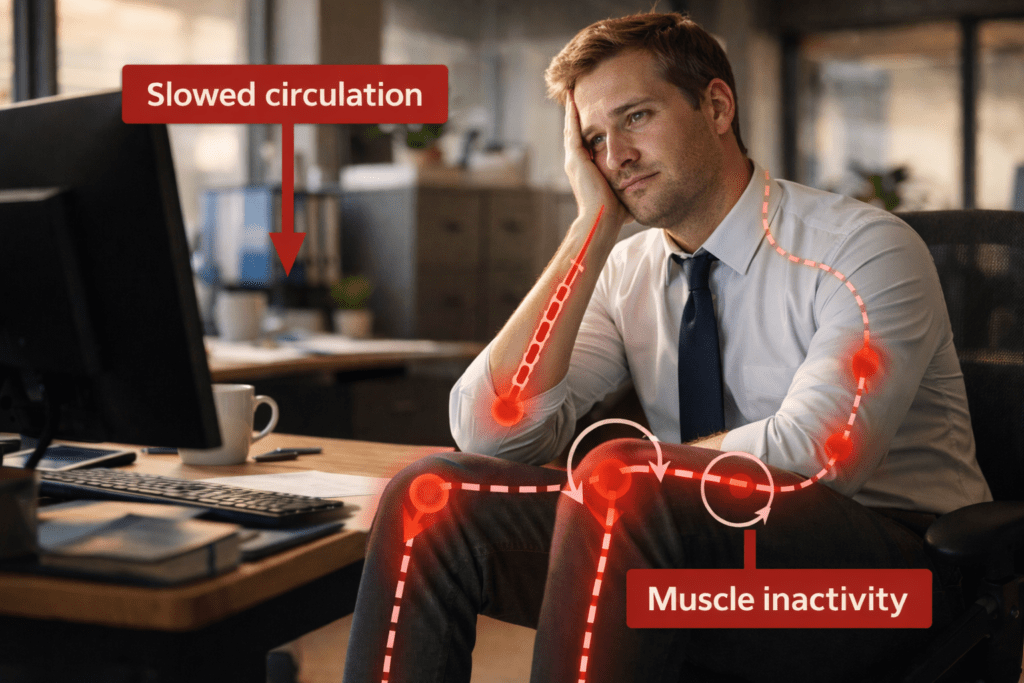
The human body evolved for movement. Walking, standing, shifting posture, and interacting with the environment constantly stimulate circulation, muscles, and the brain.
When you remain seated for long periods, those systems gradually slow down.
Blood circulation decreases slightly in the lower body. Muscle contractions become less frequent. Sensory signals traveling from the body to the brain decrease. These subtle changes accumulate over time.
According to information from the Mayo Clinic, prolonged sitting slows metabolism and circulation, which can contribute to fatigue and reduced alertness.
What happens when you sit too long? Sitting for extended periods reduces blood circulation, decreases muscle activation, and lowers metabolic activity. These changes reduce oxygen delivery to tissues and slow energy production in the body, which can lead to fatigue and difficulty concentrating.
Even small movement breaks can reverse these effects by stimulating circulation and muscle activity again.
Several biological factors explain why people feel tired after sitting for long periods. The table below summarizes the most common causes and simple ways to counteract them during the workday.
Why Sitting Too Long Makes You Feel Tired
| ⚠️ Cause | 🧬 What Happens in Your Body | 😴 How It Makes You Feel | ⚡ Quick Fix |
|---|---|---|---|
| 🪑 Sitting for long periods | Blood circulation slows down | Heavy legs and low energy | Stand up and move every 30 minutes |
| 💪 Muscle inactivity | Muscles stop stimulating metabolism | Sluggish body and fatigue | Stretch or walk briefly |
| 🧠 Reduced brain stimulation | Fewer movement signals reach the brain | Brain fog and poor focus | Change posture or take a short break |
| 👀 Screen exposure | Eye muscles stay fixed on screens | Mental exhaustion and eye strain | Look away from screens regularly |
| 💧 Mild dehydration | Blood volume slightly decreases | Headaches and tiredness | Drink water consistently |
The Impact of Prolonged Sitting on Posture and Breathing
Another overlooked factor behind feeling tired after sitting too long is how prolonged sitting affects posture and breathing patterns. When people sit at a desk for hours, they often lean forward toward their screens.
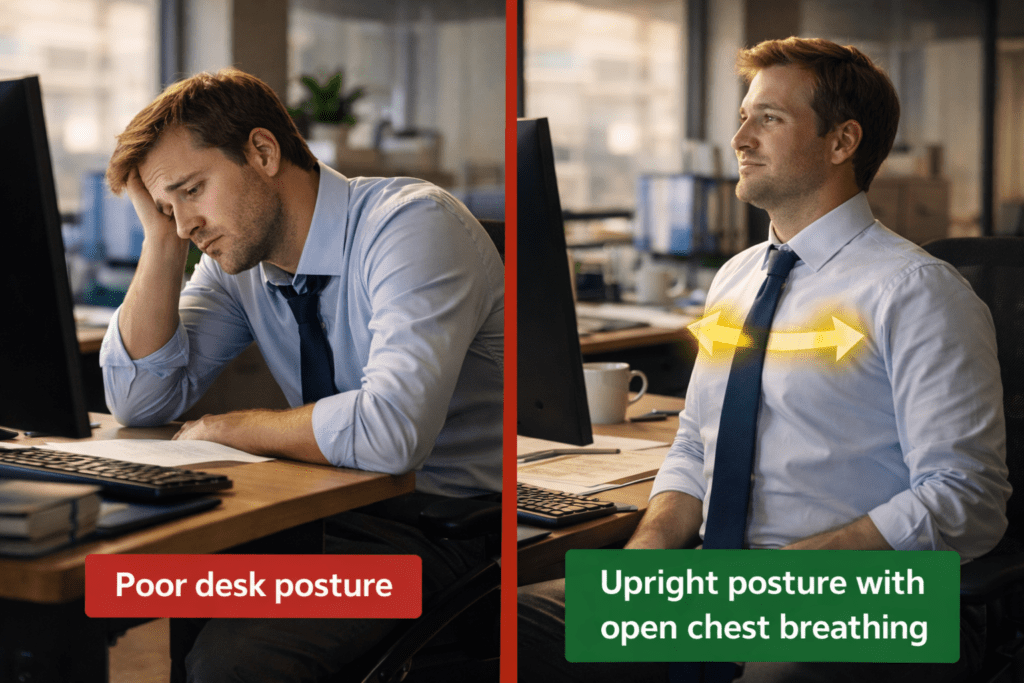
This posture slightly compresses the chest and limits how deeply the lungs expand. As a result, breathing becomes shallower and the body receives less oxygen with each breath.
Oxygen plays a critical role in cellular energy production, so reduced oxygen intake can gradually increase fatigue and mental fog.
Poor posture also tightens the neck, shoulders, and upper back, which adds muscular strain and increases the sensation of exhaustion.
Making small posture adjustments during the day can restore breathing efficiency and circulation. Short movement routines like the exercises described in 3 minute posture reset desk workers help open the chest, improve breathing depth, and reduce fatigue caused by long sitting sessions.
How Reduced Circulation Affects Energy and Brain Alertness
Circulation plays a critical role in how energized you feel.
When you walk or stand, your leg muscles contract and relax. These contractions help pump blood back toward the heart. This process improves circulation throughout the body and supports oxygen delivery to the brain.
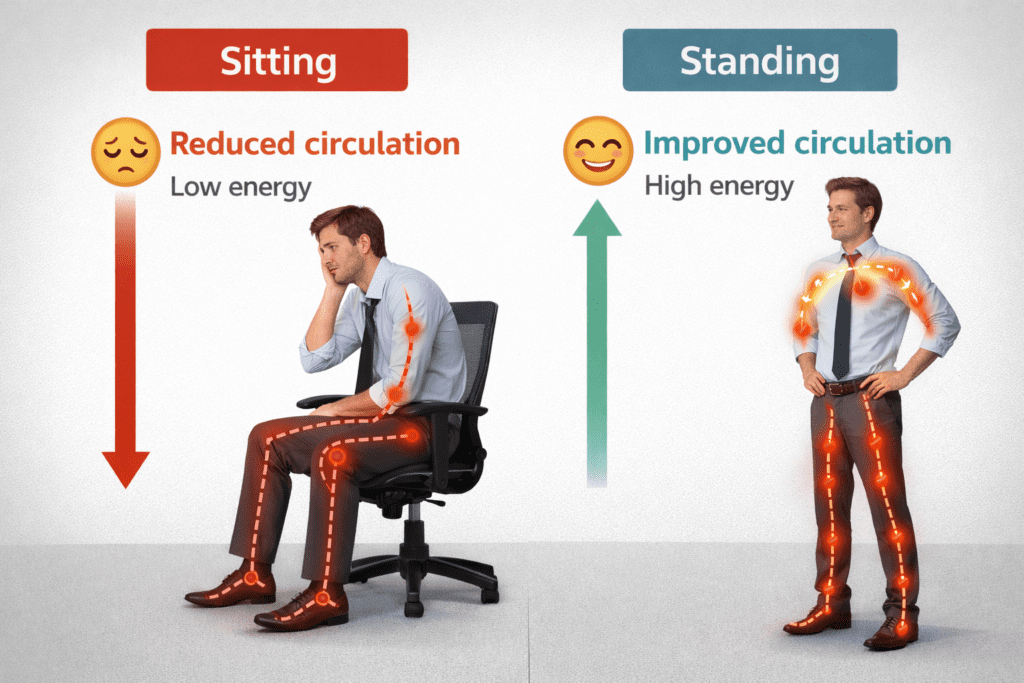
When you sit for long periods, that natural pumping system becomes less active.
Blood flow slows slightly in the legs and lower body. Over time this reduces the efficiency of oxygen delivery throughout the body.
Even minor reductions in circulation can influence how alert the brain feels. Reduced oxygen delivery contributes to mental fog, slower thinking, and decreased concentration.
This is one reason many people feel noticeably more awake after simply standing up or walking for a minute.
Desk workers often experience posture-related circulation problems as well. Small posture adjustments during the day can reactivate circulation and relieve muscle tension. Many people find simple posture routines helpful, such as the movements described in 3 minute posture reset desk workers.
These small adjustments encourage blood flow and reduce the stiffness that often accompanies long sitting sessions.
Related energy guides
If you’re experiencing fatigue during the day, these guides explain other common causes of low energy and how to fix them.
How Hormonal Signals Influence Energy When You Sit Too Long
Hormonal signals inside the body also influence how tired you feel after sitting for long periods.
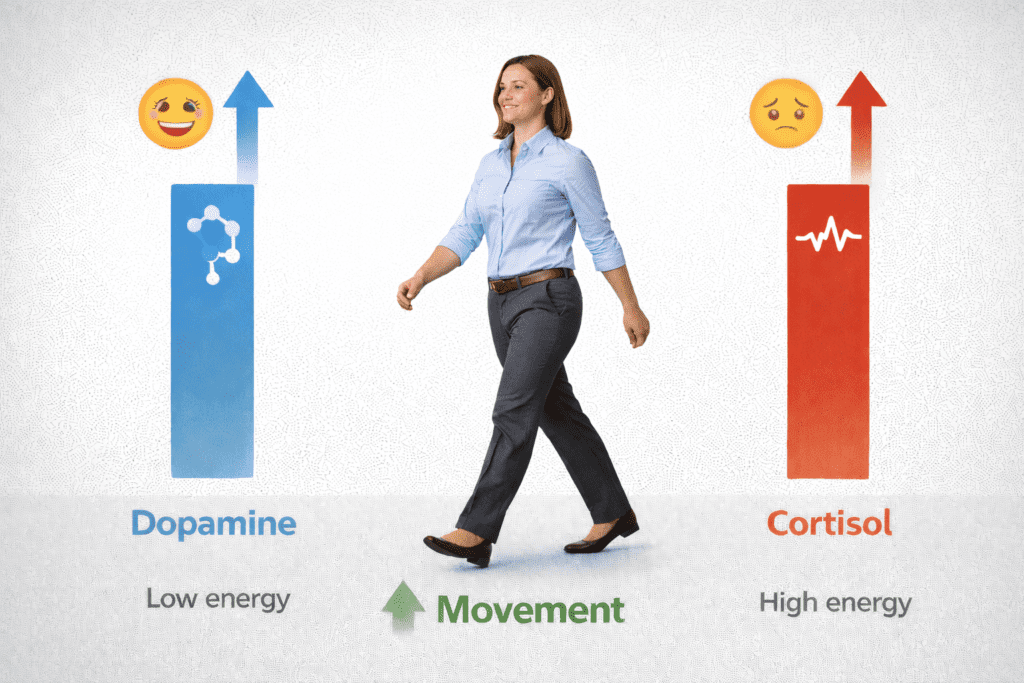
Hormones like cortisol and dopamine play an important role in maintaining alertness and motivation during the day.
Physical movement naturally stimulates these hormonal systems by signaling the brain that the body is active and engaged with its environment.
When movement disappears for long periods, these alertness signals become weaker. As a result, the brain may gradually shift toward a lower stimulation state that feels like fatigue.
Short bursts of movement, fresh air, and changes in posture can reactivate these hormonal pathways and restore mental energy.
Many people find that structured daily routines help maintain these signals consistently.
Morning routines like the ones described in 5 minute morning rituals boost energy help activate the body’s alertness systems early in the day and support better energy levels later.
The Science Behind Muscle Inactivity and Energy Production
Muscles do much more than help you move. They also play an important role in metabolic activity and energy production.
Every time muscles contract, they stimulate processes that help produce cellular energy. This energy is stored in molecules called ATP, which power nearly every activity in the body.
When muscles remain inactive for long periods, these energy-producing signals decrease.
As a result, the body gradually shifts into a lower energy state.
This change does not happen instantly, but after several hours of sitting the cumulative effect becomes noticeable. The body produces slightly less cellular energy, which contributes to feelings of fatigue.
Many people notice that their energy begins dropping in the early afternoon. This timing is not a coincidence. By that point, several hours of sitting may have already slowed metabolic signaling.
Maintaining regular movement throughout the day helps prevent this slowdown. Simple routines like those explained in daily habits for energy help stimulate metabolism and support stable energy levels.
The Link Between Long Sitting and Blood Sugar Fluctuations
Another important factor that contributes to feeling tired after sitting too long involves blood sugar regulation.
When muscles remain inactive for extended periods, the body becomes slightly less efficient at using glucose from the bloodstream.
Active muscles normally help absorb glucose and maintain stable energy levels throughout the day.
When movement stops, glucose regulation becomes less efficient, which may lead to small fluctuations in blood sugar levels. These fluctuations can trigger fatigue, irritability, and difficulty concentrating.
Even brief physical activity helps muscles absorb glucose more effectively and stabilize energy levels.
This is why simple movement habits throughout the day can significantly reduce energy crashes.
Maintaining consistent energy patterns also becomes easier when daily habits support metabolic balance, such as those discussed in midday healthy habits energy slump.
The Impact of Sitting on Mental Energy and Cognitive Focus
Physical inactivity does not only affect muscles and circulation. It also influences how the brain functions.
The brain relies on constant signals from the body to maintain alertness. These signals include movement feedback from muscles, balance information from the inner ear, and sensory stimulation from the environment.
When the body remains still for long periods, the brain receives fewer of these signals.
As stimulation decreases, the brain gradually shifts into a lower alertness state.
This change can lead to reduced motivation, slower reaction time, and difficulty concentrating on complex tasks.
Research summarized by the CDC shows that regular physical movement supports brain function and improves mood, focus, and energy levels.
Even short bursts of activity can restore mental clarity.
For example, people who experience significant mental fatigue at the end of the workday often benefit from short reset routines like the ones described in mental fatigue after work 15 minute reset.
These short breaks help restore cognitive energy and improve productivity.
How Prolonged Sitting Affects Your Eyes and Brain
Another hidden contributor to fatigue during long sitting sessions is visual strain from prolonged screen exposure.

When your eyes remain fixed on a computer screen for hours, the muscles responsible for focusing and eye movement become fatigued.
This forces the brain to work harder to maintain concentration.
In addition, people blink less frequently while looking at screens, which can lead to dry eyes and discomfort.
These small stress signals travel directly to the brain and gradually increase mental fatigue.
Over time this combination of eye strain and reduced movement can make you feel mentally exhausted even if your physical activity level has been low.
Taking short eye breaks and shifting focus away from the screen periodically helps reset these muscles. Techniques like those explained in computer eye fatigue relief can relax eye muscles and improve mental clarity during long work sessions.
What Most People Miss About Sitting Fatigue and Afternoon Energy Crashes
Most people believe fatigue from sitting occurs simply because they are inactive.
However, a deeper metabolic mechanism is also involved.
Muscles help regulate important enzymes responsible for managing blood sugar and fat metabolism. These enzymes become less active when muscles remain inactive.
Reduced enzyme activity affects how the body processes energy.
When this happens, the body may experience small fluctuations in blood sugar levels and metabolic signaling. These fluctuations contribute to fatigue and the familiar afternoon slump.
This is why energy often drops sharply after lunch during long workdays.
Regular movement helps maintain stable metabolic activity and prevents these slowdowns from building up.
Many people reduce afternoon fatigue by adopting strategies like those explained in afternoon energy crash prevention.
These strategies focus on movement timing, hydration, and balanced meals.
The biological process behind sitting fatigue becomes easier to understand when visualized. The infographic below explains how prolonged sitting gradually reduces energy levels in the body.
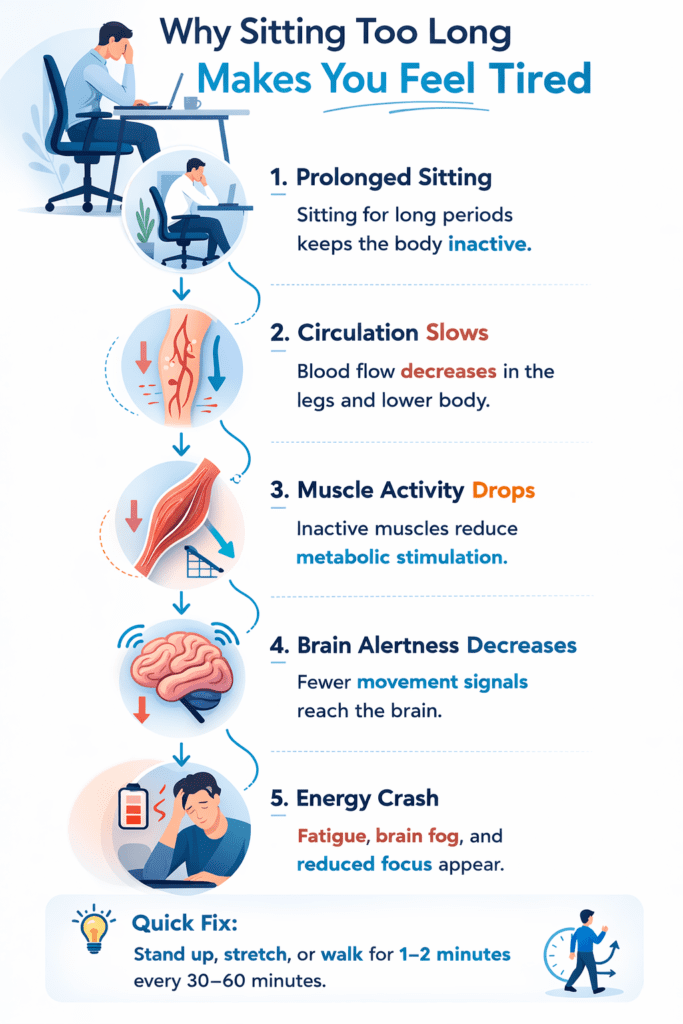
How Sitting Too Long Disrupts Your Daily Energy Rhythm
Prolonged sitting can also interfere with the body’s natural daily energy rhythm.
Human energy levels follow a circadian pattern that rises and falls throughout the day.
Movement plays an important role in reinforcing these natural rhythms because physical activity signals the brain to maintain alertness.
When you remain inactive for several hours, the body receives fewer stimulation cues and the natural afternoon dip in energy can become much stronger.
This is why many people feel extremely tired around two or three in the afternoon after sitting all morning.
Short bursts of movement, exposure to daylight, and brief walking breaks can help stabilize these energy cycles.
Incorporating small routines during the afternoon, like the strategies described in afternoon habits boost energy, helps maintain alertness and prevents dramatic energy crashes later in the day.
How Sitting Too Long Reduces Nervous System Stimulation
Another overlooked reason people feel tired after sitting too long is reduced stimulation of the nervous system.
The nervous system relies on constant feedback from the body to maintain alertness.
Movements like standing, walking, and shifting posture send signals through nerves to the brain that help regulate focus and awareness.
When you remain seated for long periods without movement, these signals become weaker.
As a result, the brain gradually lowers its level of stimulation, which can make you feel sleepy, unmotivated, or mentally sluggish.
This effect becomes even stronger during long work sessions when posture stays fixed for hours.
Small changes in position and brief movement breaks help reactivate these signals and improve alertness.
Simple strategies like those described in why sitting too long makes you tired explain how restoring movement throughout the day can quickly improve energy and focus.
How to Boost Your Energy After Sitting for Hours at a Desk
Fortunately, reversing fatigue from sitting does not require intense exercise.
Small movements repeated throughout the day can quickly restore circulation and metabolic activity.
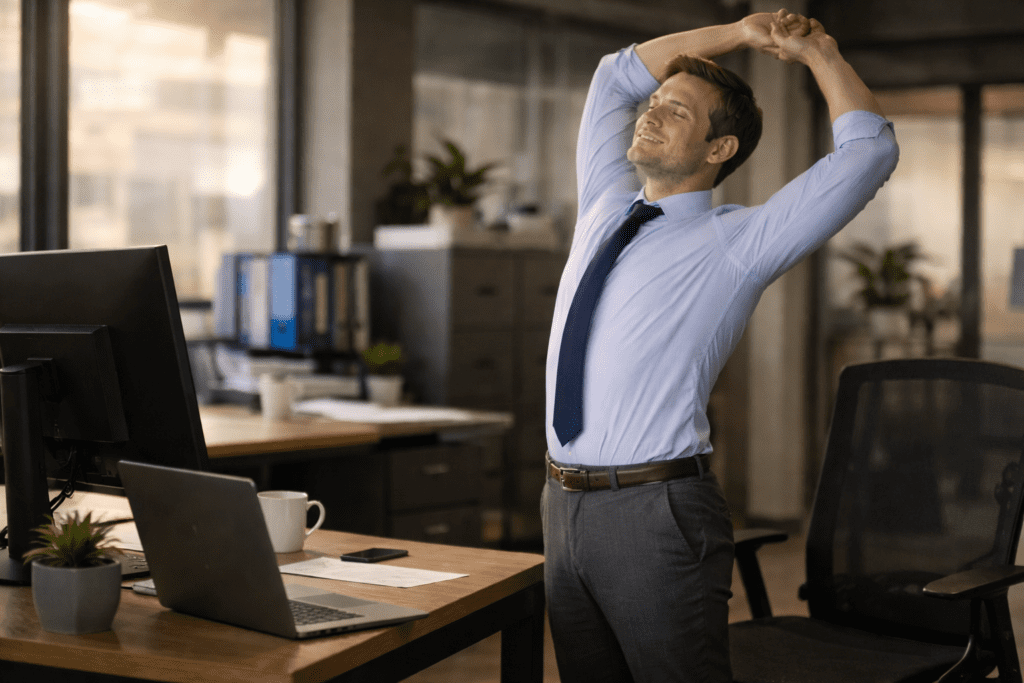
Here are five simple ways to boost your energy after sitting too long
- Stand up and move for one minute every thirty minutes
- Walk around your room or office every hour
- Stretch your hips, hamstrings, and shoulders
- Drink water regularly to support circulation
- Reset your posture and engage your core muscles
These small actions activate muscles, improve circulation, and stimulate brain alertness.
If you want a quick routine you can do immediately, see this guide on how to fix sitting fatigue in minutes. It walks through a simple desk reset routine that restores energy in just a few minutes.
Many people also benefit from activating circulation early in the morning. Simple routines such as those described in quick morning habits to boost energy can help maintain steady energy throughout the day.
Want more simple ways to stay energized during the day?
If long hours at your desk leave you drained, these practical guides can help you improve focus, prevent energy crashes, and build a more sustainable daily routine.
Explore More Energy TipsWhy Short Breaks Reset Mental Energy During Long Work Sessions
Short breaks during the workday do more than just relax your muscles—they help reset mental energy.
When you work continuously without pauses, the brain gradually accumulates cognitive fatigue.
Attention becomes harder to maintain, decision-making slows down, and motivation decreases. Even brief breaks can interrupt this fatigue cycle. Standing up, walking for a minute, or simply changing environments gives the brain a moment to reset its focus.
These small resets improve productivity and help maintain steady energy levels throughout the day.
Many professionals notice that their energy improves when they intentionally schedule short pauses between tasks.
Techniques like those discussed in mentally drained but restless in the afternoon show how structured mini-breaks can restore mental clarity and reduce the fatigue that builds during long periods of sitting.
Why Staying Hydrated is Crucial During Long Sitting Sessions
Hydration is another factor that strongly influences how energized you feel during long sitting sessions.
Many people unintentionally drink less water when they remain seated for extended periods because they become absorbed in work and forget to hydrate regularly.
Even mild dehydration can reduce blood volume and make circulation less efficient, which may contribute to fatigue, headaches, and reduced concentration.
Proper hydration supports nutrient transport, temperature regulation, and oxygen delivery throughout the body.
When hydration levels drop, the body must work harder to maintain these processes, which can increase feelings of tiredness.
Building simple hydration habits throughout the workday can significantly improve energy stability.
Many busy professionals benefit from small routines like those described in simple daily hydration habits energy or by following structured approaches such as the one outlined in hydration routine busy adults daily.
Warning Signs That Show You Have Been Sitting Too Long
Your body usually provides signals when it needs movement.
Common warning signs include
- heavy legs or stiff hips
- tight shoulders or neck
- sudden difficulty focusing
- mental fog or sleepiness
- restlessness or irritability
Recognizing these early signals allows you to take a quick movement break before fatigue becomes overwhelming.
Even standing up and stretching for one minute can reactivate circulation and restore alertness.
You may notice several physical and mental signals when your body has been sitting too long. The table below summarizes common signs, what they indicate inside your body, and the quickest way to restore energy.
Sitting Fatigue Test: Signs Your Body Needs Movement
| 🔎 Signal You Notice | 🧠 What It Means in Your Body | ⚠️ Likely Cause | ⚡ Quick Reset |
|---|---|---|---|
| 💤 Sudden sleepiness | Brain stimulation decreases | Long periods without movement | Stand up and walk for one minute |
| 🦵 Heavy or stiff legs | Circulation slows in the lower body | Sitting too long | Stretch your legs or take a short walk |
| 😵 Brain fog | Oxygen delivery slightly decreases | Reduced circulation | Change posture and move briefly |
| 👀 Eye strain | Eye muscles remain fixed on screens | Continuous screen exposure | Look away from the screen for 30 seconds |
| 🤯 Loss of focus | Nervous system stimulation drops | Lack of physical activity | Take a short movement break |
| 🥱 Afternoon energy crash | Metabolism slows during inactivity | Long sitting sessions | Walk or stretch to reactivate muscles |
Why Small Movements Matter More Than You Think During Desk Work
Many people believe they need a full workout to counteract the effects of sitting, but the body actually responds strongly to very small movements.
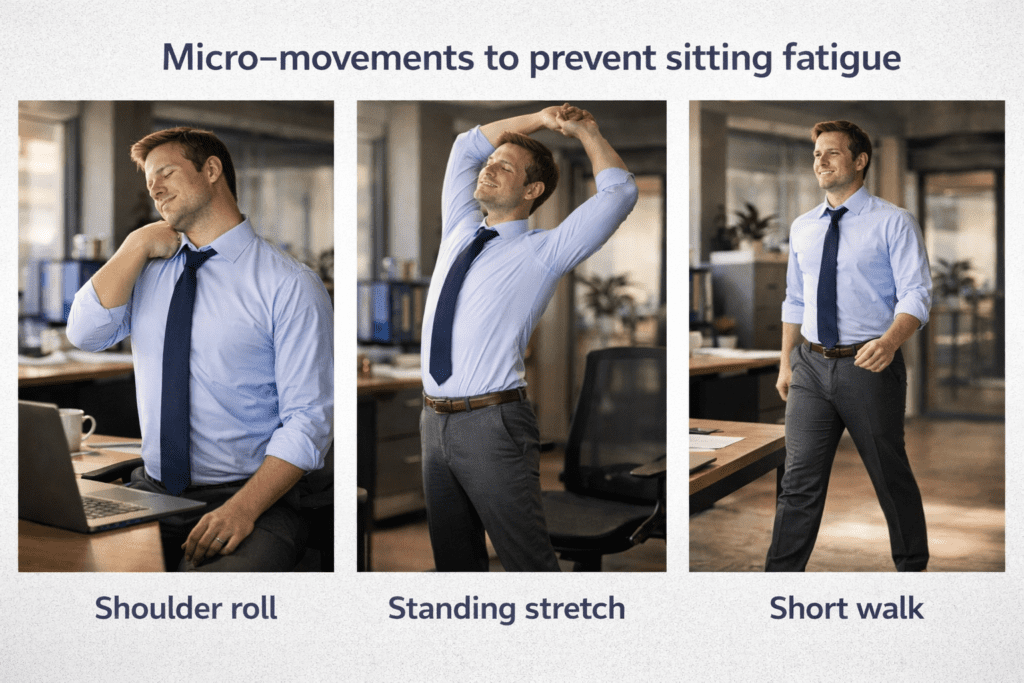
These tiny movements, sometimes called micro-movements, include actions like standing briefly, stretching the legs, rolling the shoulders, or walking across the room.
Even these minimal activities activate muscles and stimulate circulation. When performed regularly, micro-movements prevent the body from entering a prolonged inactive state that leads to fatigue.
Research shows that breaking up sitting time with brief activity helps maintain metabolic activity and improves energy levels during the workday.
Building these tiny habits into your routine can be surprisingly effective.
Simple micro-habit strategies like those described in micro habits boost afternoon energy show how small actions repeated throughout the day can prevent energy crashes.
The Simple Daily Movement Protocol That Prevents Sitting Fatigue
Preventing sitting fatigue is easier than most people expect. The key is creating small habits that encourage movement throughout the day.
A simple movement protocol might include
• standing up every thirty minutes
• walking briefly every hour
• adjusting posture frequently
• drinking water throughout the day
• taking a short walk during lunch
These small actions maintain circulation and metabolic activity during long periods of desk work.
Over time, these habits support consistent energy levels and better concentration.
Understanding why you feel tired after sitting too long makes it easier to prevent the problem before it disrupts your workday.
Prolonged sitting slows circulation, reduces muscle activity, and lowers mental stimulation, which gradually drains your energy.
The good news is that small habits—like standing regularly, stretching, and taking short movement breaks—can quickly reverse these effects.
By keeping your body moving throughout the day, you can maintain steady energy levels, sharper focus, and better productivity even during long desk work sessions.
Keep building better energy habits
If you found this guide helpful, the next step is building a daily routine that supports steady energy, better focus, and fewer afternoon slumps. These reader favorites from Everyday Health Plan can help.
Frequently Asked Questions
Why do I feel tired after sitting for long periods even if I slept well?
Feeling tired after sitting for long periods often happens because prolonged sitting slows blood circulation and reduces muscle activity. When muscles stay inactive for hours, the body produces slightly less cellular energy and the brain receives fewer stimulation signals. This combination can lead to fatigue, brain fog, and reduced focus even if you slept well the night before.
How long is too long to sit without moving?
Health experts generally recommend standing or moving at least once every 30 to 60 minutes. Sitting continuously for several hours can slow circulation, increase muscle stiffness, and reduce metabolic activity. Taking short movement breaks throughout the day helps maintain energy levels and prevents fatigue from building up.
Can sitting too long cause mental fatigue?
Yes, sitting too long can contribute to mental fatigue. When the body remains inactive, the brain receives fewer sensory signals from muscles and movement. This reduced stimulation can make it harder to concentrate and maintain focus, which is why short activity breaks often restore mental clarity during long work sessions.
Does standing up really improve energy levels?
Yes, even brief standing or walking can improve energy levels. Movement activates muscles, increases blood circulation, and helps deliver more oxygen to the brain. These changes can quickly restore alertness and reduce the sluggish feeling that often develops after sitting for long periods.
Why does my energy crash in the afternoon when I sit all day?
Afternoon energy crashes often occur because prolonged sitting slows metabolism and circulation during the morning hours. When physical activity remains low for several hours, the body’s natural circadian energy rhythm can dip more strongly in the afternoon. Movement breaks, hydration, and short walks can help stabilize energy levels during this time.
Can drinking water help reduce fatigue from sitting?
Yes, proper hydration plays an important role in maintaining energy levels. Mild dehydration can reduce blood volume and make circulation less efficient, which may contribute to fatigue and difficulty concentrating. Drinking water regularly throughout the day helps support circulation, oxygen delivery, and overall energy.
Experience, Expertise, Authority, and Trust
This article was created to help readers understand the biological reasons behind fatigue caused by prolonged sitting and to provide practical strategies supported by credible health research. The explanations about circulation, metabolism, brain stimulation, and movement are based on widely recognized findings from leading medical and public health organizations.
Research from institutions such as the Mayo Clinic, the Centers for Disease Control and Prevention (CDC), and the National Institutes of Health (NIH) highlights how prolonged sitting can affect circulation, metabolism, brain function, and overall energy levels.
By combining these evidence-based insights with practical daily habits, this article aims to present reliable information that readers can apply in real-world environments such as office work, remote work, or long study sessions. The goal is to help readers better understand why sitting too long can lead to fatigue and how simple movement strategies can support healthier energy levels throughout the day.
