

If you often feel tired in the afternoon, especially around 2 or 3 PM, the cause is usually not laziness or weak discipline. You may start the day productive and focused, then suddenly feel your brain slow down, your eyes get heavy, and your motivation drop — even if you slept 7–8 hours.
This afternoon slump is usually a predictable biological pattern. It can be influenced by your circadian rhythm, lunch choices, blood sugar changes, mild dehydration, prolonged sitting, mental overload, caffeine timing, and daily work habits.
Quick Answer: If you feel tired in the afternoon, the cause is usually a mix of your natural circadian rhythm dip, post-lunch blood sugar changes, mild dehydration, prolonged sitting, mental overload, and caffeine timing. This is why energy often drops between 1 PM and 4 PM, even after a full night of sleep.
Once you understand what is happening inside your body, the crash becomes easier to manage — and often prevent. This guide explains the main causes of afternoon fatigue first, then shows which daily patterns make the 3PM crash stronger.
Table of Contents
- What Is an Afternoon Energy Crash?
- Why You Feel Tired in the Afternoon: Main Causes and Quick Fixes
- Why Your Circadian Rhythm Naturally Causes Afternoon Energy Drops
- How Blood Sugar Fluctuations Trigger Afternoon Fatigue and Brain Fog
- Why Sleep Quality Can Still Affect Afternoon Tiredness
- What Happens When Stress Hormones Stay Elevated and Drain Energy
- The Link Between Prolonged Sitting and Midday Energy Slumps
- Why Mild Dehydration Is a Hidden Cause of Afternoon Sleepiness
- The Hidden Reason Mental Overload Drains You by Midday
- What Most People Miss About Caffeine Timing and Afternoon Crashes
- Why Inconsistent Sleep Schedules Disrupt Afternoon Energy Stability
- The Impact of Light Exposure on Afternoon Alertness and Focus
- The Science Behind Adenosine Buildup and Afternoon Sleep Pressure
- When Afternoon Fatigue Feels More Extreme Than Normal
What Is an Afternoon Energy Crash?
An afternoon energy crash is a predictable drop in alertness, focus, and physical energy that typically occurs between 1 PM and 4 PM due to circadian rhythm shifts, blood sugar changes, accumulated sleep pressure, and mental fatigue.
Why You Feel Tired in the Afternoon: Main Causes and Quick Fixes
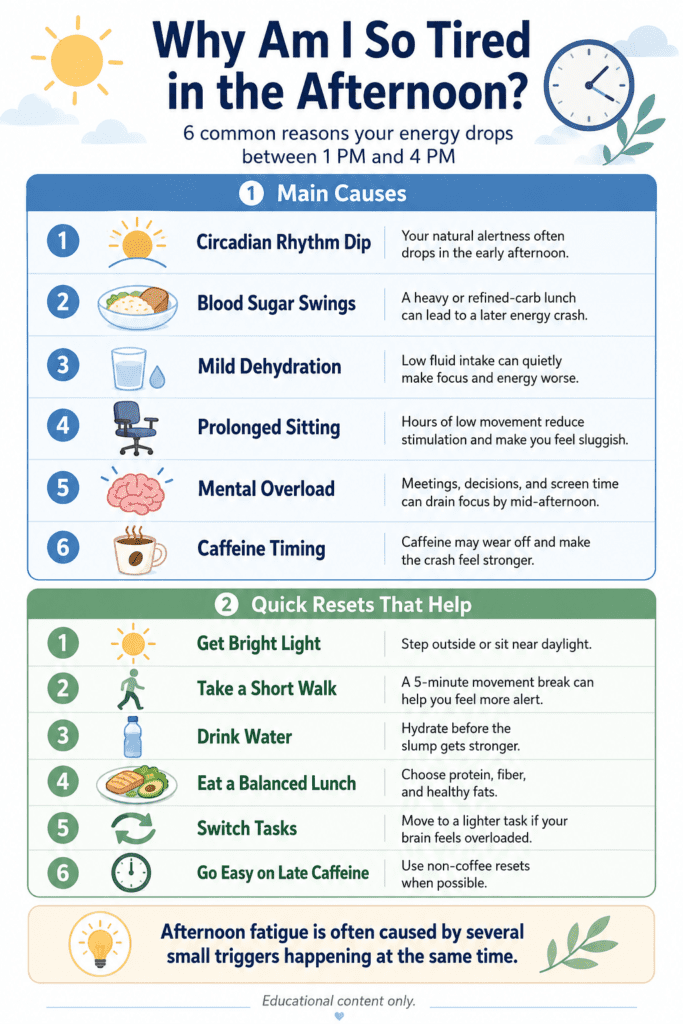
| Cause | What Happens | What Helps |
|---|---|---|
| Circadian rhythm dip | Your alertness naturally drops between 1 PM and 4 PM. | Use light exposure and schedule lighter tasks. |
| Blood sugar swing | A heavy or refined-carb lunch may lead to a later energy drop. | Add protein, fiber, and healthy fats. |
| Mild dehydration | Low fluid intake can make focus and energy feel worse. | Drink water before the slump starts. |
| Prolonged sitting | Low movement reduces body stimulation and alertness signals. | Take a short walk or movement break. |
| Mental overload | Emails, meetings, and decisions drain focus by mid-afternoon. | Use micro-breaks and switch to lighter tasks. |
| Caffeine timing | Caffeine can wear off and create a rebound dip. | Limit late caffeine and use non-coffee resets. |
Why Your Circadian Rhythm Naturally Causes Afternoon Energy Drops
One major reason people ask, “why am I so tired in the afternoon?” has to do with your internal clock.

Your body runs on a circadian rhythm — a 24-hour biological cycle that regulates sleep, hormones, body temperature, and alertness. Most people think circadian rhythm only affects nighttime sleep, but it also controls daytime energy patterns.
Here’s the key detail: humans naturally experience a dip in alertness between 1 PM and 4 PM.
This drop happens because:
- Core body temperature slightly decreases
- Alertness hormones decline
- Melatonin may rise subtly
- Mental focus becomes harder to sustain
This doesn’t mean something is wrong. It means your brain is following its built-in rhythm.
In traditional cultures, this is when people took short rest periods. In modern office life, we push through it with caffeine and screens.
If you feel tired every afternoon around the same time, it may simply be your biological clock doing exactly what it was designed to do.
The CDC/NIOSH explains that an afternoon dip in wakefulness can happen when circadian wakefulness signals dip while sleep pressure builds.
Is it normal to feel tired every afternoon?
Yes. A mild dip in alertness between 1 PM and 4 PM is biologically normal due to circadian rhythm patterns. However, extreme exhaustion that interferes with daily life, feels sudden, or keeps worsening should be discussed with a healthcare professional.
How Blood Sugar Fluctuations Trigger Afternoon Fatigue and Brain Fog
Another common reason for a 3 PM energy crash is blood sugar regulation.
After you eat, especially a carb-heavy lunch, your blood sugar rises. Your pancreas releases insulin to move glucose into cells. This process can work smoothly — or it can create a sharp spike followed by a crash.
Here’s what often happens:
- You eat a lunch high in refined carbohydrates.
- Blood sugar spikes quickly.
- Insulin surges.
- Blood sugar drops rapidly.
- You feel sleepy, shaky, foggy, or irritable.
This roller coaster effect can hit about 60 to 120 minutes after eating.
If you regularly feel tired after eating, you may want to explore this deeper:
https://everydayhealthplan.com/why-do-i-feel-tired-after-eating/
Even if your lunch seems “normal,” things like white bread, pasta, sugary drinks, or large portions can amplify this effect.
When your brain senses dropping glucose levels, it signals fatigue. Your body interprets that dip as a need to rest.
That’s why the afternoon slump often overlaps with post-lunch timing.
Does eating carbs at lunch cause afternoon sleepiness?
High refined carbohydrate meals can trigger rapid blood sugar spikes followed by crashes, which may increase afternoon fatigue. Balanced meals with protein, fiber, healthy fats, and moderate complex carbs usually support steadier afternoon energy.

Why Sleep Quality Can Still Affect Afternoon Tiredness
If you’re sleeping 7–8 hours but still wondering, “why am I so tired in the afternoon?”, sleep quality may be the missing piece.
Quantity and quality are not the same thing.
You can be in bed for eight hours but still experience:
- Fragmented sleep cycles
- Late-night blue light exposure
- Elevated stress hormones
- Shallow sleep stages
Deep sleep and REM sleep are when your brain resets and restores energy systems. If these stages are disrupted, you may wake up feeling okay but lack sustained energy capacity.
By afternoon, your body runs out of reserves.
If you suspect your sleep isn’t restorative, improving evening habits may help:
https://everydayhealthplan.com/improve-sleep-quality-evening-habits/
This often shows up as:
- Brain fog
- Heavy eyelids
- Slow thinking
- Reduced motivation
It’s not that you didn’t sleep. It’s that your body didn’t fully recharge.
If your crash happens almost exactly at 3 PM even after a full night of sleep, read the deeper guide on feeling exhausted at 3 PM even after 8 hours of sleep.
Why do I feel tired every afternoon around 3PM?
The 3PM timing often reflects a natural circadian dip combined with accumulated adenosine, post-lunch blood sugar changes, and mental workload from the morning. Sitting too long, dehydration, and caffeine timing can make this dip feel stronger.
What Happens When Stress Hormones Stay Elevated and Drain Energy
Stress doesn’t just affect your mood. It directly affects energy regulation.
Cortisol, your primary stress hormone, is supposed to peak in the morning and gradually decline throughout the day.
But chronic stress changes that pattern.
When stress remains elevated:
- Cortisol may spike too early
- Energy feels “wired” in the morning
- A sharp drop occurs mid-afternoon
- You feel drained and unfocused
This explains why some people feel alert at 9 AM but crash hard by 2 PM.
Your nervous system shifts from alert mode to depletion mode.
If your job involves constant deadlines, multitasking, or mental strain, your brain burns through neurotransmitters faster than you replenish them.
Mental fatigue is just as real as physical fatigue.
The Link Between Prolonged Sitting and Midday Energy Slumps
Modern work environments create a unique problem.

Sitting for hours reduces:
- Blood circulation
- Oxygen delivery
- Muscle activation
- Metabolic stimulation
When muscles stay inactive, glucose uptake slows. Circulation decreases. Movement and alertness signals may become less active, which can make your brain feel slower and foggier.
The result?
You feel sluggish and foggy — even if you slept well.
If you notice that desk sitting makes the slump stronger, read our deeper guide on why sitting too long makes you tired.
Many people who feel tired in the afternoon are also dealing with sedentary fatigue from hours of low movement.
The body was designed for movement throughout the day. Long periods of stillness signal the brain to power down.
This is why even a 5-minute walk can help many people feel more alert.
The CDC also advises adults to move more and sit less, noting that physical activity can be broken into smaller chunks throughout the week.
Why Remote and Desk Workers Experience Stronger Afternoon Crashes
Remote and desk-based work environments amplify natural energy dips.
When you work from home or sit at a computer for long periods:
- Movement decreases
- Light exposure may be limited
- Social stimulation drops
- Work tasks often become cognitively demanding
In traditional environments, physical movement and environmental stimulation partially mask the circadian dip. In quieter remote settings, the slump feels more intense.
This is why many remote professionals report predictable 3PM fatigue, even after a full night of sleep.
Why Mild Dehydration Is a Hidden Cause of Afternoon Sleepiness
Mild dehydration is surprisingly common and can directly affect energy levels.

Even a 1–2% drop in hydration can cause:
- Fatigue
- Reduced focus
- Headaches
- Irritability
When you’re slightly dehydrated, blood volume decreases. Your heart works harder to pump oxygen and nutrients.
The brain perceives this as low energy.
If you drink coffee but not much water, dehydration becomes more likely.
Many adults don’t realize they’ve had only one or two glasses of water by mid-afternoon.
Mayo Clinic lists tiredness and dizziness among possible adult dehydration symptoms, which helps explain why low fluid intake can make an afternoon slump feel stronger.
Improving daily hydration habits can make a noticeable difference:
https://everydayhealthplan.com/simple-daily-hydration-habits-energy/
Before assuming something is wrong, ask yourself:
Have I had enough fluids today?
Hydration directly influences afternoon energy.
If the afternoon slump comes with lightheadedness, this guide explains why you may feel dizzy and tired in the afternoon.
Can dehydration really make me tired?
Yes. Even mild dehydration can reduce concentration, lower fluid balance, and make fatigue feel stronger. Many people drink coffee in the morning but not enough water, so dehydration can quietly build by mid-afternoon.
The Hidden Reason Mental Overload Drains You by Midday
Cognitive fatigue is real.
Every decision, email, notification, and task consumes mental energy. Your prefrontal cortex — responsible for focus and decision-making — gets overworked.

Decision fatigue accumulates.
By afternoon:
- Focus drops
- Reaction time slows
- Motivation declines
- Errors increase
Even if your body feels fine, your brain may be exhausted.
This explains why scrolling feels easier than tackling complex tasks after 2 PM.
Mental energy has limits. Without breaks, it depletes.
If your afternoon fatigue feels tense instead of sleepy, read this guide on feeling mentally drained but restless in the afternoon.
What Most People Miss About Caffeine Timing and Afternoon Crashes
Caffeine helps — temporarily.
But mistimed caffeine can worsen afternoon crashes.
When you drink coffee immediately after waking, it interferes with natural cortisol peaks. Later, as caffeine wears off, you may experience a rebound dip.
Drinking multiple cups before noon can also increase energy volatility.
By mid-afternoon, your nervous system may be overstimulated and then depleted.
If caffeine keeps backfiring, use this guide to build a midday energy boost without coffee.
This cycle can make the afternoon slump feel stronger, even when you slept enough the night before.
Sometimes, the solution isn’t more caffeine. It’s smarter timing and moderation.
How Skipping Protein at Lunch Amplifies Afternoon Energy Slumps
Protein stabilizes blood sugar.
If your lunch lacks sufficient protein and fiber, glucose rises and falls faster.
Meals built mostly around refined carbs create rapid energy peaks followed by steep declines.
A balanced lunch that includes:
- Lean protein
- Healthy fats
- Fiber
- Complex carbohydrates
helps create steadier energy release.
When blood sugar remains stable, afternoon fatigue decreases significantly.
The Science Behind Post-Lunch Sleepiness and Nervous System Activation
After eating, your body shifts into “rest and digest” mode.
The parasympathetic nervous system activates to support digestion.
Blood flow shifts toward the digestive tract. Heart rate slows slightly. Alertness may decrease.
This response is normal.
But large meals intensify it.
If you regularly eat heavy lunches, you may notice stronger afternoon drowsiness.
Your body prioritizes digestion over alertness.
Smaller, balanced meals can reduce this effect.
Why Inconsistent Sleep Schedules Disrupt Afternoon Energy Stability
Even if you sleep 8 hours, inconsistent timing can disrupt circadian rhythm.
Going to bed at midnight one night and 10 PM the next confuses your internal clock.
When circadian rhythm becomes irregular:
- Hormone release patterns shift
- Energy timing becomes unpredictable
- Afternoon dips feel stronger
Your body thrives on rhythm. Consistency helps regulate energy more than occasional long sleep sessions.
What Happens When You Ignore Micro-Recovery Breaks During the Workday
Your brain functions in cycles of focus and rest, often around 90-minute blocks.
When you push through hours of continuous work:
- Attention declines
- Stress hormones rise
- Cognitive fatigue builds
By afternoon, depletion becomes noticeable.
Short breaks — even 5 minutes — allow neural reset.
Ignoring these resets contributes to daily exhaustion patterns.
Why Am I So Tired in the Afternoon Even After Sleeping 8 Hours?
If you feel tired in the afternoon even after sleeping 8 hours, the issue is often not sleep length alone. The afternoon crash usually happens when several factors overlap at the same time.
- Natural circadian dip
- Blood sugar swings
- Prolonged sitting
- Mental overload
- Mild dehydration
- Caffeine timing
- Stress hormone patterns
This is why the slump can appear even when your sleep schedule looks normal. Your body may have slept enough, but your daytime rhythm, lunch, hydration, movement, and mental load still shape how your afternoon feels.
The Top 5 Biological Reasons You Feel Tired in the Afternoon
- Natural circadian rhythm dip
- Blood sugar spike and crash
- Adenosine buildup in the brain
- Stress hormone fluctuations
- Prolonged physical inactivity
Your body isn’t broken.
It’s responding to daily inputs.
Understanding the mechanism reduces frustration and helps you adjust behavior strategically.
How to Reduce Afternoon Fatigue Without Relying on More Caffeine
Small adjustments can significantly improve energy stability.
Consider:
- Eating balanced lunches
- Drinking water consistently
- Taking short movement breaks
- Managing caffeine timing
- Getting morning sunlight exposure
- Keeping consistent sleep hours
Simple Habits That Stabilize Afternoon Energy
- Drink water consistently throughout the morning
- Eat balanced meals with protein and fiber
- Step outside for natural light exposure
- Take 5-minute movement breaks every 90 minutes
- Avoid heavy, carb-dense lunches
- Limit caffeine after late morning
Energy regulation is about rhythm, not force.
Want a faster fix for the 3PM slump?
If you’re trying to stay energized without relying on another cup of coffee, start here:
Midday Energy Boost Without Coffee: Simple Moves That Work
Quick, realistic strategies you can do at your desk in under 10 minutes.
When daily patterns align with biology, afternoon crashes soften.
The Impact of Light Exposure on Afternoon Alertness and Focus
Light signals regulate circadian rhythm.
Morning sunlight increases cortisol appropriately and anchors your internal clock.
Insufficient daylight exposure can make afternoon dips feel heavier.
Working indoors under dim lighting may exaggerate fatigue.
Even 10–15 minutes of natural light in the morning can improve later alertness patterns.
Your brain interprets light as a wake signal.

Why Afternoon Fatigue Feels Worse During Short Winter Days
Seasonal light changes influence circadian timing.
Shorter daylight hours can:
- Delay circadian signals
- Reduce serotonin production
- Lower mood and energy
Many people notice stronger afternoon sleepiness during fall and winter.
This doesn’t mean something is medically wrong. It reflects environmental input.
Light exposure and consistent routines become even more important during darker months.
The Science Behind Adenosine Buildup and Afternoon Sleep Pressure
Another important reason afternoon fatigue builds is a molecule called adenosine.
Adenosine builds up in your brain throughout the day as you use mental energy. The longer you stay awake, the more adenosine accumulates. This creates sleep pressure.
By mid-afternoon, levels become noticeable.
Caffeine blocks adenosine receptors temporarily. It does not eliminate adenosine.
When caffeine wears off, the signal returns.
This biological buildup contributes to predictable afternoon drowsiness.
Final Thoughts: Why Am I So Tired in the Afternoon?
If you’ve been asking, “why am I so tired in the afternoon?”, the answer usually isn’t mysterious.
It’s your circadian rhythm, blood sugar regulation, hydration levels, stress hormones, movement patterns, and mental load interacting throughout the day.
Afternoon fatigue is common. It’s predictable. And in most cases, it’s manageable.
By understanding what happens inside your body — instead of blaming willpower — you can make small adjustments that stabilize energy naturally.
Your afternoon slump isn’t a character flaw.
It’s a signal.
When you learn what drives it, you regain control.

When Afternoon Fatigue Feels More Extreme Than Normal
Afternoon fatigue can feel extreme when several triggers stack together, such as poor sleep quality, a heavy lunch, dehydration, long sitting, mental overload, stress, and the natural circadian dip. If extreme mid-afternoon fatigue is sudden, frequent, worsening, or interfering with daily life, it is safer to speak with a healthcare professional.
Build a Smarter Reset for Your 3 PM Slump
If you want a practical next step, start with a simple routine that does not rely on another cup of coffee. A short movement break, water, light exposure, and a calmer task shift can help your afternoon feel more stable.
Read: Midday Energy Boost Without Coffee
Related Energy Patterns You Should Understand
Afternoon fatigue is often part of a bigger daily energy rhythm. These guides can help you identify the pattern closest to your symptoms:
- Exhausted at 3 PM Even After 8 Hours of Sleep
- Midday Energy Boost Without Coffee
- Dizzy and Tired in the Afternoon
- Mentally Drained but Restless in the Afternoon
- Why Do I Feel Tired After Eating?
- Blood Sugar Crash Symptoms Explained
Frequently Asked Questions About Feeling Tired in the Afternoon
Should I take a nap during an afternoon energy crash?
Short naps of 10–20 minutes may improve alertness without interfering with nighttime sleep. Longer naps may increase grogginess or delay bedtime, especially if they happen late in the afternoon.
Does caffeine make afternoon crashes worse?
Excessive or poorly timed caffeine can create rebound fatigue when its effects wear off, especially if consumed early in large amounts. Late caffeine may also disrupt sleep, which can make tomorrow’s afternoon slump stronger.
Why does my afternoon fatigue feel worse some days?
Sleep quality, stress levels, hydration, food choices, light exposure, movement, and workload vary daily. These small differences can amplify or soften the afternoon dip, even when your routine looks similar from the outside.
About This Content
This article was created using evidence-informed explanations of circadian rhythm biology, blood sugar regulation, hydration science, and behavioral health research. It is written for educational purposes and reflects current understanding of how daily energy patterns function in healthy adults.
