

You finish a meal expecting to feel satisfied—but instead, your energy drops and your focus fades.
Feeling tired after eating is usually caused by blood sugar spikes, large meals, digestion, and your body’s natural afternoon energy dip.
This combination triggers what’s known as post-meal fatigue, or a “food coma,” where your energy drops and alertness decreases shortly after eating.
If you’ve ever asked yourself why do I feel tired after eating, the answer lies in how your body processes food, insulin, and energy regulation.
If this happens often during the day, it may also be related to afternoon energy crash patterns.
Many people describe this as feeling sleepy, weak, or even exhausted after eating. It can show up as heavy eyelids, brain fog, low energy, or a sudden drop in focus.
This is also why many people ask, why do I feel sleepy after eating, especially after larger or high-carb meals.
If this sounds familiar, you’re not alone. Many adults experience sleepiness after eating, particularly in the afternoon when energy levels naturally dip.
The good news is that this reaction is not random. There are clear biological reasons behind post-meal fatigue—and once you understand them, it becomes much easier to reduce the crash and keep your energy stable throughout the day.
Table of Contents
What Causes Post-Meal Fatigue After You Eat?
If you’ve ever asked yourself why do I get tired after eating, the answer is usually a combination of several factors happening at the same time.
In most cases, post-meal fatigue is not caused by just one thing, but by overlapping effects such as digestion, blood sugar changes, meal size, and your natural circadian rhythm.
The most common causes include:
- Blood sugar spikes and crashes
- Large or heavy meals
- High intake of refined carbohydrates
- Your body’s natural afternoon energy dip
- Increased digestive workload
Each of these factors affects your body in a different way, and understanding them helps explain why the same meal can feel fine one day but exhausting the next.
One of the biggest reasons people ask, why do I feel tired after eating, is related to blood sugar regulation.
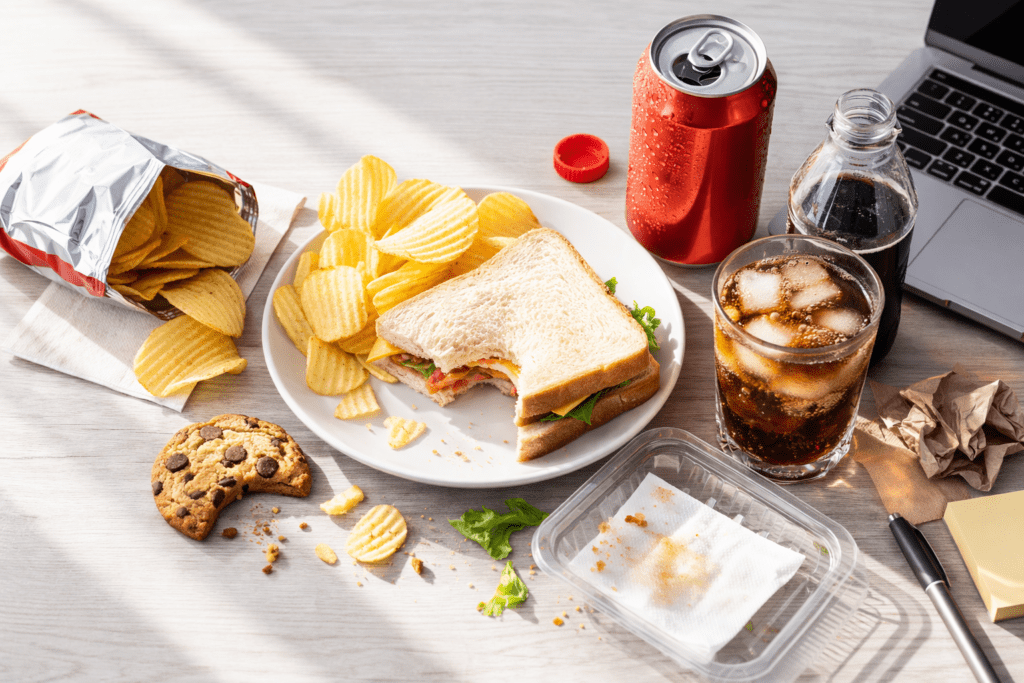
When you eat carbohydrates, your body converts them into glucose, which raises your blood sugar. In response, insulin helps move that glucose into your cells.
If the meal is high in refined carbs or sugar, blood sugar can rise quickly and then drop just as fast. This drop is what often causes fatigue, brain fog, and sleepiness after eating.
This can lead to a rapid drop in blood sugar afterward.
That drop is what many people describe as:
- Feeling sluggish after eating
- Brain fog
- Sudden sleepiness
- Shakiness or irritability
- Strong cravings a few hours later
This pattern is often called a blood sugar crash.
If this happens to you often, it may help to understand why blood sugar crash symptoms happen and how they affect your daily energy.
When glucose falls too quickly, your brain senses low energy availability. Since your brain depends heavily on glucose, you may feel tired or unfocused.
So if you’re asking, why do I get sleepy after eating carbohydrates, the answer often involves this spike-and-crash cycle.
Meals high in:
- White bread
- Sugary drinks
- Pastries
- Large portions of pasta
- Sweet desserts
are more likely to create this effect.
Balanced meals with protein, fiber, and healthy fats slow down glucose absorption and reduce dramatic crashes. If lunch is the meal that causes the biggest crash for you, it helps to look more closely at tired after eating lunch.
The main reasons you feel tired after eating include blood sugar changes, large meals, circadian rhythm dips, and increased digestive workload.
Does eating sugar make you more tired afterward?
Yes, foods high in sugar can cause a rapid spike in blood glucose followed by a sharp drop. This quick rise and fall often leads to a noticeable energy crash, making you feel more tired shortly after eating.
What Happens When Insulin Signals Energy Storage Instead of Alertness
Insulin does more than regulate blood sugar. It also signals your body to store energy.
After you eat, insulin encourages cells to take in glucose. Excess energy may be stored as glycogen in the liver and muscles or as fat for later use.
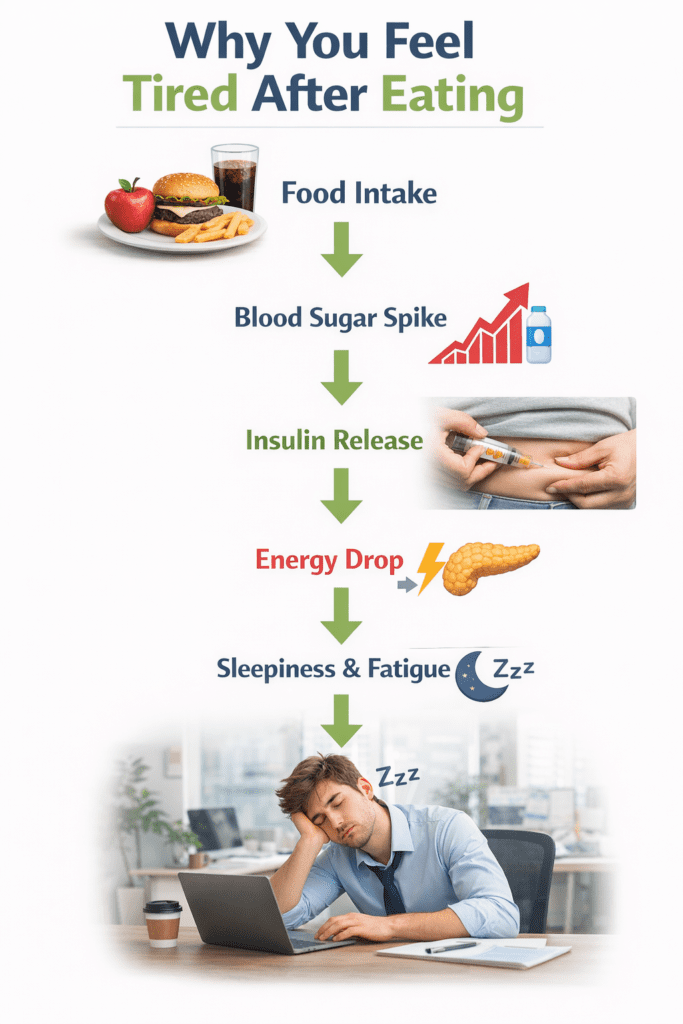
Insulin doesn’t just regulate blood sugar — it also signals your body to store energy. After eating, this “storage mode” can temporarily reduce alertness, especially after larger meals.
In modern life, this can feel inconvenient. You might need to return to work, drive, or focus on tasks. Instead, you’re fighting post-meal fatigue.
If you frequently notice that this pattern happens more often after lunch, it may be because it overlaps with your body’s natural afternoon energy dip.
Insulin is not the enemy. It’s essential for survival. But large swings in insulin can influence how energized or sluggish you feel.
Why Lunch and the Afternoon Make Post-Meal Fatigue Feel Worse
Your body follows a 24-hour internal clock called the circadian rhythm. The NIH explains that circadian rhythms regulate alertness, hormone release, and sleep timing.

This rhythm influences:
- Hormone release
- Body temperature
- Alertness levels
- Digestion
- Sleep pressure
Most people experience a natural alertness dip between 1:00 PM and 3:00 PM.
This is not caused by food alone. It’s a built-in biological pattern.
When this natural dip overlaps with digestion and insulin activity, the effect can feel amplified.
So if you’re wondering why this type of fatigue happens in the afternoon but not at breakfast, circadian timing may be part of the answer.
In the morning:
- Cortisol levels are higher.
- Your body is more alert.
- Glucose tolerance may be slightly better.
In the early afternoon:
- Alertness naturally declines.
- Core body temperature dips slightly.
- Melatonin may rise subtly.
Add a carb-heavy meal to that window, and fatigue becomes more noticeable. This is also why many people deal with a stronger slump later in the day, especially if they are already struggling with afternoon energy crash prevention.
Why do I feel extremely tired after lunch but not in the morning?
This usually happens because lunch occurs during your natural circadian dip in alertness. When digestion is added on top of this low-energy window, the feeling of fatigue becomes stronger compared to earlier in the day.
What Most People Miss About “Food Coma” After Large Meals
Most people think a food coma happens because eating simply “uses energy.” That is only part of the story.
A “food coma” usually happens when several factors combine — a large meal, high refined carbs, poor sleep, and low movement. Together, these amplify the feeling of heaviness and fatigue after eating.
In other words, the meal matters, but the timing, your sleep, your stress level, and your blood sugar response matter too.
The Real Cause of the “Food Coma” Feeling After Large Meals
The term “food coma” describes extreme post-meal sleepiness.
Several factors can combine to create this feeling:
- Large meal size
- High carbohydrate content
- High fat content
- Alcohol consumption
- Dehydration
- Poor sleep the night before

Large meals stretch the stomach significantly. This can activate stretch receptors that signal fullness and relaxation.
High-fat meals take longer to digest, prolonging the rest-and-digest response.
Alcohol suppresses the central nervous system, which can increase drowsiness.
If you already had low sleep or high stress, your nervous system may be more sensitive to these changes.
The next time you ask why this happens after a big dinner, consider the total meal load, not just one ingredient.
At this point, you can see that post-meal fatigue is not caused by a single factor, but by multiple overlapping systems.
What Most People Miss About Protein, Tryptophan, and Sleepiness
You may have heard that turkey makes you sleepy because of tryptophan.
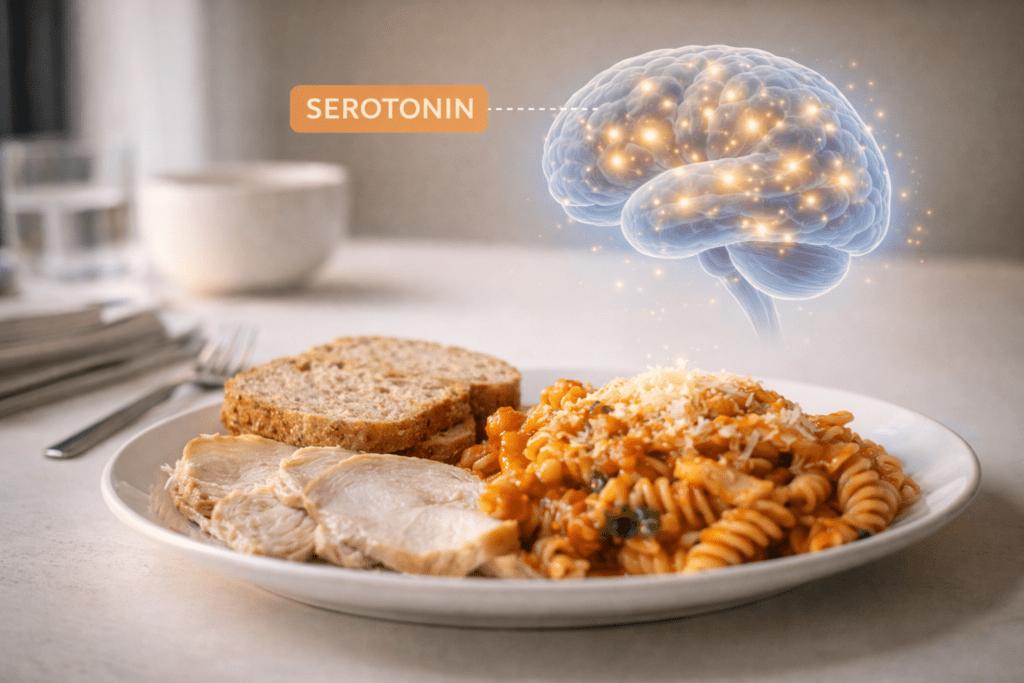
Tryptophan is an amino acid found in protein-rich foods. It’s a precursor to serotonin, which can later convert to melatonin.
However, protein alone usually does not cause strong sleepiness.
Here’s the key detail most people miss:
Carbohydrates increase insulin. Insulin helps clear other amino acids from the bloodstream more than tryptophan. This allows relatively more tryptophan to cross into the brain.
In other words, high-carb meals can indirectly increase serotonin production.
That serotonin increase may contribute to relaxation and mild drowsiness.
So if you’re asking, is it normal to feel tired after a meal with pasta or bread, the answer may involve this serotonin pathway.
Still, this effect is usually mild unless combined with blood sugar swings and circadian timing.
How Dehydration and Electrolyte Imbalance Impact Post-Meal Energy
Hydration status influences circulation and blood pressure.
After eating, blood flow shifts toward the digestive system. If you are already slightly dehydrated, this shift can make you feel lightheaded or tired.
If you’re slightly dehydrated, the shift in blood flow after eating can make fatigue feel stronger. Staying hydrated helps maintain better energy levels throughout the day.
Many people mistake dehydration fatigue for food-related sleepiness.
If you often wonder, this reaction but not hungry, consider whether you drank enough water earlier in the day. Improving simple daily hydration habits for energy can reduce these dips.
Electrolytes like sodium and potassium also help regulate nerve and muscle function. Extremely low levels can contribute to fatigue, although this is less common in healthy adults.
The Impact of Stress Hormones on Why You Feel Tired After Eating
Chronic stress changes how your body handles meals.
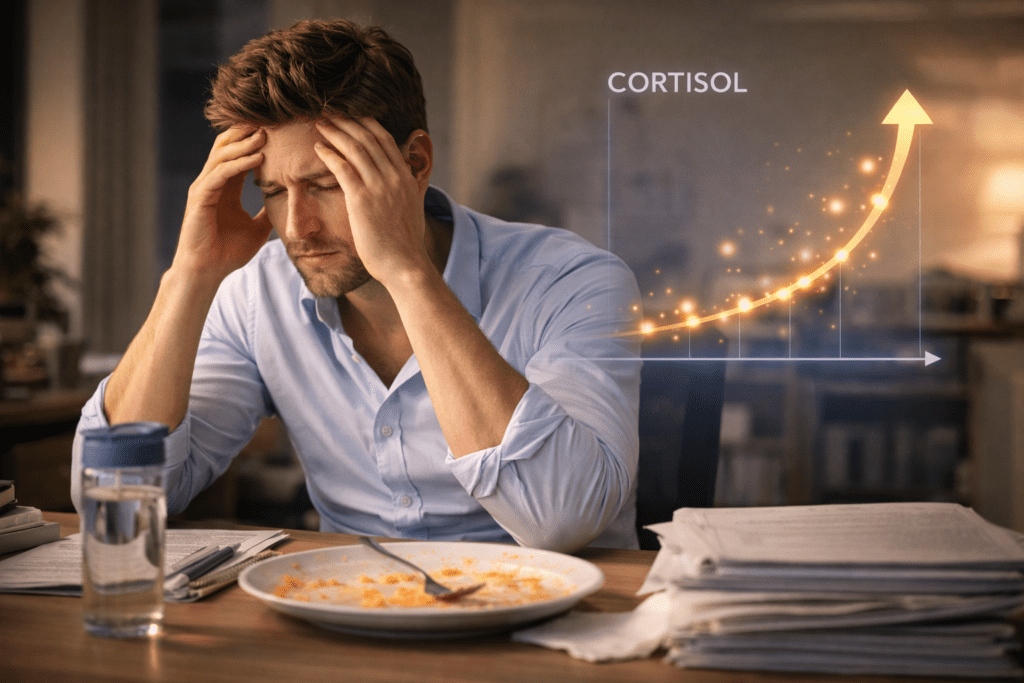
When you’re stressed:
- Cortisol levels rise.
- Blood sugar regulation becomes less stable.
- Insulin sensitivity may decrease.
- Digestion can become less efficient.
High stress can lead to stronger glucose spikes followed by sharper crashes.
Additionally, if you eat quickly under stress, you may swallow more air and overwhelm your digestive system.
Over time, stress can make post-meal fatigue more noticeable.
If you’re constantly thinking, why do I feel tired after eating even small meals, stress physiology may be amplifying your response.
ongoing mental fatigue after work can also make digestion-related tiredness feel worse, as explained in this 15-minute mental reset routine.
What Happens When You Sit Immediately After Eating a Meal
Movement plays a role in glucose control.
When you sit for long periods after eating:
- Muscle contraction is minimal.
- Glucose uptake by muscles slows.
- Blood sugar may remain elevated longer.
Even light activity, like a 10-minute walk, helps muscles absorb glucose more efficiently.

This reduces the size of the insulin spike and may prevent an energy crash later.
Sedentary habits combined with large meals can intensify that sleepy feeling.
How Gut Hormones Influence Post-Meal Sleepiness and Relaxation
Your digestive system doesn’t just break down food. It also releases hormones that affect your brain.
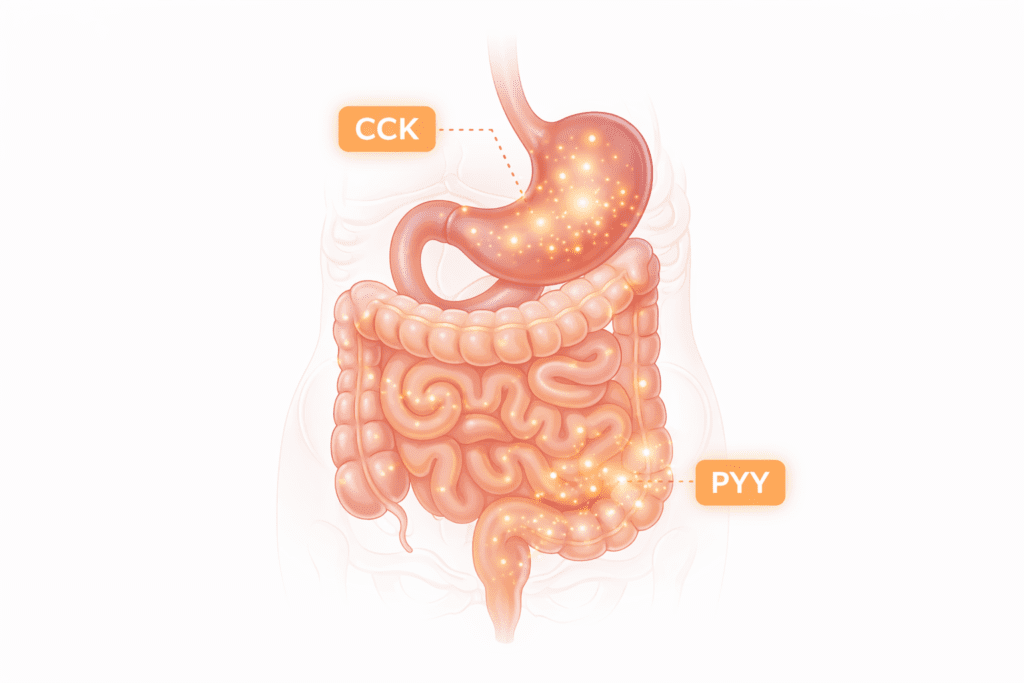
Two key hormones involved after eating are:
- Cholecystokinin (CCK)
- Peptide YY (PYY)
These hormones help regulate appetite and signal fullness. But they also interact with the brain in ways that promote relaxation.
CCK, in particular, has been linked to feelings of calmness and mild sedation after eating.
Large, high-fat meals stimulate more CCK release, which can increase that heavy, relaxed feeling.
The Science Behind Adenosine and Afternoon Energy Pressure
Adenosine builds up in your brain while you are awake. It creates sleep pressure.
The longer you’re awake, the more adenosine accumulates.
After a meal, especially during the afternoon dip, your alertness is already declining. Digestion adds another calming signal on top of existing sleep pressure.
This layering effect explains why lunch often makes people sleepier than breakfast.
Caffeine works by blocking adenosine receptors, which temporarily masks fatigue.
How Poor Sleep Disrupts Blood Sugar and Increases Post-Meal Fatigue
When you don’t sleep well:
- Insulin sensitivity decreases
- Cortisol regulation becomes unstable
- Glucose control becomes less efficient
The same meal that felt fine on a well-rested day may cause a stronger crash after poor sleep. This is one reason why improving sleep quality with evening habits can also reduce how tired you feel after eating.
Does lack of sleep make post-meal fatigue worse?
Yes, poor sleep can make your body less efficient at regulating blood sugar and energy levels. As a result, the same meal may cause stronger fatigue when you are sleep-deprived.
What Happens When You Eat Too Quickly and Overwhelm Digestion
Eating very quickly can:
- Increase calorie intake
- Spike blood sugar rapidly
- Overstretch the stomach
- Delay satiety signals
Slowing down supports gradual glucose absorption and reduces insulin spikes.
Eating too quickly can spike blood sugar faster and overwhelm digestion, increasing the chances of feeling tired shortly after a meal.
Can eating too fast make you feel tired after a meal?
Yes, eating too quickly can overload your digestive system and lead to faster blood sugar spikes. This can increase the likelihood of an energy crash shortly after eating.
Why Highly Processed Foods Increase Energy Instability After Meals
Processed foods are often low in fiber and high in rapidly digestible carbohydrates.
Without fiber, glucose enters the bloodstream quickly. Insulin surges. Blood sugar drops soon after.
Ultra-processed meals may also lack micronutrients needed for efficient energy metabolism.
The Link Between Hormonal Fluctuations and Post-Meal Energy Changes
Hormonal shifts influence insulin sensitivity and metabolism.
For some women, energy levels vary across the menstrual cycle.
Thyroid hormone levels also influence metabolic rate and overall energy.
Persistent, severe fatigue should be discussed with a healthcare professional.
These hormonal changes can directly influence how your body responds to food and energy regulation.
How to Tell the Difference Between Normal Sleepiness and Concerning Fatigue
It’s normal to feel mildly relaxed after eating.
It is not normal to:
- Feel faint
- Experience confusion
- Have blurred vision
- Feel extreme weakness
If symptoms are intense or worsening, seek medical advice.
For some people, this can also show up as feeling weak after eating, especially after large or unbalanced meals.
Now that you understand the causes, the next step is learning how to prevent these energy crashes.
How to Reduce Post-Meal Fatigue and Keep Your Energy Stable
If you often feel tired after eating, small changes in how and what you eat can make a big difference.
The most effective ways to reduce post-meal fatigue include:
- Eat smaller, balanced meals
Large meals increase digestive load and make energy drops more noticeable. Smaller portions help your body process food more efficiently. - Reduce refined carbohydrates
Foods like white bread, sugary snacks, and processed carbs can cause rapid blood sugar spikes followed by crashes that lead to fatigue. - Add protein and fiber to every meal
Protein and fiber slow digestion and help stabilize blood sugar, which reduces sudden drops in energy. - Move lightly after eating
A short walk or light movement helps circulation and prevents blood from pooling, which can reduce that heavy, sluggish feeling. - Stay hydrated
Dehydration can worsen fatigue. Drinking enough water throughout the day supports better circulation and energy balance. - Avoid sitting immediately after meals
Remaining completely still after eating can make fatigue feel stronger. Even small movement helps your body stay more alert. - Pay attention to meal timing
Eating large meals during your natural afternoon energy dip can make post-meal fatigue feel more intense.
In many cases, it’s not just one change that makes the difference, but combining several of these habits together. Even small adjustments can significantly reduce how tired you feel after eating.
Light movement, such as a short walk, combined with balanced meals that include protein and fiber, can quickly help reduce post-meal fatigue and stabilize energy levels.
The Real Reason You Feel Tired After Eating (Real-Life Example)
To see how these changes work in real life, I tested them step by step over four weeks.
My 4-Week Test Results – Post-Meal Fatigue Fixed
| Week | Tiredness After Lunch | Focus Level | Energy Duration | Best Change |
|---|---|---|---|---|
| Before | 8/10 | 4/10 | 1 hour | Heavy carbs |
| Week 1 | 4/10 | 7/10 | 3 hours | Protein + fiber |
| Week 2 | 3/10 | 8/10 | 4+ hours | Post-meal walk |
| Week 4 | 1/10 | 9/10 | All afternoon | Full routine |
Week 1: Switched from white bread/pasta to protein + veggies = 50% less fatigue. Week 4: Complete system eliminated food coma completely.
So why do I feel tired after eating?
The 5 Main Reasons You Feel Tired After Eating:
- Parasympathetic nervous system activation
- Insulin-driven blood sugar changes
- Natural circadian rhythm dip
- Adenosine sleep pressure buildup
- Large meal size and digestion load
Post-meal fatigue is a layered biological response.
This is why feeling tired after a meal is not random, but the result of multiple systems working at the same time.
When meals are large, high in refined carbs, eaten quickly, combined with poor sleep, dehydration, and stress, the effect becomes stronger.
When meals are balanced, moderate in size, eaten mindfully, and followed by light movement, the effect becomes milder and more manageable.
Your body is not broken — it is responding to inputs.
Once you understand those inputs, you can stabilize your energy without relying on constant caffeine or sugar.
When Feeling Tired After Eating Might Not Be Normal
While post-meal fatigue is usually a normal response, there are cases where it may need more attention.
You may want to look closer if:
- You feel unusually tired after very small meals
- Fatigue is combined with dizziness, shakiness, or blurred vision
- The tiredness lasts longer than expected
- You experience this after every meal without exception
In these situations, it may be helpful to speak with a qualified professional to better understand what’s happening.
Frequently Asked Questions
Is it normal to feel tired after eating?
Feeling tired after eating is common, especially after larger meals or meals high in refined carbohydrates. It often happens because digestion, blood sugar changes, and your natural afternoon energy dip combine to temporarily reduce alertness.
Why do I feel sleepy after eating?
Sleepiness after eating usually occurs when digestion, insulin activity, and meal size overlap with your body’s natural rhythm. This effect is often stronger after lunch, when your energy levels are already lower.
Why do I feel weak after eating?
Feeling weak after eating can happen when your blood sugar rises quickly and then drops, especially after meals high in simple carbohydrates. This can create a short-lived energy crash and reduced physical or mental strength.
What is a food coma?
A food coma is a common term for post-meal fatigue, also known as postprandial somnolence. It describes the heavy, sluggish feeling that can occur after eating, especially after large or high-carb meals.
Why does lunch make me more tired than breakfast?
Lunch often happens during your body’s natural afternoon dip in alertness. When digestion is added on top of that, it can amplify fatigue and make you feel more tired compared to earlier meals.
How can I stop feeling tired after eating?
Eating smaller meals, balancing carbohydrates with protein and fiber, staying hydrated, and moving lightly after eating can help reduce post-meal fatigue and stabilize energy levels.
When should I worry about feeling tired after eating?
You may need to pay closer attention if the fatigue feels extreme, happens after small meals, or comes with symptoms like dizziness, shakiness, confusion, or blurred vision. In such cases, it may be worth discussing with a healthcare professional.
About This Article
This article was written using current research in metabolic physiology, circadian biology, and nervous system regulation. It provides educational information about daily energy patterns for healthy adults.
For persistent or severe symptoms, consult a licensed healthcare professional.
