

It’s 2:30 PM. You slept seven or eight hours, your morning went fine, and suddenly your energy drops. Your focus fades, your body feels heavy, and even simple tasks feel harder. This experience is often called an afternoon energy crash, and it usually isn’t caused by laziness or poor sleep. An afternoon energy crash typically happens because of natural body rhythms, blood sugar changes, hydration levels, and daily habits that affect how your energy is used throughout the day.
Understanding why this happens makes it much easier to prevent.
This guide will show you exactly what causes afternoon fatigue and how small daily habit adjustments can keep your energy stable all day.
What Is an Afternoon Energy Crash?
An afternoon energy crash is a temporary drop in physical and mental alertness, usually occurring between 1 PM and 4 PM. It often includes:
- Sleepiness
- Brain fog
- Low motivation
- Slower thinking
- Muscle fatigue
This dip is partly natural, but modern routines often make it worse. Your body runs on predictable biological rhythms. When meals, movement, hydration, and light exposure don’t support those rhythms, your energy drops more dramatically than it should.
The good news is that this pattern is highly fixable.
Why Your Energy Naturally Drops in the Afternoon
Before fixing the problem, it helps to understand what’s happening inside your body. Three systems control most of your daily energy:
- Circadian rhythm
- Blood sugar regulation
- Nervous system balance
When these systems fall out of sync, fatigue appears quickly.
The Body Clock Effect
Your circadian rhythm controls alertness across the day. Most people experience a natural dip in energy in the early afternoon, even after good sleep. This doesn’t mean something is wrong. It simply means your brain temporarily lowers alertness to conserve energy.
However, certain habits can make this dip much stronger than it needs to be. Examples include:
- Sitting too long (Tired After Sitting Too Long)
- Eating large refined-carb lunches
- Drinking too little water
- Working without breaks
- Staying indoors all day
When several of these happen together, the afternoon slowdown becomes a crash.
Blood Sugar Stability and Energy
Food strongly affects afternoon alertness. When you eat a lunch high in refined carbohydrates, your blood sugar rises quickly. Your body responds by releasing insulin, which can cause blood sugar to drop soon afterward. That drop often feels like:
- Sudden tiredness
- Difficulty focusing
- Cravings for sugar or caffeine
Meals that combine protein, fiber, and healthy fats tend to produce more stable energy. This is why two lunches with the same calories can lead to very different afternoons.
The Hidden Role of Hydration
Even mild dehydration can reduce energy levels. Your brain is highly sensitive to fluid balance, and when hydration drops, circulation efficiency and cognitive performance can suffer. Many people drink coffee in the morning but forget water during the day. By early afternoon, fatigue can appear even though the real issue is dehydration, not sleep — according to the CDC’s guidelines on plain water as the healthier choice, drinking water regularly is one of the simplest ways to maintain energy throughout the day.
A Simple Daily System to Prevent Afternoon Fatigue
(Solution Map Structure)
Instead of relying on caffeine or willpower, you can stabilize energy using a few predictable daily habits. These steps work together, not individually.
Step 1: Start the Day With Movement

Morning movement signals your brain to increase alertness. This doesn’t require a workout. Even 5–10 minutes of light movement improves circulation and oxygen delivery — for some quick, effective routines, see 5‑Minute Morning Rituals to Boost Energy Without Coffee.
Examples:
- Walking (5‑Minute Morning Rituals)
- Stretching
- Mobility exercises
- Light bodyweight movements
Movement early in the day helps prevent the afternoon slump later. Your nervous system stays more balanced across the day when mornings include physical activity.
Step 2: Eat a Balanced Lunch

Lunch is often the biggest trigger of afternoon fatigue. A balanced lunch usually includes:
- Protein
- Fiber
- Healthy fats
- Moderate carbohydrates
This slows digestion and stabilizes blood sugar. Example balanced lunch:
- Grilled chicken or beans
- Vegetables
- Brown rice or whole grains
- Olive oil or avocado
Heavy refined-carb meals often lead to sleepiness within one to two hours. Food timing matters just as much as food choice.
Step 3: Take a Midday Movement Break

Sitting for long periods slows circulation and reduces oxygen delivery to muscles and the brain. This contributes directly to fatigue.
A 3–5 minute movement break every hour or two can restore alertness quickly.
Simple options:
- Stand and stretch
- Walk around the room
- Do shoulder rolls
- Climb stairs
Think of movement as turning your energy back on.
Step 4: Use Light to Reset Alertness

Natural light helps regulate alertness signals in the brain. Spending a few minutes near sunlight during the afternoon can improve focus and reduce sleepiness. Even standing near a window helps. Light exposure reminds your brain that the day is still active. This is especially important for people working indoors or remotely — according to the NIH National Heart, Lung, and Blood Institute, your circadian rhythm uses light cues to regulate alertness and sleep-w
Step 5: Hydrate Consistently

Waiting until you feel thirsty is usually too late. Energy stays more stable when hydration is consistent throughout the day. A simple approach:
- Drink water in the morning
- Drink water with lunch
- Drink water mid-afternoon
Hydration affects circulation, temperature regulation, and brain function.
Step 6: Avoid Long Periods of Continuous Work

Mental fatigue builds when the brain works without breaks. Short pauses help reset attention and prevent burnout.
Try this simple rhythm:
- Work for 50 minutes
- Take a 5-minute break
Breaks are not lost productivity — they protect energy.
How Small Habits Combine to Protect Energy
One habit rarely fixes afternoon fatigue by itself. But small habits together create stable energy.
| Habit | Energy Benefit |
|---|---|
| Morning movement | Improves circulation and alertness |
| Balanced lunch | Stabilizes blood sugar |
| Movement breaks | Prevents physical fatigue |
| Hydration | Supports brain performance |
| Light exposure | Maintains circadian alertness |
| Work breaks | Prevents mental exhaustion |
This combination keeps energy from dropping too low.
Common Mistakes That Make Afternoon Fatigue Worse
Many people accidentally create the conditions for an energy crash.
- Skipping Breakfast and Overeating at Lunch: Hunger builds, and lunch becomes heavier, increasing sleepiness. Even a small breakfast can help regulate energy.
- Drinking Coffee Instead of Water: Coffee can temporarily increase alertness, but it does not replace hydration.
- Sitting for Too Many Hours: Reduces circulation and muscle activity. Even short movement breaks help.
- Eating Fast Without Awareness: Eating quickly leads to overeating and sluggish digestion.
- Working Through Fatigue Instead of Resetting: Pushing through tiredness often worsens focus. Short resets restore energy faster.
The Science of Afternoon Fatigue (Simple Explanation)
Energy regulation involves communication between the brain, hormones, and muscles. Three key factors influence afternoon alertness:
- Glucose regulation
- Circadian rhythm signaling
- Nervous system balance
When blood sugar rises and falls quickly, fatigue follows. When the circadian rhythm signals a rest period, alertness drops. When the nervous system stays in “focus mode” too long, mental fatigue appears.
Small daily habits help keep these systems balanced. This is why simple behavior changes often work better than quick fixes.
A Practical Afternoon Energy Checklist
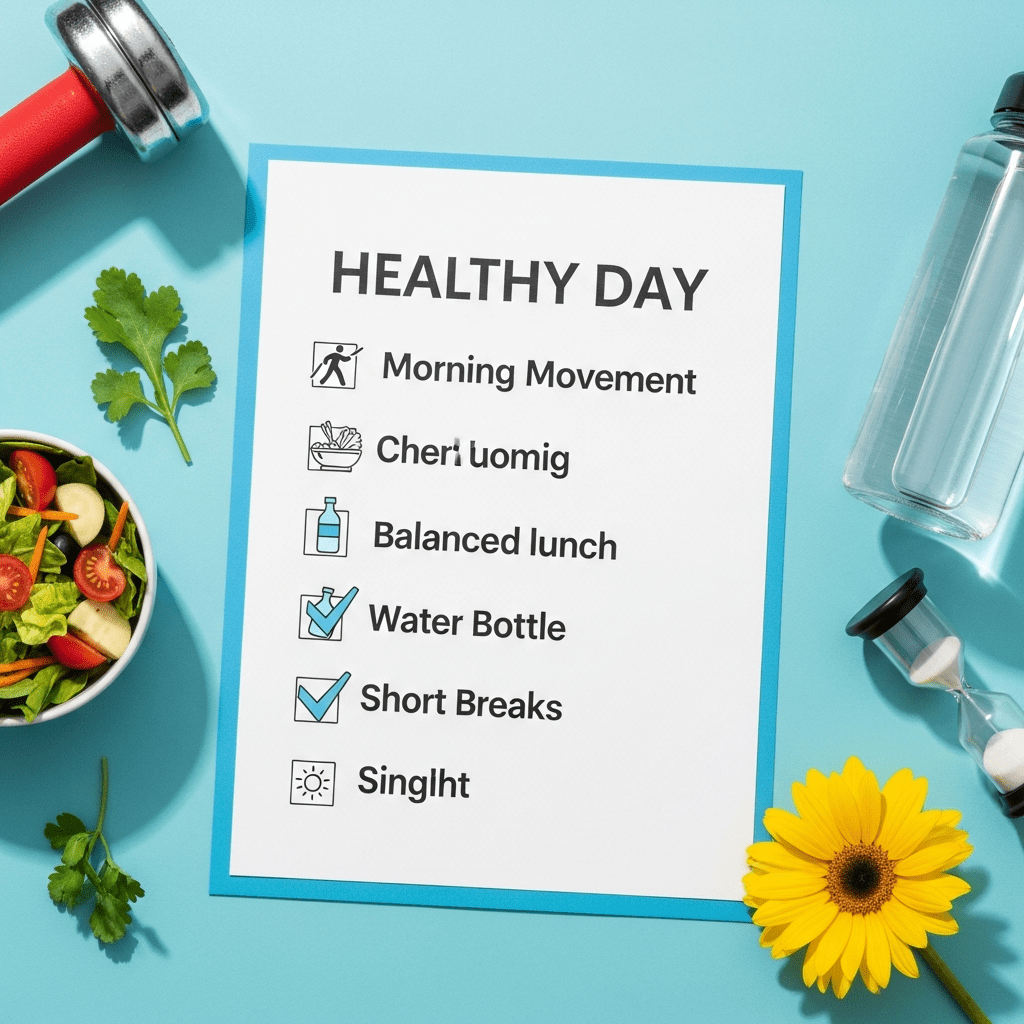
- Move for 5–10 minutes in the morning
- Eat protein and fiber at lunch
- Drink water throughout the day
- Take movement breaks every 1–2 hours
- Get natural light exposure
- Take short mental breaks
- Avoid heavy refined-carb lunches
Consistency matters more than perfection. Even improving a few of these habits can make afternoons easier.
Real-Life Example
Day one: No morning movement, coffee instead of water, fast heavy lunch, sitting for hours, no breaks → Energy drops quickly.
Day two: Short morning walk, balanced lunch, water throughout the day, standing breaks, sunlight exposure → Energy stays steady.
The difference isn’t motivation — it’s daily habits.
Why Energy Management Is a Habit Skill
Daily routines shape energy patterns. Energy management works like any habit: small changes, repeated consistently, built into normal routines. You don’t need perfect discipline, just predictable systems.
Building a Sustainable Routine
Start with one habit:
- Drinking water regularly
- Taking movement breaks
- Improving lunch balance
Once that habit feels automatic, add another. Energy improves step by step.
The Long-Term Impact of Stable Energy
When afternoon fatigue improves, several things become easier:
- Focus
- Mood
- Productivity
- Exercise consistency
- Evening relaxation
- Sleep quality
Energy stability affects the entire day, not just the afternoon. Small daytime habits matter.
Final Thoughts

An afternoon energy crash is not a personal weakness or a sign of poor sleep. It’s usually the result of how daily habits interact with natural body rhythms.
When hydration, movement, food, light, and breaks support your body’s energy systems, afternoons feel completely different. Instead of pushing through fatigue, you can prevent it. Stable energy is built through small, repeatable routines — and those routines can start today
FAQ / People Also Ask
1. What causes an afternoon energy crash?
An afternoon energy crash is usually caused by a combination of natural circadian rhythms, drops in blood sugar after meals, dehydration, long periods of sitting, and lack of light exposure. Small daily habit adjustments like balanced meals, short movement breaks, hydration, and natural light can prevent these energy dips.
2. How long does an afternoon slump last?
Typically, an afternoon energy slump lasts anywhere from 30 minutes to two hours, depending on your diet, hydration, activity levels, and sleep. Following consistent daily routines with balanced meals, hydration, and short movement breaks can reduce both the intensity and duration of these dips.
3. Can drinking coffee fix afternoon fatigue?
Coffee can temporarily boost alertness, but it does not address the underlying causes of fatigue such as dehydration, poor meal choices, or lack of movement. Relying solely on caffeine often leads to a temporary spike followed by a crash. Water, balanced meals, and movement breaks provide more stable energy.
4. What foods help prevent an afternoon energy drop?
Foods high in protein, fiber, and healthy fats help maintain stable blood sugar levels, preventing sudden energy dips. Examples include grilled chicken, beans, vegetables, whole grains, nuts, and avocado. Avoid heavy refined-carbohydrate meals for lunch, which can cause blood sugar spikes and subsequent crashes.
5. How can movement help with afternoon fatigue?
Short, frequent movement breaks increase circulation and oxygen delivery to the brain and muscles, boosting alertness. Even 3–5 minutes every hour or two — like stretching, walking, or climbing stairs — can significantly reduce fatigue and help maintain focus throughout the afternoon.
6. Does light exposure really affect energy levels?
Yes. Natural light regulates your circadian rhythm, which signals your brain when to be alert or sleepy. Spending a few minutes near sunlight in the afternoon or working near a bright window helps maintain focus and prevent drowsiness, especially for people who spend most of their day indoors.
7. How does hydration affect energy?
Even mild dehydration can reduce circulation and cognitive performance, making you feel sluggish. Drinking water consistently throughout the day, not just when thirsty, supports brain function, circulation, and overall energy levels. Aim for water in the morning, with lunch, and mid-afternoon for optimal alertness.
8. Are short work breaks really effective?
Yes. Working continuously without breaks leads to mental fatigue. Following a rhythm like 50 minutes of work followed by a 5-minute break restores focus, reduces stress, and prevents burnout. Breaks are not lost productivity — they protect and maintain energy throughout the day.
This article is for informational purposes only and is not a substitute for professional medical advice, diagnosis, or treatment. Always seek the guidance of a qualified healthcare provider with any questions you may have regarding a medical condition or before making changes to your diet, exercise, or lifestyle. Results may vary from person to person.
Take Control of Your Energy Today
Small, consistent habits make a huge difference. Start with one daily routine — like drinking water regularly, taking movement breaks, or improving lunch choices — and gradually build a system that keeps your energy steady all day.
Start Your Energy Routine Now