
Quick Answer: You feel tired after a shower because hot water lowers blood pressure and shifts blood flow away from the brain. This temporary change reduces alertness, making you feel sleepy or low-energy right after showering.
You step out of the shower expecting to feel refreshed… but instead, your energy crashes. You feel heavy, sleepy, or even slightly dizzy — and it makes no sense.
This happens because of how heat affects your circulation, body temperature, and nervous system. When these systems shift at the same time, your body can temporarily move into a more relaxed, low-energy state.
In this guide, you’ll understand exactly why this happens and what simple adjustments can help you stay energized instead of drained.
Most people feel tired after a shower because:
- Warm water lowers blood pressure
- Blood flow shifts away from the brain
- Your body enters a relaxed state
- Body temperature drops after showering
- Heat triggers the body’s cooling response
Why Do You Feel Tired After a Shower?
After a shower, your body rapidly moves from a heated state to a cooling phase. During this shift, multiple internal systems adjust at once, which can briefly reduce alertness.
This short transition may leave you feeling slightly heavy, slower, or less focused for a few minutes before your energy returns to normal.
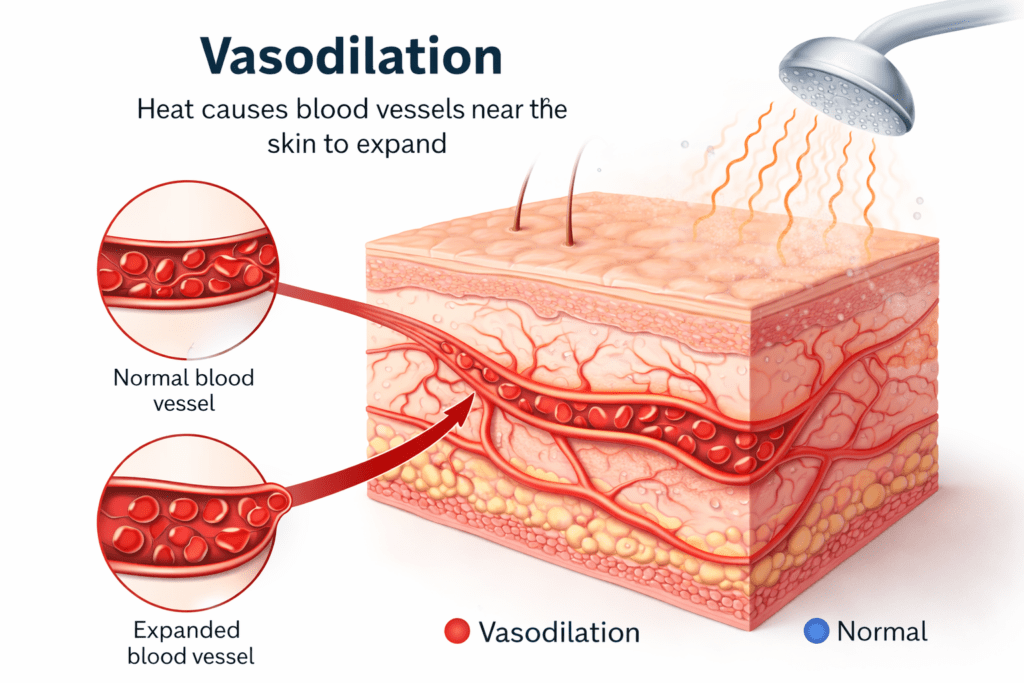
When warm or hot water hits your skin, your body immediately activates its thermoregulation system.
To prevent overheating, your body starts cooling itself in several ways.
The most important change happens in your blood vessels.
Heat signals the body to widen blood vessels near the skin surface. This process is called vasodilation.
Vasodilation allows warm blood to move closer to the skin, where heat can escape into the surrounding air.
But this shift in circulation also creates a temporary effect on your cardiovascular system.
When blood vessels expand, blood pressure may drop slightly while circulation redistributes toward the skin. The heart then adjusts its pumping rhythm to maintain balance.
Because of this redistribution, less blood is briefly pushed upward toward the brain.
The difference is small, but the brain is extremely sensitive to changes in oxygen and blood flow.
That is why some people notice symptoms such as mild dizziness, heaviness in the limbs, or mental fog after a shower. You can explore this further in why you feel dizzy after a hot shower.
These symptoms usually disappear once the body restores normal circulation.
Heat-related blood vessel expansion is a well-known physiological response explained by the cardiovascular system’s reaction to temperature changes according to the Mayo Clinic explanation of vasodilation.
Can low blood pressure make you feel tired after a shower?
Yes. Hot water can slightly lower blood pressure by expanding blood vessels. This can reduce blood flow to the brain for a short time, leading to temporary tiredness, lightheadedness, or a heavy feeling after showering.
How Body Temperature Changes Can Trigger Sleepiness After Showering
Another important factor involves body temperature fluctuations.
Your brain closely links temperature with sleep signals.
In the evening, the body naturally prepares for sleep by lowering core temperature slightly. This drop helps trigger the release of the hormone melatonin, which promotes sleepiness.
A hot shower can unintentionally mimic this process.
First, hot water raises skin temperature and slightly increases overall body heat.
Then, when you step out of the shower, your body begins cooling rapidly.
The natural temperature drop that happens before bedtime.
The brain may interpret this signal as a cue that it is time to relax or sleep, a response linked to how the body regulates sleep cycles and temperature, as explained by Sleep Foundation.
As a result, some people feel sleepy after a shower. This is explained in more detail in why hot showers make you sleepy.
Research examining warm bathing and thermoregulation shows that increasing skin temperature before cooling can influence sleepiness and circadian signals, as discussed in this study summarized on ScienceDaily.
This effect tends to be strongest when showers are very hot, longer than ten minutes, or taken late in the evening.
Why do hot showers make you feel sleepy instead of refreshed?
Hot showers trigger a cooling process after you step out. This drop in body temperature mimics natural sleep signals, which can make your brain shift toward a more relaxed and sleepy state.
The Hidden Role of Your Nervous System After a Hot Shower
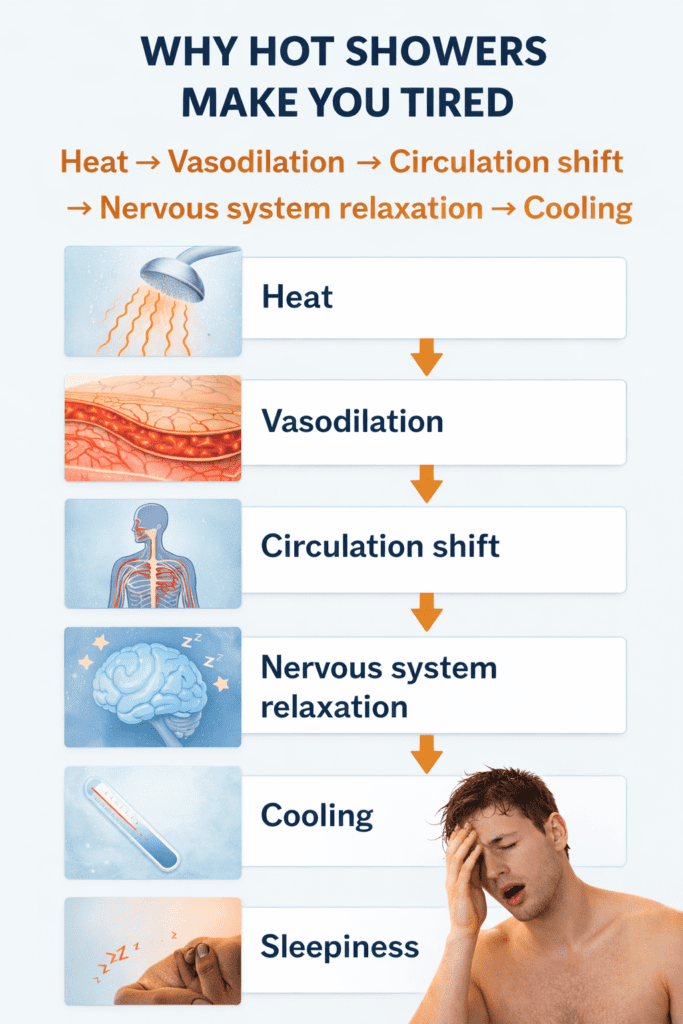
Another overlooked reason people feel tired after a shower involves the autonomic nervous system.
Your autonomic nervous system has two main modes.
The sympathetic system drives alertness, action, and energy.
The parasympathetic system promotes relaxation, digestion, and recovery.
Hot showers stimulate the parasympathetic response.
Warm water on the skin activates sensory nerves that send calming signals to the brain. If hot showers leave you sleepy or heavy, cold water can create the opposite response by triggering a short alertness signal, which is explained in cold shower benefits.
These signals encourage the body to slow down and relax.
This shift produces noticeable physical effects.
Heart rate may decrease slightly. Muscles relax. Breathing becomes slower.
At the same time, the stress hormone cortisol begins to decline.
Cortisol normally helps maintain alertness, especially in the morning. When its activity drops, the body can shift toward a calmer state.
That is why some people feel extremely relaxed—or even sleepy—after a hot shower.
For individuals who already feel slightly fatigued, this relaxation response can push them into a deeper sense of tiredness.
Do hot showers relax your nervous system?
Yes. Warm water activates the parasympathetic nervous system, which promotes relaxation. This can slow your heart rate, reduce stress signals, and make you feel calm or even sleepy after a shower.
What Most People Miss About Steam, Ventilation, and Post-Shower Fatigue
Steam can also make post-shower fatigue feel stronger, especially in a small bathroom with poor ventilation.
Warm, humid air makes it harder for the body to release heat efficiently. That means your cooling system stays active longer, even after the shower ends.
When heat exposure, steam, and poor airflow happen together, the body may continue pushing blood toward the skin and maintaining a relaxed state for longer than expected.
This does not usually cause a major physical problem, but it can make the room feel heavy, stuffy, and less refreshing. For some people, that adds to the sleepy or drained feeling after showering.
Good ventilation helps heat and humidity leave the room faster, which may reduce that lingering sluggish feeling.
Key factors that can make post-shower fatigue worse:
- Heat exposure triggers relaxation signals
- Long or very hot showers intensify the effect
- Poor ventilation keeps the body overheated longer
- Mild dehydration amplifies the effect
- Standing still for too long increases blood pooling
The Link Between Time of Day and Feeling Tired After Showering
The time you shower can significantly change how your body reacts.
Morning showers often feel energizing because cortisol levels are naturally higher early in the day. Cortisol helps maintain alertness and supports the sympathetic nervous system.
But evening showers happen when cortisol levels are already falling. In that situation, the relaxation effects of warm water combine with the body’s natural sleep preparation process.
This makes evening showers far more likely to cause sleepiness after showering. That is one reason warm showers are often used as part of a bedtime routine.
Morning showers can sometimes feel more draining if the water is very hot and the body is still adjusting to waking up. People who notice similar timing-related energy drops may also recognize the same pattern in why do I feel tired after taking a nap or exhausted at 3pm even after 8 hours sleep.
How Dehydration, Timing, and Daily Habits Make Shower Fatigue Worse
Daily habits can make post-shower fatigue feel stronger.
For example, someone who is dehydrated, has not eaten for hours, or takes a very hot shower first thing in the morning may be more sensitive to circulation changes.
Even mild dehydration reduces blood volume slightly. That makes it harder for the body to maintain stable blood pressure during heat exposure, which can increase feelings of weakness, dizziness, or fatigue after showering. Building better hydration habits through simple daily hydration habits for energy or a hydration routine for busy adults daily may help reduce that effect.
Timing matters too. Morning showers can feel more draining if the body is still adjusting to waking up, while evening showers are more likely to trigger sleepiness because the body is already moving toward a rest state.
Standing still for long periods can also make the effect worse by slowing blood return from the legs. Small movements during the shower and better hydration throughout the day can reduce the intensity of this response. If you notice similar circulation-related sluggishness in daily life, it may also help to read why sitting too long makes you tired and 3 minute posture reset desk workers.
Test Results: How Different Factors Affect Post-Shower Fatigue
| Factor | Common Effect After Shower | Fatigue Risk |
|---|---|---|
| Dehydration before showering | More dizziness or weakness | Medium |
| Shower longer than 10 minutes | Stronger relaxation and energy drop | Medium |
| Moderate water temperature | More balanced response | Low |
| Standing still for too long | More blood pooling in the legs | Medium |
| Showering right after a heavy meal | May increase tiredness | Medium |
| Good bathroom ventilation | Faster recovery after showering | Low |
A Simple Severity Scale for Post-Shower Fatigue
Not all fatigue after showering is the same.
You can think of it in three levels.
Mild fatigue includes slight sleepiness, relaxed muscles, or a temporary drop in alertness.
Moderate fatigue includes noticeable tiredness, mental fog, or mild dizziness. This often occurs after very hot or long showers.
Strong fatigue may include significant weakness, prolonged dizziness, or difficulty standing. This level is uncommon and usually happens when several factors combine, such as dehydration, prolonged heat exposure, or underlying circulation sensitivity.
Why Very Cold Showers Do Not Always Boost Energy
Many people believe cold showers always increase energy.
Cold water can indeed activate the sympathetic nervous system and increase alertness.
However, sudden cold exposure can also cause the body to constrict blood vessels rapidly and increase heart rate.
For some individuals, especially those who already feel fatigued, this shock response can briefly feel exhausting rather than energizing.
This is why a moderate water temperature is often the most balanced approach for maintaining alertness.
Some people notice a similar mismatch between temperature and energy in other settings too, especially in does cold weather make you tired and tired after being in the sun.
How to Stay Energized After a Shower
Small changes in your shower routine can make a noticeable difference in how you feel afterward.
If you often feel tired after showering, it usually comes down to how heat, hydration, and circulation affect your body. The goal is not to remove the relaxing effect of a shower, but to keep your energy levels stable.
- Keep your shower between 5 and 10 minutes to avoid prolonged heat exposure that can lower alertness
- Use warm or lukewarm water instead of very hot water to reduce sudden drops in blood pressure
- Drink a glass of water before or after your shower to support proper circulation
- Avoid standing completely still — slight movement can help prevent blood pooling in the legs
- If possible, avoid showering immediately after a heavy meal, as your body is already using energy for digestion
These small adjustments help your body maintain balance, allowing you to feel refreshed without the heavy or sleepy feeling that sometimes follows a shower.
Comparison: How Different Shower Temperatures Affect Energy Levels
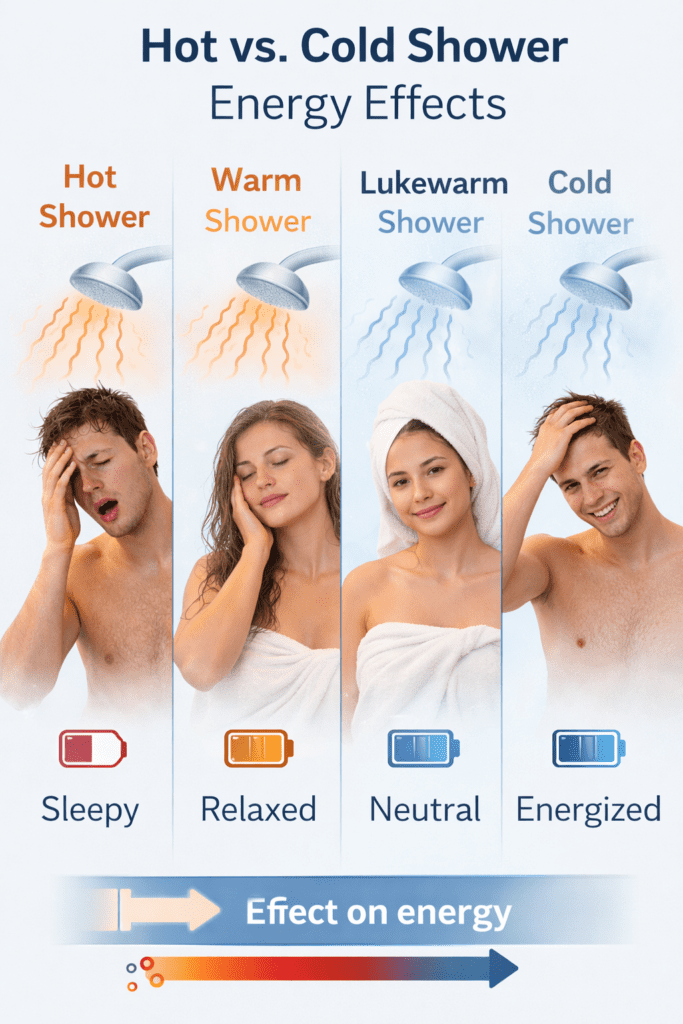
Different shower temperatures can affect circulation and energy levels in different ways. The comparison below shows how the body typically responds to each type of shower.
| Shower Type | Body Response | Energy Effect | Best Time to Use |
|---|---|---|---|
| Very hot shower | Strong vasodilation and heat buildup | May cause fatigue or dizziness | Evening |
| Warm shower | Moderate circulation shift | Mild relaxation | Morning or evening |
| Cold shower | Rapid blood vessel constriction | May increase alertness briefly | Morning |
| Lukewarm shower | Stable temperature balance | Lowest chance of fatigue | Any time |
When Should You Be Concerned?
Feeling tired after a shower is usually normal. However, in some cases, it may be worth paying closer attention.
If you experience strong dizziness, fainting, or fatigue that lasts longer than usual, it could indicate that your body is not responding well to heat or circulation changes.
In these situations, it’s best to adjust your shower routine and seek medical advice if the symptoms continue.
Why Water Temperature Matters More Than Most People Realize
Shower temperature plays a major role in how the body responds after bathing.
Extremely hot water encourages blood vessels to widen and promotes relaxation signals in the nervous system.
Moderately warm water tends to produce fewer circulation shifts and is less likely to cause fatigue afterward.
A Realistic Morning Scenario That Explains Why This Happens
Imagine someone who wakes up after a slightly restless night.
They grab their phone, check messages, skip breakfast, and step into a very hot morning shower.
Because they are already slightly dehydrated and cortisol levels are still stabilizing, the heat triggers strong vasodilation.
Circulation shifts toward the skin.
When they step out of the shower into cooler air, body temperature drops quickly.
Within minutes they feel heavy, foggy, and strangely sleepy.
This experience is extremely common and explains why many people report feeling tired after a hot shower in the morning.
Why Post-Shower Fatigue Usually Fades Within Minutes
Post-shower fatigue usually fades quickly because your body restores balance after the heat exposure ends. Blood vessels return to normal, circulation stabilizes, and body temperature adjusts back to baseline — allowing your alertness to recover.
What feels like sudden tiredness is often just a temporary response to heat, circulation shifts, and rapid cooling. Once these systems reset, your energy levels typically return within minutes.
If this happens often, simple changes like using slightly cooler water, shortening very hot showers, and staying hydrated can help you feel more refreshed instead of drained.
Still dealing with low energy during the day?
If post-shower fatigue happens often, small daily habits may make a bigger difference than you think. Better hydration, steadier meals, and simple movement breaks can all help support more consistent energy.
Start here with simple daily hydration habits for energy, a hydration routine for busy adults, midday energy boost without coffee, and daily habits for energy.
Evidence-based note: This article is based on well-established physiological principles related to thermoregulation, blood circulation, and nervous system responses. It is designed for general educational purposes and reflects how the body typically reacts to heat exposure during showering.
Common Questions About Feeling Tired After a Shower
Why do hot showers sometimes make you feel dizzy instead of relaxed?
Hot showers can cause blood vessels to expand quickly, which may lower blood pressure slightly. This sudden shift in circulation can reduce blood flow to the brain for a short moment, leading to lightheadedness or dizziness instead of relaxation.
Is it normal to feel tired after a shower?
Yes, it’s completely normal. Hot water relaxes the body and can temporarily reduce alertness, leading to a brief feeling of tiredness or sleepiness after showering.
Can dehydration make shower fatigue worse?
Yes, dehydration can make the effects stronger. When your body lacks enough fluids, it becomes harder to maintain stable circulation during heat exposure, increasing the chance of feeling weak or tired after a shower.
How can I avoid feeling tired after a shower?
You can reduce post-shower fatigue by using warm water instead of very hot water, keeping your shower short, staying hydrated, and avoiding long periods of standing still. Small adjustments in your routine can help maintain your energy levels.
Why do evening showers make you sleepier than morning showers?
In the evening, your body is already preparing for rest by lowering core temperature and reducing alertness signals. A warm shower enhances this process, making you feel more relaxed and sleepy compared to the morning.
Can changing shower temperature help reduce fatigue?
Yes, using warm or lukewarm water instead of very hot water can reduce the intensity of circulation changes and help maintain better alertness after showering.
