
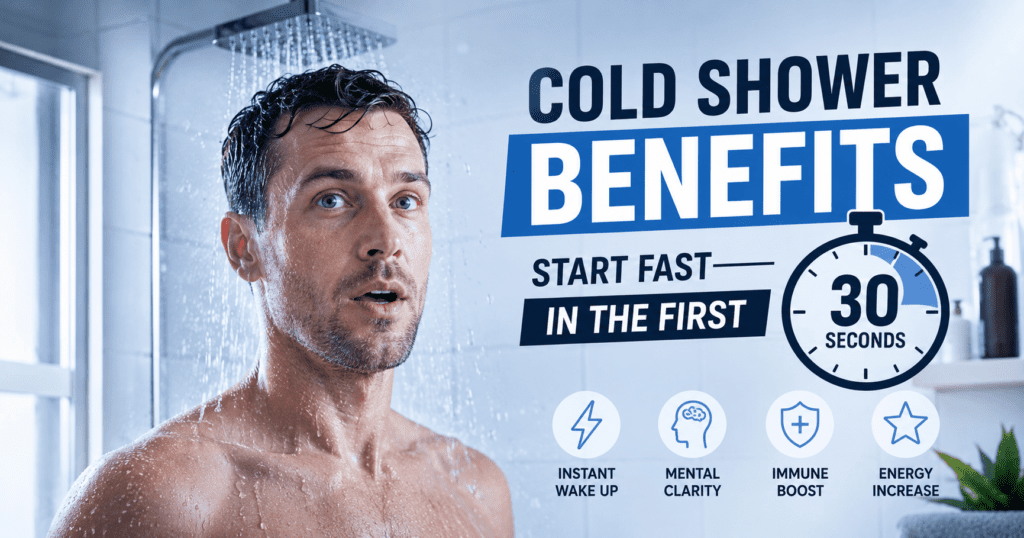
You turn the shower handle colder than usual, step under the water, and your whole body reacts before you can think. Your breath catches. Your shoulders tighten. Your eyes open wider. Within seconds, you feel more awake than you did with warm water.
Cold shower benefits start with a fast cold-shock response. Brief cold water exposure can sharpen breathing, tighten blood vessels, raise alertness, and make your nervous system feel more awake almost immediately. That is why a cold shower may feel energizing before any longer-term benefit appears.
Cold shower benefits are the possible effects of brief cold water exposure, including faster alertness, improved circulation response, reduced post-workout soreness, temporary skin and hair support, and a mild metabolism response. Most benefits begin with the body’s cold-shock reaction, which activates breathing, blood vessels, heart rate, and nervous system alertness.
The main cold shower benefits may include:
- Faster alertness after the water first hits your skin
- Better morning focus from a short nervous-system response
- Improved circulation response as blood vessels tighten and adjust
- Less post-workout soreness for some people after hard activity
- A short-term mood lift from endorphin and norepinephrine activity
- Temporary skin and hair support by avoiding very hot water
- Mild metabolism activation as the body works to stay warm
- Possible immune support, although evidence is still mixed
Table of Contents
What Are the Main Benefits of Cold Showers?
Cold shower benefits may include faster alertness, better morning focus, improved circulation response, less post-workout soreness, a short-term mood lift, temporary skin and hair support, mild metabolism activation, and possible immune support. Most effects begin with the body’s cold-shock response.
This makes the topic easier to understand. The benefits are not separate random effects. They mostly come from one fast chain: cold signal, nervous-system activation, circulation adjustment, and a brief rise in alertness. That is the angle this article uses to explain cold shower benefits without turning them into hype.
What Happens When Cold Water Hits Your Body So Fast
The first thing cold water does is surprise your skin and pull your attention into the moment quickly.
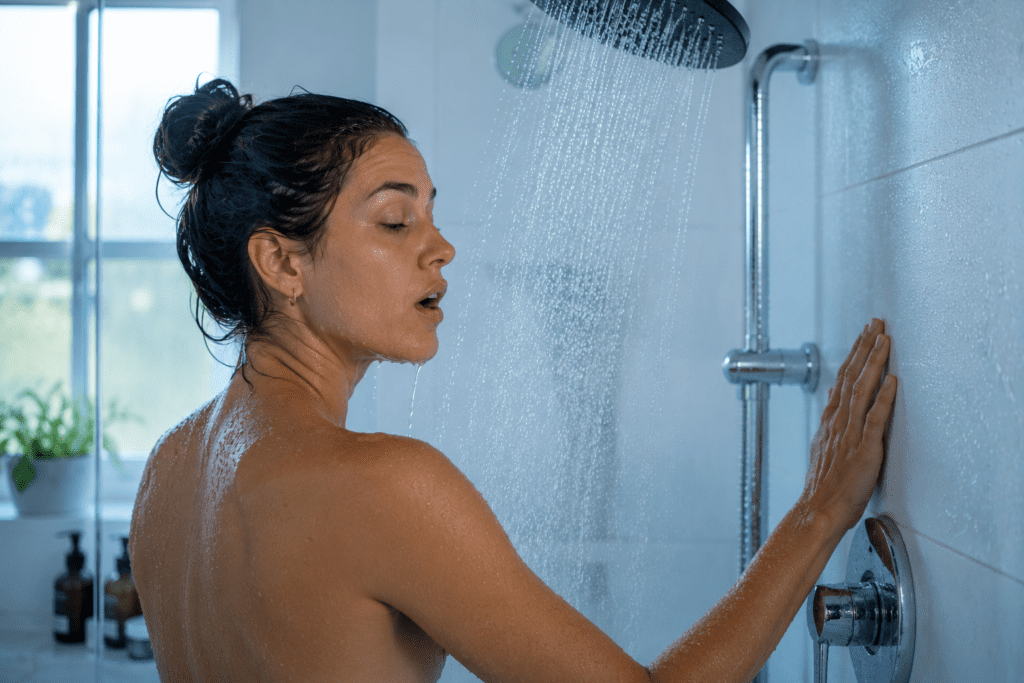
Your skin has temperature sensors that detect cold very quickly. When cold water hits your shoulders, chest, back, or face, those sensors send a strong signal to your nervous system. Your body reads that signal as sudden environmental stress.
In the first few seconds, your breathing may become sharper. You may gasp or take shorter breaths. Your muscles may tense. Your heart rate may rise. Your mind may feel instantly pulled into the present moment.
This is the cold-shock response.
In the first 30 seconds of a cold shower, your body may respond with:
- Sharper breathing
- A faster heart rate
- Tighter surface blood vessels
- More alert nervous-system activity
- A stronger sense of focus
- A quick shift away from morning grogginess
- A temporary rise in cold-stress response signals
What Happens After 30 Seconds in a Cold Shower?
After about 30 seconds in a cold shower, your breathing may sharpen, your heart rate may rise, and your blood vessels may tighten. This short cold-shock response activates the nervous system and can make you feel more awake, focused, and present.
It is the body’s automatic reaction to sudden cold exposure. The sympathetic nervous system becomes more active. This is the branch of the nervous system that supports stress, action, and alertness.
That is why a cold shower can wake you up so quickly. It does not gently relax you. It demands attention.
At the same time, blood vessels near the skin tighten. This process is called vasoconstriction. Your body does this to protect core temperature and limit heat loss. Blood shifts more toward the center of the body, where vital organs need stable warmth.
This is very different from what happens when hot showers make you sleepy, because warm water usually pushes the body toward relaxation instead of fast alertness. Warm water tends to widen blood vessels and relax the body. If warm showers leave you unusually heavy or drained, the opposite heat-based response is explained in why you feel tired after a shower.
The Real Benefit Starts When You Control Your Breathing
The most powerful cold shower benefit may not be the cold water itself. It may be what happens when you stay calm inside the shock.
In the first few seconds, your body wants to gasp, tense up, and escape.
But when you slow your breathing, relax your shoulders, and stay steady, you teach your nervous system to move from panic to control.
That is why a short cold shower can feel like a mental reset, not just a physical wake-up.

The Science Behind Cold Shower Benefits and Fast Alertness
The most noticeable cold shower benefit is usually alertness.
First, your breathing changes. Cold water often makes you breathe faster or more forcefully. This can make you feel suddenly awake because breathing is closely tied to the nervous system.
Second, your heart and circulation respond. Cold water tells your body to protect internal temperature. Blood vessels near the skin tighten, and your cardiovascular system adjusts to keep blood moving where it matters most.
Third, chemical messengers may shift. Cold exposure can increase activity related to norepinephrine, adrenaline, and endorphins. These are involved in alertness, attention, discomfort control, and mood. That does not mean a cold shower is a treatment for mood or energy problems. It means your body has a real, measurable alerting response to cold water.
Are Cold Showers Good for You?
Cold showers may be good for many healthy people when they are short, controlled, and used safely. They may support alertness, circulation response, post-workout comfort, and skin hydration. However, they are not a cure-all and may not be right for people with heart or circulation concerns.
But there is a limit. The alert feeling is not the same as deep, lasting energy. Cold water can wake up your system, but it cannot replace sleep, food, hydration, movement, or recovery.
Why Cold Showers May Improve Focus Without Giving Real Energy
One counterintuitive truth about cold showers is that they can make you feel energized without actually adding energy.
Energy and alertness are not the same thing.

Real energy comes from sleep quality, stable blood sugar, oxygen delivery, hydration, and daily recovery. If your energy keeps dropping later in the day, cold water may only mask the pattern temporarily. The deeper causes are often closer to why you feel tired in the afternoon.
This is one of the most useful cold shower benefits when understood correctly. If you are groggy in the morning, stuck in a lazy loop, or struggling to start your day, a short cold finish may help you shift state.
But if you use cold showers to push through chronic exhaustion, the effect can backfire. You may feel alert for a short time, then crash because the deeper issue was still there.
A cold shower may make you feel awake fast. For longer-lasting daytime energy, it helps to build habits beyond cold water, such as the small resets explained in how to boost daytime energy.
Want steadier energy after the cold-shower boost fades?
A cold shower can wake you up fast, but daily energy usually depends on small habits that keep your body from crashing later.
Read the daytime energy guideThe best use is not forcing yourself through long cold showers. It is using a short, controlled cold exposure as a signal to wake up, reset, and begin the next action.
How Cold Shower Benefits Affect Circulation and Muscle Recovery
Cold water changes circulation fast.
When cold water touches the skin, blood vessels near the surface tighten. This helps the body reduce heat loss. It also shifts circulation toward the core. After the cold exposure ends and the body warms again, blood vessels can relax and blood flow changes again.

This tightening and relaxing pattern is one reason people connect cold shower benefits with circulation. This is also why temperature-based circulation changes should be separated from dizziness after a hot shower, which involves heat, blood pressure, and post-shower stabilization.
Cold water may also help some people after exercise. After a hard workout, muscles can feel sore because of small tissue stress, swelling, and normal recovery processes. Cold exposure may reduce the sensation of soreness for some people by cooling tissues, tightening blood vessels, and slowing pain signals.
That does not mean cold showers are equal to ice baths. A shower exposes the body to cold water, but the temperature and coverage are usually less consistent than full cold water immersion. A shower is easier, cheaper, and more realistic for most people, but it is also less controlled.
Here is a simple way to compare the most common cold-water options:
| Cold Water Method | What It Usually Does | Best Use | Main Limitation |
|---|---|---|---|
| Cold shower | Creates a quick alertness response and cools the skin | Morning focus, post-workout refresh, short reset | Less controlled than full immersion |
| Ice bath | Surrounds more of the body with cold water | Athletic recovery and stronger cold exposure | Harder to tolerate and not needed for most people |
| Cool rinse | Gently lowers skin temperature at the end of a shower | Beginners, skin comfort, quick wake-up | Milder effect than a full cold shower |
| Contrast shower | Alternates warm and cold water | Easier adaptation and circulation response | Can feel uncomfortable if done too aggressively |
For everyday readers, the simple answer is this: cold showers may help you feel less sore or more refreshed after activity, but they should not be treated as a guaranteed recovery tool.
Can Cold Showers Help Sore Muscles?
Cold showers may help some people feel less sore after hard activity by cooling the body, tightening blood vessels, and reducing the sensation of discomfort. They are not as controlled as ice baths, but they may still feel useful after workouts, heat, sweating, or general muscle heaviness.
What Most People Miss About Metabolism and Weight Loss Claims
Metabolism is one of the most hyped cold shower benefits.
The idea sounds exciting. Cold water makes your body work harder to stay warm, so it burns more energy. That part is true in a basic sense. When the body is cold, it must protect core temperature. That requires energy.
But this is where many people get misled.
A short cold shower is not a weight-loss plan. If the goal is steadier energy rather than a quick jolt, daily routines like simple daily habits for energy usually matter more than one cold shower.
Do Cold Showers Help With Weight Loss?
Cold showers may briefly increase energy use because the body works to stay warm, but they should not be treated as a weight-loss method. Sleep, food choices, movement, protein intake, and daily consistency matter much more for body weight than a short cold shower.
The real benefit is not “cold showers melt fat.”
The real benefit is that cold showers may train your body to handle a small controlled stressor. They may help you build a routine, start the morning with intention, and feel more alert. Those habits can support a healthier lifestyle, but the shower itself should not be sold as a shortcut.
If someone takes cold showers for one week and expects major weight loss, they will likely be disappointed. If they use a cold shower as a morning activation habit, they may get more value from it.
The Hidden Reason Cold Showers May Support Skin and Hair
Cold showers may help skin and hair in a simple way: they are less harsh than hot water.
Hot water can strip natural oils from the skin and scalp. That can leave some people feeling dry, tight, itchy, or irritated. Cold water does not remove oils in the same way. It may help the skin feel calmer after washing, especially when the alternative is a very hot shower.
Are Cold Showers Good for Skin and Hair?
Cold showers may support skin and hair comfort because they are less likely than very hot water to strip natural oils. Cold water can also make skin look temporarily tighter and may help hair feel smoother, but it should not be treated as a cure for skin or scalp problems.

Cold water can make the skin appear tighter for a short time because surface blood vessels constrict. Some people describe this as a cleaner or fresher look. The effect is temporary, but it can feel noticeable.
For hair, cooler water may help reduce the rough, dry feeling that can come from repeated hot showers. Hair cuticles may lie flatter after a cooler rinse, which can make hair feel smoother. The effect depends on hair type, products, water quality, and how hot your showers usually are.
You do not need to stand under freezing water for ten minutes to support skin and hair comfort. A short cool finish after washing may be enough for many people.
The goal is not suffering. The goal is controlled exposure.
The Link Between Cold Showers, Immunity, and Mixed Evidence
Immune support is one of the most popular cold shower benefits, but it needs careful language.
Some research suggests people who regularly use cold showers may report fewer sick days or may respond differently to common illnesses. Cold exposure can also affect immune-related cells and stress response pathways. That makes the topic interesting.
But interesting does not mean fully proven. Harvard Health reviewed recent cold-water immersion research and noted that the evidence is promising in some areas but still mixed, especially because studies vary widely in temperature, duration, and method.
Do Cold Showers Boost Your Immune System?
Cold showers may support certain immune responses, but the evidence is still mixed. A cold shower is only one small input among sleep, nutrition, stress, exercise, hydration, and recovery. It is safer to view cold water as a supportive habit, not a guaranteed immune booster.
The useful part is this: a regular cold shower routine may act like a small controlled stressor. When done safely and consistently, it may help the body practice adapting to discomfort. This is sometimes called hormesis, where a small stress may encourage adaptation.
But too much stress can do the opposite. If you are sick, extremely tired, freezing cold already, or highly stressed, forcing a cold shower may not be helpful. In those moments, the body may need warmth, rest, fluids, and sleep more than another challenge.
How to Start Cold Showers Without Overwhelming Your Body
The safest way to start is gradually.
A better approach is to train the response.
Start with your normal warm shower. Wash as usual. At the end, lower the temperature until it feels cool but manageable. Stay there for 15 to 30 seconds. Focus on slow breathing.
Here is a simple beginner protocol:
Day 1 to 3: finish with 15 seconds of cool water.
Day 4 to 7: finish with 30 seconds of cold water.
Week 2: use 45 to 60 seconds if it feels manageable.
Week 3: try 1 to 2 minutes only if you stay calm and steady.
How Long Should a Cold Shower Be for Benefits?
Many beginners can start with 15 to 30 seconds of cool water at the end of a normal shower. Over time, some people build toward 1 to 3 minutes. Longer is not always better. The goal is a controlled response, not forcing discomfort.
Most people do not need more than 2 to 3 minutes to feel the main alertness benefit. UCLA Health also recommends starting slowly with short cold-water exposure, such as 30 seconds, before building toward longer cold finishes when tolerated.
Breathing is the key skill. When cold water hits, your body wants to gasp. Instead of panicking, breathe out slowly. Keep your jaw loose. Let your shoulders drop. Stand tall. Keep the water on your back, legs, or arms first if your chest feels too intense.
You can also use contrast showers. This means alternating warm and cold water. For example, use warm water for one minute, cold water for 30 seconds, then repeat once or twice. Always keep it comfortable enough that you remain in control.
The Simple Cold Shower Routine That Works Best
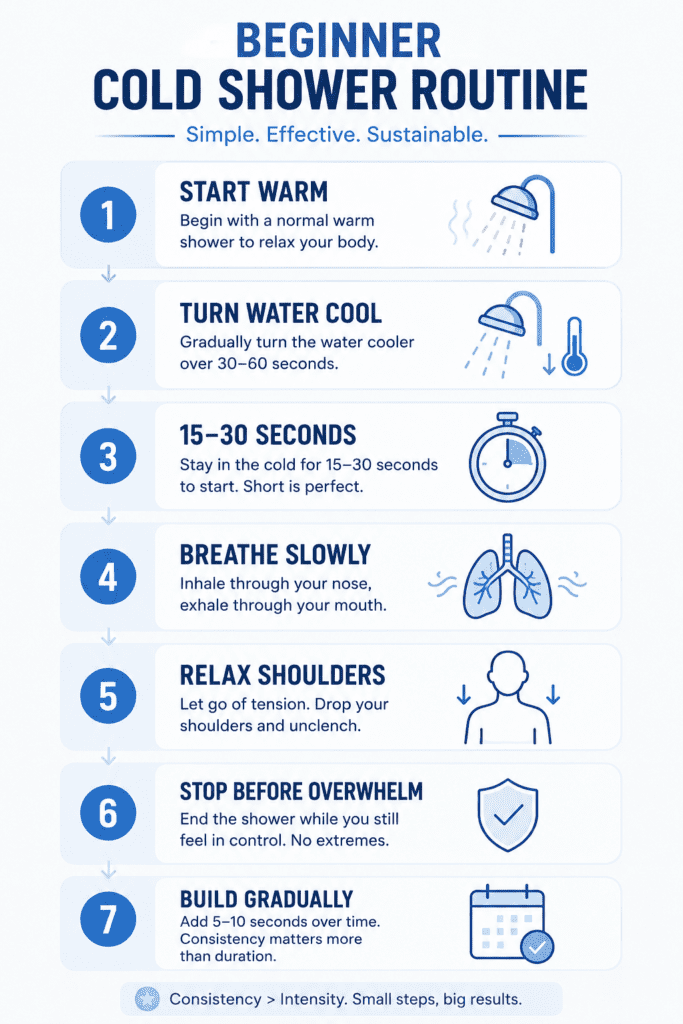
Start warm, finish cold, and keep the cold part short. A simple routine is 3–5 minutes of normal warm showering, followed by 30 seconds of cold water on the arms, legs, and back. Breathe slowly, keep your shoulders relaxed, and stop before the cold feels overwhelming.
A strong cold shower routine works best when it feels repeatable. The goal is not to chase discomfort, but to create a short alertness switch you can use without turning the habit into another stressor.
What Happens When Cold Showers Are Not a Smart Choice
Cold showers are not right for everyone in every situation.
The sudden cold can raise breathing rate, heart rate, and blood pressure for a short time. Cleveland Clinic notes that people with heart disease, cold-shock symptoms, or strong discomfort should be careful with cold showers and avoid pushing past warning signs.
Who Should Avoid Cold Showers?
People with heart disease, serious blood pressure concerns, cold urticaria, circulation problems, severe dizziness, or strong cold sensitivity should be cautious with cold showers. If cold water causes chest discomfort, trouble breathing, severe panic, or lightheadedness, stop and warm up.
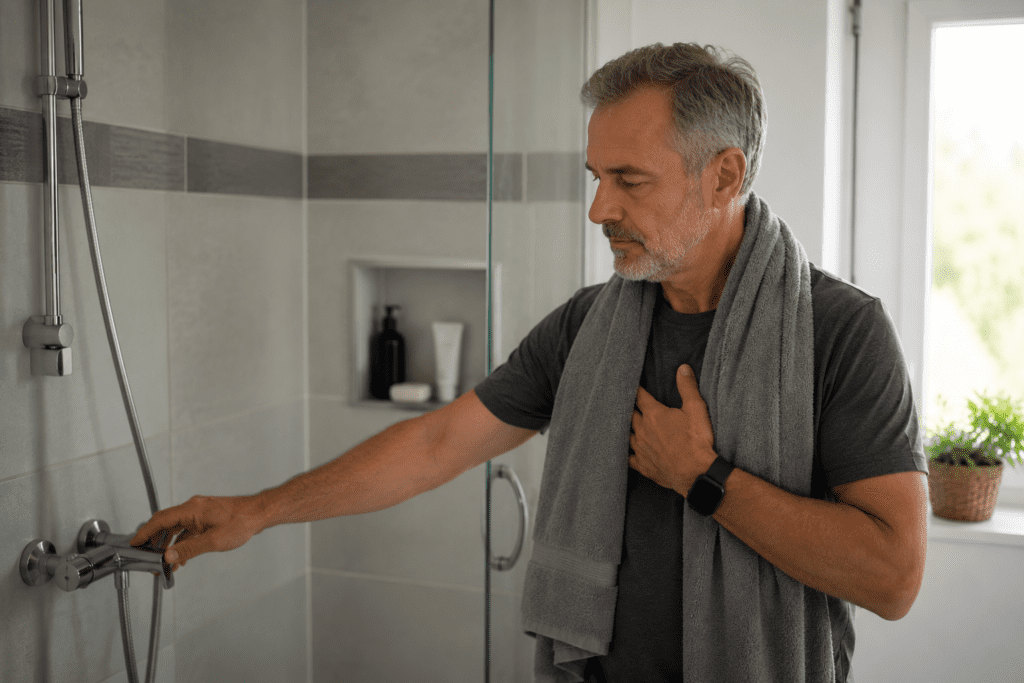
Cold showers may also feel worse when you are already sick, shivering, dizzy, underfed, or exhausted. In those cases, cold water can feel like another stress load instead of a helpful reset.
If you feel clear, steady, and alert after a short cold finish, your routine may be reasonable. If you feel chest discomfort, severe dizziness, panic, numbness, or trouble breathing, stop the cold exposure and warm up.
Cold exposure is a tool. Like any tool, it depends on the person, the timing, and the dose.
The best approach is controlled, short, and flexible. Use cold showers when they help. Skip them when your body clearly needs warmth or recovery.
The Real Cause Cold Showers Feel Energizing but Temporary
Cold showers feel energizing because they create a fast state change.
They do not slowly build energy. They flip your nervous system into alert mode.
That is why the first 30 seconds matter so much. Cold water activates skin receptors. The nervous system reacts. Breathing sharpens. Blood vessels tighten. Heart rate may rise. Chemical messengers linked to alertness and mood may increase. Your brain stops wandering and pays attention.
This chain creates the feeling people describe as energy.
But the effect is often temporary because the shower is only one input. If you slept poorly, skipped breakfast, sat all day, or feel stressed, the cold shower may wake you up for a while, but it will not erase the deeper energy problem. If the tired feeling keeps showing up even when nothing obvious caused it, the pattern may be closer to why you feel tired for no reason.
A cold shower can be a quick morning switch. It can help you move from sleepy to awake, from sluggish to present, from stuck to ready. It may also support circulation response, workout recovery, skin comfort, and mood for some people.
The best cold shower benefits come when the habit is short, consistent, and realistic.
You do not need to freeze for a long time. You do not need to prove anything. You only need enough cold water to create a controlled response your body can handle. If cold exposure makes you feel worse instead of clearer, compare that reaction with why cold weather can make you tired, since prolonged cold stress is different from a short cold shower.
Cold showers are only one small energy switch.
If you often feel tired for no clear reason, the deeper issue may be sleep quality, hydration, blood sugar, stress, or daily recovery — not just your shower routine.
See why tiredness can happen for no reasonEditorial note: This article explains cold shower benefits for general education and daily wellness awareness. It uses cautious language because cold water affects breathing, circulation, heart rate, and nervous system response differently from person to person.
If cold showers cause chest discomfort, severe dizziness, trouble breathing, or intense panic, stop and warm up. People with heart, blood pressure, or circulation concerns should check with a qualified healthcare professional before starting a cold shower routine.
