

You wake up after a normal night, but your body already feels behind. The coffee helps a little, then fades. By lunch, your focus feels soft. By late afternoon, even basic tasks feel heavier than they should. You are not sick, and you may not be doing anything extreme, but your energy still feels low.
Women often feel always tired and have no energy when several systems overlap at once, including poor sleep quality, low iron, hormone shifts, thyroid changes, blood sugar swings, chronic stress, and recovery gaps. If you searched “why am i always tired and have no energy female,” the real answer is usually a pattern, not one single cause.
Female fatigue is a repeated feeling of tiredness, low energy, brain fog, or physical heaviness that can interfere with normal daily tasks. In women, it may be linked to sleep quality, iron levels, hormones, thyroid function, blood sugar stability, stress load, and daily recovery.
Common reasons women feel always tired and have no energy include:
- Poor sleep quality or interrupted sleep
- Low iron or anemia, especially with heavy periods
- Hormone shifts during the menstrual cycle, postpartum, perimenopause, or menopause
- Thyroid changes that affect metabolism and body temperature
- Blood sugar swings from skipped meals, sweets, or too much caffeine
- Chronic stress, caregiving pressure, or mental load
- Nutrient gaps such as vitamin B12, vitamin D, protein, or magnesium
- Low movement, poor recovery, or long periods of sitting
That is why this kind of fatigue can feel so confusing. You may sleep, eat, work, care for people, manage home responsibilities, and still feel like your body never reaches full power.
What is the most common reason women feel tired all the time?
The most common reason women feel tired all the time is usually not one single cause. In many cases, fatigue comes from overlapping factors such as poor sleep quality, low iron, hormone shifts, stress load, blood sugar swings, or thyroid changes. The pattern matters more than guessing one cause too quickly.
Why Women Can Feel Drained When Several Energy Systems Overlap
Women can feel constantly tired when several energy systems are slightly off at the same time. One system may involve sleep. Another may involve iron. Another may involve hormones, blood sugar, thyroid rhythm, stress, or recovery. Each one alone may create mild tiredness. Together, they can create the feeling of having no energy.
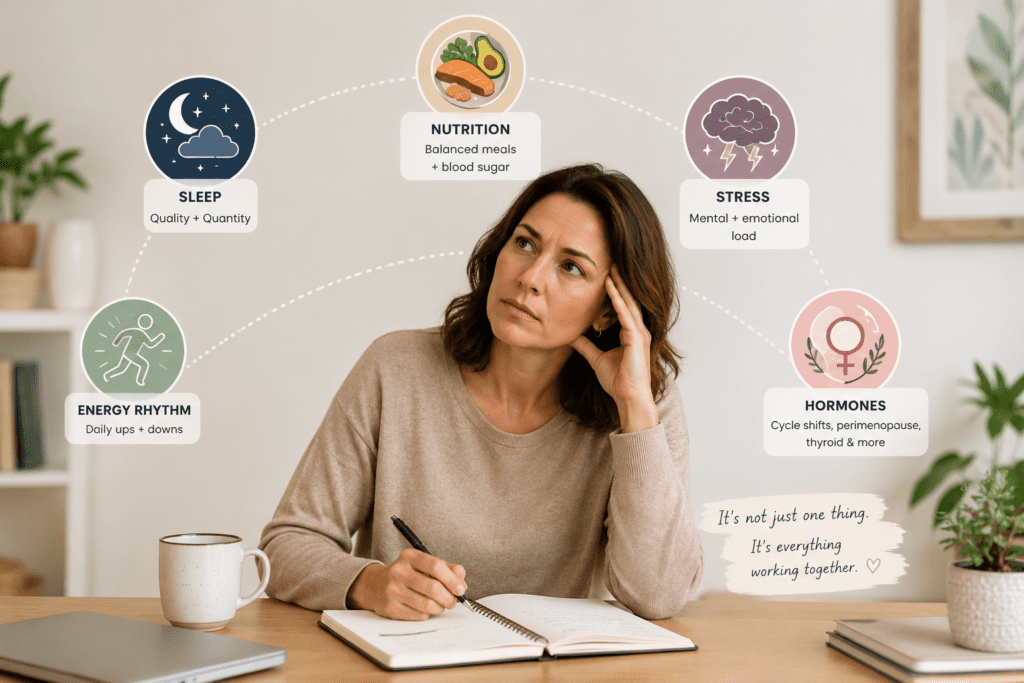
Iron helps oxygen reach your tissues. Thyroid hormones help set metabolic speed. Cortisol helps create morning alertness. Estrogen and progesterone influence sleep, mood, temperature, and stamina. Blood sugar gives the brain steady fuel. Your nervous system decides whether the body should stay alert or recover.
This is why the search “why am i always tired and have no energy female” often points to several overlapping systems rather than one simple answer.
When these systems work together, energy feels steady enough for normal life. When they stop lining up, you may feel slow, foggy, heavy, unmotivated, or weak.
Sleep is only one part of the female energy picture. If iron is low, sleep may not fully help. If stress keeps your system activated, rest may not feel restorative. If blood sugar swings all day, you may keep crashing.
The better question is not only, “Why am I tired?” It is, “Which system is making my energy unstable?”
What Happens When Tiredness Becomes Different From Low Energy
Tiredness and low energy are connected, but they are not exactly the same. Tiredness often feels like you need rest. You may want to lie down, sleep, or stop working. It usually makes sense after poor sleep, a long day, exercise, travel, or emotional stress.
Low energy feels different. It can feel like your body has a weak power supply. You may not feel sleepy, but you still cannot get moving. Your thoughts feel slow. Your muscles feel heavy. Your drive feels missing. You may look fine, but inside, everything takes more effort.
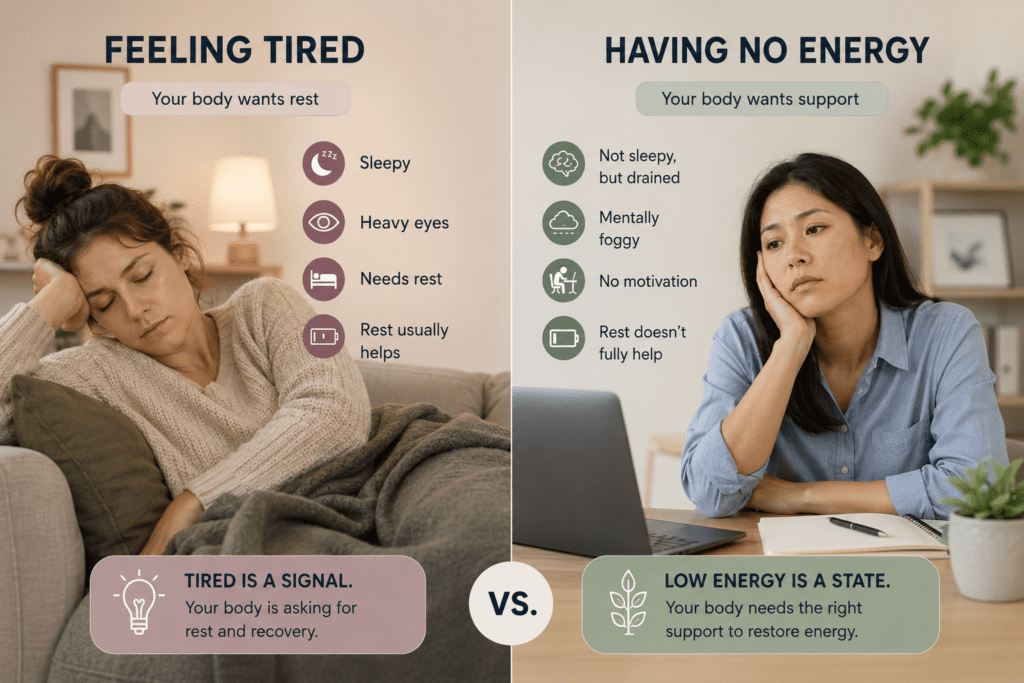
This matters because the phrase includes both problems. The person is not just sleepy. She feels drained, underpowered, and unable to run at her normal level.
Here is the simple difference: tiredness asks for rest. Low energy asks for better output. Constant fatigue asks you to look at the whole system.
Why do I feel tired but not sleepy as a woman? You may feel tired but not sleepy when your body has low output but your brain is still alert. This can happen with stress load, hormone shifts, caffeine timing, poor sleep quality, or blood sugar swings that leave you drained without creating true sleepiness.
The Hidden Reason Iron and Oxygen Delivery Matter So Much
Iron is one of the most important fatigue clues for women because menstruation can increase iron demand. Heavy periods, pregnancy, postpartum recovery, limited diets, or low iron intake can make the issue more likely.
Iron helps your body make healthy red blood cells. The NIH Office of Dietary Supplements explains that iron deficiency anemia can cause weakness, tiredness, lack of energy, and trouble with concentration. Those red blood cells carry oxygen, and oxygen helps your cells produce energy. When iron stores are low, your body may still keep going, but it may not feel efficient.

This can create a very specific kind of tiredness. It may feel physical, heavy, and slow. You may feel winded more easily. Your legs may feel weak during normal movement. Your focus may drop. Your hands or feet may feel colder. If tiredness shows up with feeling chilled or underpowered, this related article on feeling cold and tired all the time explains how energy output and body temperature can overlap.
Many women blame age, stress, work, parenting, or poor motivation. But if fatigue lines up with heavy periods or gets worse around your cycle, iron and oxygen delivery deserve attention. Do not guess or start high-dose supplements on your own. The smarter step is to notice the pattern and ask a healthcare professional about testing if fatigue is persistent or disruptive.
Can low iron make women feel tired all the time? Yes, low iron can make women feel tired, weak, foggy, or low on stamina because iron helps red blood cells carry oxygen. Heavy periods, pregnancy, postpartum recovery, or limited iron intake may increase the risk. Testing is the safest way to know whether iron is part of the problem.
How Hormone Shifts Affect Energy Across Each Female Life Stage
Female energy can change across the menstrual cycle, pregnancy, postpartum, perimenopause, and menopause. Estrogen and progesterone influence sleep quality, body temperature, mood, appetite, fluid balance, and nervous system sensitivity.
Some women notice a predictable energy dip before their period. Others feel drained during bleeding days. Some feel more tired during ovulation. Others do not notice a monthly pattern until they start tracking it.

The second half of the cycle can be especially important. Progesterone rises, body temperature may shift, sleep can feel lighter, cravings may increase, and mood may feel more sensitive. If sleep is already weak or meals are inconsistent, this phase may make fatigue more obvious.
Pregnancy creates another layer. The body is building, circulating, adapting, and using more resources. Postpartum fatigue can also be deeper than “new mom tired.” It may involve interrupted sleep, hormone shifts, feeding demands, blood loss, emotional load, and very little true recovery.
Perimenopause can start in the late 30s or 40s. Sleep may become less predictable. Night sweats, mood shifts, heavier or irregular periods, and brain fog can all affect energy. Menopause can also change sleep, temperature control, and body composition in ways that make energy feel different.
Can hormones make women feel tired with no energy? Hormone shifts can affect energy by changing sleep quality, mood, appetite, temperature control, and stress sensitivity. Some women notice fatigue before their period, during bleeding days, postpartum, during perimenopause, or after menopause. The pattern matters because hormone-related fatigue often changes with timing.
The Link Between Thyroid Signals and Female Energy Output
The thyroid helps control how fast or slow your body runs. It affects metabolism, body temperature, heart rate, digestion, mood, and energy production. When thyroid signals are off, tiredness can become one of the clearest signs.
Women are more likely than men to have thyroid problems, which is why thyroid health often appears in searches about female fatigue. The NIDDK explains that hypothyroidism can develop slowly and may cause symptoms such as fatigue, weight gain, cold sensitivity, constipation, and dry skin.
An underactive thyroid can make the body feel slow. You may feel tired, cold, foggy, constipated, heavy, or unmotivated. Weight may change. Skin may feel dry. Hair may thin. The fatigue can feel like your internal engine is set too low.
An overactive thyroid can also drain energy, but the feeling may be different. You may feel shaky, restless, overheated, weak, anxious, or unable to sleep well. Your body may feel like it is running too fast and then crashing.
Can thyroid problems make women feel exhausted? Thyroid changes can affect energy because thyroid hormones help regulate metabolism, body temperature, heart rate, and digestion. An underactive thyroid may cause tiredness, cold sensitivity, constipation, dry skin, or weight changes. These symptoms do not prove a thyroid problem, but they are worth tracking.
What Most People Miss About Sleep Quality and Female Fatigue
Sleep hours matter, but sleep quality matters just as much. The CDC notes that good sleep quality is an important part of healthy sleep. A woman can be in bed for 8 hours and still wake up exhausted if her sleep is light, fragmented, mistimed, or disrupted. If this sounds familiar, this deeper guide on waking up tired even after 8 hours of sleep explains why sleep duration does not always equal real recovery.
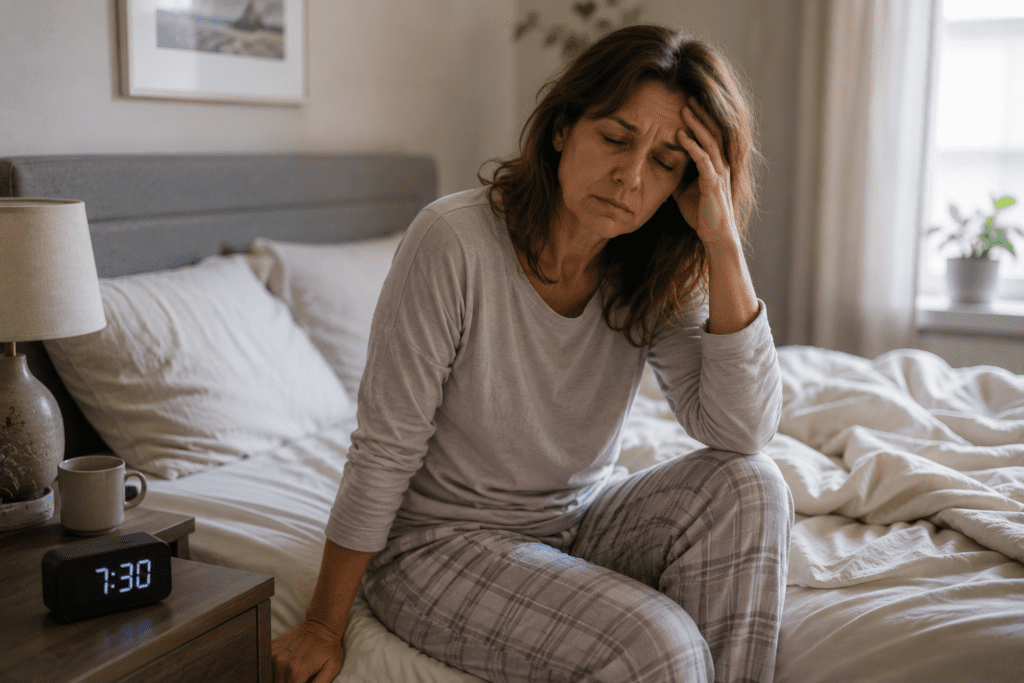
Stress can keep the nervous system alert. Late screens can delay sleep timing. Alcohol can fragment sleep. Pain can cause micro-wakeups. Snoring or sleep apnea can reduce oxygen during the night. Perimenopause and menopause can bring night sweats or temperature changes.
This is why sleep advice often feels incomplete. You may also recognize the pattern described in feeling tired even after sleeping enough, where the problem is often recovery quality rather than hours in bed.
Restorative sleep needs several things to line up. Your body needs a clear nighttime signal from melatonin. Your nervous system needs to downshift. Your breathing needs to stay stable. Deep sleep and REM sleep need enough space. Cortisol should rise at the right time in the morning so you wake with alertness instead of heaviness.
Why do I feel tired even after sleeping enough hours? Sleeping enough hours does not always mean your sleep was restorative. Light sleep, stress, night waking, snoring, caffeine, alcohol, hormone shifts, or temperature changes can reduce recovery quality. That is why some women wake up tired even after 7 or 8 hours in bed.
How Blood Sugar Swings Can Create Heavy Afternoon Crashes
Blood sugar is one of the most practical energy systems to watch because it changes throughout the day. Your brain needs steady fuel. When blood sugar rises and falls quickly, energy can feel unstable. If your energy drops after meals, this guide on why blood sugar crash symptoms happen explains how fast fuel changes can affect focus, cravings, and fatigue.

This can happen after a sweet breakfast, a sugary coffee, a high-carb lunch with little protein, or a long gap between meals. It can also happen when stress hormones and caffeine push the body harder than the food supply can support. If coffee seems to backfire, compare this pattern with why coffee can make you sleepy immediately.
For many women, the pattern looks like this: coffee with little food, a quick sweet meal, a short energy lift, then fog, cravings, and heavy-body fatigue. This is not a character flaw. It is a fuel rhythm problem.
Hormone changes can make it more noticeable. Appetite, cravings, insulin sensitivity, and stress response may shift across the cycle. Women who are dieting, busy, stressed, or caring for others may also eat too little during the day. The body then tries to maintain stability with cortisol and adrenaline, which can make you feel wired before the crash.
A steadier energy pattern usually needs protein at breakfast, fiber-rich carbs, healthy fats, regular meal timing, water across the day, less caffeine on an empty stomach, and fewer long gaps without food.
Why do I crash in the afternoon as a woman? Afternoon crashes may happen when blood sugar, caffeine, sleep quality, stress, and meal timing are unstable. Skipping breakfast, drinking coffee on an empty stomach, eating a high-sugar lunch, or going too long without protein and fiber can make the crash feel stronger.
The Impact Of Stress Load on Women’s Daily Recovery
Stress is not only a feeling. It is a body state. Stress does not only come from obvious emergencies. It can come from constant responsibility. For a deeper explanation of this background energy drain, read why anxiety can make you tired even when you are not doing anything physically intense.
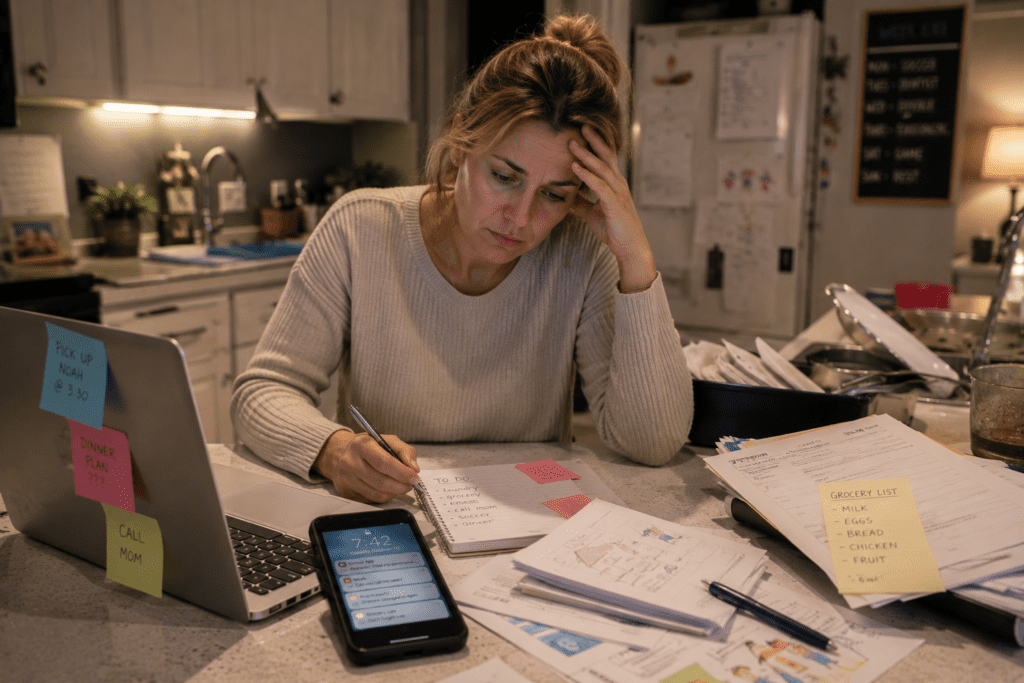
Many women carry invisible stress all day. Work messages, kids’ needs, family planning, grocery lists, bills, appointments, aging parents, relationship strain, home tasks, and mental reminders can stay open in the background.
Even when you sit down, your brain may still be working. It remembers, predicts, scans, plans, and prepares. Your body may stay slightly activated. Muscles hold tension. Breathing stays shallow. Sleep becomes lighter. Recovery feels incomplete.
This can feel unfair, but the nervous system is still using energy. Your body is designed to move between activation and recovery. Activation helps you handle life. Recovery restores energy. The problem comes when activation stays on too long.
Stress load can amplify every other fatigue driver. Poor sleep feels worse under stress. Blood sugar swings feel stronger. Hormone shifts feel harder. Caffeine crashes feel sharper. Your body needs proof that it is safe to slow down: daylight, gentle movement, regular meals, quiet time, boundaries, and a consistent evening routine.
What Happens When Nutrient Gaps Quietly Lower Energy Output
Nutrient gaps can create a slow fade instead of a sudden crash. You just notice that normal life starts taking more effort.
Iron, vitamin B12, vitamin D, magnesium, protein, and overall food intake can all affect energy. These support oxygen delivery, nerve function, muscle function, mood, immune balance, and cellular energy production.
Low B12 may affect brain and nerve function. Low vitamin D may be linked with low energy in some people. Low protein can reduce meal satisfaction and recovery support. Too little overall food can make your body conserve energy. Too little fluid can make fatigue feel heavier by affecting blood volume and circulation.
Women may be more likely to run into gaps during heavy periods, pregnancy, breastfeeding, frequent dieting, vegetarian or vegan eating without planning, digestive issues, or busy seasons when meals become random.
The danger is guessing. A supplement may help if there is a real deficiency, but it may do little if the true issue is sleep apnea, heavy stress, thyroid changes, low food intake, or another condition. More supplements are not always safer.
What vitamins are linked to tiredness in women? Low iron, vitamin B12, vitamin D, magnesium, protein intake, and overall calorie intake may contribute to low energy in some women. Supplements are not always the answer, though. It is safer to track symptoms and ask a healthcare professional about testing before taking high doses.
How to Read Your Fatigue Pattern Before Trying Random Fixes
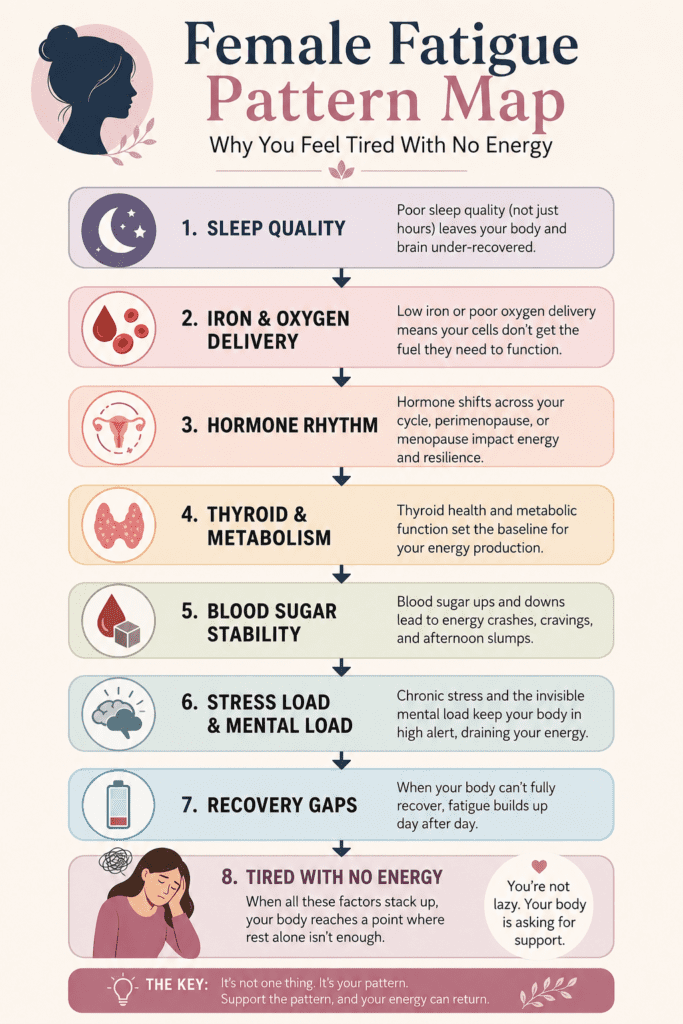
The best way to understand constant fatigue is to match the pattern to the system. If the tiredness feels vague and hard to explain, this guide on why you feel tired for no reason can help separate random fatigue from repeatable body signals. This does not diagnose you, but it helps you stop treating every tired day the same way.
Before guessing the cause, look for these fatigue clues:
- When the tiredness is strongest during the day
- Whether it changes before, during, or after your period
- Whether sleep feels long enough but not restorative
- Whether meals, caffeine, or skipped breakfast make it worse
- Whether you feel cold, shaky, foggy, weak, or wired
- Whether stress, caregiving, or mental load increases the crash
- Whether symptoms are new, severe, persistent, or unusual for you
Use this simple fatigue map:
| Pattern you notice | System to consider | What to track first |
|---|---|---|
| Worse during or after your period | Iron and hormones | Flow, cycle day, cramps, energy |
| Tired after 8 hours of sleep | Sleep quality | Wake-ups, snoring, bedtime, morning mood |
| Afternoon crash with cravings | Blood sugar | Breakfast, lunch, caffeine, meal gaps |
| Cold, foggy, slow, constipated | Thyroid or iron | Temperature, digestion, weight, hair, skin |
| Tired but wired | Stress response | Mental load, evening habits, caffeine |
| Shaky and weak | Fuel and stress hormones | Meal timing, hydration, coffee, sleep |
| Fatigue after busy care days | Recovery gaps | Responsibilities, breaks, quiet time |
| Severe or unusual fatigue | Medical evaluation | Duration, red flags, new symptoms |
If low energy comes with trembling, jitteriness, or sudden weakness, this guide on feeling shaky and tired at the same time explains the blood sugar and stress-hormone connection in more detail.
Still trying to figure out your fatigue pattern?
If your tiredness feels random or hard to explain, start with this deeper guide on why you feel tired for no reason to compare common body signals before guessing the cause.
How Women Can Build a Better Energy Baseline Without Random Guessing
The best way to handle constant low energy is to stop treating every tired day the same way. A woman who feels drained before her period may need a different starting point than a woman who crashes after lunch, wakes up exhausted, or feels tired but wired at night.
The goal is not to diagnose yourself from one symptom. The goal is to notice which pattern repeats most often, then choose the next step that matches that pattern.
For seven days, focus on the pattern that shows up most often: morning heaviness, afternoon crashes, period-related fatigue, poor sleep recovery, or stress-related burnout. This keeps you from trying too many fixes at once and makes your body’s response easier to read.
If mornings feel hardest, build a stronger wake-up signal. Open the blinds, get outdoor light when possible, drink water before coffee, and eat a simple protein-based breakfast. This helps your body shift from night mode into day mode instead of running on caffeine alone.

If your energy drops after meals, make lunch steadier instead of smaller. A very light lunch can backfire if it leaves your brain under-fueled by midafternoon. Aim for a balanced plate with protein, fiber-rich carbs, and healthy fats so your energy does not rise and fall too quickly.
If fatigue gets worse around your period, track cycle timing instead of guessing. Note when the tiredness begins, how heavy your flow is, whether cravings increase, and whether you feel colder, weaker, or more foggy than usual. This gives you clearer information if you decide to ask about iron or other basic labs.
If stress load is the main pattern, do not wait until bedtime to recover. Add short recovery breaks earlier in the day: a quiet 5-minute reset, a short walk, slower breathing, or a screen-free pause between responsibilities. Small recovery signals work better when they happen before your system is completely drained.
If sleep looks “enough” but still does not restore you, look at what may be breaking the quality. Night waking, snoring, temperature changes, late caffeine, alcohol, pain, or scrolling in bed can all reduce recovery even when the total hours look fine.
The goal is not to fix everything in one week. The goal is to collect better clues. When you know when your energy drops, what makes it worse, and what helps even a little, you can stop chasing random fixes and start responding to the system that needs the most support.
Important note: This article is for educational purposes and helps explain common fatigue patterns in women. It does not diagnose or treat any condition. If your tiredness is persistent, severe, unusual for you, or affecting daily life, consider speaking with a qualified healthcare professional.
What Happens When Constant Female Fatigue Gets Ignored Over Time
Occasional tiredness is normal. Constant fatigue is different. When low energy keeps repeating for weeks, interferes with daily life, or feels unusual for your body, it deserves attention.
Ignoring it can create a loop. You feel tired, so you move less. Less movement reduces circulation and mood support. Low energy makes meal planning harder. Random meals create crashes. Crashes increase caffeine. Caffeine affects sleep. Poor sleep raises stress. Stress keeps your body activated. The next day starts with even less energy.
This is how a temporary fatigue pattern can become your normal baseline. The answer is not panic. It is pattern clarity.
When should a woman worry about constant fatigue? Constant fatigue should not be ignored if it lasts for weeks, gets worse, disrupts normal life, or appears with chest pain, shortness of breath, fainting, fever, unexplained weight loss, heavy bleeding, severe weakness, or major mood changes. In those cases, medical evaluation is important.
If you searched “why am i always tired and have no energy female,” the most helpful answer is this: your fatigue is not random, and it is not a personal failure. It is a signal. For many women, that signal comes from overlapping systems: sleep recovery, iron and oxygen delivery, hormones, thyroid rhythm, blood sugar, stress load, and nutrient support.
Once you read the pattern, you can stop guessing and start responding to what your body is actually telling you.
Want to understand your energy pattern more clearly?
If your tiredness keeps showing up after sleep, meals, stress, or certain times of day, explore our related guide on why you may feel tired even after sleeping enough.
