

It can happen in the middle of a normal day. You might be sitting at your desk, walking through a grocery store, or relaxing at home. Suddenly your body feels drained. Your arms feel heavy. Your energy drops fast. Sometimes it even feels like your strength disappears for a moment.
For many people across the United States, this experience is surprisingly common during busy workdays, long commutes, or hours spent in front of a computer. The strange part is that the fatigue can appear even when you haven’t done anything physically demanding.
Many people search online asking why do I suddenly feel weak and tired, especially when nothing intense happened beforehand. You may not have exercised. You may not feel sick. Yet your body suddenly feels exhausted.
What Does It Mean When You Suddenly Feel Weak and Tired
Sudden weakness and fatigue happen when the body temporarily reduces energy output due to shifts in circulation, blood sugar, hormone signals, or nervous system activity. Even small changes in these systems can reduce oxygen and fuel delivery to the brain and muscles, causing a noticeable drop in energy.
This experience is surprisingly common among adults with unpredictable schedules and mentally demanding jobs. Long periods of sitting, irregular meals, dehydration, and stress can all influence the body’s internal energy systems.
Research on fatigue physiology shows that multiple biological systems interact to regulate daily energy levels. When these systems shift quickly, the brain may trigger temporary tiredness as a protective signal. Health experts note that fatigue often results from several small lifestyle and biological factors working together rather than a single cause, as explained in guidance about common causes of fatigue.
Many everyday habits can also contribute to these sudden energy drops. For example, skipping meals or delaying food intake may disrupt metabolic rhythms and lead to unstable energy levels during the day. Some people notice similar patterns when they experience fatigue after breakfast, which is explored further in tired after healthy breakfast.
Understanding these hidden triggers can make sudden fatigue less confusing and help explain why weakness can appear during an otherwise normal day.
The Hidden Reason Your Body Can Trigger Sudden Energy Drops Without Warning
Energy in the body is tightly controlled by several systems working together. Your brain constantly monitors signals from your blood, muscles, hormones, and nervous system. When one of these systems detects instability, your brain may trigger fatigue as a protective response.
This reaction is similar to a warning light on a car dashboard. Fatigue is not always about physical effort. It can also be your body trying to slow you down so it can stabilize internal conditions.
Sudden weakness often appears when one of these internal systems shifts quickly. Small changes in blood pressure, glucose levels, or nervous system activity can temporarily reduce how efficiently your brain and muscles receive energy.
When that happens, the brain interprets the situation as a temporary energy shortage. The result is a sudden sensation of fatigue, heaviness, or weakness.
How Your Nervous System Can Instantly Change Your Energy Levels
One of the fastest systems controlling energy is the autonomic nervous system. This system regulates heart rate, blood pressure, breathing, and circulation without you thinking about it.
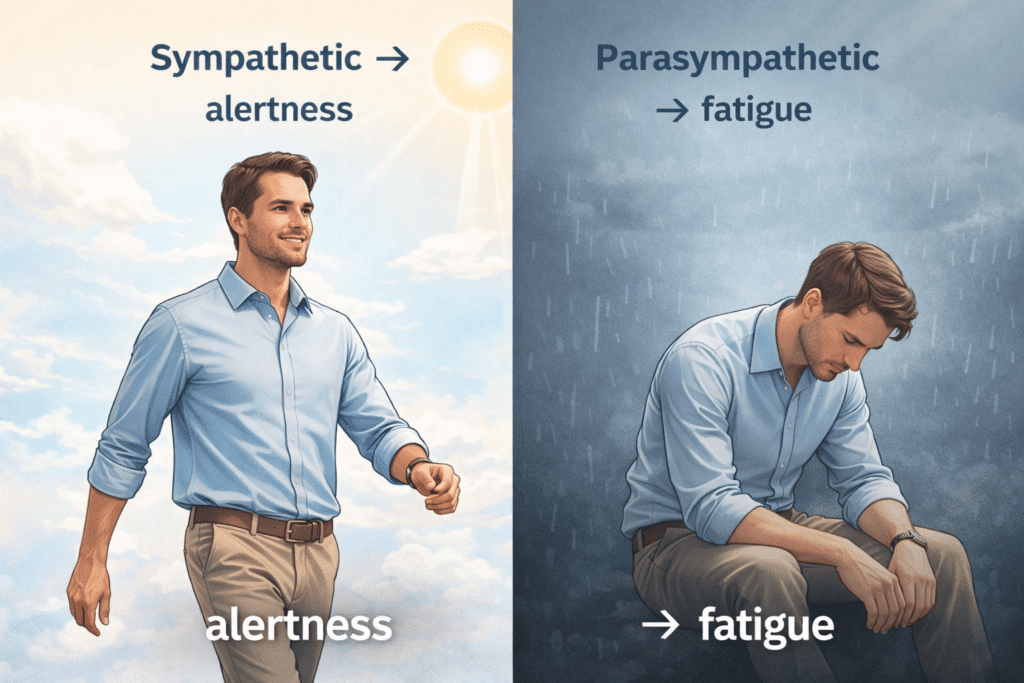
The nervous system has two main modes.
The first is the sympathetic system, often called the “fight-or-flight” system. It prepares the body for action, increasing alertness and energy.
The second is the parasympathetic system, sometimes called the “rest-and-recover” system. It slows the body down and conserves energy.
Your body constantly shifts between these two states during the day. If the balance changes suddenly, it can create an abrupt drop in energy.
For example, after stress or intense mental focus, the nervous system may switch quickly toward the parasympathetic state. When this happens, heart rate and blood pressure may fall slightly. Circulation patterns shift, and the brain may interpret this as a signal to reduce activity.
The result can feel like a sudden wave of fatigue.
The Science Behind Blood Pressure Shifts That Cause Sudden Weakness
Blood pressure plays an important role in how oxygen and nutrients reach the brain. Even small fluctuations can affect how energized you feel.
During normal daily activity, blood pressure adjusts constantly as you move, sit, stand, or change posture. If pressure drops briefly, blood flow to the brain can decrease slightly.
This effect does not need to be dramatic to cause symptoms. Even mild reductions in circulation can produce sensations such as sudden fatigue, temporary weakness, lightheadedness, and reduced concentration.
Busy adults often experience this after long periods of sitting or dehydration. People who notice fatigue after prolonged sitting can learn more in this related explanation of why sitting too long makes you tired.
When blood pressure dips briefly, the brain may respond by triggering fatigue signals. This reaction encourages the body to slow down until circulation stabilizes.
What Happens When Blood Sugar Fluctuations Drain Your Energy Quickly
Glucose is the brain’s primary fuel source. Stable glucose levels help maintain steady energy and focus throughout the day.
However, glucose levels can change faster than many people realize. Eating patterns, stress hormones, and physical inactivity all influence how your body processes glucose.
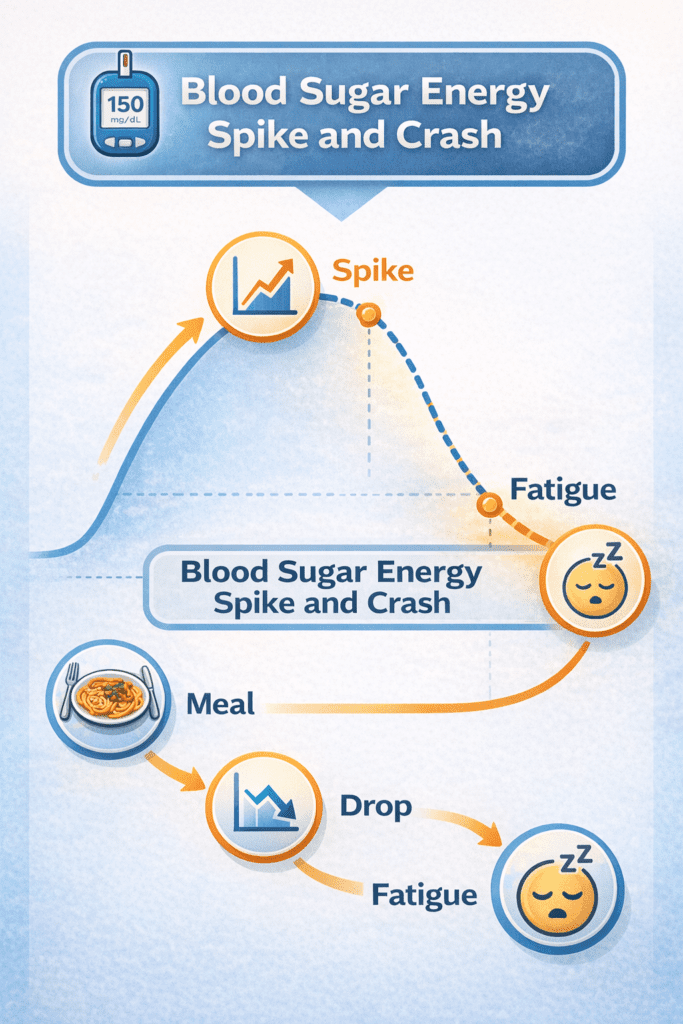
A rapid shift in blood sugar can temporarily reduce the amount of energy available to your brain. When this happens, the brain may respond with symptoms such as weakness, fatigue, or mental fog.
This can occur even if you ate recently.
For example, meals high in refined carbohydrates can cause a quick rise in blood sugar followed by a rapid decline. During that decline, energy levels may drop sharply. Some people experience this after meals and search for answers similar to those explained in why do I feel tired after eating or tired after eating.
Many people experiencing this reaction search online asking why do I suddenly feel weak and tired, because the fatigue appears without warning. In reality, the body may simply be reacting to a fast glucose fluctuation.
The Link Between Circulation, Oxygen Delivery, and Unexpected Fatigue
Another important factor influencing energy is oxygen delivery. Every cell in your body depends on oxygen to produce energy through cellular respiration.
Circulation plays a major role in this process. Blood transports oxygen from the lungs to tissues throughout the body, including the brain and muscles.
When circulation slows, oxygen delivery can temporarily decline. Even small changes may affect how alert or energized you feel.
Long periods of sitting are a common cause of reduced circulation. When muscles remain inactive, blood flow through the legs and core may slow slightly. This reduces the muscle pump effect that normally helps circulate blood efficiently.
Some people experience sudden heaviness or fatigue after extended sitting. A related explanation can be found in tired after sitting too long.

The Real Cause Behind Cortisol Fluctuations and Sudden Energy Loss
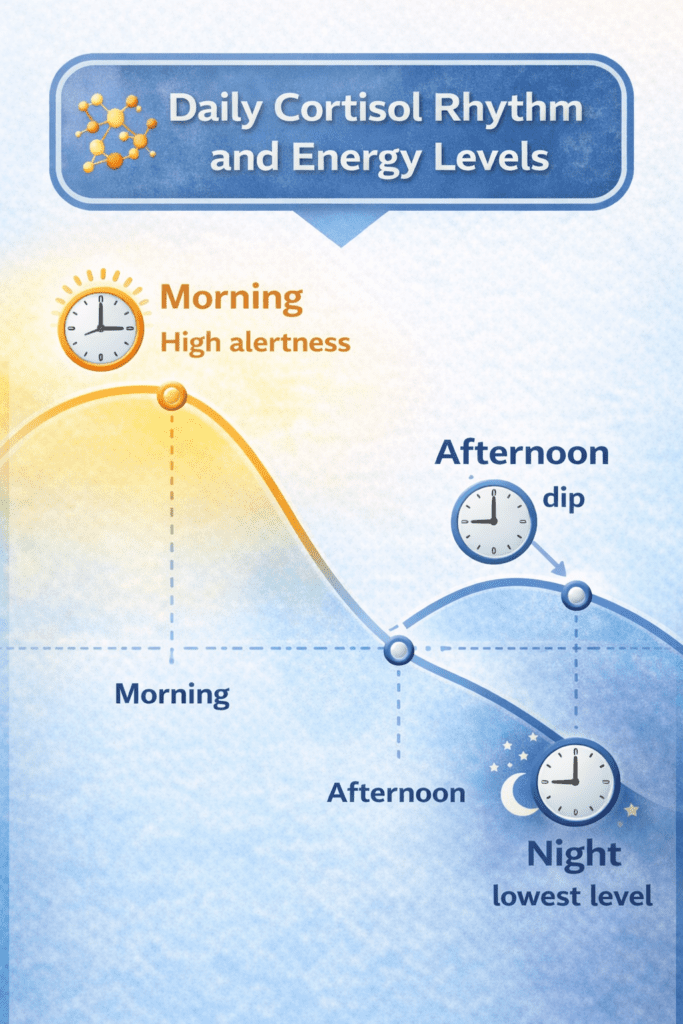
Cortisol is a hormone that plays a major role in daily energy regulation. It follows a natural rhythm controlled by your circadian clock.
Normally cortisol levels rise in the morning to help you wake up and become alert. Levels gradually decline as the day continues.
However, cortisol levels can also shift due to stress, irregular sleep, or sudden changes in mental workload.
When cortisol drops faster than expected, energy levels may temporarily fall as well. The brain interprets this drop as a signal that the body should conserve resources.
For busy professionals, this often occurs during transitions between tasks. After completing an intense period of concentration, cortisol levels may decline quickly, leading to a noticeable dip in energy.
More about fatigue patterns linked to daily rhythms can also be seen in articles like why am I so tired in the afternoon and midday energy boost without coffee.
What Most People Miss About Sudden Fatigue During a Normal Day
Many people assume fatigue must come from physical exertion. In reality, mental effort can influence energy levels just as strongly.
The brain uses a large amount of the body’s energy supply. Activities such as decision making, problem solving, and multitasking require constant neural activity.
After prolonged mental focus, the brain may signal the need for recovery. This can produce sensations of weakness or exhaustion even if the body has remained physically inactive.
This is one reason sudden fatigue frequently appears during desk work or computer tasks. Strategies for mental fatigue recovery are discussed in mental fatigue after work reset.
The Link Between Visual Fatigue, Screen Exposure, and Brain Energy Drain
Modern work environments often require constant screen use, which can create a form of fatigue known as digital eye strain. When the eyes focus on screens for long periods, the brain must process continuous visual information and maintain intense focus.
This ongoing neural activity increases cognitive load and can gradually drain mental energy.
As visual fatigue increases, people may notice symptoms such as slower thinking, difficulty concentrating, or sudden tiredness.
This type of fatigue can appear even when the body feels physically rested because the brain is working harder to process visual input.
Taking short visual breaks and adjusting screen brightness can reduce this effect. Helpful strategies for reducing screen-related fatigue are discussed in computer eye fatigue relief and simple relaxation methods such as desk breathing exercises for office workers.

The Counterintuitive Truth About Why Doing Very Little Can Make You Feel Exhausted
One surprising factor behind fatigue is inactivity itself. Many people expect rest to increase energy. However, the body’s metabolism often works best when movement occurs regularly.
Muscle activity supports circulation, oxygen delivery, and metabolic stability. When the body remains inactive for long periods, these systems may slow down.
As a result, energy production can become less efficient.
Inactivity may reduce blood flow, decrease oxygen delivery, and lower metabolic stimulation. These changes can lead to a sluggish feeling that resembles exhaustion.
This explains why some people feel more tired on slow days than on active ones.
The Impact of Posture and Musculoskeletal Tension on Sudden Energy Loss
Another overlooked cause of sudden weakness is physical tension caused by poor posture.
When the body remains in the same seated position for long periods, muscles in the neck, shoulders, and lower back can become tight.
This tension restricts natural movement patterns and may reduce circulation to certain muscle groups.
Over time, the body must spend extra energy compensating for these imbalances.
The brain also interprets persistent muscular tension as physical strain, which can contribute to fatigue signals even if the person has not performed intense activity.
Simple posture resets during the day can help restore circulation and reduce unnecessary energy expenditure. Techniques like the quick movement routine described in 3-minute posture reset for desk workers or simple stretching habits such as 5-minute morning stretch for desk workers can help counteract these effects.
How Daily Lifestyle Patterns Quietly Trigger Sudden Energy Crashes
Daily routines play a significant role in energy stability. Small lifestyle patterns can influence the systems that regulate fatigue.
Common triggers include long periods of sitting, irregular meal timing, dehydration, poor sleep consistency, and prolonged screen exposure.
Each of these factors affects at least one biological system involved in energy regulation.
For example, dehydration reduces blood volume, which can slightly affect circulation. Irregular meals may influence glucose stability. Screen exposure can affect circadian rhythms and mental fatigue.
Healthy routines that stabilize daily energy are explained further in daily habits for energy and midday healthy habits energy slump.
Want to Understand Your Energy Crashes Better?
Sudden weakness and fatigue often connect to blood sugar shifts, dehydration, and afternoon energy dips. These related guides can help you spot patterns and understand what may be affecting your body during the day.
The Hidden Impact of Hydration on Sudden Weakness and Energy Stability
Many people overlook how hydration affects daily energy levels. Even mild dehydration can influence blood circulation, oxygen delivery, and brain alertness.
When fluid levels drop, blood volume can decrease slightly, which makes the heart work harder to maintain circulation. As a result, the brain may receive slightly less oxygen and nutrients for short periods of time.
This change can contribute to the sensation of weakness or fatigue that appears suddenly during the day.
People who spend long hours working indoors or focusing on screens may forget to drink enough water, which makes these energy dips more likely.
Developing consistent hydration habits can help stabilize circulation and reduce unexpected fatigue episodes, especially for busy professionals following routines like the one explained in hydration routine for busy adults and practical strategies such as simple daily hydration habits for energy.
A Simple Checklist of Triggers That Can Cause Sudden Weakness and Fatigue
Sudden fatigue usually results from several small triggers rather than a single cause. Recognizing these triggers can help explain why energy drops unexpectedly.
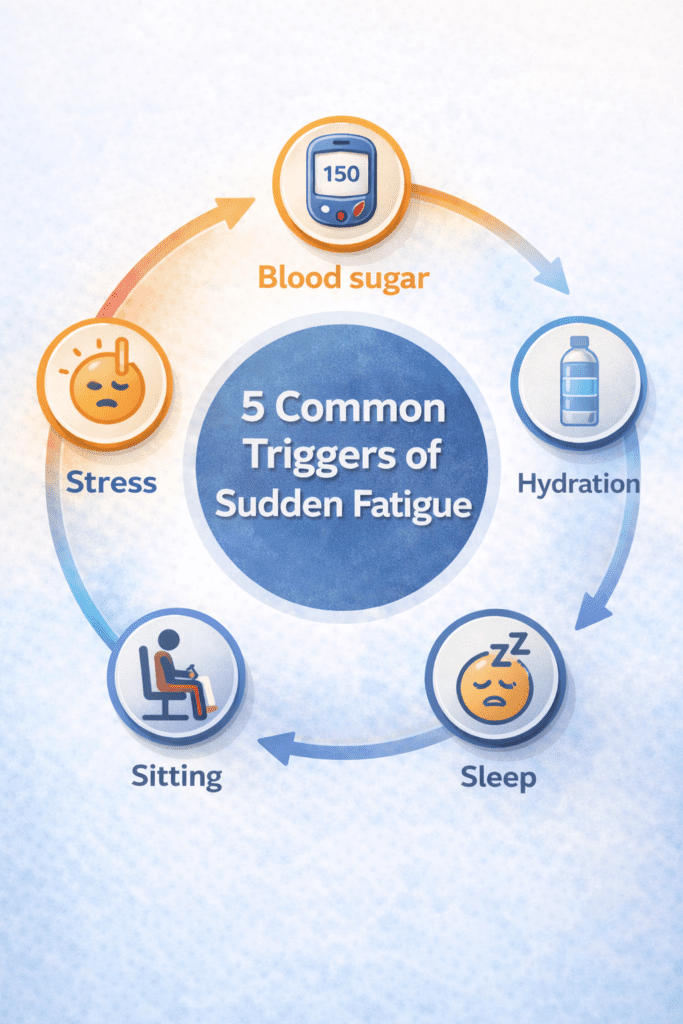
Common triggers include rapid blood sugar fluctuations, mild dehydration, prolonged sitting, sudden posture changes, mental overload, and irregular sleep timing.
These factors influence circulation, hormones, and nervous system activity. When multiple triggers appear at once, the brain may respond by temporarily reducing energy output.

Comparison of Common Triggers That Cause Sudden Weakness and Fatigue
Sudden weakness and fatigue can come from several different triggers. The table below compares how common biological and lifestyle factors affect energy levels.
| Trigger | What Happens in the Body | How Quickly It Affects Energy | Common Situation |
|---|---|---|---|
| Blood Sugar Fluctuation | Glucose levels rise then fall quickly, reducing fuel for the brain | ⚡ Fast | After high-carbohydrate meals |
| Dehydration | Lower blood volume reduces circulation and oxygen delivery | ⚡ Fast | Long workdays without drinking water |
| Prolonged Sitting | Circulation slows and muscles remain inactive | ⏱ Gradual | Desk jobs and long computer sessions |
| Nervous System Stress | Sudden shift from stress response to recovery mode | ⚡ Fast | After intense mental focus |
| Circadian Rhythm Dip | Natural daily hormone cycles lower alertness | ⏱ Gradual | Early afternoon energy slump |
5 Common Reasons You Suddenly Feel Weak and Tired
- Rapid blood sugar fluctuations
- Temporary drops in blood pressure
- Mild dehydration affecting circulation
- Nervous system stress responses
- Reduced oxygen delivery due to prolonged sitting
These physiological shifts can temporarily reduce how efficiently your brain and muscles receive energy.
The Link Between Circadian Rhythm Timing and Unexpected Fatigue Episodes
Your circadian rhythm acts as the body’s internal clock. It controls when hormones rise and fall throughout the day.
Energy naturally fluctuates in cycles influenced by this rhythm. Many people experience a mild energy dip during the early afternoon when circadian signals promote rest.
If other triggers appear during this time, the dip can feel more dramatic.
Circadian biology research shows how daily rhythms influence alertness and fatigue as explained in understanding the body clock and common causes of fatigue.
Circadian timing interacts with blood sugar, cortisol, and nervous system activity. When these systems align in a way that reduces stimulation, the body may temporarily lower energy output.

The Hidden Reason Dopamine Fluctuations Can Make You Suddenly Feel Drained
Another biological factor that influences energy levels is dopamine. Dopamine is a neurotransmitter that helps regulate motivation, focus, and the brain’s reward system.
When dopamine levels shift quickly, the brain may interpret the change as a signal that energy should be conserved.
This often happens during long periods of mentally repetitive work. Activities such as answering emails, scrolling through digital content, or completing routine tasks may gradually reduce stimulation in the brain’s reward system.
When dopamine signaling decreases, motivation drops and the brain may respond with fatigue signals.
In many cases, people assume they are physically tired when the real cause is a temporary drop in mental stimulation.
This is why brief behavioral resets during the day can help restore alertness. Small habit adjustments like the strategies described in micro habits to boost afternoon energy or quick behavior shifts explained in 2-minute health habits can help reactivate the brain’s reward system and stabilize energy.
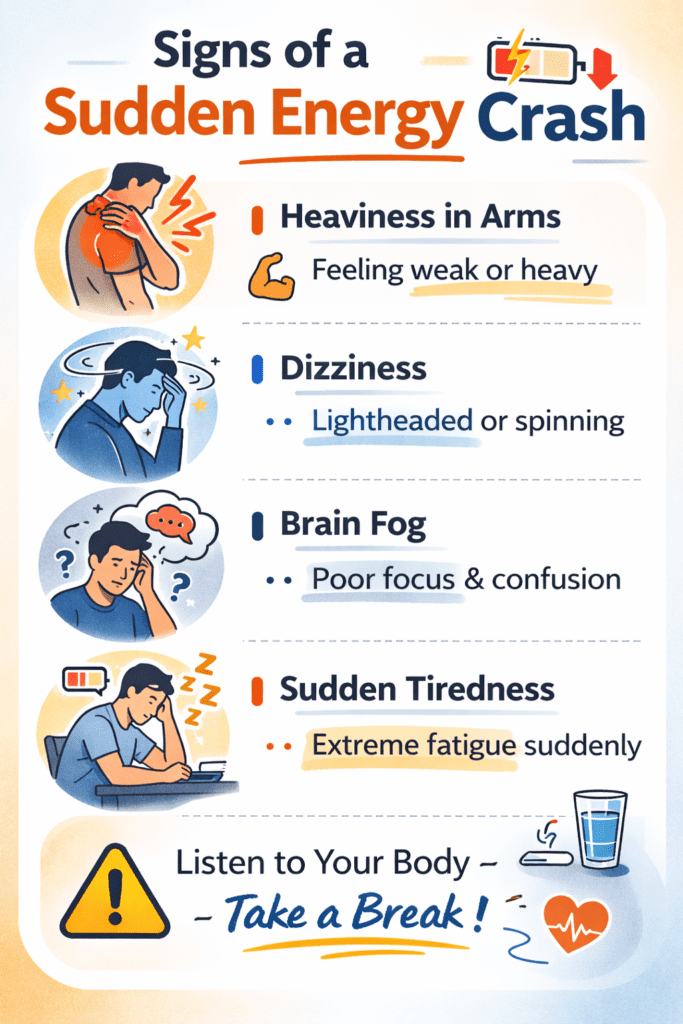
Signs Your Body Is Experiencing a Sudden Energy Crash
• sudden heaviness in arms or legs
• difficulty concentrating
• brief dizziness or lightheadedness
• mental fog or slow thinking
• strong urge to rest or sit down
These symptoms often appear when energy-regulation systems temporarily lose balance. Related symptoms are discussed in dizzy and tired in the afternoon and wake up tired even after 8 hours.
Quick Self-Check: What Your Sudden Fatigue Symptoms Might Be Telling You
Sudden fatigue symptoms often appear when the body’s energy systems temporarily lose balance. The quick self-check below helps identify what your body might be signaling during an unexpected energy drop.
| Symptom You Notice | Possible Body Signal | Energy Effect | Common Situation |
|---|---|---|---|
| Sudden heaviness in arms or legs | Temporary circulation slowdown | ⚡ Rapid energy drop | Sitting too long or standing quickly |
| Mental fog or slow thinking | Reduced glucose supply to the brain | ⚡ Rapid mental fatigue | Long gaps between meals |
| Lightheadedness or dizziness | Temporary blood pressure shift | ⚠ Short weakness episode | Dehydration or posture changes |
| Strong urge to rest or lie down | Nervous system switching to recovery mode | ⚡ Energy conservation signal | After intense stress or focus |
| Afternoon sleepiness | Natural circadian rhythm dip | ⏱ Gradual energy decline | Early afternoon work hours |
The Impact Of Irregular Meal Timing on Sudden Weakness and Daily Energy Stability
Meal timing plays an important role in maintaining steady energy throughout the day. When meals occur at inconsistent times, the body’s metabolic rhythms may struggle to predict when fuel will arrive.
This uncertainty can lead to fluctuations in blood sugar and hormone signaling that affect energy regulation.
For example, skipping meals or delaying food intake for long periods may cause the body to conserve energy.
When the brain senses that fuel availability is uncertain, it may reduce energy output to preserve resources. This response can produce sudden fatigue even if a person has not performed demanding physical activity.
Consistent eating patterns help maintain stable glucose levels and hormone rhythms.
Many people notice that structured meals reduce unpredictable fatigue episodes. Practical examples of balanced eating routines can be found in resources such as healthy breakfasts for busy adults in 5 minutes and efficient midday meal strategies described in quick lunch prep for office workers.
Conclusion: Understanding Why Sudden Weakness and Fatigue Happens
If you have ever wondered why do I suddenly feel weak and tired, the answer usually involves several biological systems working together.
Energy levels depend on stable circulation, glucose supply, hormone rhythms, and nervous system balance. Small shifts in any of these systems can create sudden fatigue.
Although the sensation may feel confusing, it often reflects the body’s normal energy regulation process. Temporary weakness or tiredness can occur when internal systems adjust to changes in activity, posture, metabolism, or circadian timing.
Understanding these mechanisms helps explain why sudden weakness can appear during a normal day and how small changes in daily habits can support more stable energy levels.
Keep Reading: Related Energy and Fatigue Guides
If you keep asking yourself why you suddenly feel weak and tired, these next articles can help you connect the dots between fatigue triggers, daily energy habits, and common symptom patterns.
Frequently Asked Questions
Why do I suddenly feel weak and tired for no reason?
Sudden weakness and fatigue often happen when internal systems such as blood circulation, blood sugar balance, hormone signals, or nervous system activity shift quickly. Even small changes in these systems can temporarily reduce oxygen and energy delivery to the brain and muscles, leading to a sudden drop in energy.
Can dehydration cause sudden weakness and fatigue?
Yes. Mild dehydration can lower blood volume, which affects circulation and oxygen delivery throughout the body. When this happens, the brain may receive slightly less oxygen and nutrients, which can lead to fatigue, lightheadedness, or sudden weakness.
Why do I feel weak and tired after sitting for a long time?
Prolonged sitting can slow circulation and reduce the “muscle pump” effect that helps move blood through the body. When circulation slows, oxygen delivery may decrease slightly, which can cause feelings of fatigue, heaviness in the limbs, or reduced concentration.
Can stress make you suddenly feel exhausted?
Yes. Stress activates the sympathetic nervous system and stress hormones such as cortisol. When stress levels suddenly drop after intense focus or pressure, the body may shift into recovery mode, which can create a sudden feeling of fatigue or weakness.
Why do I suddenly feel weak and tired after eating?
Some people experience rapid blood sugar fluctuations after meals, especially meals high in refined carbohydrates. When blood sugar rises quickly and then drops, the brain may temporarily receive less stable fuel, leading to fatigue or mental fog.
Is sudden fatigue related to sleep patterns?
Yes. Irregular sleep schedules can disrupt circadian rhythms, the body’s internal clock that regulates alertness and energy levels. When this rhythm becomes unstable, people may experience unexpected energy dips during the day.
Why does mental work make me feel physically tired?
The brain uses a significant portion of the body’s daily energy supply. Long periods of concentration, decision-making, or problem solving can temporarily drain mental energy resources, which may produce sensations of fatigue even when the body has not done physical work.
When should sudden weakness and fatigue be checked by a doctor?
Occasional fatigue during a busy day is common. However, persistent or severe weakness, frequent dizziness, or fatigue that does not improve with rest may require medical evaluation to rule out underlying conditions.
Experience, Expertise, Authority, and Trust
This article was created to help readers understand the biological and lifestyle factors that can cause sudden weakness and fatigue during a normal day. The explanations in this guide are based on widely accepted principles of human physiology, including how circulation, blood sugar regulation, hormone rhythms, and nervous system activity influence energy levels.
The information presented reflects current understanding from trusted health organizations and educational medical resources. These sources explain how fatigue can result from interactions between multiple biological systems rather than a single isolated cause.
For additional background information on fatigue physiology and energy regulation, readers can explore resources from reputable medical institutions including:
Mayo Clinic – Causes of Fatigue
Harvard Health Publishing – Understanding the Body Clock and Circadian Rhythm
Cleveland Clinic – Fatigue: Causes and Symptoms
These organizations provide evidence-based information about how daily habits, biological rhythms, and physiological systems influence energy levels in healthy adults.
