
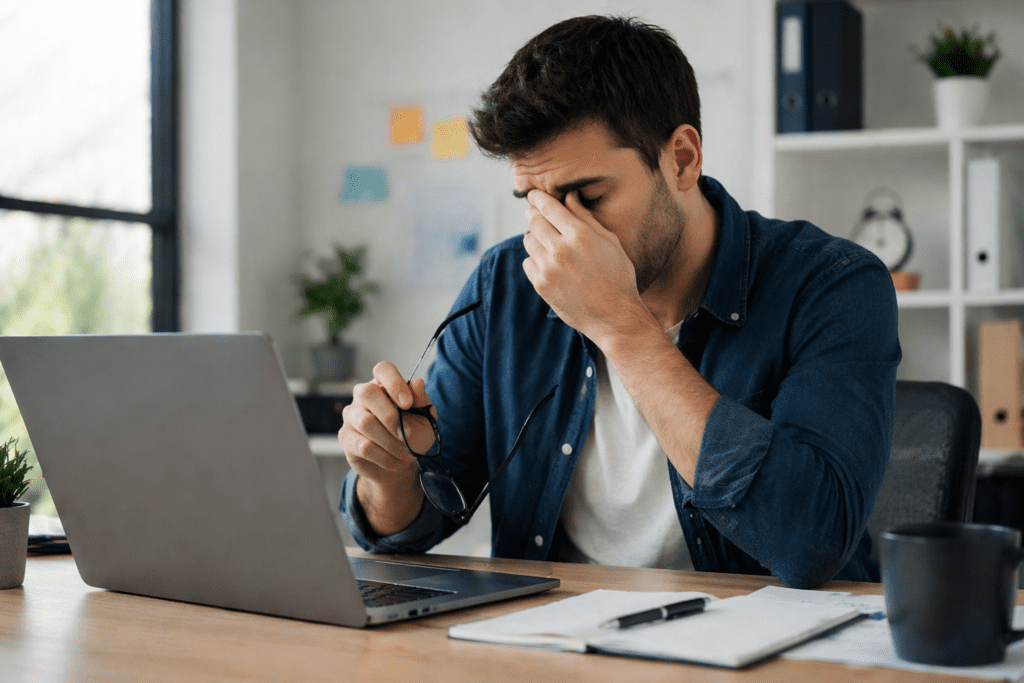
It’s mid-afternoon. You’re sitting at your desk, checking emails or scrolling your phone, but something feels off.
Your eyes feel heavy.
Not painful. Not fully sleepy. Just harder to keep open than usual.
If you’ve ever wondered why do my eyes feel heavy, the answer is not always as simple as “I need more sleep.”
Quick Answer: Your eyes may feel heavy when visual focus, reduced blinking, dry eye surface, mental fatigue, low alertness, or afternoon energy dips stack together. Heavy eyes are often a signal that your brain, eyelids, and visual system are using more effort than usual, even if you are not truly sleepy.
That is why heavy eyes can feel confusing. You may be awake, working, and functioning normally, but your eyelids feel slower, heavier, or less responsive. The feeling is usually not one single problem. It often comes from several small loads building at the same time.
What Heavy Eyes Really Mean During The Day
When people say their eyes feel heavy, they usually mean their eyelids feel harder to keep open than normal. The feeling may come with pressure, slow blinking, reduced focus, or a sense that the eyes are less responsive.
Heavy eyes are different from sharp eye pain. They are also different from blurry vision. In many cases, heaviness is more like resistance. Your eyes still work, but keeping them open and focused feels less automatic.
This can happen when your visual system, attention system, and eyelid muscles are all under load at the same time. That load may come from long focus, reduced blinking, dry indoor air, screen use, poor sleep, or natural energy dips.
Why do my eyes feel heavy but I’m not sleepy?
Your eyes can feel heavy even when you are not sleepy because heaviness is often an early fatigue signal. Your brain may be lowering effort after long focus, reduced blinking, screen use, or mental load before full sleepiness appears.
Why Heavy Eyes Feel Different From Tired Or Dry Eyes
Heavy eyes, tired eyes, and dry eyes can overlap, but they do not always feel the same.
Heavy eyes usually feel like weight, resistance, or slow eyelids. Tired eyes often feel overworked, sore, or irritated. Dry eyes may feel gritty, scratchy, burning, or watery.
Knowing the difference matters because each feeling points to a slightly different trigger. Heavy eyes may reflect low alertness or mental fatigue. Dry eyes may point to reduced blinking or dry air. Tired eyes may come from long visual effort.
| Sensation | What It Feels Like | Common Trigger |
|---|---|---|
| Heavy eyes | Weight, resistance, slower eyelids | Low alertness, focus load, fatigue buildup |
| Tired eyes | Soreness, overuse, discomfort | Long reading, screen use, visual strain |
| Dry eyes | Gritty, burning, scratchy, watery | Reduced blinking, dry air, tear film issues |
| Blurry eyes | Unclear or unstable vision | Focus strain, prescription issues, eye surface dryness |
The Hidden Reason Your Brain Signals Eye Heaviness Early
Heavy eyes are not always an eye-only problem. They can also reflect how your brain is managing effort.
Your brain helps control attention, alertness, blinking, and eyelid effort. When you focus for a long time, process too much information, or stay mentally engaged without enough breaks, your brain may start lowering effort before you feel fully tired.
That early shift can show up in your eyes first. Your eyelids feel heavier. Your focus feels less steady. Keeping your eyes open feels slightly more effortful than it did earlier.
This is why eyes can feel heavy during long meetings, deep work, driving, scrolling, studying, or mentally demanding tasks even when you are not ready to sleep.
How Reduced Blinking Can Make Your Eyes Feel Heavy
Blinking helps keep the eye surface smooth and comfortable.

When you focus on screens, reading, driving, or detailed work, your blink rate may drop without you noticing.
Less blinking can make the tear film evaporate faster. When the eye surface becomes less stable, your eyes may feel dry, gritty, tired, or heavy.
This is one reason heavy eyes often show up during long focus periods. The problem may not be sleepiness. It may be that your eyes are working harder to stay comfortable and clear.
Research shows that reduced blinking during focused tasks contributes to eye fatigue and discomfort (NIH).
Can dry eyes make your eyes feel heavy?
Yes, dry eyes can make your eyes feel heavy because an unstable tear film makes the eye surface less comfortable. When blinking decreases or indoor air is dry, the eyes may feel gritty, tired, weighted, or harder to keep open.
How Screens, Dry Air, Allergies, And Posture Add To Heavy Eyes
Several everyday triggers can make heavy eyes worse.
Screen use can reduce blinking and keep your eyes locked in close focus. If heaviness mostly happens after long screen sessions, this guide on eye strain from screens explains the screen-specific mechanism in more detail.
Dry indoor air can also make the eye surface less comfortable. Fans, air conditioning, heating vents, smoke, and low humidity may increase dryness, which can make the eyes feel heavier.
Allergies or sinus pressure may add puffiness, irritation, or a weighted feeling around the eyelids. Poor posture can add neck, shoulder, jaw, or forehead tension, making the eye area feel more tired than it really is.
None of these triggers has to be dramatic. Heavy eyes often happen when several small triggers stack together.
Why Heavy Eyes Often Feel Worse In The Afternoon
Eyes often feel heavy in the afternoon because several loads have had time to build.
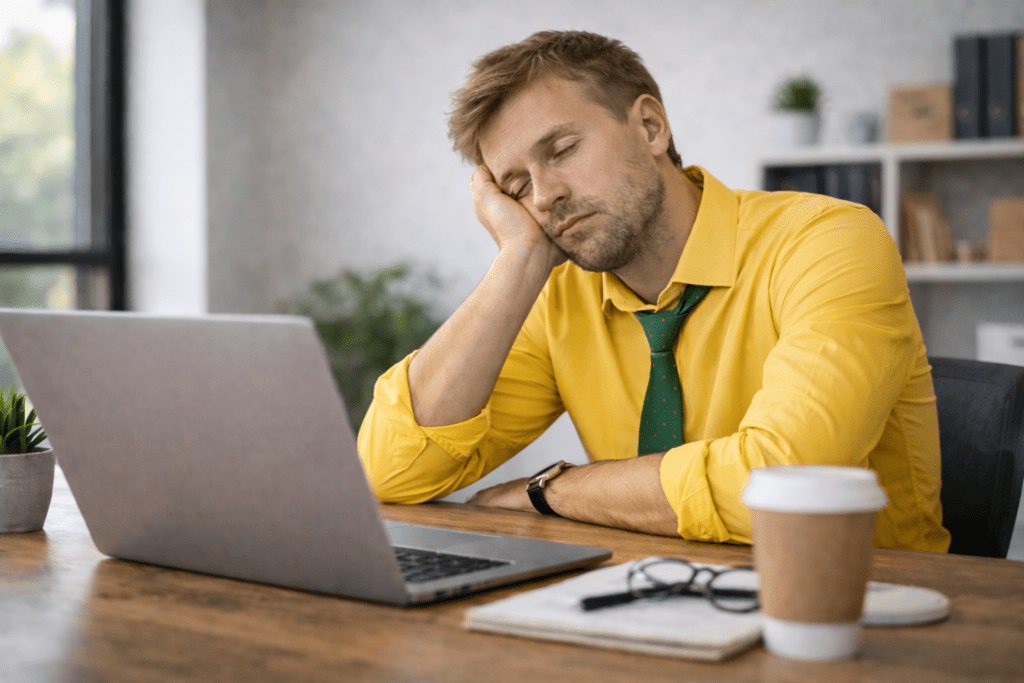
By 2 or 3 p.m., you may have spent hours focusing, blinking less, sitting still, making decisions, or looking at screens. At the same time, many people experience a natural dip in alertness later in the day.
That combination can make your eyelids feel slower and heavier. It does not always mean something is wrong. It may simply mean your focus system has been active for too long without enough recovery moments.
Why do my eyes feel heavy in the afternoon?
Eyes often feel heavy in the afternoon because focus load, reduced blinking, posture tension, and natural energy dips stack together. By later in the day, your eyes and brain may have had fewer recovery moments than they need.
What Most People Miss About Why Their Eyes Feel Heavy
Most people assume heavy eyes mean they need sleep. Sometimes that is true, but it is not the only explanation.
Heavy eyes usually come from load stacking. One small trigger may not be enough to bother you. But long focus, reduced blinking, dry air, mental fatigue, low movement, and afternoon alertness dips can combine until your eyelids feel harder to keep open.
The sensation itself is not the full problem. It is a signal. Your body may be telling you that your visual system, attention system, or environment needs a reset.
That is why rubbing your eyes may help for a moment but not fix the pattern. If the same triggers keep returning, the heavy feeling usually returns too.
| Heavy Eyes Trigger | What It Affects | Why Your Eyes Feel Heavy |
|---|---|---|
| Long focus | Eye and attention effort | Eyelids feel harder to keep open |
| Reduced blinking | Tear film stability | Eyes feel dry, slow, or weighted |
| Poor sleep | Recovery and alertness | Eyes feel heavy earlier in the day |
| Dry indoor air | Eye surface comfort | Heaviness comes with gritty discomfort |
| Screen use | Focus and blinking | Visual effort builds gradually |
| Allergies or sinus pressure | Eyelid swelling and irritation | Eyes feel puffy, heavy, or pressured |
| Mental fatigue | Brain attention systems | Eyes feel heavy even without sleepiness |
Heavy eyes keep showing up at the same time?
If your eyes feel heavy during screen work or afternoon focus dips, the pattern may be coming from a repeated daily trigger rather than one random moment.
Start with the most likely trigger: screen-related eye strain or afternoon energy dips.
The Real Cause-Effect Chain Behind Heavy Eyes
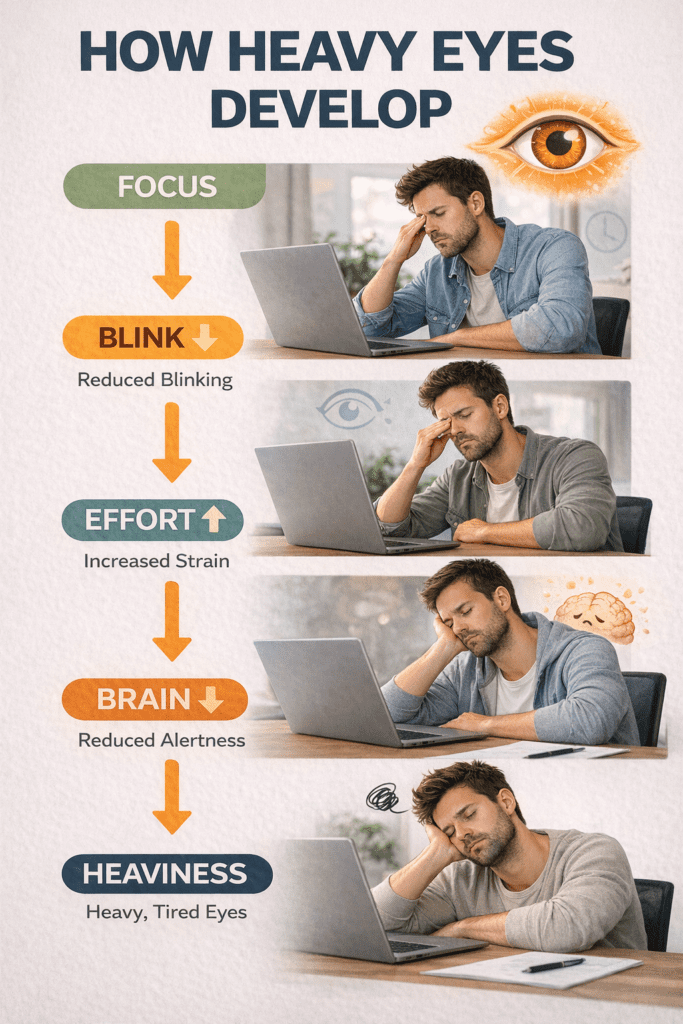
Here is the simplest way heavy eyes often build:
- You focus on one task for a long time.
- Your blink rate drops.
- The eye surface becomes less comfortable.
- Your attention system uses more effort.
- Mental or physical alertness starts to dip.
- Your eyelids feel less automatic.
- Your eyes feel heavy, slow, or harder to keep open.
This chain explains why heavy eyes often build gradually instead of hitting all at once. By the time you notice the sensation, several smaller loads may already be working together.
For broader medical background on eyestrain symptoms and causes, Mayo Clinic and Cleveland Clinic both explain that intense eye use, screen time, dry eyes, glare, and vision issues can contribute to tired or strained eyes.
Why Your Eyes Can Feel Heavy Even After Sleeping
Good sleep helps your eyes recover, but it does not remove every trigger that can appear during the day.
Your eyes can feel heavy even after sleeping if your sleep quality was poor, your eye surface is dry, your eyelids are puffy, or your day quickly adds focus and screen load. Some people also feel heavy-eyed in the morning because the brain has not fully shifted into alert mode yet.
If heaviness improves as you move, hydrate, blink, and start your day, it may simply be part of the normal wake-up transition. If it lasts all day or comes with vision changes, pain, or unusual symptoms, it deserves closer attention.
Why do my eyes feel heavy even after sleeping?
Your eyes can feel heavy after sleep if your eye surface is dry, your eyelids are puffy, your sleep quality was poor, or your brain has not fully shifted into alert mode. If it happens often or feels unusual, it may need closer attention.
When Heavy Eyes Need More Than Habit Changes
Most heavy-eye sensations are linked to everyday strain, focus, dryness, sleep, or environment. But some symptoms should not be ignored.
Consider contacting an eye care provider if heavy eyes are persistent, sudden, one-sided, or linked with blurry vision, double vision, eye pain, severe headaches, eyelid drooping, swelling, redness, or unusual light sensitivity.
You should also get checked if your eyes feel heavy all the time even after improving sleep, screen habits, hydration, and your work environment. Sometimes dry eye, allergies, prescription changes, eyelid issues, or other conditions can make the feeling more frequent.
Editorial note: This article is for general eye comfort and daily habit education. It does not diagnose eye conditions or replace care from an eye care provider. If symptoms are severe, sudden, persistent, or linked with vision changes, professional guidance is the safest next step.
Do heavy eyes mean my vision is getting worse?
Not always. Heavy eyes are often linked to fatigue, dry eyes, screen use, allergies, or mental load rather than permanent vision changes. But if heaviness comes with blurry vision, pain, double vision, or sudden changes, an eye care provider should check it.
How To Reset Heavy Eyes Without Overthinking It
Heavy eyes usually respond best when you change the conditions that created the feeling.

Start simple. Look away from the close task. Blink slowly several times. Sit back. Loosen your shoulders and jaw. Reduce harsh glare or dry airflow. Stand up and move for a minute if you have been sitting still.
The goal is not to fight the sensation directly. The goal is to interrupt the pattern behind it.
If your eyes feel heavy during screen work, start with the screen trigger. If they feel heavy during low-energy afternoons, add movement and light. If they feel heavy with dryness, reduce airflow and support blinking. If they feel heavy even after rest, pay attention to whether the pattern keeps repeating.
Heavy eyes are not random. They are often your system’s early signal that focus, blinking, alertness, and environment need a reset.
Heavy eyes showing up during screen time?
If your eyes feel heavy mainly after laptop, phone, or monitor use, the screen itself may be adding extra focus load, glare, and reduced blinking.
