

You slept enough, started the day normally, and still feel your energy collapse around the same time every afternoon. By 3 PM, your eyes feel heavy, your brain slows down, and simple work suddenly feels harder than it did an hour earlier.
If you keep asking why do I get tired at 3PM, the answer is usually timing. Around mid-afternoon, your natural body clock dip, rising sleep pressure, lunch digestion, hydration gaps, sitting time, screen fatigue, and morning mental load can all meet at once.
Quick Answer: You may get tired at 3PM because your circadian rhythm naturally lowers alertness in the early to mid-afternoon while sleep pressure has been building since you woke up. Lunch choices, dehydration, long sitting, caffeine timing, and screen focus can make that normal dip feel like a hard crash.
For the broader explanation of afternoon tiredness, read our main guide on why you feel tired in the afternoon. This article focuses only on the specific 3PM crash pattern
Table of Contents
- Why 3PM Is the Time Your Energy Often Drops
- Why You Get Tired at 3PM: Timing Map
- The Real Reason Your Body Clock Makes 3PM Feel Heavy
- How Lunch Timing Can Make the 3PM Crash Feel Stronger
- Why Hydration Gaps Often Show Up Around 3PM
- Why Sitting Since Morning Can Make 3PM Exhaustion Worse
- How Morning Decisions Catch Up With You at 3PM
- The 3 PM Energy Reset Framework
- When Afternoon Fatigue Feels Unusual
Why 3PM Is the Time Your Energy Often Drops
The 3PM slump often feels random, but the timing usually makes sense. By mid-afternoon, you have already been awake for several hours, used mental energy through the morning, eaten lunch, sat through tasks or meetings, and possibly gone too long without water or movement.
At the same time, your circadian rhythm can create a lower-alertness window between early and mid-afternoon. This means 3PM fatigue is often not caused by one mistake. It is usually the point where several normal daily signals stack together.
That is why you can sleep 8 hours and still feel drained at 3PM. Sleep helps your baseline energy, but it does not erase the natural afternoon dip or the effects of lunch, screens, sitting, hydration, and workload.
Why You Get Tired at 3PM: Timing Map
| 3PM Trigger | Why It Hits Around This Time | What Usually Helps |
|---|---|---|
| Body clock dip | Alertness often drops in the early to mid-afternoon. | Use light, movement, and easier tasks. |
| Sleep pressure | Adenosine builds the longer you are awake. | Take a short reset or brief walk. |
| Lunch timing | Blood sugar changes may appear 1–3 hours after eating. | Balance lunch with protein, fiber, and healthy fats. |
| Hydration gap | Many people reach 3PM after coffee but little water. | Drink water before the crash gets strong. |
| Sitting since morning | Low movement reduces body stimulation and alertness cues. | Stand, walk, stretch, or change posture. |
| Screen fatigue | Hours of visual focus and task switching drain attention. | Look away, reduce notifications, and take a screen break. |
The Real Reason Your Body Clock Makes 3PM Feel Heavy
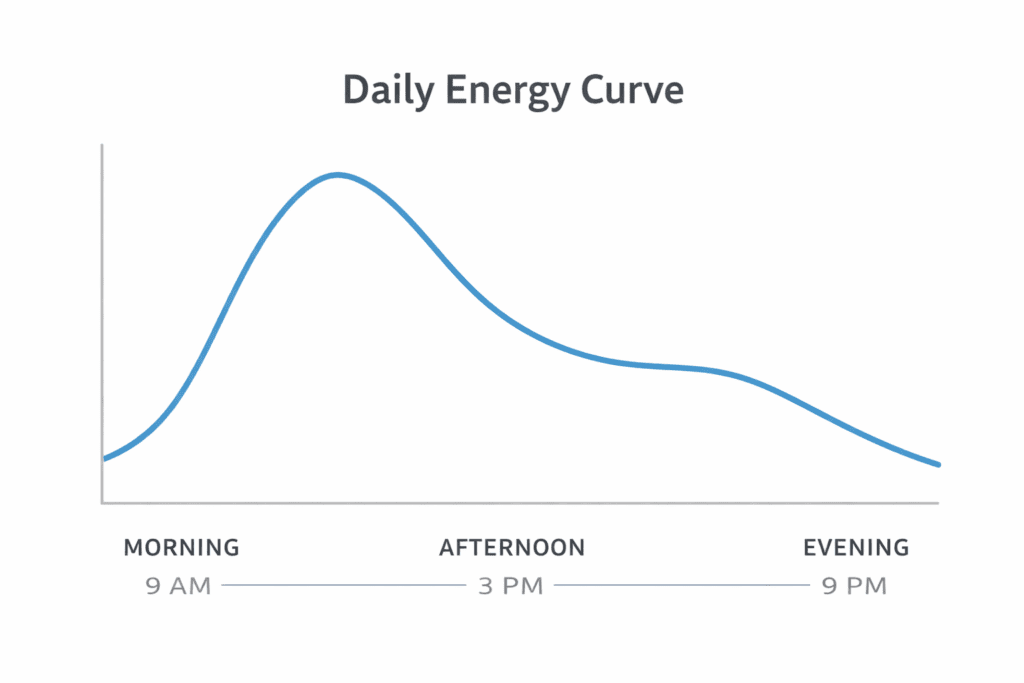
Your body clock does not keep alertness perfectly flat all day. For many adults, alertness naturally dips in the early to mid-afternoon, which is why 3PM can feel heavier than late morning.
This does not mean your sleep failed. It means your internal rhythm is entering a lower-alertness window while your morning energy has already been used for several hours.
Around 1 PM to 3 PM:
- Core body temperature slightly drops
- Alertness decreases
- Reaction time slows
This happens even if you:
- Slept 8 hours
- Ate breakfast
- Exercised in the morning
It’s a built-in energy valley in your daily cycle.
Quick Tip
Instead of scheduling your hardest cognitive tasks at 3 PM, move deep work earlier in the day and leave lighter admin tasks for this window.
Is the 3PM slump real?
Yes, the 3PM slump is real for many adults. Alertness often drops in the early to mid-afternoon because of normal body clock timing and rising sleep pressure. Daily habits such as lunch choices, hydration, sitting, and screen work can make that dip feel mild or much stronger.
How Lunch Timing Can Make the 3PM Crash Feel Stronger
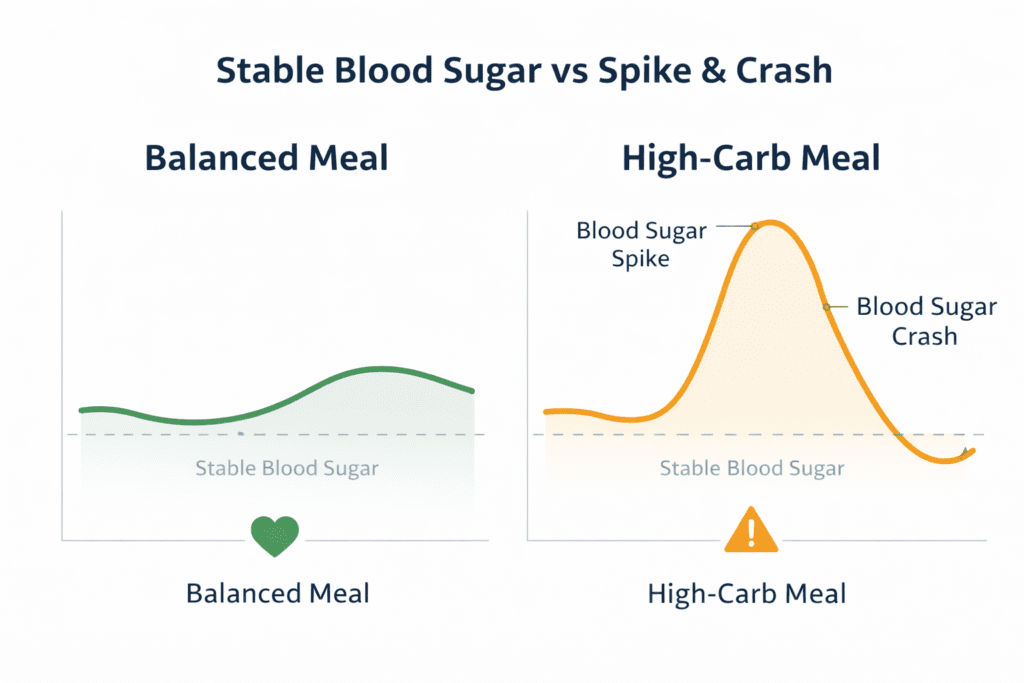
Lunch does not always cause the 3PM crash by itself, but it can make the timing feel much worse. If you eat around noon, blood sugar changes may become more noticeable one to three hours later, right when your body clock is already moving into a lower-alertness window.
That is why a refined-carb lunch can line up almost perfectly with 3PM fatigue. The issue is not simply that you ate lunch. It is that lunch timing, insulin response, and the afternoon dip can overlap.
Symptoms include:
- Brain fog
- Sleepiness
- Irritability
- Cravings
What Most People Get Wrong
They blame poor sleep when it’s actually unstable blood sugar.
Try This Instead
Build your lunch around:
- 20–30 grams of protein
- High-fiber vegetables
- Healthy fats
- Moderate complex carbs
For more structured strategies, you can reinforce these habits with afternoon energy crash prevention strategies here: https://everydayhealthplan.com/afternoon-energy-crash-prevention/
Why do I get so tired around 3PM after lunch?
You may get tired around 3PM after lunch because blood sugar changes can show up one to three hours after eating. If lunch was heavy in refined carbs or low in protein and fiber, that timing can overlap with your natural afternoon alertness dip.
Why Hydration Gaps Often Show Up Around 3PM
Many people reach 3PM after several hours of coffee, meetings, screen work, and very little water. That hydration gap can make the normal afternoon dip feel stronger.

You may not feel clearly thirsty, but low fluid intake can still make focus, mood, and energy feel worse by mid-afternoon.
Even mild dehydration can affect concentration and alertness. Harvard Health explains that hydration supports daily body function and focus, which helps explain why low fluid intake can make the 3PM crash feel heavier.
Common signs of mild dehydration:
- Headache
- Low focus
- Fatigue
- Slower thinking
You may not feel thirsty—but your brain feels it.
Quick Reset
Drink 16–20 ounces of water and walk for 5 minutes. Many people feel better after pairing water with movement, especially when they have been sitting for hours.
To build consistency, follow simple daily hydration habits for steady energy at https://everydayhealthplan.com/simple-daily-hydration-habits-energy/
Can dehydration make the 3PM crash worse?
Yes, low fluid intake can make the 3PM crash feel worse. Many people drink coffee in the morning but very little water before mid-afternoon. That hydration gap can add to brain fog, low focus, and a heavier afternoon slump.
Why Sitting Since Morning Can Make 3PM Exhaustion Worse
If you have been sitting since 9 AM, your body may reach 3PM with very little movement input. That matters because movement helps keep your body alert, engaged, and responsive during the workday.

By mid-afternoon, long sitting can stack on top of the natural body clock dip. This can make the 3PM crash feel heavier than it would if you had moved regularly through the morning.
- Less posture change
- Fewer movement signals
- More stiffness
- Lower physical stimulation
By 3PM, that low-stimulation state can make your body feel slower, heavier, and less ready for focused work.
If sitting is a major trigger for you, read our deeper guide on why sitting too long makes you tired.
Simple 3-Minute Movement Reset:
- 10 bodyweight squats
- 30 seconds marching in place
- 10 shoulder rolls
- 5 slow deep breaths
No equipment needed. Just movement.
Why does sitting all morning make me tired at 3PM?
Sitting all morning can make you feel tired at 3PM because your body has had fewer movement signals for several hours. By mid-afternoon, stiffness, low physical stimulation, and the natural body clock dip can stack together and make focus feel harder.
How Morning Decisions Catch Up With You at 3PM
By 3PM, your brain has usually spent hours switching between emails, meetings, messages, decisions, and unfinished tasks. Even when your body is not physically active, your attention system has been working all morning.
This is why the 3PM crash can feel mental before it feels physical. You may not need sleep as much as your brain needs a lower-friction task, a short reset, or a break from constant switching.
Emails. Meetings. Notifications. Messages. Small choices all day long.
This creates decision fatigue.
Mental fatigue often feels like physical exhaustion—even when your body is fine.
Pro Insight
For many people, though, a 3PM crash is strongly influenced by daily timing patterns like sleep consistency, lunch balance, hydration, movement, screen work, and mental load.
If your 3PM crash feels tense instead of sleepy, this deeper guide explains why you may feel mentally drained but restless in the afternoon.
Why do I get tired at 3PM even when I am not physically active?
You can get tired at 3PM even without physical activity because mental work also drains attention. Meetings, emails, decisions, notifications, and task switching can build cognitive fatigue by mid-afternoon, making your brain feel slower even if your body did not work hard.
The 5-Layer 3PM Crash Model
Instead of guessing why the crash hits at the same time every day, look at the five layers that usually build before 3PM.
The stronger your crash feels, the more likely it is that two or more layers are stacking together.
- Sleep rhythm
- Blood sugar balance
- Hydration
- Movement
- Cognitive load
If two or more are unstable, the afternoon crash becomes stronger.
You don’t need perfection in all five. You need consistency.
Layer 1: Sleep Rhythm (Not Just Hours)
Sleeping 8 hours at inconsistent times can disrupt your internal clock.
Going to bed at midnight on weekdays and 2 AM on weekends shifts your rhythm. That makes the afternoon dip more intense.
Consistency matters more than occasional long sleep.
Layer 2: Blood Sugar Stability
Balanced meals prevent spikes and crashes.
A simple formula:
Protein + Fiber + Healthy Fat + Moderate Carbs
This slows digestion and supports steady energy.
Layer 3: Hydration Timing
Front-load hydration:
- 16–20 ounces within 30 minutes of waking
- Another 16 ounces before lunch
By 3 PM, you’re less likely to dip.
Layer 4: Micro-Movement
Even brief standing or walking breaks can send your body movement signals before the 3PM dip gets stronger.
Layer 5: Cognitive Load Management
Batch similar tasks together.
Avoid constant task-switching.
Schedule deep work when your alertness is highest.
The 3 PM Energy Reset Framework
Instead of reacting emotionally to your slump, use this simple system.
Step 1: Hydrate
Drink water first.
Step 2: Move
Stand up and walk for 2–5 minutes.
Step 3: Breathe
Take 5 slow, deep breaths.
Step 4: Evaluate Lunch
If lunch was carb-heavy, add a protein snack.
Step 5: Shift Task Type
Move to lighter or creative tasks during the dip.
This small ritual can change how your afternoons feel.
Why do I get tired at 3PM every day?
You may get tired at 3PM every day because the same triggers repeat in the same window. Your body clock dip, sleep pressure, lunch timing, hydration gaps, sitting, screen fatigue, and mental load can stack together around mid-afternoon.
Try the 3PM Reset Before the Crash Gets Stronger
If your energy drops around the same time every afternoon, do not wait until you feel completely drained. Use a simple reset before 3PM: drink water, stand up, move for two minutes, and shift to a lighter task.
- 2:45 PM: Drink water
- 2:47 PM: Stand and move
- 2:50 PM: Take 5 slow breaths
- 2:55 PM: Switch to a lighter task
Common Mistakes That Make 3 PM Exhaustion Worse
Mistake 1: Drinking More Coffee
Caffeine at 3 PM may disrupt nighttime sleep, which makes tomorrow’s slump worse.
Mistake 2: Skipping Lunch
This destabilizes blood sugar.
Mistake 3: Doom-Scrolling
Scrolling social media feels like a break, but it often increases mental fatigue.
Mistake 4: Powering Through Without Breaks
Your brain needs micro-recovery periods.
How to Prevent Tomorrow’s 3 PM Crash
Energy stability starts earlier in the day.
Morning:
- Get natural light within 30 minutes of waking
- Eat protein at breakfast
- Hydrate early
Midday:
- Eat balanced meals
- Take at least two short movement breaks
Afternoon:
- Hydrate again
- Shift workload strategically
- Avoid late caffeine
Small adjustments compound over time.
One 3PM Pattern Worth Testing First
If your crash happens almost every day around the same time, test one simple pattern for a week: water before 2:30 PM, a short movement break before the crash, and a lunch that includes protein and fiber.
This works because it targets the three triggers that often stack before 3PM: hydration gaps, low movement, and post-lunch blood sugar changes. You are not trying to overhaul your whole day. You are testing the timing that seems to create the crash.
Real-Life Example
Imagine a remote worker who sleeps 7.5 hours but eats a bagel for breakfast and pasta for lunch. By 3 PM, he feels drained daily.
After making small changes:
- Adds eggs or Greek yogurt at breakfast
- Drinks water consistently
- Takes 3-minute standing breaks
- Balances lunch
His 3PM crash becomes less intense because fewer triggers are stacking at the same time.
No extreme routine. Just rhythm alignment.
When Afternoon Fatigue Feels Unusual
Occasional 3 PM fatigue is normal.
But if exhaustion is:
- Persistent every day
- Severe or worsening
- Paired with dizziness or unusual symptoms
It’s worth speaking with a healthcare professional.
For many people, though, a 3PM crash is strongly influenced by daily timing patterns like sleep consistency, lunch balance, hydration, movement, screen work, and mental load.
When should I worry about getting tired at 3PM?
A mild 3PM dip is common, but you should take it more seriously if the fatigue is severe, sudden, worsening, daily, or hard to function through. It is also worth speaking with a healthcare professional if it comes with dizziness, unusual weakness, chest discomfort, or other concerning symptoms.
The Bigger Picture Behind Your 3PM Crash
If you keep asking why you get tired at 3PM, the answer is rarely just one thing. The crash usually gets stronger when your body clock dip, sleep pressure, lunch timing, hydration, sitting, screen work, and mental load all meet in the same window.
The goal is not to fight your biology with more willpower. It is to reduce the triggers that stack before 3PM so the normal dip feels less disruptive.
Make Tomorrow’s 3PM Crash Easier to Catch
If your 3PM slump keeps repeating, the best next step is not more willpower. It is a simple daily system that reduces the triggers before they stack together.
About This Content
This article is for educational purposes only and is not intended to diagnose or treat medical conditions. Occasional afternoon fatigue is common. If exhaustion is persistent, severe, or accompanied by other symptoms, consult a qualified healthcare professional for evaluation.
Content is based on established sleep science, hydration research, and behavioral energy management principles.
