
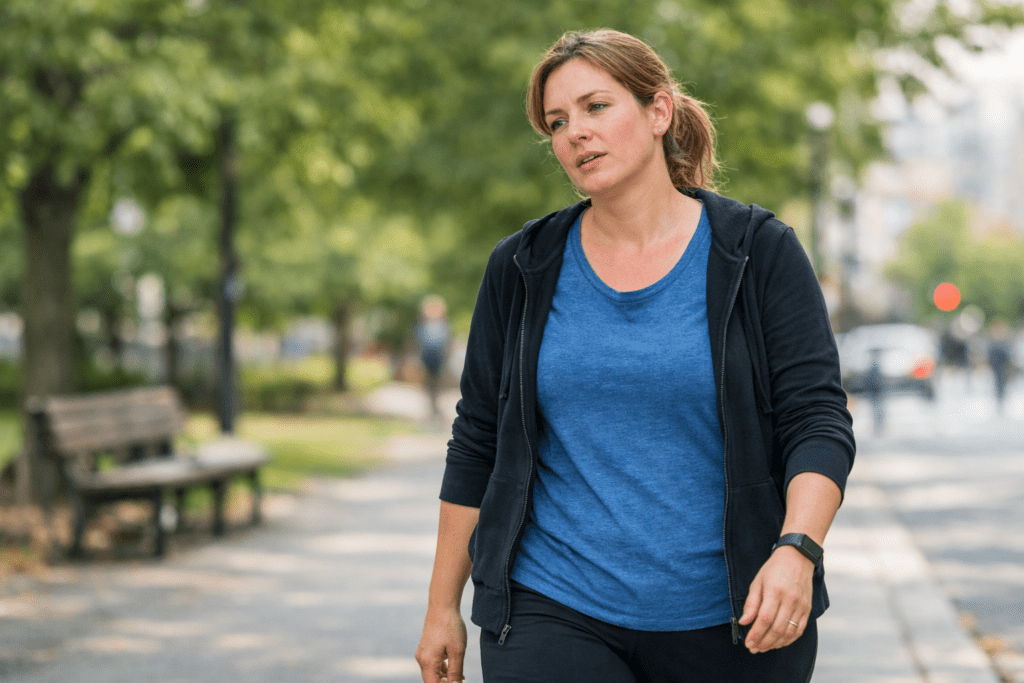
You step outside for a short walk. Maybe it’s a quick stroll around the block, a walk through your neighborhood park, or a casual walk during a lunch break.
It doesn’t feel intense. Your breathing is normal. Your legs don’t feel sore. But when you get back home or return to your desk, something strange happens.
You suddenly feel tired.
Not exhausted like after a workout. More like a quiet energy drop. Your body feels heavier. Your focus dips. Sometimes you even feel sleepy.
Many people experience this but assume it means one of three things:
they’re out of shape
they didn’t drink enough water
they didn’t sleep well
But in many cases, that’s not what’s actually happening.
Your body is quietly managing several energy-intensive biological systems at the same time — even during a light walk.
The fatigue you feel often has less to do with the walking itself and more to do with how your body regulates temperature, circulation, and oxygen while adapting to the outdoor environment.
Once you understand this chain reaction, the tired feeling after a walk starts to make a lot more sense.
Here’s what most people get wrong.
Feeling tired after walking does NOT automatically mean you’re out of shape.
In reality, your body may be triggering a hidden response that temporarily redirects energy away from alertness and toward internal regulation.
That’s why the fatigue can feel sudden — even after a short, easy walk.
In simple terms, your body is using extra energy to regulate itself while walking, which can temporarily lower how alert and energized you feel.
even if the walk itself feels easy.
Table of Contents
What Does It Mean When You Feel Tired After Walking Outside
Feeling tired after walking usually happens because your body activates multiple systems at once, including circulation, temperature regulation, and oxygen delivery. This temporary energy shift can lower alertness and cause a short, mild drop in energy even after a simple walk.
Many people wonder why walking can feel tiring even when it seems easy.
The answer is that even light movement makes the body adjust several systems at the same time.
The Science Behind Why Walking Activates Multiple Energy Systems At Once
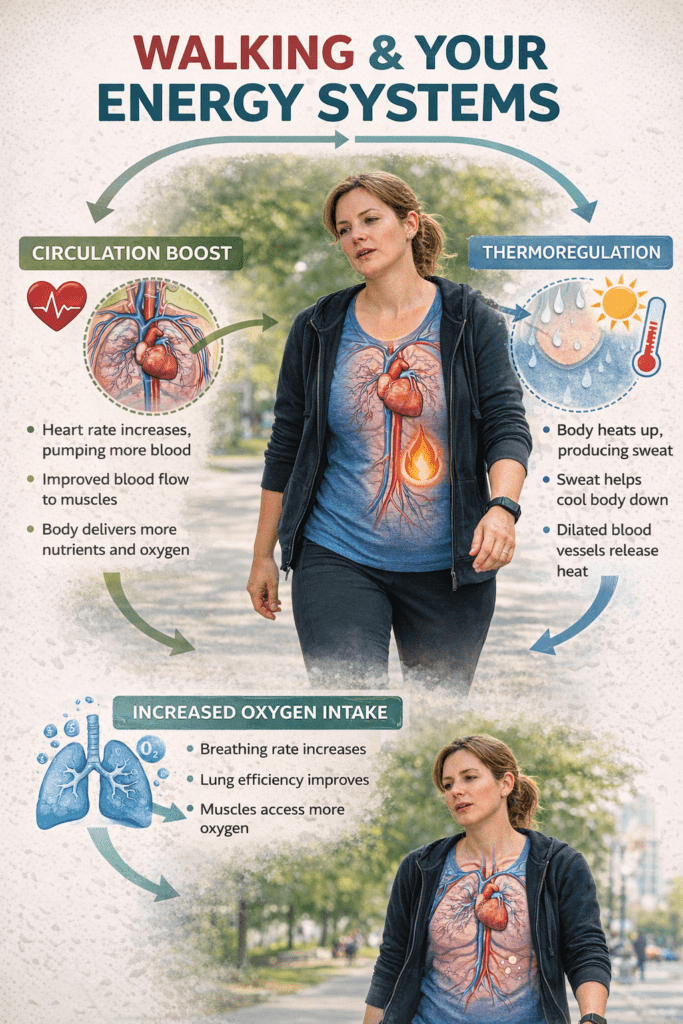
Walking seems simple, but biologically it is surprisingly complex.
When you start walking, even at a slow pace, your body activates multiple systems simultaneously.
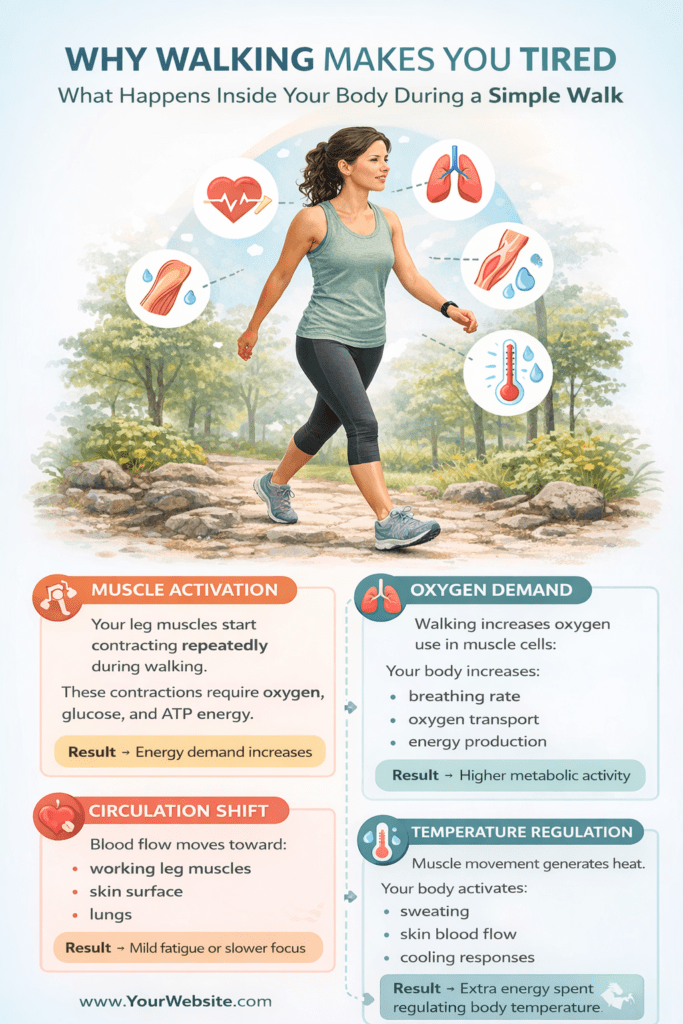
- skeletal muscles begin contracting rhythmically
- your heart increases blood flow to working muscles
- oxygen demand rises slightly
- the nervous system adjusts posture and balance
- the body begins regulating temperature
Each one of these processes requires energy.
But something important happens when you walk outside instead of indoors.
Your body must also respond to the external environment.
This includes factors like sunlight exposure, air temperature, wind, humidity, and terrain changes.
The brain region responsible for temperature regulation, called the hypothalamus, constantly monitors your internal temperature and the surrounding environment.
Scientific explanations of this system are described in resources about how the body regulates temperature.
Why Walking Fatigue Is Not the Same as Exercise Fatigue
Most people assume that feeling tired after walking is the same as feeling tired after a workout.
But these are not the same thing.
Exercise fatigue usually comes from muscle exhaustion, energy depletion, or overexertion.
Walking fatigue, on the other hand, often comes from internal regulation.
During a simple walk, your body is not pushing to its limits. Instead, it is adjusting circulation, temperature, oxygen delivery, and nervous system balance at the same time.
This creates a different kind of fatigue.
This is why it can feel confusing — it doesn’t feel like typical tiredness.
It feels like low energy, but it’s actually active regulation.
It’s not caused by “doing too much.”
It’s caused by your body actively maintaining stability while responding to the environment.
That’s why even an easy walk can sometimes leave you feeling unexpectedly tired.
The Main Reasons Your Body Feels Tired After Walking Outside
The main reasons you feel tired after walking include:
• Circulation shifting toward muscles and skin
• Temperature regulation increasing energy use
• Oxygen demand rising during movement
• Nervous system switching into recovery mode
These biological adjustments can temporarily lower perceived energy after walking.
The Hidden Reason Your Body Uses Extra Energy Regulating Temperature Outdoors
One of the biggest hidden drivers of fatigue during walking is thermoregulation.
Thermoregulation is the process your body uses to keep internal temperature stable around 98.6°F.
Even small increases in muscle activity generate heat.
Walking activates large muscle groups including:
- quadriceps
- hamstrings
- calves
- glutes
As these muscles work, they generate heat.
To prevent overheating, the body begins cooling itself through several mechanisms.
Blood vessels near the skin expand in a process called vasodilation.
More blood flows toward the surface of the skin, allowing heat to escape into the surrounding air.
Sweat glands also begin producing small amounts of sweat.
Even if you don’t notice sweating, evaporation helps regulate temperature.
Heart rate also increases slightly to support these adjustments.
All of these processes require circulatory energy and fluid balance adjustments.
Environmental heat exposure can create similar fatigue patterns described in tired after being in the sun.
This quick comparison shows how different body systems contribute to post-walk fatigue.
| Fatigue Factor | What Happens in the Body | Energy Impact |
|---|---|---|
| Thermoregulation | Body regulates temperature via sweating and circulation | Decreases energy due to cooling |
| Blood Circulation Shifts | Blood redirected to muscles, skin, and lungs | Reduces brain circulation |
| Oxygen Demand | Muscles require more oxygen to work | Increased metabolic demand |
| Hydration & Electrolyte Levels | Fluid and electrolyte balance impacts circulation | Can cause fatigue if off-balance |
| Mental Fatigue (Brain Switching) | Shift from movement to recovery mode | Temporary decrease in alertness |
The Real Cause Of Circulation Changes That Can Trigger Fatigue After Walking
Another important factor is how blood circulation shifts during walking.
When you’re sitting, blood circulation remains relatively balanced.
But when you begin walking, blood flow starts shifting toward working muscles.
Leg muscles require additional oxygen and nutrients to keep contracting.
To meet this demand, the circulatory system redirects blood toward:
- leg muscles
- skin surface
- lungs for oxygen exchange
This means slightly less blood flow reaches the brain for short periods.
Even small changes in cerebral circulation can influence how alert you feel.
Some people notice:
- mild tiredness
- slower thinking
- reduced concentration
This effect often becomes noticeable when someone immediately returns to desk work.
This is one reason fatigue overlaps with issues discussed in why am I so tired in the afternoon.
Why Blood Sugar Regulation Can Influence Fatigue After Light Walking
Another hidden factor that can influence fatigue after walking is how your body regulates blood sugar during movement.
Even light physical activity increases the rate at which muscles absorb glucose from the bloodstream. Muscles use this glucose as a fuel source to generate ATP, the molecule that powers cellular energy production.
If your blood sugar levels were already slightly low before the walk, this increased glucose usage can create a temporary drop in available energy. The brain is especially sensitive to glucose fluctuations, which is why some people experience mild fatigue, shakiness, or reduced concentration after walking.
This effect is closely related to metabolic energy dips explained in articles like why blood sugar crash symptoms happen and why do I feel tired after eating.
The Link Between Oxygen Demand Muscle Work And Energy Drain
Walking may not feel intense, but it still increases oxygen demand.
Muscle cells produce energy using oxygen and glucose.
This process occurs inside mitochondria through aerobic respiration.
When muscles begin working:
- breathing rate increases slightly
- heart rate rises
- oxygen transport increases
Even a casual walk can increase metabolic activity two to three times above resting levels.
Your body increases:
- oxygen delivery
- glucose use
- ATP production
ATP is the molecule that powers cellular energy.
Health experts often explain how physical activity affects energy balance in articles like does exercise give you energy.
After the walk ends, the body enters a recovery phase while it restores these systems.
That recovery period can feel like fatigue.
These example outcomes show how different walking conditions can change energy demand.
| Test Condition | Results | Energy Use Increase |
|---|---|---|
| Walking for 10 minutes | Increased heart rate, higher oxygen intake | +15% energy expenditure |
| Walking in the sun (hot day) | Elevated body temperature, more sweat production | +30% energy expenditure |
| Walking after a meal | Blood redirected to digestive system, less focus | +10% energy drain |
| Walking on uneven terrain | Extra stabilization by lower body muscles | +20% energy consumption |
| Post-walk Recovery | Parasympathetic nervous system shifts to recovery | -25% energy immediately after |
The Hidden Role Of Hydration And Electrolytes In Post-Walk Energy Levels
Hydration plays a surprisingly important role in how energized you feel after walking.
When your body begins regulating temperature through sweating, it also loses small amounts of electrolytes such as sodium and potassium. These minerals help maintain fluid balance, nerve signaling, and muscle contraction.
Even mild electrolyte changes can affect how efficiently the cardiovascular system circulates blood and oxygen. If hydration levels are slightly off, the body may need to work harder to maintain circulation and temperature balance.
This is why some people notice fatigue patterns connected to hydration changes, which are discussed further in tired after drinking water electrolyte effect and simple daily hydration habits for energy.

What Happens When Your Nervous System Switches From Activity To Recovery
Another reason people feel tired after walking involves the autonomic nervous system.
The autonomic nervous system has two main branches:
- sympathetic nervous system
- parasympathetic nervous system
The sympathetic system activates during movement.
It increases:
- heart rate
- breathing rate
- alertness
Once you stop walking, the parasympathetic system takes over.
This system promotes:
- relaxation
- slower heart rate
- energy conservation
The shift between these two states can produce a temporary drop in alertness.
This is why many people feel calm or even sleepy after walking.
The Impact Of Mental Fatigue When Physical Movement Interrupts Focus
This is one of the most overlooked reasons.
Many people don’t feel physically tired after walking — they feel mentally drained.
That’s because the brain is constantly switching between focus states, which quietly consumes energy.
Physical fatigue is not the only factor that can influence how tired you feel after walking.
Mental fatigue can also appear when the brain shifts rapidly between different types of activity. For example, someone may go from intense screen work to walking outdoors and then immediately return to computer tasks.
The brain must constantly adjust between sensory environments, attention demands, and movement coordination.
This cognitive switching can briefly drain mental energy reserves, especially if the walk occurs during a workday. Similar patterns of mental fatigue are explored in mentally drained but restless in the afternoon and mental fatigue after work 15 minute reset.
What Most People Miss About Walking Fatigue And Energy Levels
Most people assume feeling tired after walking means they need better endurance.
But that’s usually not the case.
The tired feeling often means the body successfully activated several regulatory systems.
These include:
- temperature control
- circulation management
- oxygen delivery
- nervous system balance
Each of these systems requires small amounts of energy to maintain balance.
The fatigue you feel simply reflects temporary energy redistribution.
Over time, as the body becomes more efficient, this fatigue often decreases.
What makes this confusing is that this type of fatigue feels similar to being low on energy, even though the body is actually working correctly.
In many cases, this is not a sign of weakness.
It is a sign that multiple systems were successfully activated at the same time.
Why Sleep Quality Can Influence How Your Body Responds To Walking
Another factor that can influence fatigue after walking is sleep quality.
During sleep, the body restores energy reserves, balances hormones, and repairs tissues used during daily activity. When sleep quality is poor, the body may start the day with slightly lower energy reserves.
Even mild physical activity can then reveal this underlying fatigue more quickly.
People who frequently feel tired during simple activities sometimes notice related patterns such as waking up tired or feeling wired but exhausted at night, topics explored in wake up tired even after 8 hours and wired but tired at night.
This is why a simple walk can feel completely different depending on how well your body recovered overnight.
The Impact Of Outdoor Conditions On Why Walking Sometimes Feels Draining
Common biological and environmental reasons walking can make you feel tired
The environment plays a surprisingly large role in post-walk fatigue.
Environmental Factors That Increase Post-Walk Fatigue
• High outdoor temperatures
• Humid air that slows sweat evaporation
• Direct sunlight exposure
• Wind increasing heat loss
• Uneven terrain requiring extra muscle activation
• Rapid temperature changes between indoors and outdoors
Environmental adjustments constantly force the body to adapt.
This ongoing regulation consumes energy.
General explanations about how physical activity influences the body can also be found in benefits of regular physical activity and physical activity basics and your health.
Why Sunlight Exposure Can Amplify Fatigue During Outdoor Walking
Sunlight exposure affects more than just body temperature.
When sunlight reaches the skin and eyes, it can trigger biological signals that influence hormones involved in circadian rhythm and energy regulation. The body may increase circulation to the skin to help dissipate heat while also activating temperature-control responses.
If sunlight intensity is high, the body may increase sweating and circulation adjustments, which require additional energy.
This is why some people notice stronger fatigue when walking in bright sun, a pattern also explained in tired after being in the sun.
Sunlight also plays a role in circadian rhythm regulation. Light entering the eyes sends signals to the brain’s internal clock, which helps coordinate hormone release throughout the day. These signals can briefly shift alertness patterns, which sometimes creates a short adjustment period where the body feels calmer or slightly less energized.
Why Short Walks Sometimes Feel More Draining Than Longer Ones
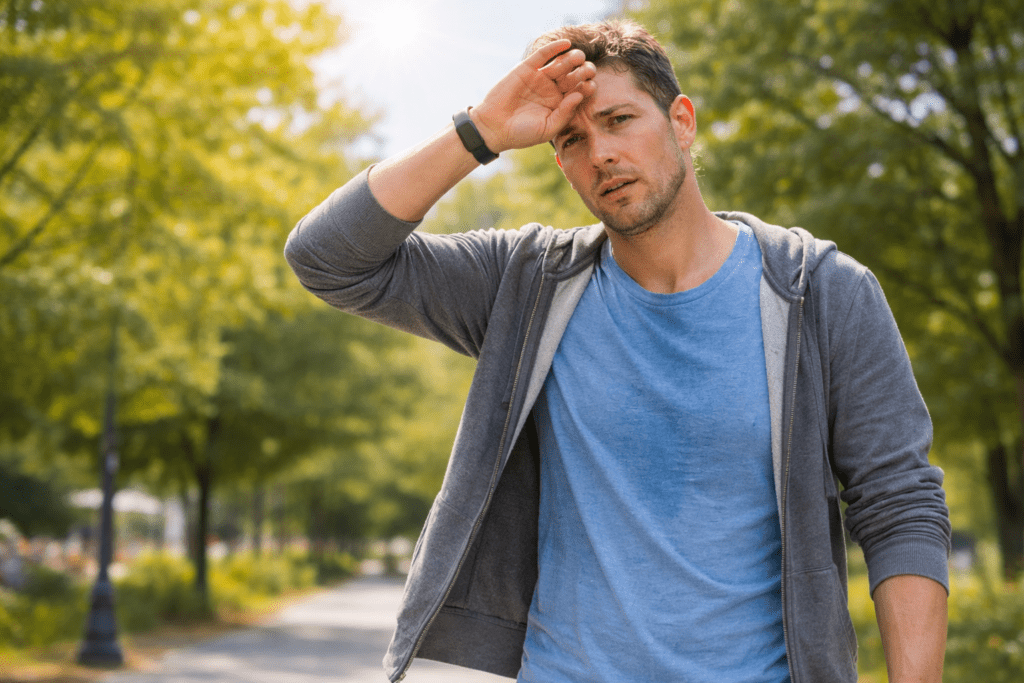
A surprising pattern many people notice is that short walks sometimes feel more tiring than longer ones.
This happens because the body may not fully transition into an efficient rhythm.
During the first 5–10 minutes of walking the body is still adjusting:
- circulation patterns
- breathing rhythm
- temperature regulation
If the walk ends during this adjustment period, the body immediately shifts into recovery mode.
That abrupt transition can make fatigue feel stronger.
Longer walks allow the body to stabilize its metabolic rhythm.
That’s why some people feel more energized after a longer walk compared to a very short one.
People who experience energy crashes during the day often see similar patterns discussed in midday energy boost without coffee and afternoon energy crash prevention.

How Sedentary Lifestyles Can Make Light Walking Feel More Fatiguing
For people who spend long periods sitting during the day, even a short walk can feel unexpectedly draining.
When the body remains sedentary for hours, circulation slows and muscles remain relatively inactive. The sudden transition to movement requires the cardiovascular system to quickly increase blood flow and oxygen delivery.
This adjustment can temporarily feel tiring until the body re-establishes efficient circulation.
Many people notice this effect during desk-heavy workdays, which is related to patterns described in why sitting too long makes you tired and tired after sitting too long.
The Role Of Small Energy Slumps That Naturally Occur During The Day
Human energy levels naturally rise and fall throughout the day.
Hormones such as cortisol and melatonin follow daily rhythms that influence alertness and fatigue. These fluctuations can make certain times of day feel more tiring even when activity levels remain the same.
For example, many people experience a natural energy dip during mid-afternoon. If a walk occurs during this window, the fatigue may feel stronger.
This daily rhythm is discussed further in exhausted at 3pm even after sleep and afternoon habits boost energy.
These natural energy rhythms are influenced by circadian signals triggered by environmental cues such as sunlight exposure.
Natural light reaching the eyes sends signals to the brain’s internal clock, which helps regulate hormones like cortisol and melatonin that influence alertness and fatigue.
Because of this, walking outdoors during a natural energy dip may make fatigue feel stronger even though the activity itself is light.
Still dealing with random energy crashes during the day?
If fatigue does not only happen after walking, you may be dealing with a broader daily energy pattern. These guides explain why your energy drops at certain times and what may be happening inside the body.
How Sudden Light Exercise Can Reveal Hidden Energy Imbalances In The Body
Sometimes a short walk does not actually cause fatigue — it simply reveals fatigue that was already present.
When the body begins moving, energy systems become more active. Muscles require fuel, circulation increases, and oxygen delivery rises.
If the body was already slightly low on energy reserves due to factors like poor sleep, irregular meals, or prolonged stress, this activation may expose the imbalance.
Instead of feeling energized, the person suddenly becomes aware of the fatigue that was already building.
This pattern often overlaps with symptoms described in why do I suddenly feel weak and tired and why do I feel shaky and tired.
Recognizing this pattern helps explain why the same walk can feel energizing one day and draining the next.
Why Fresh Air Exposure Can Sometimes Trigger Temporary Relaxation Fatigue
Many people report feeling unusually relaxed or sleepy after spending time outdoors, even when the physical activity was minimal.
One reason involves the way fresh air influences the respiratory system and nervous system.
Outdoor air often contains lower concentrations of indoor pollutants and carbon dioxide, especially compared to enclosed spaces like offices or apartments. When breathing patterns shift in cleaner air, the body may experience slightly improved oxygen exchange.
While this sounds energizing, it can also activate the parasympathetic nervous system — the branch responsible for rest and recovery.
When this system activates, the body slows heart rate, relaxes muscles, and promotes calmness. This relaxation response can feel like mild fatigue.
This is similar to relaxation responses discussed in 5 simple breathing exercises to reduce daily stress and desk breathing exercises office workers.
Why Changes In Posture And Muscle Stabilization Increase Energy Use During Walking
Walking outdoors requires more than simple leg movement.
The body must constantly adjust posture, balance, and muscle stabilization as it moves across different surfaces.
Small stabilizing muscles in the hips, ankles, and core activate continuously to maintain balance. Even if the terrain looks flat, the body still performs dozens of small adjustments every minute.
These micro-adjustments require additional neural signals and muscular effort.
Although each adjustment uses only a tiny amount of energy, the combined effect can increase metabolic demand.
This is why posture resets and muscle activation exercises discussed in 3 minute posture reset desk workers and 5 minute morning stretch desk workers can influence how energized someone feels during movement.
The Hidden Influence Of Sensory Stimulation On Energy Levels During Outdoor Walking
Outdoor environments stimulate the brain in ways indoor environments usually do not.
While walking outside, the brain processes a constant stream of sensory input including:
- changing visual landscapes
- moving people or vehicles
- environmental sounds
- temperature sensations
- sunlight brightness
Processing this sensory information requires activity in multiple brain regions, including those responsible for attention and spatial awareness.
For many people this stimulation feels refreshing.
However, if someone is already mentally overloaded, additional sensory input can contribute to mild fatigue.
This is similar to sensory fatigue patterns explained in computer eye fatigue relief and why eyes feel tired after looking at screens.
Why Walking After Eating Can Amplify Post Walk Fatigue
The timing of a walk can also influence how tired someone feels afterward.
When walking shortly after eating, the body is already directing blood flow toward the digestive system.
Digestion requires energy and circulation to help break down food and absorb nutrients.
If physical activity begins during digestion, the body must divide blood flow between:
- digestive organs
- working muscles
- skin temperature regulation
This circulation competition can temporarily lower available energy.
Some people experience stronger fatigue when walking soon after meals, a pattern related to topics discussed in tired after eating lunch and tired after healthy breakfast.
Related Reading
Fatigue after meals can change how walking feels
If your energy drops more after walking when you have recently eaten, these articles explain the blood sugar, digestion, and post-meal energy patterns that may be contributing.
Why Consistent Walking Eventually Improves The Body’s Energy Efficiency

Even though walking can sometimes produce short-term fatigue, regular walking generally improves long-term energy regulation.
The body adapts to repeated movement by improving:
- cardiovascular efficiency
- oxygen transport
- thermoregulation speed
- metabolic flexibility
As these systems adapt, the body becomes better at managing energy during activity.
This means the same walk that once caused fatigue may later feel refreshing.
Habit-based energy improvements are also discussed in daily healthy habits without overwhelm and healthy habits that actually stick.
Over time, consistent walking helps stabilize energy patterns throughout the day.
How Changes In Outdoor Air Temperature Force The Body To Use Extra Energy
When you walk outside, your body constantly adapts to changing temperatures in the surrounding environment. Even small differences between indoor and outdoor temperatures force the body to adjust circulation and heat balance.
For example, stepping outside into cooler air triggers blood vessels to constrict slightly to preserve body heat. When the body warms up during movement, those vessels widen again to release excess heat.
This continuous adjustment requires the cardiovascular system to redirect blood flow multiple times during the walk.
Although each adjustment is small, the repeated temperature corrections increase overall metabolic activity. The body must maintain stable internal conditions while still powering movement.
Environmental adaptation like this can also influence energy levels during daily routines, which is discussed in articles such as evening habits for next day energy and improve sleep quality evening habits.
Why The Brain Uses Extra Energy Navigating Outdoor Environments
Walking outdoors requires more brain activity than many people realize.
The brain must constantly analyze the environment to guide movement safely. It processes visual information, detects obstacles, adjusts stride length, and coordinates balance.
Even simple actions like stepping over uneven pavement or navigating around other pedestrians require quick neurological decisions.
These small cognitive tasks activate areas of the brain responsible for spatial awareness and motor coordination.
Although the brain only weighs about three pounds, it consumes a significant portion of the body’s daily energy supply. When walking outside, the brain’s workload increases slightly as it manages movement and environmental awareness.
Mental energy demands like this also contribute to fatigue patterns similar to those explained in computer eye fatigue relief and mentally drained but restless in the afternoon.
The Hidden Role Of Micro Muscle Activation During Everyday Walking
Even a slow walk activates dozens of muscles beyond the large muscles in the legs.
Stabilizing muscles in the feet, ankles, hips, and lower back constantly adjust to maintain balance and posture. These muscles contract in tiny bursts to keep the body upright and moving efficiently.
Because these contractions are small and repetitive, most people never notice them. However, they still require energy.
The body must send nerve signals to these muscles hundreds of times during a short walk. Over time, this repeated activation increases total energy expenditure.
People who spend most of their day sitting often notice these muscles fatigue more quickly because they are not used to consistent activation.
Improving posture and muscle stability can help reduce this effect, which is why techniques discussed in 3 minute posture reset desk workers and 5 minute morning stretch desk workers can support better energy levels.
Common Questions About Feeling Tired After Walking
Why Do I Get Extremely Tired After Walking Even Short Distances?
This usually happens when the body is still in its adjustment phase. Circulation, breathing, and temperature control have not fully stabilized yet, so the body quickly switches into recovery mode, making fatigue feel stronger.
What Are Red Flags When Feeling Tired After Walking?
Fatigue after walking is usually normal, but warning signs may include dizziness, chest discomfort, shortness of breath, or fatigue that does not improve with rest. These may require further evaluation.
How Can I Reduce Feeling Tired After Walking?
Improving hydration, walking at a steady pace, and allowing your body to adapt gradually can help reduce fatigue. Over time, the body becomes more efficient and uses less energy for the same activity.
The Bottom Line On Why Walking Sometimes Leaves You Feeling Tired
Feeling tired after walking is surprisingly common.
Even light walking activates multiple biological systems at once.
Your body must manage:
- muscle activity
- oxygen delivery
- circulation changes
- nervous system transitions
- temperature regulation
These processes temporarily redistribute energy throughout the body.
The result can be a short period of fatigue once the walk ends.
For most people, this response is completely normal and reflects how the body maintains balance during everyday movement.
So if you’ve ever wondered why something as simple as walking makes you feel tired, the answer is not weakness.
It’s your body working harder behind the scenes than you realize.
Want to understand what else might be draining your energy?
Walking is only one trigger. Everyday fatigue can also come from eating, sitting too long, screen use, naps, heat, hydration shifts, or afternoon energy crashes. Explore the most helpful next reads below.
People Also Ask Questions
Why Do I Feel So Tired After Walking Even When The Walk Was Easy?
Feeling tired after walking often happens because several body systems activate at the same time. Even light walking increases muscle activity, oxygen demand, circulation adjustments, and temperature regulation. These processes temporarily redistribute energy in the body, which can create a short period of fatigue once the walk ends.
Is It Normal To Feel Sleepy After Walking Outside?
Yes, it is normal. After physical movement, the body often shifts from an active state to a recovery state. This transition activates the parasympathetic nervous system, which slows heart rate and encourages relaxation. That calming response can sometimes make people feel sleepy or less alert for a short time.
Why Do I Get Tired After Walking A Short Distance?
Short walks can feel tiring because the body is still adjusting its circulation, breathing rhythm, and temperature control. If the walk ends during this adjustment phase, the body immediately switches into recovery mode. This quick shift can make fatigue feel more noticeable even though the activity itself was light.
Can Dehydration Make Walking Feel More Exhausting?
Yes, dehydration can make walking feel more exhausting. When your body loses fluids, circulation and temperature regulation become less efficient, which increases fatigue and reduces overall energy levels.
Why Does Fresh Air Sometimes Make Me Feel Tired?
Fresh air can sometimes activate relaxation responses in the nervous system. When the body experiences cleaner air and slower breathing patterns outdoors, it may shift into a calmer physiological state. This relaxation response can reduce stress signals and occasionally create a temporary feeling of fatigue.
Does Walking Regularly Help Reduce Fatigue Over Time?
In most cases, yes. As the body adapts to regular movement, it becomes more efficient at circulating blood, delivering oxygen, and regulating temperature. These improvements reduce the amount of energy required for the same activity, which often means people feel less tired after walking as their body adapts.
Experience, Expertise, Authority, and Trust
The information in this article is based on well-established principles of human physiology, including thermoregulation, cardiovascular function, oxygen metabolism, and nervous system regulation. These mechanisms are widely described in scientific literature related to exercise physiology and daily energy balance.
The explanations focus on common biological responses that occur during normal physical activity such as walking. These responses involve systems including circulation, metabolic energy production, and autonomic nervous system adjustments that help the body maintain internal stability during movement.
Content is written with an educational purpose to help readers understand why everyday activities like walking can influence energy levels. The goal is to translate scientific concepts into clear explanations that are easy to understand while remaining consistent with evidence-based health knowledge.
Authoritative references from recognized medical and health organizations such as the National Institutes of Health, Harvard Health Publishing, the Mayo Clinic, and the Centers for Disease Control and Prevention are commonly used to support the physiological concepts discussed throughout the article.
