
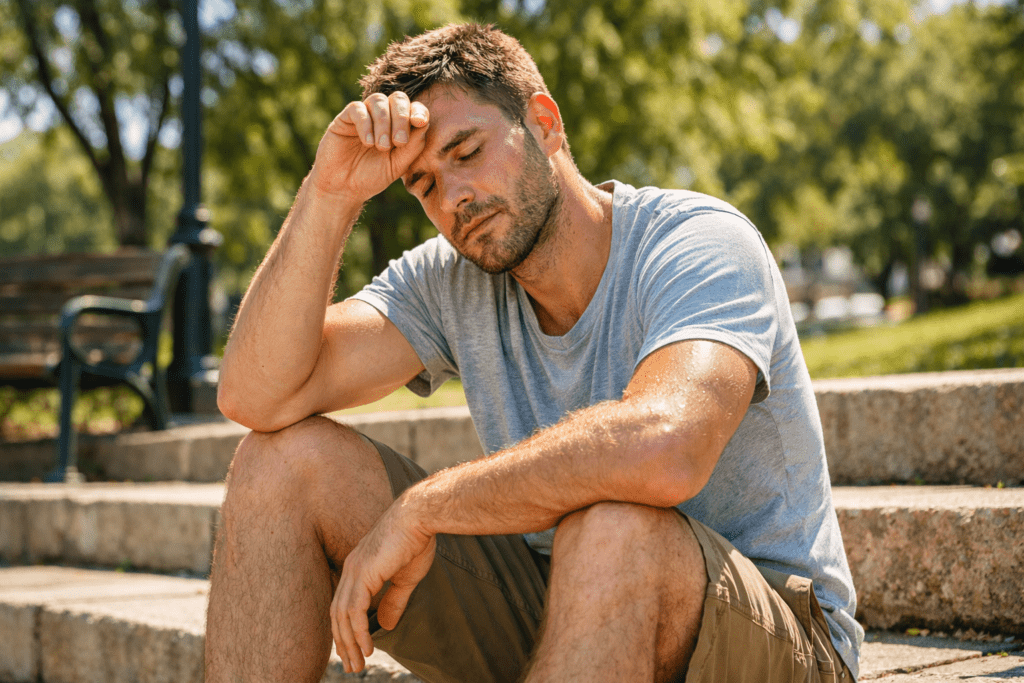
You spend a few hours outside on a sunny day. Maybe you’re at the beach, mowing the lawn, watching your kid’s soccer game, walking through a theme park, or sitting at a summer baseball game. At first, the sunshine feels good. But later, your body feels heavy, your brain feels foggy, and all you want to do is sit down or take a nap.
Quick Answer: The sun can make you tired because your body works harder to stay cool. Heat triggers sweating, widens blood vessels, shifts blood flow toward the skin, and may reduce fluid and electrolyte levels. At the same time, bright light, UV exposure, and circadian timing can push your body toward recovery mode, leaving you sleepy, foggy, heavy, or drained.
If you’ve ever wondered why does the sun make you tired, you’re not imagining it. This reaction is common, even when you are healthy and not doing intense exercise.
Most people assume the cause is only dehydration. Hydration does matter, but the real explanation is bigger. Sun exposure can trigger a chain reaction involving temperature regulation, sweating, circulation, skin stress, hormone timing, and brain protection signals. When these systems work at the same time, even a relaxing sunny day can feel surprisingly exhausting.
Understanding this process helps explain why a beach day, backyard barbecue, outdoor sports event, or long walk in summer heat can leave you feeling like you did much more work than you expected.
Table of Contents
Why Does the Sun Make You Tired So Quickly?
The sun makes you tired because your body has to manage heat, fluid balance, blood flow, skin stress, and alertness signals at the same time. Your cooling system turns on, sweat removes water and electrolytes, blood moves toward the skin, and your brain may encourage rest so the body can avoid overheating.
The main reasons the sun makes you tired include:
- Your body burns extra energy trying to stay cool.
- Sweating lowers fluid and electrolyte levels.
- Blood vessels widen and shift blood toward the skin.
- Less blood may be available for the brain and deeper organs.
- UV exposure can trigger skin repair and immune activity.
- Bright light and timing can affect melatonin and alertness signals.
- Humidity, heat, and activity make cooling less efficient.
This is why you may feel tired after being in the sun even if you were mostly sitting, relaxing, or doing light activity.
The Science Behind Why Heat Makes Your Body Work Harder
One of the main reasons people feel exhausted after spending time outside is thermoregulation. Thermoregulation is the body’s system for maintaining a stable internal temperature, usually around 98.6°F.
When you’re sitting indoors in a cool room, your body doesn’t have to work very hard to maintain this temperature. But when you step outside into strong sunlight, especially during warm weather, your internal cooling system activates immediately.
The brain region responsible for this process is the hypothalamus. This small but powerful structure constantly monitors your internal temperature and sends signals throughout the body when cooling is required.
Once the hypothalamus detects rising heat levels, several processes begin at the same time.
Your sweat glands activate to release moisture onto the skin.
Your heart increases circulation to move heat toward the surface.
Your blood vessels widen to release heat into the environment.
Each of these responses consumes energy.
Sweating requires fluid transport and electrolyte balance. Increased circulation forces the heart to pump more actively. Skin blood flow increases to help heat escape the body.
Individually these processes are manageable. But when someone spends hours in strong sunlight, the combined energy demand can become significant.
This is one of the first reasons why people often feel unusually fatigued after outdoor exposure.
This hidden cooling workload is one of the biggest reasons the sun makes you tired. You may feel like you are doing nothing, but your body is actively managing heat, sweat, circulation, and skin temperature in the background.

How Sweating and Dehydration Drain Your Energy in the Sun
Sweating is one reason many people ask why does the sun make me tired after only a few hours outside. The body uses sweat to cool the skin, but that process also removes fluid and important electrolytes that help muscles, nerves, and the brain work efficiently.
Even mild dehydration can significantly increase fatigue after sun exposure. When the body loses fluids through sweating, blood volume begins to drop slightly. Lower blood volume means the heart must work harder to circulate oxygen and nutrients throughout the body.
Sweat contains electrolytes such as sodium, potassium, magnesium, and chloride. These minerals help regulate nerve signals, muscle contraction, and normal energy function. When sweating continues for hours, that mineral shift can add to the heavy, weak, or drained feeling people often describe after sun exposure.
As circulation becomes less efficient, muscles and the brain may receive slightly less oxygen than usual. This can lead to symptoms such as sluggish thinking, low motivation, and heavy limbs.
This is why people who already have poor hydration habits during the day often experience stronger fatigue when they spend time outside. Maintaining proper hydration throughout the day is essential for stable energy levels, as explained in Simple Daily Hydration Habits for Energy and Hydration Routine for Busy Adults.
Does sunlight itself make you tired or is it the heat?
Heat is usually the bigger cause, but sunlight can also contribute through glare, skin warming, UV exposure, and circadian timing. For most people, the tired feeling comes from a combination of heat, sweating, hydration changes, blood flow shifts, and sensory load.
The Hidden Reason Blood Flow Shifts Can Make You Feel Drained
Another major contributor to sun-induced fatigue involves vasodilation, which means the widening of blood vessels.
When the body tries to release excess heat, blood vessels near the skin expand. This allows warm blood to move closer to the surface so heat can escape into the air.
This blood-flow shift is one reason sun fatigue can feel like heaviness instead of simple sleepiness. Your body is not only tired from heat; it is also redirecting circulation toward the skin so heat can escape.
While this process helps cool the body, it also has a side effect.
As blood vessels widen, blood pressure can temporarily drop.
Lower blood pressure means the brain may receive slightly less oxygenated blood. Even small reductions in brain oxygen delivery can trigger symptoms like fatigue, sluggish thinking, dizziness, and heavy limbs.
The body senses this drop and reacts by slowing physical activity. This protective response encourages rest so circulation can stabilize.
In other words, the fatigue you feel after being in the sun may actually be your body preventing overheating and circulation stress.

The Hidden Reason UV Exposure Can Add to Sun Fatigue
Heat is usually the main reason the sun makes you tired, but UV exposure can add another layer. When skin is exposed to strong sunlight, the body may increase repair and immune activity, especially if sunburn develops.
This does not mean every short period of sunlight will make you exhausted. But after a long day outdoors, skin stress, heat, sweating, and fluid loss can overlap. That combined recovery demand may leave some people feeling achy, sleepy, or unusually low-energy later.
This is also why sun protection matters for energy, not just skin comfort. Sunscreen, shade, hats, and breathable clothing can reduce how much stress your body has to manage during long outdoor exposure.
Does sunburn make you tired?
Sunburn can make you feel tired because the body has to repair skin stress caused by UV exposure. This may increase immune activity and fluid needs, which can leave some people feeling achy, sleepy, or drained after a long day outside.
The Link Between Sunlight, Melatonin, and Later Sleepiness
Sunlight usually helps the body feel more awake during the day. Bright light entering the eyes sends signals to the brain that support daytime alertness and help suppress melatonin, the hormone linked with sleep timing.
However, long exposure to sunlight often happens with heat, glare, sweating, walking, standing, and outdoor stimulation. After several hours, the body may shift toward recovery mode, especially in the afternoon when circadian alertness naturally dips.
That is why the sun can make you feel sleepy later, even though daylight itself usually supports alertness earlier in the day. The tired feeling is usually not caused by sunlight alone. It often comes from sunlight, heat, fluid loss, body temperature control, and timing all working together.
Why do I feel so sleepy in the sun?
You may feel sleepy in the sun because heat makes your body work harder to cool down. Sweating, blood flow changes, lower fluid levels, bright light, and afternoon circadian dips can all push the body toward fatigue or recovery mode.
What Most People Miss About Why the Sun Makes You Tired
Most explanations focus only on dehydration, but sun fatigue is rarely caused by one factor alone. The bigger issue is overlap. Your body may be cooling itself, sweating, widening blood vessels, repairing UV stress, handling glare, and adjusting circadian alertness at the same time.
That combined workload is why a relaxing sunny day can feel physically draining later. You may not feel tired because you exercised hard. You may feel tired because your body spent hours managing heat, circulation, hydration, skin temperature, and brain alertness in the background.
This is the counterintuitive part: doing “nothing” in the sun can still drain energy because your body is not doing nothing. It is running a full cooling and recovery system while you sit, walk, drive, watch a game, or relax outside.
The key point: sun fatigue usually happens when several body systems compete for energy at the same time. Your cooling system needs sweat and blood flow, your skin may need repair after UV exposure, your brain is monitoring heat and hydration, and your circadian rhythm may already be dipping later in the day. That overlap is what makes a calm sunny afternoon feel more exhausting than it looks.
7 Biological Reasons the Sun Can Make You Tired
- Thermoregulation increases energy demand. Your body works harder to keep its internal temperature stable.
- Sweating reduces fluid levels. Fluid loss can make circulation and focus feel less efficient.
- Electrolyte loss affects muscles and nerves. Sodium, potassium, magnesium, and chloride help support normal muscle and nerve function.
- Blood vessels widen near the skin. This helps release heat but may contribute to a heavy or drained feeling.
- UV exposure can increase recovery demand. Skin stress and sunburn may trigger repair processes that add to fatigue.
- Bright light and timing affect alertness signals. Outdoor light can interact with your circadian rhythm, especially later in the day.
- The brain may encourage rest. Fatigue can act as a protective signal when the body is managing heat stress.
The Real Cause-Effect Chain Behind Sun Fatigue
Before looking at the table, here is a quick visual breakdown of how sun exposure can turn into fatigue inside the body.
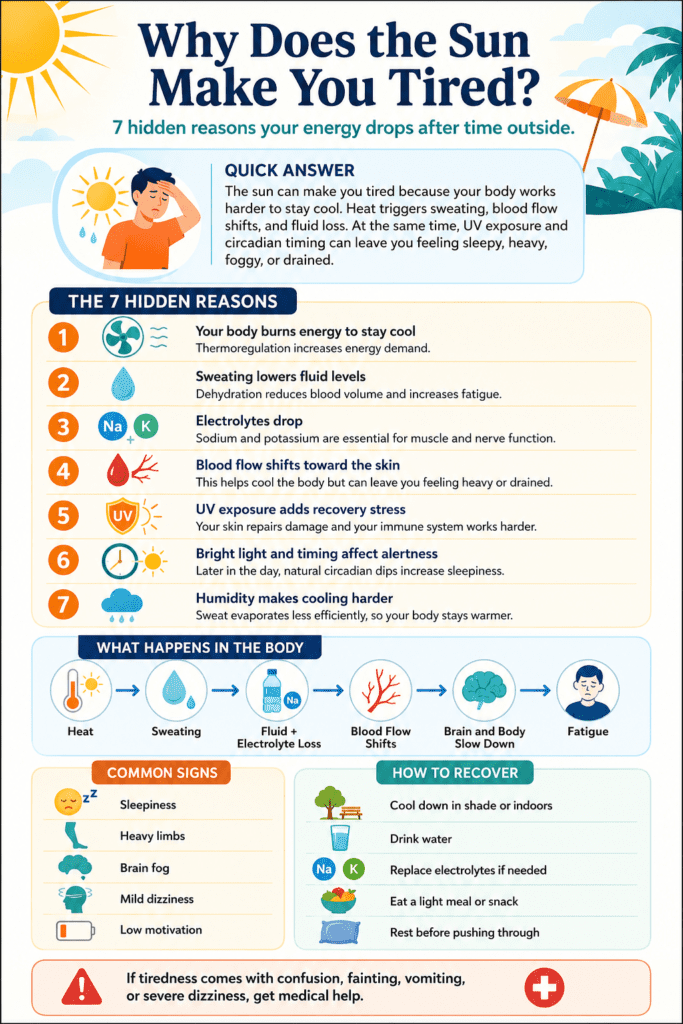
The table below explains the same chain in more detail, showing each sun exposure trigger, the body’s response, and why it can drain your energy.
| Sun Exposure Trigger | Body Response | Why It Drains Energy |
|---|---|---|
| Heat from direct sun | Your body activates cooling systems | Thermoregulation uses energy in the background |
| Sweating | Fluid and electrolytes leave the body | Lower fluid balance can increase fatigue and brain fog |
| Warm skin | Blood vessels widen near the surface | Blood flow shifts toward the skin to release heat |
| UV exposure | Skin repair and immune activity may increase | Recovery processes can add to tiredness |
| Bright light and afternoon timing | Alertness signals shift | Your body may drop into a later energy slump |
| Humidity | Sweat evaporates more slowly | Cooling becomes less efficient and more demanding |
Why Your Energy Crashes in the Afternoon
Sun exposure isn’t the only reason people feel exhausted during the day. Many adults experience a natural afternoon energy dip caused by circadian rhythm shifts, hydration changes, and metabolic patterns.
Read the Full GuideCommon Symptoms That Can Appear After Long Sun Exposure
- sudden fatigue or sleepiness
- heavy or sluggish muscles
- mild dizziness or brain fog
- reduced concentration
- decreased physical motivation
These symptoms often appear when thermoregulation, circulation, and electrolyte balance are under stress.
Heat-related symptoms such as fatigue, dizziness, and weakness are commonly associated with heat stress conditions described in medical guidance from the Mayo Clinic first aid page for heat exhaustion.
How Heat Stress Can Trigger Brain Fog After Sun Exposure
One reason the sun makes you tired is that the brain is sensitive to heat, hydration, and circulation changes. When body temperature rises and fluid balance drops, mental energy may feel less steady.
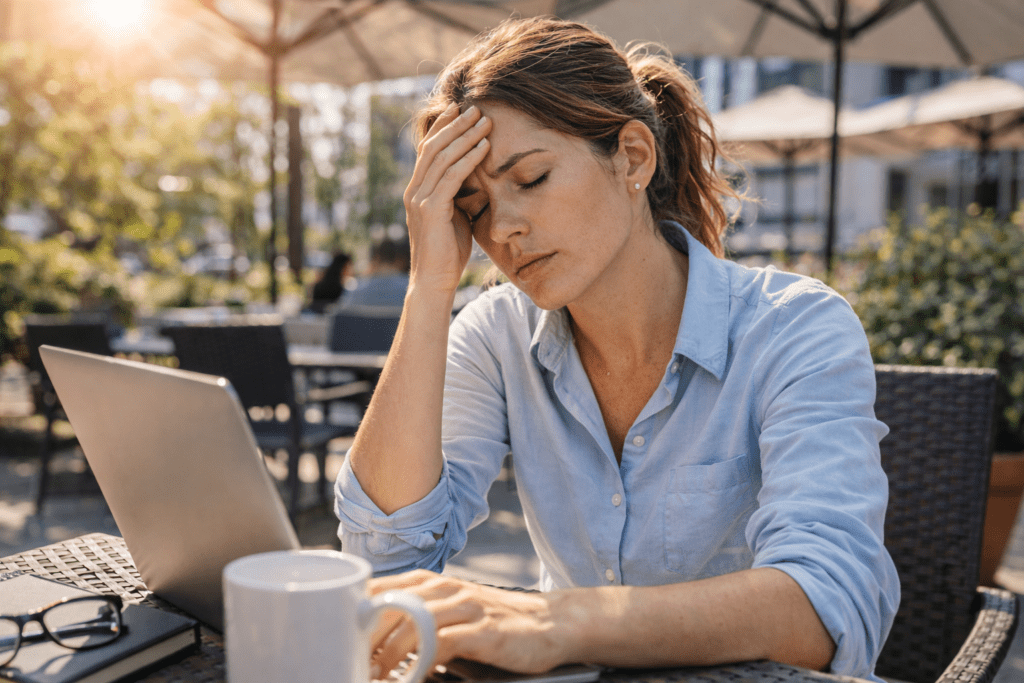
This can show up as slower thinking, reduced focus, heavy eyelids, or a foggy feeling after spending time outdoors. The brain may reduce mental intensity as part of a protective response while the body works to cool down and stabilize circulation.
This is why sun fatigue often feels both physical and mental. Your legs may feel heavy, but your focus may also feel slower, especially after several hours in heat, glare, humidity, or direct sunlight.
Why does the sun make me sleepy while driving?
The sun may make you sleepy while driving because bright light, heat inside the car, dehydration, and afternoon circadian dips can reduce alertness. A hot car can also increase fatigue because your body keeps working to cool itself while you sit still.
A Realistic American Scenario That Explains Why Sun Exposure Causes Exhaustion
Imagine spending a Saturday afternoon at a summer baseball game.
The temperature is around 86°F. The sun is shining directly on the stadium seats. You sit for three hours watching the game, occasionally standing, walking to buy snacks, and cheering for your team.
You’re not doing intense exercise, but your body is quietly working the entire time.
Your sweat glands are active.
Your blood vessels are dilating.
Your heart is circulating heat toward the skin.
Your electrolytes are gradually shifting.
By the time the game ends, your body has spent hours regulating temperature and circulation.
On the drive home, fatigue sets in suddenly. Your body feels heavy and your brain feels slow.
This reaction isn’t unusual. It’s the natural outcome of multiple heat-response systems working together for an extended period.

Why Some People Feel More Exhausted in the Sun Than Others
Not everyone reacts to sunlight the same way.
Several factors influence how strongly someone experiences fatigue after sun exposure.
Body hydration levels play a role. People who start the day slightly dehydrated may fatigue faster.
Fitness level can also affect thermoregulation efficiency. People accustomed to hot environments often adapt better.
Body composition matters as well. Fat tissue retains heat differently than muscle, which may influence heat tolerance.
Clothing choices can also change how quickly body temperature rises. Dark or heavy clothing absorbs more heat from sunlight.
Even sleep quality can affect how resilient someone is to environmental stress. People who already struggle with sleep-related fatigue, such as those discussed in Why You Wake Up Tired Even After Eight Hours of Sleep, may feel the effects of sun exposure more strongly.
How Humidity and Air Temperature Intensify Sun-Related Fatigue
Environmental conditions can greatly influence how the body reacts to sunlight. Humidity is one of the most important factors because it affects how efficiently sweat evaporates from the skin.
When humidity levels are high, sweat evaporates more slowly. This reduces the body’s ability to cool itself and forces thermoregulation systems to work harder.
As a result, heart rate may increase, sweating may intensify, and energy demand rises. These combined effects can make people feel significantly more exhausted than they would under dry conditions.
Temperature changes can also interact with other fatigue triggers during the day. For example, dehydration or blood sugar fluctuations may amplify fatigue symptoms, similar to the metabolic fatigue patterns described in Why Blood Sugar Crash Symptoms Happen and Why Do I Feel Shaky and Tired.
Why Outdoor Activities Can Feel More Draining Than Indoor Activities
Many people assume outdoor activities should always increase energy because they involve fresh air and movement. However, the body often spends more energy adapting to environmental conditions outside.

Sunlight, wind, humidity, and temperature changes constantly challenge the body’s balance systems. Even mild environmental stress forces the body to adjust circulation, hydration, and temperature regulation.
Indoor environments are typically more stable, allowing the body to conserve energy. Outdoors, however, the body is constantly responding to external conditions.
This is why people sometimes feel surprisingly exhausted after outdoor events like hiking, festivals, or sporting events. These fatigue patterns often combine with other daily energy triggers such as poor sleep or metabolic energy dips after meals, which are discussed in Why Am I So Tired in the Afternoon and Exhausted at 3PM Even After 8 Hours Sleep.
Why Resting After Sun Exposure Helps Restore Energy
After extended sun exposure, the body often benefits from a short recovery period. Rest allows circulation, hydration balance, and body temperature to stabilize.
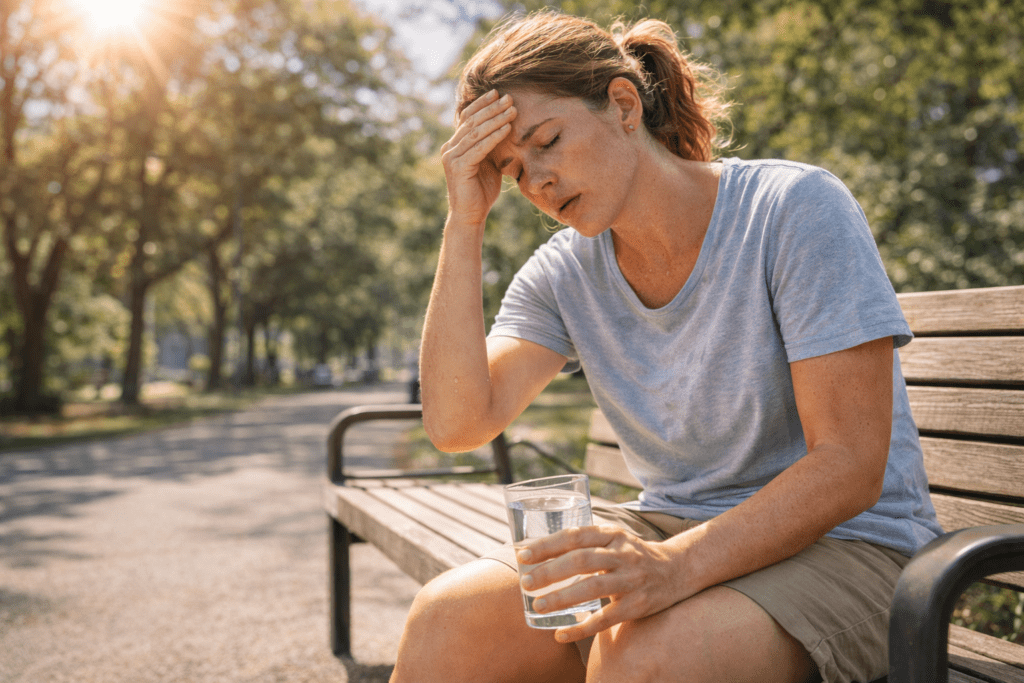
Cooling down in a shaded or indoor environment helps the nervous system shift away from heat stress mode. During this recovery phase, sweating decreases, heart rate slows, and blood pressure stabilizes.
Rehydrating with fluids and electrolytes can also help restore normal cellular function. When these systems return to balance, energy levels usually improve quickly.
Many people notice that even a short break indoors or a brief rest period can significantly reduce sun-related fatigue. Small recovery strategies like these are often included in daily energy management routines such as those discussed in Daily Habits for Energy and Afternoon Habits Boost Energy.
How do you get rid of sun fatigue?
Sun fatigue often improves by cooling down, drinking fluids, replacing electrolytes if needed, eating a light meal, and resting in shade or air conditioning. If symptoms are severe or include confusion, fainting, vomiting, or very hot skin, medical help may be needed.
For many people, this tired feeling improves within a few hours after cooling down, drinking fluids, eating normally, and resting. It may last longer if you were dehydrated, sunburned, sleep-deprived, or outside in high heat and humidity for several hours.
When Sun Tiredness May Need More Attention
Feeling tired after a sunny day is often temporary. It usually improves after cooling down, drinking fluids, eating normally, and resting. But stronger symptoms should not be ignored, especially after several hours in heat, humidity, or direct sunlight.
If sun exposure is followed by confusion, fainting, vomiting, severe dizziness, very hot skin, a fast heartbeat that does not settle, or symptoms that do not improve after cooling down, it may be a sign of a heat-related problem that needs medical help.
Is sun fatigue the same as heat exhaustion?
No. Mild sun fatigue can happen after a normal sunny day and often improves with rest, cooling, and fluids. Heat exhaustion is more serious and may include heavy sweating, weakness, nausea, headache, dizziness, or symptoms that do not improve after cooling down.
This article is for educational purposes and helps explain common body responses to sun, heat, sweating, hydration changes, and circulation shifts. It is not a diagnosis. If symptoms feel severe, unusual, or persistent, it is safer to speak with a healthcare professional.
The Real Reason the Sun Leaves You Feeling Drained
So, why does the sun make you tired? Most of the time, it is not one single cause. It is the combined effect of heat regulation, sweating, fluid loss, electrolyte shifts, blood flow changes, UV exposure, and circadian timing.
Your body may feel like it is resting outside, but internally it is working to stay cool, protect the skin, stabilize circulation, and keep the brain functioning efficiently. When those systems overlap for several hours, fatigue can show up as sleepiness, heavy limbs, brain fog, or a strong need to rest.
The best way to reduce sun fatigue is to think ahead: drink fluids, take shade breaks, wear sunscreen, choose breathable clothing, eat enough, and cool down before your body feels completely drained.
Want More Stable Energy Throughout the Day?
Understanding why the sun makes you tired is only the first step. Daily habits, hydration, and simple routines can dramatically improve how your body handles energy dips.
Daily Habits for Energy Afternoon Habits That Boost Energy Midday Energy Boost Without Coffee