
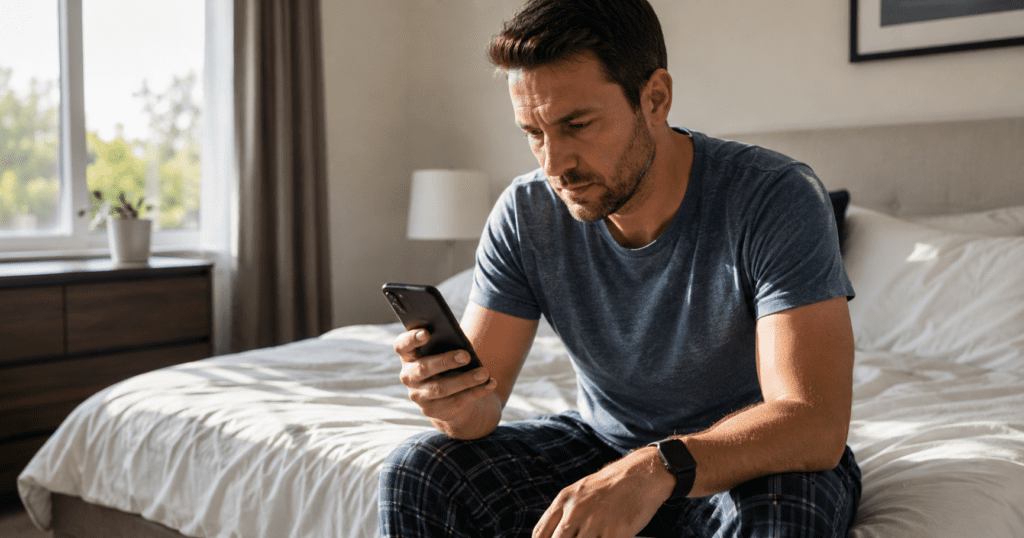
You wake up, open your sleep app, and see a number that instantly changes how you feel about the night: 38 minutes of deep sleep. You were in bed for nearly eight hours, but now you wonder if your body missed the most important part of recovery. That is why the question matters: how much deep sleep do you need to feel rested, clear, and steady the next day?
Most adults get about 10% to 20% of total sleep as deep sleep. During a 7- to 9-hour night, that often equals roughly 40 to 110 minutes. Some sources estimate closer to 1.5 to 2 hours when using higher percentage estimates, which is why deep sleep numbers can look confusing. Your number also depends on total sleep time, age, sleep quality, and tracker accuracy.
Definition snippet: Deep sleep is the deepest stage of non-REM sleep, also called N3 or slow-wave sleep. It is the part of sleep most linked with physical recovery, lower sleep pressure, immune support, and waking up feeling more restored. Most adults get deep sleep as a percentage of total sleep, not as one fixed number.
Table of Contents
How Much Deep Sleep Do You Need for Better Adult Recovery
In practical terms, deep sleep is the recovery-heavy part of non-REM sleep. It is often labeled as N3 or slow-wave sleep because brain activity slows compared with lighter stages. This stage is strongly tied to physical recovery, lower sleep pressure, and the body’s overnight repair work.
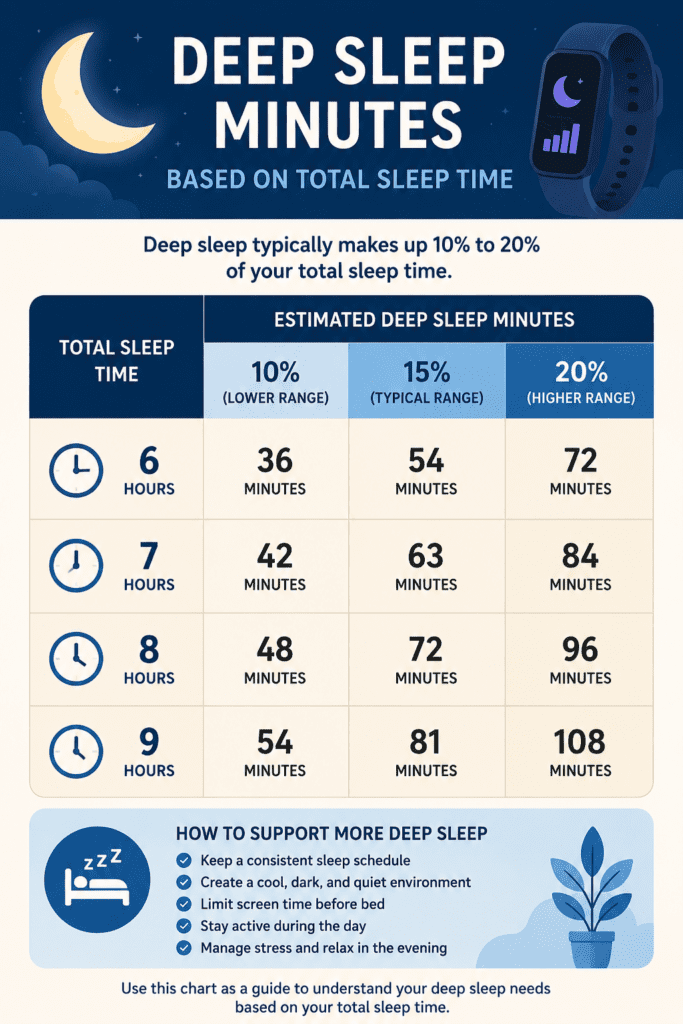
So, how much deep sleep do you need? A practical adult range is about 10% to 20% of total sleep. The Sleep Foundation’s deep sleep guide also describes deep sleep as roughly 10% to 20% of total sleep for many adults, or about 40 to 110 minutes during a 7- to 9-hour night.
| Total sleep time | 10% deep sleep | 15% deep sleep | 20% deep sleep |
|---|---|---|---|
| 6 hours | 36 minutes | 54 minutes | 72 minutes |
| 7 hours | 42 minutes | 63 minutes | 84 minutes |
| 8 hours | 48 minutes | 72 minutes | 96 minutes |
| 9 hours | 54 minutes | 81 minutes | 108 minutes |
This chart is not a strict rule. One low night does not automatically mean something is wrong.
Is 1 hour of deep sleep enough?
One hour of deep sleep can be enough for some adults, especially if total sleep is 7 to 8 hours and daytime energy feels steady. But it depends on age, sleep quality, tracker accuracy, and how you feel the next day. One hour may be normal for one person and low for another.
Why Deep Sleep Numbers Differ From One Source to Another
Deep sleep numbers can look confusing because different sources use different estimates. One article may say adults need 40 to 110 minutes. Another may say 60 to 100 minutes. Another may say 1.5 to 2 hours.
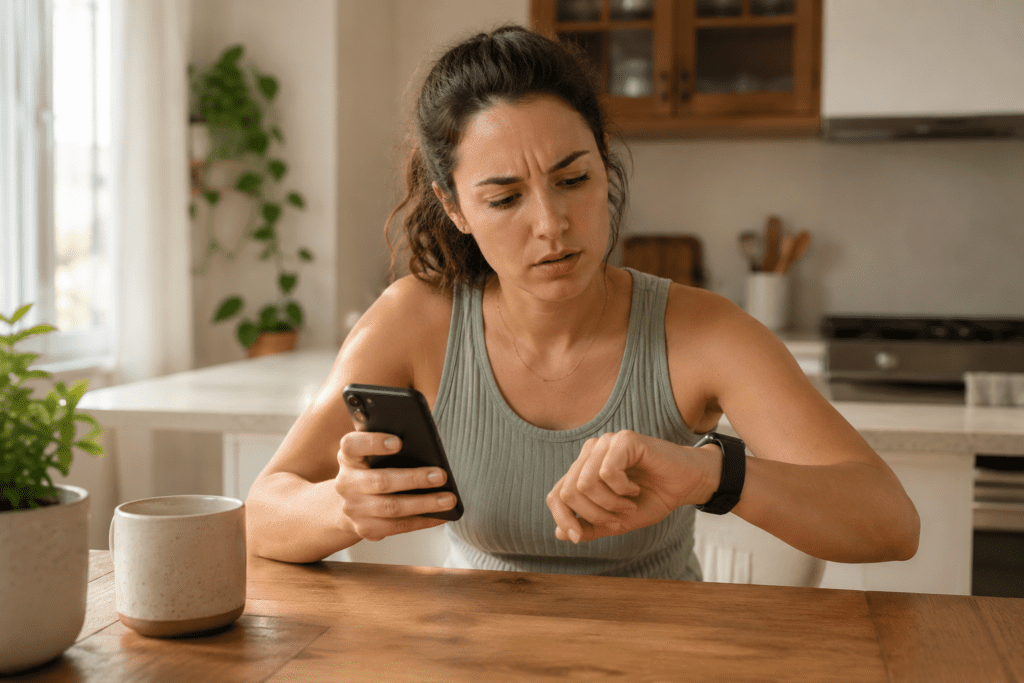
The main reason is percentage. If one source uses 10% to 20% of total sleep, the number looks lower. If another uses 20% to 25%, the number looks higher. The result also changes with total sleep time.
For example, 20% of 8 hours is 96 minutes. Twenty-five percent of 8 hours is 120 minutes. Both numbers may be called deep sleep estimates, but they come from different assumptions.
Age also changes the picture. Younger people often get more deep sleep. Older adults may get less deep sleep naturally. A 25-year-old and a 65-year-old should not always judge themselves by the same number.
Trackers add another layer. Your watch or ring is estimating sleep stages with sensors and algorithms. It may be useful for trends, but it is not the same as a clinical sleep study. That is why a flexible range is smarter than one perfect target.
Why do deep sleep recommendations look different?
Deep sleep recommendations look different because some sources use 10% to 20% of total sleep, while others use higher estimates such as 20% to 25%. The number also changes with total sleep time, age, sleep quality, and whether the estimate comes from a tracker or a sleep study.
The Science Behind Deep Sleep and Slow-Wave Physical Recovery
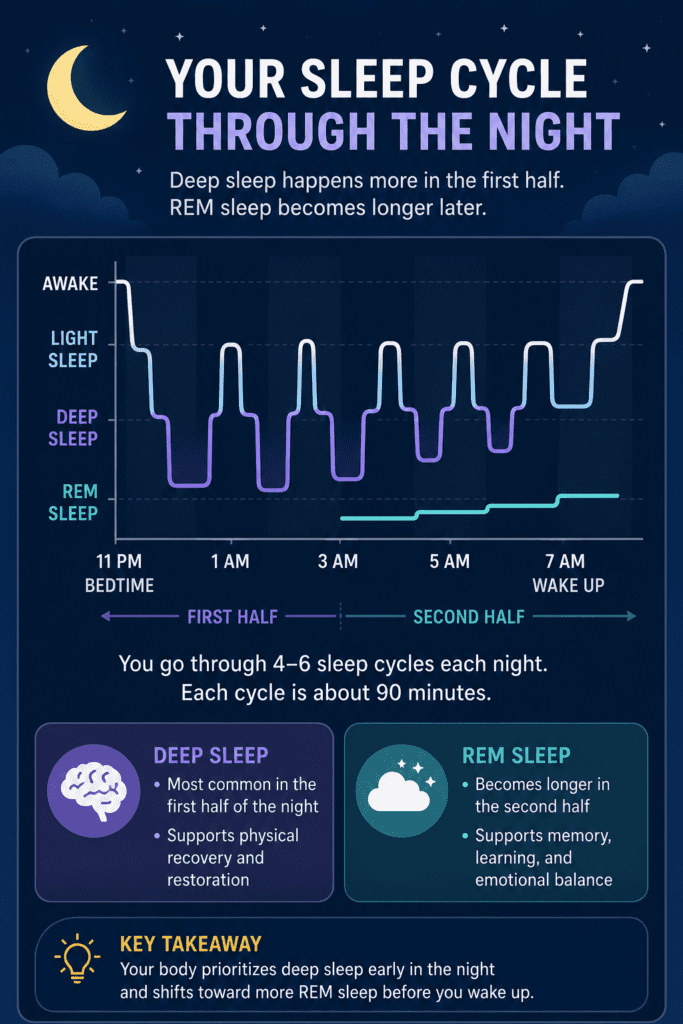
Deep sleep usually happens more in the first part of the night. As you move from light sleep into deeper non-REM sleep, your body becomes harder to wake, your breathing tends to slow, and your brain activity becomes quieter.
This stage helps the body shift into a recovery state. It is linked with tissue repair, immune support, and physical restoration. It may also help reduce the heavy drive to sleep that builds while you are awake.
That drive is sometimes called sleep pressure. The longer you stay awake, the stronger it gets. Deep sleep appears to be one way the body lowers that pressure, which is why a solid night can make the next day feel less forced.
Deep sleep is not the only important sleep stage. Light sleep helps you move through the night, and REM sleep supports different brain functions. But deep sleep is the stage people often associate with feeling physically restored. The Cleveland Clinic’s sleep overview explains that stage 3 NREM sleep is the deepest NREM stage and is important for waking up feeling rested.
How Total Sleep Time Changes Your Deep Sleep Minutes Each Night
Total sleep time matters because deep sleep is part of the whole night. If you sleep less overall, you may have fewer minutes available for deep sleep, even if your percentage is normal.
This is where many people make a mistake. They ask how to increase deep sleep while still sleeping only 5 or 6 hours. But if the total sleep window is too short, there is less space for all sleep stages. Deep sleep is like a slice of the sleep pie. If the pie is smaller, the slice may be smaller too.
A low deep sleep number may not mean your body failed. It may mean your total night was too short, broken, or poorly timed. If you regularly sleep 6 hours and your tracker says your deep sleep is low, the first answer may not be a supplement or gadget. It may be that your night is too short. If this sounds like your schedule, read whether 6 hours of sleep is enough before trying to optimize deep sleep alone.
That is why the deep sleep question works best after you understand your full sleep range. If you are still unsure about your total sleep range, start with this simple guide on how much sleep you need before worrying about one sleep-stage number.
What Most People Miss About Deep Sleep Tracker Accuracy
What most people miss is that sleep trackers estimate deep sleep. They do not measure brain waves the same way a sleep lab does.
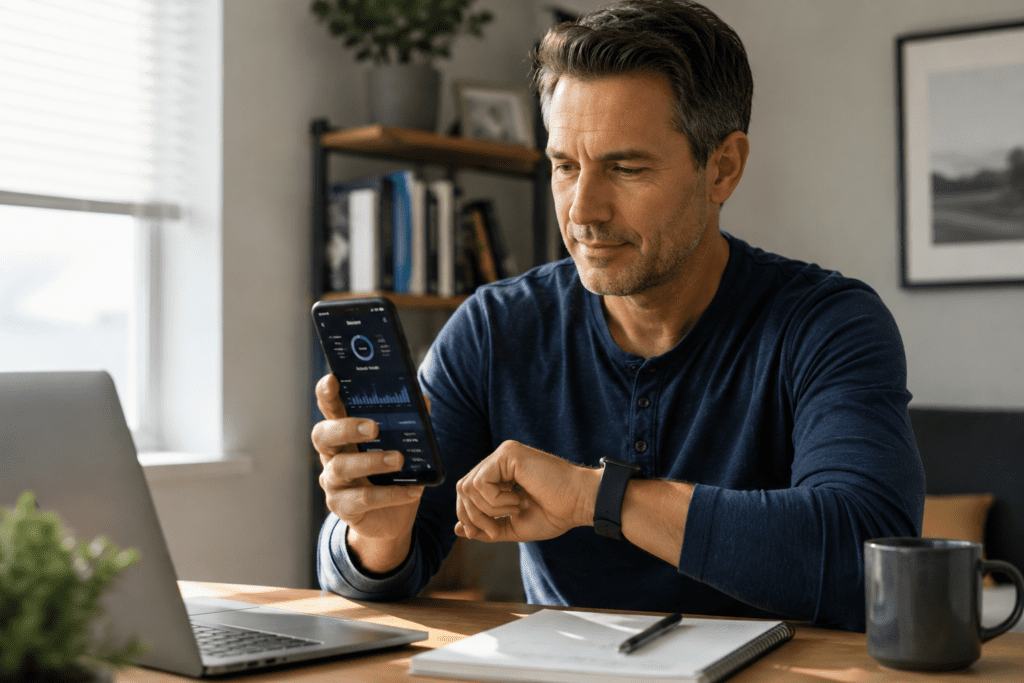
A wearable may use movement, heart rate, heart rate variability, breathing, skin temperature, and an algorithm to guess your stages. That can be helpful, but it is not perfect. A 2023 review of wearable sleep technology found that newer devices can provide useful sleep insights, but sleep-stage estimates still depend on sensors and algorithms rather than full lab polysomnography.
This does not mean trackers are useless. They can show patterns. You may notice that deep sleep drops after alcohol, travel, late caffeine, stress, or an inconsistent bedtime. Those patterns can be useful.
The problem starts when one number becomes a verdict. If your tracker says 35 minutes, you may assume the night was bad before you even notice how you feel. That stress can make sleep harder the next night.
Use the number as a clue, not a grade. A low number once is not a crisis. A low trend for several nights, paired with heavy mornings and poor focus, is more useful information.
Are sleep tracker deep sleep numbers accurate?
Sleep tracker deep sleep numbers can be useful for trends, but they are not perfect. Most wearables estimate sleep stages from movement, heart rate, breathing, and algorithms. Use the number as a clue, not a diagnosis, and compare it with weekly patterns and daytime energy.
Your tracker number is only one piece of the night
Before you worry about one deep sleep score, compare it with your total sleep time and daytime energy. A low number means more when it repeats across several nights.
Check your full sleep rangeHow to Tell If Your Deep Sleep Is Actually Low
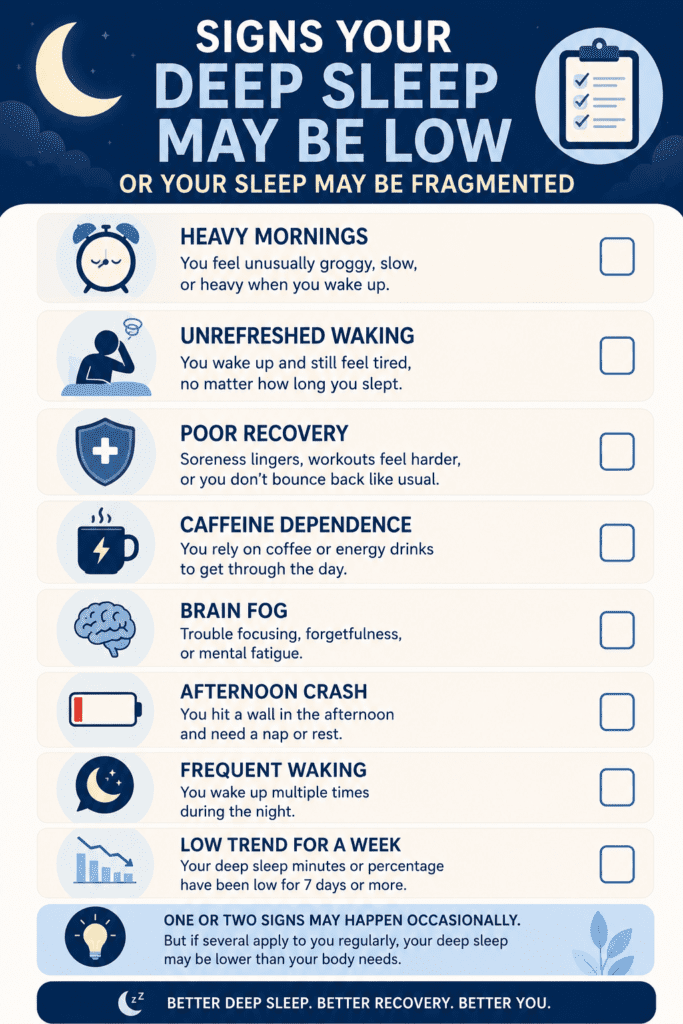
You cannot know your exact deep sleep from feelings alone. But you can look for patterns that suggest your recovery is not working well.
Bullet snippet: Deep sleep may be low, or your sleep may be fragmented, if you often notice:
- Heavy mornings even after enough time in bed
- Feeling unrefreshed most days
- Poor physical recovery after normal activity
- Needing caffeine before you feel human
- Brain fog during simple work
- A hard energy crash in the afternoon
- Waking often during the night
- A tracker showing low deep sleep for a week or more
Do not judge by one night. One poor reading can happen for many reasons. Look for the overlap between tracker trends and real-life symptoms.
Numbered snippet: To tell if your deep sleep number matters:
- Track total sleep time for one week.
- Watch your deep sleep trend, not one night.
- Note caffeine, alcohol, stress, and bedtime changes.
- Compare the trend with morning energy.
- Compare the trend with afternoon focus.
- Add more sleep opportunity if your nights are short.
- Adjust habits only after you see a pattern.
If your main sign is poor focus or mental fog, this guide explains how lack of sleep can cause brain fog and tiredness without turning this article into a full brain fog breakdown.
Is 40 minutes of deep sleep okay?
Forty minutes of deep sleep may be okay for some adults, especially on one occasional night or with shorter total sleep. But if 40 minutes happens often and you also wake unrefreshed, feel foggy, or crash in the afternoon, it may be worth improving total sleep time and sleep quality.
The Hidden Reason Age Changes Your Deep Sleep Range
Deep sleep tends to decline with age. Children and teens often get more deep sleep because their bodies and brains are growing quickly. Younger adults may also get more slow-wave sleep than older adults.
As people get older, sleep can become lighter and more broken. Deep sleep may take up a smaller share of the night. That change does not automatically mean something is wrong. It may be part of normal aging.
This matters because many apps use simple targets that do not always explain age clearly. A 28-year-old, a 48-year-old, and a 70-year-old may all see different deep sleep patterns. Comparing all three to the same ideal number can create unnecessary worry.
Your goal is not to match a younger person’s chart. Your goal is to improve your own trend and wake with better recovery.
The Link Between Deep Sleep and Steady Daytime Energy
Deep sleep can affect how physically restored you feel, but it is not the only reason you feel energized. Daytime energy depends on the whole system: total sleep, sleep timing, REM sleep, meals, hydration, movement, light, stress, and health.

When your sleep is stable and deep sleep is within a healthy trend, you may feel less physically heavy. You may need less caffeine to start. You may recover better after normal movement. Your afternoon dip may feel less sharp.
When deep sleep appears low and your total sleep is short or broken, the day may feel more effortful. You may still function, but your body may feel like it is dragging behind you.
Deep sleep is one lever. It is not the whole machine. The best approach is to ask: does my deep sleep trend match my daytime pattern? If the answer is yes, you have a useful clue. If the answer is no, look at the broader sleep and energy picture.
What Happens When Deep Sleep Looks Low but You Feel Fine
Sometimes the tracker looks bad, but your day feels normal. You wake up alert enough, think clearly, move through work without heavy caffeine, and do not feel a hard crash later. In that case, do not let one app score convince you the night failed.
Deep sleep estimates can shift because of device placement, algorithm updates, movement, heart rate changes, or a restless period that the tracker labels differently. A low number with good daytime function is not the same as a low number with poor recovery.
If you sleep enough hours but still wake up drained, compare this with why some people wake up tired even after 8 hours of sleep.
If you feel fine and the low number is occasional, watch the trend. If you feel worse and the low number repeats, adjust the basics.
What Happens When You Chase Deep Sleep Too Hard
Trying to support deep sleep is smart. Trying to control it perfectly can backfire.
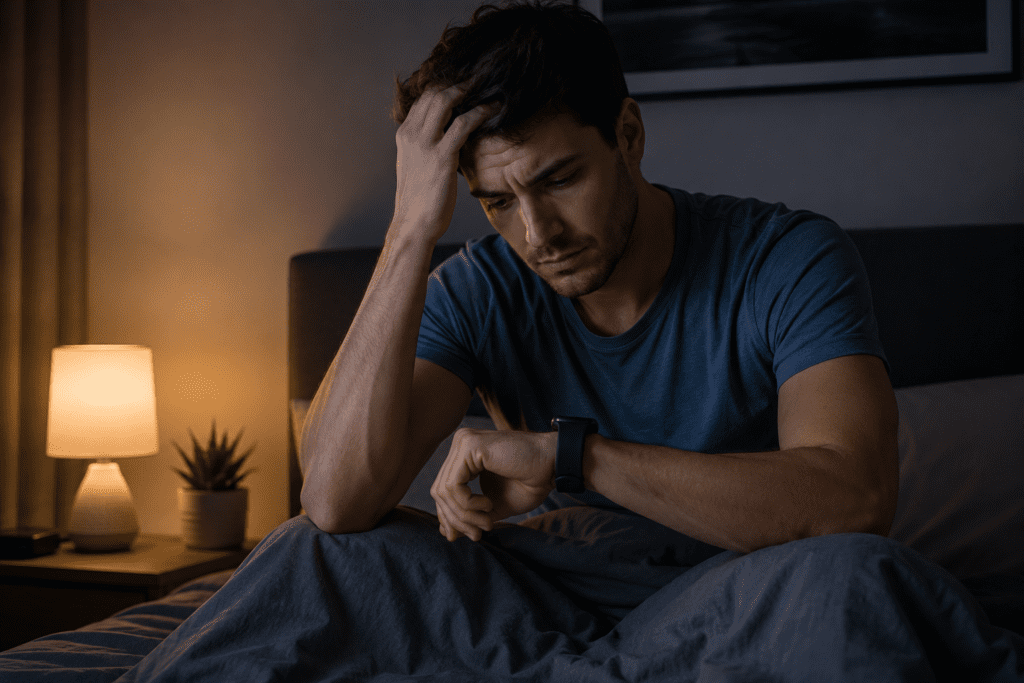
Some people start changing everything at once. They buy gadgets, stack supplements, avoid normal activities, check their tracker every morning, and judge the night before their feet hit the floor. That can turn sleep into a performance test.
Sleep works better when it is supported, not forced. You cannot command your brain to create more deep sleep at exactly 11:42 PM. What you can do is create conditions that make stable sleep more likely.
That means enough total sleep time, a consistent wake time, a calmer evening, less late caffeine, less alcohol close to bed, and a room that is cool, dark, and quiet.
How Alcohol, Stress, and Late Caffeine Can Lower Deep Sleep
Alcohol, stress, and late caffeine are three common reasons deep sleep may look lower or feel less restorative.
Alcohol can make you sleepy at first, but it may disturb sleep later. You may fall asleep faster and still wake more often. That can weaken the stability of your sleep cycles.
Stress keeps the nervous system more alert. Even if you fall asleep, your body may not settle as deeply. You may wake during the night, dream intensely, or feel like your sleep was busy instead of restful.
Caffeine can also be tricky. Some people can drink coffee late and still fall asleep, but falling asleep is not the only goal. Sleep can still feel lighter or less restorative.
If your deep sleep drops after wine, late coffee, stressful work nights, or late scrolling, your body is giving you useful feedback. For a broader evening reset, these evening habits to improve sleep quality can support better sleep without making this article about bedtime routines.
Why is my deep sleep so low?
Deep sleep may look low because of short total sleep, stress, alcohol, late caffeine, a warm room, inconsistent bedtimes, frequent waking, illness, or age-related sleep changes. Sleep trackers can also underestimate deep sleep, so look at weekly trends instead of one night.
How to Support Deep Sleep Without Overcomplicating Your Night
You do not need a complicated deep sleep routine. Start with the basics that protect stable sleep.
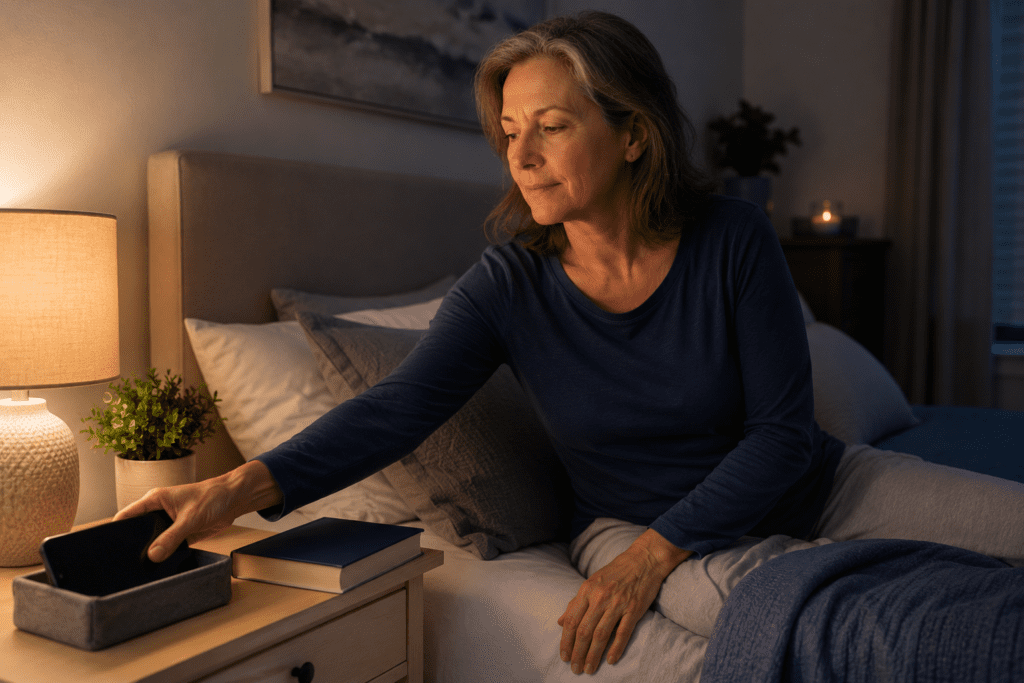
The goal is not to force deep sleep directly. The goal is to make your total night more stable so your body has a better chance to move through deep sleep naturally.
Give yourself enough sleep opportunity. Keep your wake time steady when possible. A regular wake time helps your body build rhythm. Rhythm helps sleep stages unfold more predictably.
Make the last 30 to 60 minutes calmer. Lower the lights. Put work away. Keep your phone out of bed. Avoid turning the bed into a place for scrolling, worrying, or answering messages.
Watch caffeine timing. If your sleep feels light, move your last caffeine earlier. Keep the bedroom cool, dark, and quiet. If noise is a problem, use a fan, white noise, or earplugs.
A simple deep sleep support plan looks like this:
- Keep a steady wake time for one week.
- Give yourself enough total sleep opportunity.
- Stop caffeine earlier in the afternoon.
- Avoid alcohol close to bedtime when possible.
- Make the final 30 minutes calmer.
- Track weekly trends instead of one-night scores.
- Judge success by energy, focus, and recovery.
How can I get more deep sleep naturally?
To support deep sleep naturally, protect enough total sleep, keep a steady wake time, move caffeine earlier, avoid alcohol close to bedtime when possible, keep your bedroom cool and dark, and make the last 30 to 60 minutes of the evening calmer.
Why Deep Sleep and REM Sleep Are Not the Same
Deep sleep and REM sleep are different stages with different jobs. Deep sleep is more connected with physical restoration, slow brain waves, immune support, and lowering sleep pressure. REM sleep is more connected with dreaming, learning, memory, and emotional processing.
You need both. A good night is not about making deep sleep win against REM. It is about healthy sleep cycles across the night.
This article focuses on deep sleep, so REM should stay in the background. The body naturally shifts through stages.
Deep sleep often appears more in the first part of the night. REM often becomes longer later in the night. Trying to maximize only one stage can miss the point. Better sleep usually means better balance, not more of one number at any cost.
Is deep sleep better than REM sleep?
Deep sleep is not better than REM sleep. They do different jobs. Deep sleep is more connected with physical recovery and lowering sleep pressure, while REM sleep is more connected with dreaming, learning, memory, and emotional processing. A healthy night needs both.
How to use this guide
This article is designed to help adults understand deep sleep numbers, sleep tracker trends, and next-day recovery signals in a practical way. It is educational and should not be used to diagnose a sleep disorder. If you often wake unrefreshed, feel very sleepy during the day, snore loudly, gasp during sleep, or feel unsafe while driving, consider speaking with a qualified healthcare professional.
How Much Deep Sleep Do You Need to Wake Up Rested
So, how much deep sleep do you need? For most adults, a practical answer is about 10% to 20% of total sleep. During a 7- to 9-hour night, that often equals about 40 to 110 minutes. Some estimates run closer to 1.5 to 2 hours, especially when using higher percentages or an 8-hour sleep example.

The best answer depends on context. Look at total sleep time first. Then look at age, schedule, sleep quality, tracker trends, and how you feel during the day.
If your deep sleep looks low once, do not panic. If it looks low for weeks and you also wake unrefreshed, feel foggy, depend on caffeine, or crash in the afternoon, your sleep pattern may need support.
Start simple. Protect enough total sleep. Keep your wake time steady. Move caffeine earlier. Keep alcohol away from bedtime when possible. Make your evening calmer.
For a bigger daily energy plan beyond sleep stages, use this guide alongside how to stay energized all day.
Your deep sleep number can be helpful, but it is not the whole story. The real goal is not a perfect tracker score. It is waking up with enough recovery to move through the day with clearer focus, steadier energy, and less effort.
Use better recovery to build steadier energy
Deep sleep is one part of feeling restored. For stronger daily energy, look at your sleep timing, meals, hydration, movement, light exposure, and daily rhythm together.
Build steadier energy all day