

You can start the morning with good intentions and still feel your energy rise and fall throughout the day. One hour you feel focused, the next you feel foggy, hungry, restless, or ready for another coffee.
If you want to know how to stay energized all day, the goal is not to chase quick boosts. The better strategy is to keep your energy systems stable: hydration, blood sugar, movement, caffeine timing, stress regulation, and sleep consistency.
Quick Answer: To stay energized all day, start with water after waking, eat protein at breakfast, avoid eating carbs alone, move every 60–90 minutes, stop caffeine early enough, choose balanced snacks, and keep your sleep schedule consistent. These habits help reduce energy spikes and crashes from morning to evening.
If your main problem is a specific afternoon crash, read our guide on afternoon energy crash prevention. This article focuses on full-day energy stability, not just the 3 PM slump.
Why Staying Energized All Day Starts With Stability
Energy usually drops when your body keeps swinging between stimulation and correction. A sugary breakfast, skipped water, long sitting, late caffeine, and inconsistent sleep can all create sharp rises and drops in alertness.
Staying energized all day is less about one perfect habit and more about keeping the main systems steady: blood sugar, hydration, movement, stress response, and sleep timing.
Here’s the chain reaction:
High-carb meal → Rapid glucose spike → Large insulin release → Glucose drop → Adrenaline surge → Fatigue + cravings
That shaky, foggy, irritable feeling? That’s your body correcting a glucose crash.
This pattern is explained more deeply in Why Blood Sugar Crash Symptoms Happen, where repeated spikes are linked to irritability, headaches, and afternoon exhaustion.
The key hormone involved is insulin. When meals lack protein and fiber, blood sugar may rise and fall more quickly. That quick shift can leave you feeling foggy, hungry, or low on focus later.
Stable energy requires stable glucose.

All-Day Energy Stability Map
| Time of Day | Main Energy Risk | Best Stability Habit |
|---|---|---|
| Morning | Starting dehydrated or skipping protein | Drink water and eat a protein-based breakfast |
| Late morning | Sitting too long without movement | Take a short walk or posture reset |
| Lunch | Eating carbs without protein or fat | Pair carbs with protein, fiber, and healthy fats |
| Afternoon | Caffeine wearing off, low movement, or snack cravings | Use water, movement, light, and a balanced snack |
| Evening | Second wind from stress or late caffeine | Lower stimulation and protect sleep timing |
| Night | Irregular bedtime | Keep sleep and wake times consistent |
What Most People Get Wrong About Staying Energized All Day
Most people try to fix low energy after it appears. They wait until they feel foggy, hungry, restless, or sleepy, then reach for coffee, sugar, or willpower. But all-day energy usually depends on what happened earlier: hydration after waking, breakfast balance, lunch composition, movement breaks, caffeine timing, stress load, and sleep consistency.
The goal is not to feel perfectly energized every minute. The goal is to reduce the sharp swings that make your day feel unpredictable. When the main systems stay steady, energy feels easier to manage from morning to evening.
Why does my energy go up and down during the day?
Your energy may go up and down during the day because of blood sugar swings, hydration gaps, long sitting, stress, caffeine timing, and inconsistent sleep. When these patterns repeat, your energy can feel unpredictable even if you slept enough.
How Repeated Energy Crashes Make Your Day Feel Less Stable
Most people think an afternoon crash is just a temporary inconvenience. What they don’t realize is that repeated glucose spikes and drops can condition the body to expect instability. When blood sugar rises and falls sharply every day, the brain becomes more sensitive to small fluctuations. This increases sugar cravings, lowers focus tolerance, and makes energy feel unreliable.
Over time, frequent sharp swings in energy can make your day feel less predictable. Instead of relying on quick fixes, the goal is to build meals that digest more steadily and reduce the need for constant compensation from caffeine, sugar, or stress.
Stabilizing glucose is not just about avoiding one tired moment. It is about helping your day feel steadier from breakfast through evening.
How do I stop energy crashes during the day?
To reduce energy crashes during the day, focus on steady meals, regular water intake, movement breaks, earlier caffeine timing, and consistent sleep. The goal is to reduce sharp spikes and drops instead of chasing quick fixes when you already feel drained.
How Cortisol Rhythm Impacts Your Daily Energy and What You Can Do About It
Cortisol naturally peaks in the morning and gradually declines through the day. That’s normal circadian rhythm.
But when you:
• Skip breakfast
• Overuse caffeine
• Sleep inconsistently
• Stay chronically stressed
Cortisol becomes erratic.
Instead of a smooth curve, you get:
Morning sluggishness
Midday crash
Evening second wind
Difficulty sleeping
This “wired but tired” pattern is common in busy adults.
According to Fatigue – MedlinePlus, disrupted sleep and stress cycles are among the most common drivers of persistent fatigue.
Regulation, not stimulation, restores rhythm.
Can stress make me feel tired during the day?
Yes, stress can make you feel tired during the day because your body may stay in a high-alert state for too long. That constant activation can drain focus, disrupt sleep timing, and make your energy feel unstable from morning to evening.
The Hidden Connection Between Hydration and Energy: What You Need to Know
Hydration isn’t about thirst. It’s about circulation.

When you’re mildly dehydrated:
Blood volume drops
Oxygen delivery decreases
Heart rate rises
Cognitive performance declines
You may not feel thirsty.
You just feel drained.
Even small hydration deficits can impair mental clarity, as described in Dehydration – MedlinePlus.
If hydration has been inconsistent, building a structured intake pattern like the one outlined in Hydration Routine for Busy Adults can immediately improve energy stability.
Water is not a productivity hack.
It’s a biological requirement.
Does drinking water help with daily energy?
Water supports circulation, temperature regulation, and normal brain function. If you often forget to drink until you feel tired, a simple water routine in the morning, with lunch, and mid-afternoon may help your energy feel more stable.
The Hidden Role of Your Nervous System in Daily Energy Regulation
Energy isn’t just metabolic — it’s neurological. Your autonomic nervous system constantly shifts between two states: sympathetic (alert, stress-driven) and parasympathetic (calm, restorative).

When you’re under chronic pressure, overscheduled, overstimulated, and under-rested, your body stays in sympathetic mode longer than it should.
That constant activation drains mental bandwidth and elevates cortisol, even if you’re physically sitting still. The result isn’t always anxiety — sometimes it’s exhaustion. Short movement breaks, deep breathing, and structured pauses throughout the day help shift the nervous system back toward balance.
When the nervous system stabilizes, energy becomes more sustainable because the body no longer relies on adrenaline to stay alert.
A cold shower is not a complete energy solution, but a short cold finish can support morning alertness when used safely, especially if you understand the real cold shower benefits.
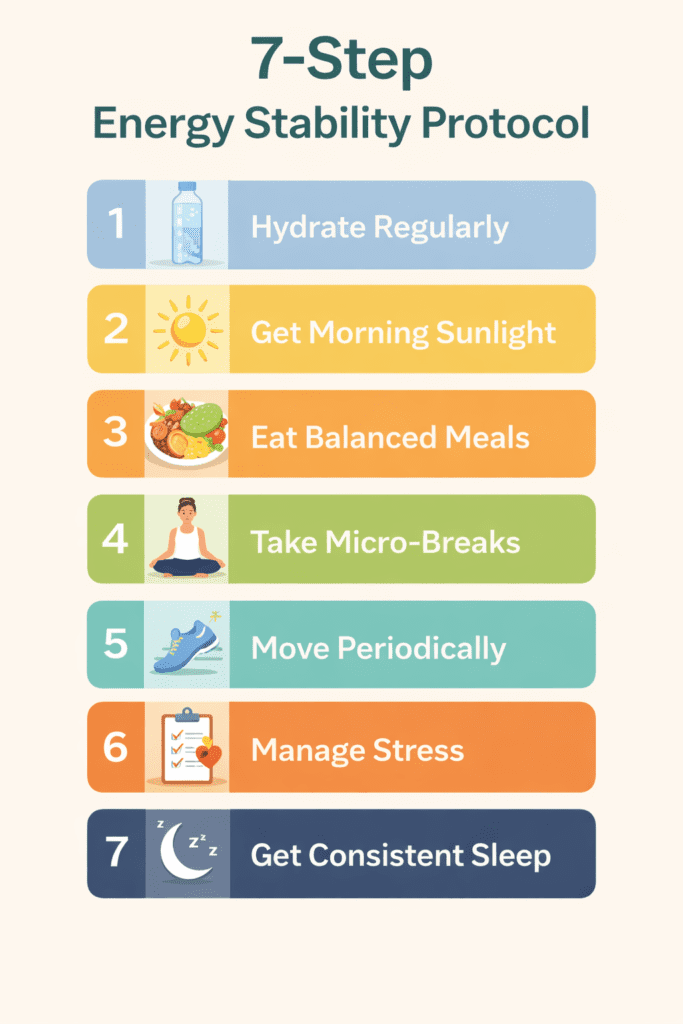
The 7-Step Protocol to Stay Energized All Day
This is your implementation model.
Use this as a flexible daily framework. Start with the first one or two steps, then add more as they become easier to repeat.
Quick Energy Fixes vs Daily Energy Stability
| Quick Fix | Why It May Backfire | Stability Habit |
|---|---|---|
| Extra coffee late in the day | May affect sleep timing for some people | Use caffeine earlier and support energy with food, water, and movement |
| Sugary snack | May create a short spike followed by a dip | Choose protein, fiber, and healthy fats |
| Pushing through fatigue | Can increase mental strain and reduce focus | Take a short movement or breathing reset |
| Skipping meals | Can make cravings and energy swings worse later | Eat steady meals with balanced macros |
| Sleeping in randomly on weekends | Can shift your rhythm and make weekdays harder | Keep sleep and wake times within a consistent window |
Why do quick energy boosts not last?
Quick energy boosts often do not last because they may stimulate alertness without fixing the pattern behind the crash. If the real issue is low hydration, skipped protein, long sitting, stress, or poor sleep timing, the boost may fade quickly and leave you looking for another fix.
Step 1: Hydrate Within 15 Minutes of Waking
Drink 16–20 oz of water immediately after waking.
Why it works:
• Replenishes overnight fluid loss
• Restores blood volume
• Supports oxygen delivery
• Improves morning cortisol alignment
Do this before coffee.
Step 2: Eat 25–35 Grams of Protein at Breakfast
Protein slows glucose absorption and reduces insulin spikes.
Examples:
Eggs + whole grain toast
Greek yogurt + nuts
Oatmeal + peanut butter
Skipping breakfast or choosing high-sugar foods destabilizes energy for the entire day.
What should I eat to keep energy stable all day?
Meals that combine protein, fiber, healthy fats, and slow-digesting carbohydrates usually support steadier energy. Examples include eggs with whole-grain toast, Greek yogurt with nuts, oatmeal with peanut butter, or lunch that pairs grains with lean protein and vegetables.
Step 3: Avoid Naked Carbs at Lunch
A “naked carb” is a carb without protein or fat.
Examples:
Bagel alone
Pasta alone
Rice bowl without protein
Instead, pair carbs with:
Lean protein
Fiber
Healthy fats
This helps reduce sharp energy drops later in the day.
Step 4: Move Every 60–90 Minutes
Sitting slows circulation and reduces oxygen delivery.
A five-minute walk increases:
Blood flow
Dopamine
Alertness
Glucose utilization
Desk workers benefit from structured resets like the strategies in 3-Minute Posture Reset for Desk Workers, which improve circulation and reduce fatigue.
Movement is one of the simplest ways to interrupt long sitting and help your body feel more alert.

Step 5: Stop Caffeine Before 12 PM
Caffeine blocks adenosine. It doesn’t remove it.
Adenosine builds through the day. When caffeine wears off, that sleep pressure may feel more noticeable, especially if you used caffeine to push through earlier fatigue.
That’s the crash.
Stopping caffeine earlier can help protect sleep timing and next-day energy rhythm for many people.
Can caffeine timing affect energy later in the day?
Yes, caffeine timing can affect both afternoon energy and nighttime sleep. Caffeine may help alertness temporarily, but using it too late can interfere with sleep for some people and make next-day energy feel less predictable.
Step 6: Stabilize Afternoon Nutrition
Instead of sugar or vending machine snacks, choose:
• Nuts
• Greek yogurt
• Apple + peanut butter
• Cottage cheese
Balanced snacks prevent glucose dips that lead to irritability and cravings.
Step 7: Protect Sleep Timing, Not Just Sleep Duration
Going to bed at wildly different times confuses circadian rhythm.

Keep sleep and wake time within a 60-minute window daily.
Consistent sleep timing improves:
Melatonin regulation
Cortisol rhythm
Next-day glucose control
Sleep is the foundation of energy regulation.
How can I stay energized all day naturally?
To stay energized all day naturally, focus on steady habits instead of quick boosts. Start with water after waking, eat protein at breakfast, pair carbs with protein or healthy fats, move regularly, limit late caffeine, and keep your sleep schedule consistent.
How Daily Habits Help Keep Energy More Stable
When your daily routine becomes more consistent, your energy may feel less reactive. Hydration, balanced meals, regular movement, earlier caffeine timing, and steady sleep schedules all reduce the sharp swings that make you feel alert one hour and drained the next.

Instead of repeating the cycle of spike, crash, caffeine, sugar, and exhaustion, the goal is to build a steadier rhythm: fuel, focus, recovery, and sleep.
Energy is not something you chase all day. It is something you regulate with small habits repeated consistently.
Instead of:
Spike → Crash → Caffeine → Crash → Sugar → ExhaustionYou create:
Fuel → Stability → Focus → Recovery → Steady alertnessSimple daily habits prevent energy slumps because they stabilize the systems that produce energy in the first place.
Over time, a steadier routine can make energy swings feel less disruptive and easier to manage.
Build Your Full-Day Energy Routine
If your energy drops mainly in the afternoon, start with our guide to afternoon energy crash prevention. If hydration is your weakest habit, use these simple daily hydration habits to make water intake easier.
If food seems to be the trigger, this guide on why blood sugar crash symptoms happen can help you understand the pattern more clearly.
About This Content
This article is for informational purposes only and does not replace professional medical advice. If your fatigue is persistent, severe, sudden, worsening, or paired with other symptoms, speak with a qualified healthcare professional.
Content is based on established guidance around hydration, balanced meals, movement, caffeine timing, stress regulation, sleep consistency, and daily energy routines.
