

You wake up after a rough night, pour coffee, open your laptop, and stare at the same email three times. Nothing looks hard, but your brain feels slow. That is the frustrating link behind brain fog lack of sleep: poor sleep can make clear thinking feel like heavy work.
The simple answer is that your brain did not get enough recovery time. Sleep helps reset attention, memory, mood, and energy regulation. When sleep is too short, broken, or shallow, your brain may still run the next day, but it often runs less smoothly. You may feel sleepy, foggy, distracted, irritable, and mentally tired at the same time.
You may forget why you walked into the kitchen, reread simple instructions, lose your place in a conversation, or feel tired before lunch. If this also happens after a full night in bed, it may connect with feeling tired even after sleeping. Brain fog is not one single feeling. It can feel like slow thinking, weak focus, forgetfulness, poor word recall, or a dull mental haze. Lack of sleep can trigger that fog because your brain is trying to manage normal tasks with less restoration than it needed.
Brain fog from lack of sleep is a temporary feeling of slow thinking, poor focus, forgetfulness, or mental heaviness after short, broken, or low-quality sleep. It often happens because the brain has less recovery time, making attention, memory, and simple decisions feel harder the next day.
Table of Contents
Why Lack of Sleep Makes Brain Fog Feel So Heavy
Lack of sleep does not just make you want to lie down. It can change how much effort your brain needs for basic tasks. A normal work email, grocery list, school form, or meeting can feel harder because attention has less support behind it.
During good sleep, your brain gets time to organize information, recover from stimulation, and prepare for the next day. The CDC explains that good sleep supports attention, memory, stress, mood, and daily performance, which is why poor sleep can affect more than physical energy.
This is why brain fog lack of sleep can feel different from feeling tired for no clear reason. You are not only low on energy. You may also feel mentally unsteady. You can be awake, walking around, and doing your day, but your focus keeps slipping.
For many people, the fog is most obvious in small moments. You read a text and forget what it said. You lose your keys. You open a browser tab and cannot remember why. You answer a simple question too slowly. These moments feel annoying, but they make sense when the brain is under-recovered.
The Science Behind Sleep Pressure, Adenosine, and Foggy Thinking
One reason lack of sleep feels so foggy is sleep pressure. As you stay awake, a chemical called adenosine builds up in the brain. Adenosine is part of the signal that tells your body it is time to rest.

When you get enough sleep, that pressure goes down. When sleep is too short, adenosine may stay higher the next day. That can leave you feeling dull, slow, and sleepy even after coffee.
This matters because brain fog is often not dramatic. It is usually a soft slowdown. Your reaction time feels slower. Your mind wanders. Your attention does not lock in. You may still complete tasks, but each one takes more effort.
Caffeine can temporarily block adenosine signals, which is why coffee may help for a while. But caffeine does not replace sleep recovery. It can make you feel more alert while the underlying sleep pressure is still there.
This is the counterintuitive part: you may feel mentally foggy even when you do not feel extremely sleepy. Your brain can be awake enough to function but not rested enough to feel sharp. That middle zone is where brain fog lack of sleep often shows up.
Why do I feel foggy after a bad night of sleep?
You may feel foggy after a bad night of sleep because your brain starts the day with less recovery, higher sleep pressure, and weaker attention control. That can make reading, planning, remembering, and decision-making feel slower than usual.
What Happens When Your Brain Misses Its Overnight Reset
Sleep is not just a break from the day. It is an active reset period. Your brain uses sleep to sort memories, process emotions, adjust alertness, and clear some of the mental noise from the day before.
When that reset is shortened, the next day can feel cluttered. Yesterday’s stress, unfinished thoughts, screen stimulation, and emotional load can feel like they are still hanging around in the background.
This can affect working memory, which is the mental space you use to hold information for a short time. Working memory helps you follow directions, compare options, remember a number, or keep track of what someone just said. After poor sleep, that space can feel smaller. Research indexed in PubMed notes that sleep deprivation can impair attention, working memory, long-term memory, and decision-making, which fits the everyday feeling of foggy thinking after a bad night.
It can also affect attention control. Attention control helps you choose what matters and ignore what does not. Without enough sleep, distractions win more easily. A phone notification, background noise, messy desk, or random worry can pull your mind away faster.
The Hidden Reason Simple Tasks Feel Harder After Poor Sleep
Most people expect lack of sleep to affect big tasks. They expect to struggle with a presentation, long drive, hard workout, or packed workday. What surprises them is how much poor sleep can affect small tasks.

Simple tasks feel harder because the brain has less automatic support. When you are rested, many small decisions happen smoothly. You choose what to wear, answer messages, follow a recipe, or switch between errands without thinking much about the effort.
After bad sleep, those same tasks can feel strangely demanding, especially if the day also includes the kind of mental load that can leave you tired after thinking too much. You may stand in front of the fridge and feel unable to decide what to eat. You may avoid a simple bill because it feels like too many steps. You may delay replying to a message because words feel hard to organize.
This is not laziness. It is often mental load. Lack of sleep makes the brain spend more energy on basic control: staying on task, remembering steps, managing emotions, and resisting distractions.
The result is a tired and foggy feeling that can build throughout the day. Each small task takes a little more effort. By afternoon, you may feel drained even if your day looked normal from the outside.
Why does lack of sleep make simple tasks feel hard?
Lack of sleep can make simple tasks feel hard because your brain has to use more effort for focus, memory, emotional control, and decision-making. Tasks that usually feel automatic may start to feel slow, frustrating, or mentally heavy.
How Cortisol Rhythm Disruption Can Add to Morning Brain Fog
Cortisol is often called a stress hormone, but it also helps with daily alertness. In a normal rhythm, cortisol rises in the morning and helps you feel ready for the day. Poor sleep can disturb that rhythm.
After a rough night, your morning alertness may feel off. You may wake up groggy, tense, restless, or tired but wired. Instead of a clean start, your body may feel like it is forcing the day open.
This matters because brain fog is not only about thinking. It is also about state. Your brain works best when your alertness level fits the task. Too little alertness can make you sleepy and slow. Too much stress arousal can make you scattered and jumpy.
Poor sleep can push you into either pattern. Some mornings feel heavy and dull, which can overlap with the same next-day pattern behind why some people feel tired after waking up. Other mornings feel tense and unfocused. Both can create brain fog.
This is one reason brain fog lack of sleep can feel inconsistent. One bad night may make you sleepy. Another may make you anxious and foggy. Another may make you emotionally flat. The common thread is that the brain did not get a stable recovery window.
What Most People Miss About Brain Fog and Tiredness
What most people miss is that brain fog and tiredness can feed each other. Foggy thinking makes tasks feel harder. Harder tasks use more effort. More effort makes you feel more tired. Then tiredness makes focus even weaker.
This loop can make a normal day feel bigger than it really is.
Lack of sleep can cause brain fog through a simple chain:
- Sleep is shortened or disrupted.
- The brain gets less overnight recovery.
- Sleep pressure stays higher the next day.
- Attention and memory feel weaker.
- Simple tasks require more effort.
- Mental effort creates tiredness.
- Tiredness makes the fog feel worse.
This loop explains why someone can say, “I did nothing today, but I feel exhausted,” a pattern that can also show up when you feel tired after doing nothing all day. The work may not be physical. The work may be the constant effort of trying to think clearly through fog.
That is also why rest can feel confusing. Sitting on the couch may help your body, but if you keep scrolling, worrying, multitasking, or solving problems in your head, your brain may not feel truly rested.
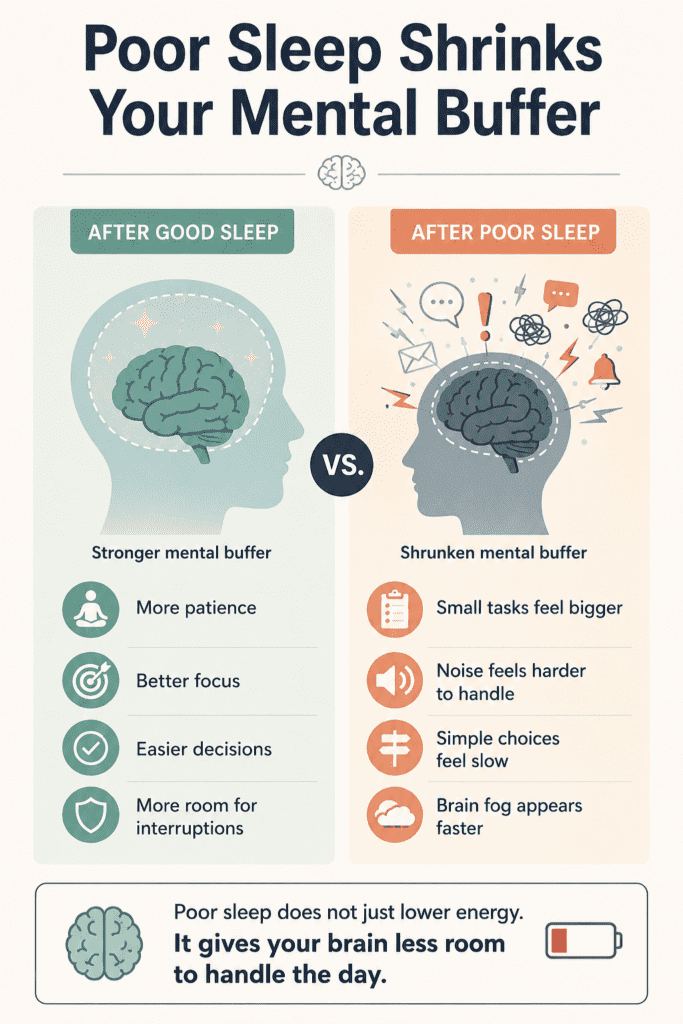
Poor sleep shrinks your mental buffer. Here is the part most people miss: lack of sleep does not just lower your energy — it removes your mental buffer.
On a normal day, your brain has enough space to handle small mistakes, noise, messages, decisions, and interruptions without feeling overloaded.
After poor sleep, that buffer is smaller. A simple email, a messy kitchen, a loud commute, or one extra problem can feel like too much because your brain has less room to absorb stress.
That is why brain fog from lack of sleep can feel sudden, even when the task in front of you is not actually difficult.
The Link Between Poor Sleep, Screens, and Slower Focus
Screens can make brain fog worse after poor sleep because they demand constant attention shifts, and that can stack with eye strain from screens during long workdays. Emails, tabs, messages, videos, alerts, and short posts all ask the brain to switch quickly.

When you are sleep-deprived, it can feel like mental static. Your brain keeps moving, but it does not feel clear.
Bright screens late at night can also make the next day worse if they push bedtime later or keep your mind alert when it should be winding down. The issue is not only blue light. It is also stimulation. Work emails, dramatic videos, online shopping, sports highlights, and social media arguments can all keep the brain engaged.
After a short night, screens can become both a tool and a trap. You use them to work, but they also increase distraction. You use them to relax, but they can keep your brain busy. You use them to wake up, but they can scatter attention.
A simple way to understand this is: poor sleep lowers your attention budget, and screens spend that budget quickly.
Can too much screen time make sleep brain fog worse?
Yes, too much screen time can make sleep-related brain fog worse because screens demand constant attention switching. After poor sleep, that extra stimulation can make the brain feel more scattered, slower, and harder to focus.
The Impact of Dehydration, Meals, and Caffeine Timing
Lack of sleep is the main trigger in this article, but the next-day fog often gets stronger when other daily habits stack on top of it.
Dehydration can make you feel sluggish and less alert. A rushed morning with only coffee and no water may make brain fog feel heavier. Skipping breakfast may also make focus harder for some people, especially if the morning already started with low energy.
Heavy meals can add another layer. A large lunch after a poor night may make the afternoon feel slow because digestion, sleep pressure, and low motivation all arrive together.
Caffeine timing matters too, especially if you already notice that coffee makes you sleepy immediately instead of sharper. Coffee may help you get through the morning, but too much caffeine late in the day can make it harder to sleep later. The CDC also lists avoiding caffeine in the afternoon or evening as one habit that can support sleep quality.
This does not mean every person needs the same routine. It means brain fog lack of sleep often becomes worse when hydration, meals, movement, and caffeine timing are also off.
How Emotional Control Gets Weaker When Sleep Is Too Short
Poor sleep does not only affect focus. It can also make emotions feel harder to manage. A small problem may feel bigger. A mild comment may feel personal. A simple delay may feel overwhelming.
That emotional strain can add to brain fog because emotional control uses energy too. If part of your brain is busy managing frustration, worry, or irritability, less energy feels available for clear thinking.
This is why a tired brain can feel dramatic. You may know the task is small, but it feels heavy. You may know you should focus, but your mind keeps drifting. You may know you need to calm down, but your nervous system feels jumpy.
Sleep supports the systems that help you pause, choose, and respond. When sleep is short, reaction can become easier than reflection. That can make work, parenting, driving, studying, and decision-making feel harder than usual.
A foggy day is often not just a focus problem. It can be a full brain-state problem: attention, emotion, motivation, and energy all feel less steady.
What Happens When Brain Fog Builds Over Several Bad Nights
One poor night can cause a rough day. Several poor nights can create a stronger pattern. The brain may start each morning with less recovery than it needs, then spend the day trying to catch up.
This is when people often say they feel stuck in a fog. They may sleep a little, wake up tired, push through with caffeine, feel unfocused at work, stay up too late catching up, and repeat the cycle.
Over time, the fog can feel normal. That can be tricky because people may stop connecting it to sleep. They may blame motivation, age, personality, or discipline when the real issue is that recovery has been too short for too many nights.
| What Lack of Sleep Affects | How It Can Feel the Next Day |
|---|---|
| Attention control | You reread simple things and lose focus faster |
| Working memory | You forget small steps, names, or why you opened something |
| Emotional control | Small problems feel bigger or more frustrating |
| Decision-making | Simple choices feel slow, heavy, or annoying |
| Sleep pressure | You feel sleepy, dull, or mentally heavy |
| Screen tolerance | Emails, tabs, and notifications feel more draining |
Can lack of sleep cause brain fog?
Yes. Short, broken, or low-quality sleep can make attention, memory, and decision-making feel weaker the next day. That can show up as slow thinking, forgetfulness, low focus, and tiredness.
The Real Cause of Feeling Tired and Foggy After Bad Sleep
The real cause is usually not one single thing. It is a stack.
Bad sleep reduces recovery. Sleep pressure stays high. Attention feels weaker. Emotional control gets thinner. Screens and stress add more input. Coffee may hide sleepiness for a while but does not restore the reset. Meals, hydration, and movement can either support the day or make the fog heavier.
That stack is why the same person can feel different levels of brain fog after different bad nights. A short night before a calm Saturday may feel annoying. A short night before a noisy commute, long shift, family issue, and screen-heavy workday may feel crushing.
The cause-effect chain looks like this:
Poor sleep leads to less recovery. Less recovery leads to weaker focus. Weaker focus makes simple tasks harder. Harder tasks increase mental effort. More effort creates tiredness. Tiredness makes the brain feel even foggier.
That is the core of brain fog lack of sleep. The fog is not random. It is often the mind’s way of showing that the recovery system is behind.
How long does brain fog from lack of sleep last?
After one bad night, it may improve after a better night of sleep and a lower-stress day. After several bad nights, it may take a steadier routine before focus feels normal again.
How Better Sleep Recovery Helps Clear Brain Fog Gradually
Brain fog from poor sleep usually improves when the recovery pattern improves. That does not mean one perfect night fixes everything for everyone. If sleep has been short for several nights, the brain may need a steadier routine before focus feels normal again.

The goal is not to create a perfect wellness plan. The goal is to reduce the load on your brain while sleep recovers. Harvard Health explains what happens during sleep and how daily habits can support better sleep, which fits a gradual recovery approach instead of forcing your way through every foggy day.
A simple recovery protocol can look like this:
- Keep wake time as steady as possible for a few days.
- Get outdoor light early in the day.
- Drink water before relying only on coffee.
- Do one easy movement break before noon.
- Limit late caffeine so bedtime is easier.
- Make the last hour before bed less stimulating, using the same kind of wind-down logic that supports better sleep quality through evening habits.
- Choose one priority task when your brain feels foggy.
This works because it supports the systems that sleep loss disrupts: circadian rhythm, hydration, attention, movement, and evening wind-down.
A simple next-day brain fog reset can help when poor sleep already happened: Start with water, daylight, and one low-pressure task before checking every message or opening several tabs.
Keep breakfast simple, take a short walk if possible, and use a written list instead of trying to hold everything in your head.
The goal is not to force perfect focus. It is to reduce the load on a tired brain until sleep recovery catches up.
Brain fog is more likely connected to lack of sleep when it appears with:
- Slow thinking after a short or restless night
- More forgetfulness than usual
- Tiredness before the day gets busy
- Stronger cravings for caffeine or sugar
- Low patience after small problems
- Worse focus during screen-heavy work
- Clearer thinking after better sleep
What helps brain fog from lack of sleep naturally?
Morning daylight, water, a steady meal, light movement, less multitasking, earlier caffeine, and a calmer last hour before bed can all reduce the extra load on a tired brain.
What Happens When You Work With Sleep Brain Fog Instead
Fighting brain fog usually means pushing harder, opening more tabs, drinking more caffeine, skipping breaks, and getting frustrated when focus does not return. That approach can work for a short burst, but it often makes the day feel heavier.

Respecting the fog means adjusting the day to match your recovery level. You still do what matters, but you lower the extra load.
When your brain feels foggy from lack of sleep, use a “low-friction day” plan: do the most important task first, remove extra tabs, keep your phone away during focus blocks, batch small decisions, and avoid starting five half-finished tasks at once.
This helps protect the limited attention you have instead of spending it too quickly.
For harder tasks, use short work blocks and write down the next step before you begin. That keeps your tired brain from wasting energy remembering what to do next.
This is not giving up. It is working with the brain you have that day.
Brain fog lack of sleep feels frustrating because it makes you question yourself. You may wonder why you cannot think clearly, why easy work feels hard, or why you feel tired after barely doing anything. But the pattern becomes less confusing when you understand the mechanism.
Your brain is not failing. It is working with a smaller recovery budget. Poor sleep can make thinking feel slow, heavy, and tiring, but the right recovery pattern can help your mind feel clearer again.
Next step:
If your brain feels foggy after sleep, it may help to compare it with other sleep-related tiredness patterns. Start with why you feel tired after waking up to understand what may be happening earlier in the morning.
Reader note: This article explains how poor sleep can affect focus, energy, and mental clarity in everyday life. It is written for educational purposes and is not meant to diagnose brain fog or replace personal medical advice. If your brain fog is sudden, severe, getting worse, or affecting daily life, consider speaking with a qualified healthcare professional.
