
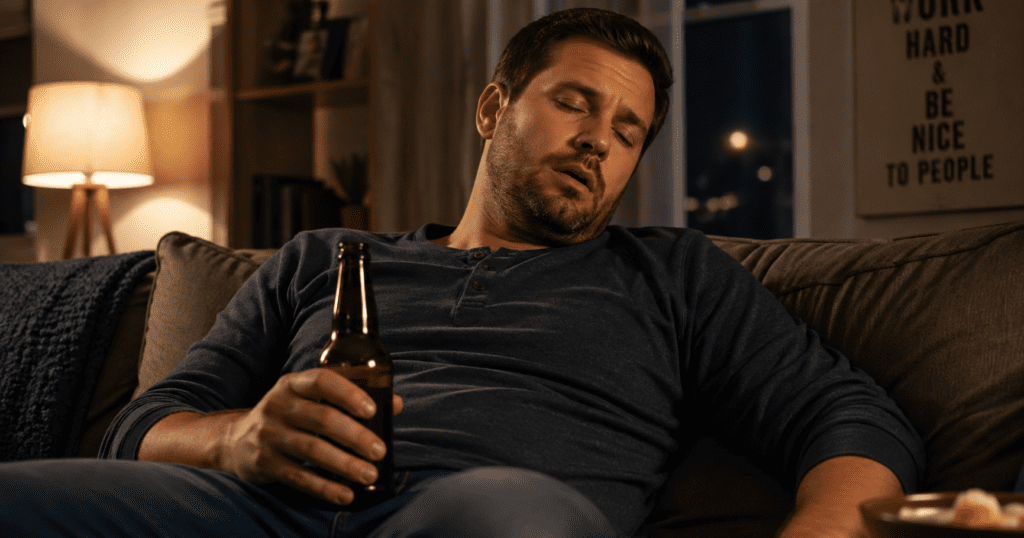
You go out for a casual drink, maybe a glass of wine with dinner, a beer while watching a game, or a cocktail at a weekend get-together. You were not exhausted before drinking. Your day felt normal. But within 30 to 60 minutes, something shifts—and it happens faster than you expect.
Your eyes feel heavier. Your focus drops. The couch suddenly feels more tempting than the conversation. It almost feels like your body decided to shut down out of nowhere.
So, why does alcohol make you sleepy even when you were not tired before?
Alcohol makes you sleepy because it slows brain activity and creates a false sleep signal by increasing calming signals and reducing alertness signals. This sudden shift makes your body feel ready for sleep—even when it hasn’t actually entered a true recovery state.
This is why the drowsiness can feel real, but the rest that follows often isn’t—similar to what happens when you feel always tired even after sleeping.
At the same time, alcohol can also disrupt normal sleep cycles, which is why you may wake up tired later.
Table of Contents
The Science Behind Why Alcohol Triggers Sleepiness Faster Than Expected
Alcohol affects your brain quickly because it moves into your bloodstream and reaches your central nervous system within a short time. Once it gets there, it does not create real rest. It slows down normal brain signaling.
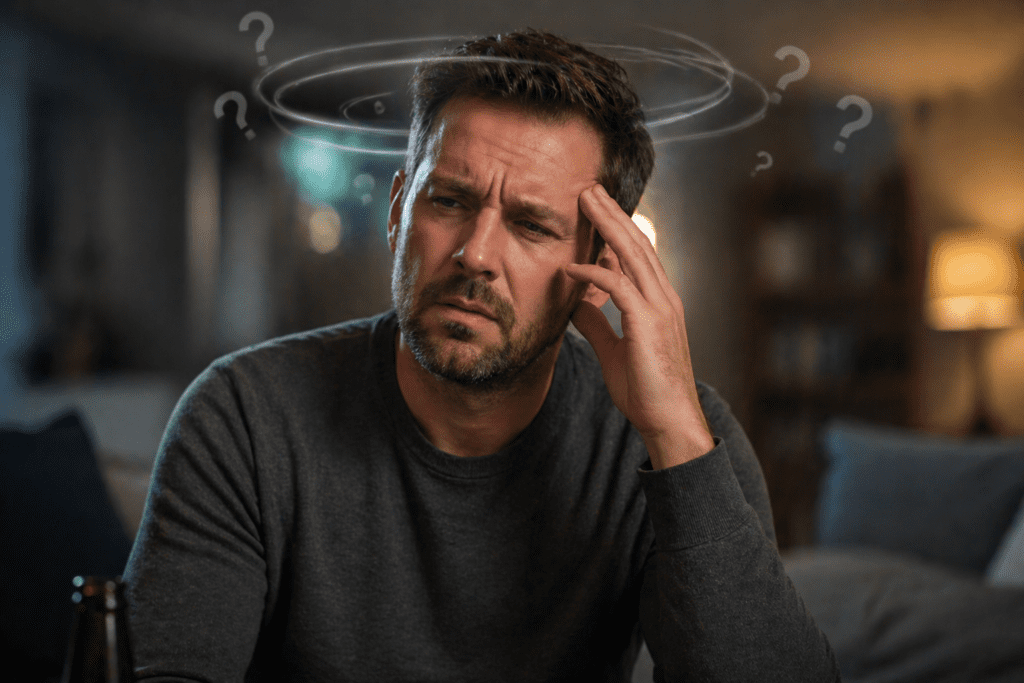
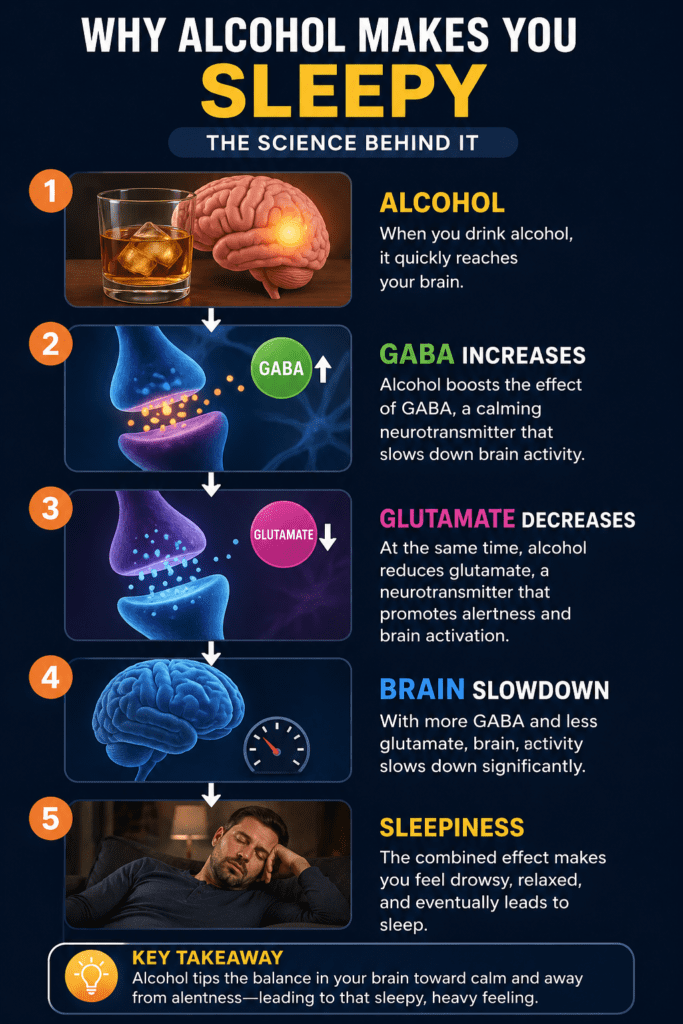
Two brain chemicals matter here: GABA and glutamate.
GABA helps calm brain activity. Glutamate helps keep your brain alert. Alcohol increases the calming effect of GABA while reducing alertness signals connected to glutamate. That combination can make your brain feel quieter, slower, and less responsive.
That is why alcohol can make you feel sleepy even if your body did not truly need sleep.
This is also why the sleepiness may feel different from regular tiredness. Normal tiredness builds gradually after a long day, poor sleep, physical effort, or mental strain. Alcohol sleepiness can appear suddenly because it is chemically triggered.
A helpful way to think about it is this:
Alcohol does not tell your body, “You are restored and ready for sleep.”
It tells your brain, “Slow down now.”
That difference matters.
To make this clearer, here’s how alcohol shifts your brain and body step by step:
| Stage | What Alcohol Does | What You Feel |
|---|---|---|
| Brain signaling | Slows communication between neurons | Mental slowdown |
| GABA increase | Enhances calming brain activity | Relaxation |
| Glutamate suppression | Reduces alertness signals | Reduced focus |
| Sensory processing | Lowers external stimulation response | Quiet, heavy feeling |
| Energy signaling | Disrupts normal brain energy balance | Sudden sleepiness |
This step-by-step shift is why alcohol-related sleepiness can feel fast and unexpected, even if you were not physically tired before drinking.
Why does alcohol make me sleepy but not drunk?
Alcohol can make you feel sleepy before you feel fully drunk because its sedative effect starts early in the brain. It slows alertness quickly, especially if you drink on an empty stomach or are already slightly fatigued. Feeling sleepy does not always mean high intoxication—it often reflects early nervous system slowdown.
Why Alcohol Causes a Brain Energy Misfire That Makes Sleepiness Feel Sudden
One overlooked reason alcohol makes you feel sleepy is how it disrupts your brain’s energy signaling system. Normally, your brain constantly balances stimulation and energy usage to match what you are doing. But alcohol interferes with that balance.
Instead of adjusting gradually, your brain suddenly reduces its activity level as if it is conserving energy. This creates a mismatch between what your body is doing and how your brain is responding.
Even if you are sitting, talking, or watching something, your brain may behave as if it is time to shut down. That sudden drop in mental activity is what makes alcohol-related sleepiness feel fast, unexpected, and sometimes overwhelming.
The Hidden Reason Alcohol Feels Like Sleep But Isn’t Real Rest
The biggest mistake most people make is assuming that drowsiness equals recovery.
It does not.
Alcohol creates what we can call a false sleep signal. Your brain feels sedated, but your body is not moving through its normal wind-down process in the same clean way.
Normally, sleep is guided by several systems working together:
Your circadian rhythm tracks time of day. Melatonin helps signal nighttime. Body temperature shifts. Your nervous system gradually moves toward a calmer state. Sleep pressure builds through the day.
Alcohol skips over much of that natural preparation.
Instead of gently helping the body enter sleep, alcohol pushes the brain into a slowed state. That can feel relaxing, but it is not the same as healthy sleep readiness.
This is why someone can say, “Alcohol helps me fall asleep,” and still wake up feeling drained.
The feeling at bedtime may be real. The recovery may not be.
How Alcohol Slows Sensory Processing and Quietly Pushes You Toward Sleep
Alcohol does not only affect thinking—it also slows how your brain processes sensory input. Sounds feel less sharp, lights feel softer, and conversations require more effort to follow.
This reduction in sensory processing can make your environment feel calmer than it actually is. When your brain receives less stimulation from the outside world, it naturally shifts toward a lower alertness state.
That is why a busy room can suddenly feel quiet, or a normal conversation can feel harder to stay engaged in. This sensory slowdown contributes to the feeling that your body is ready to sleep, even when your environment has not changed.
What Happens When Alcohol Disrupts Your Natural Sleep Process
Once you fall asleep after drinking, alcohol continues to affect your sleep architecture. Sleep architecture means the way your body moves through different sleep stages during the night.
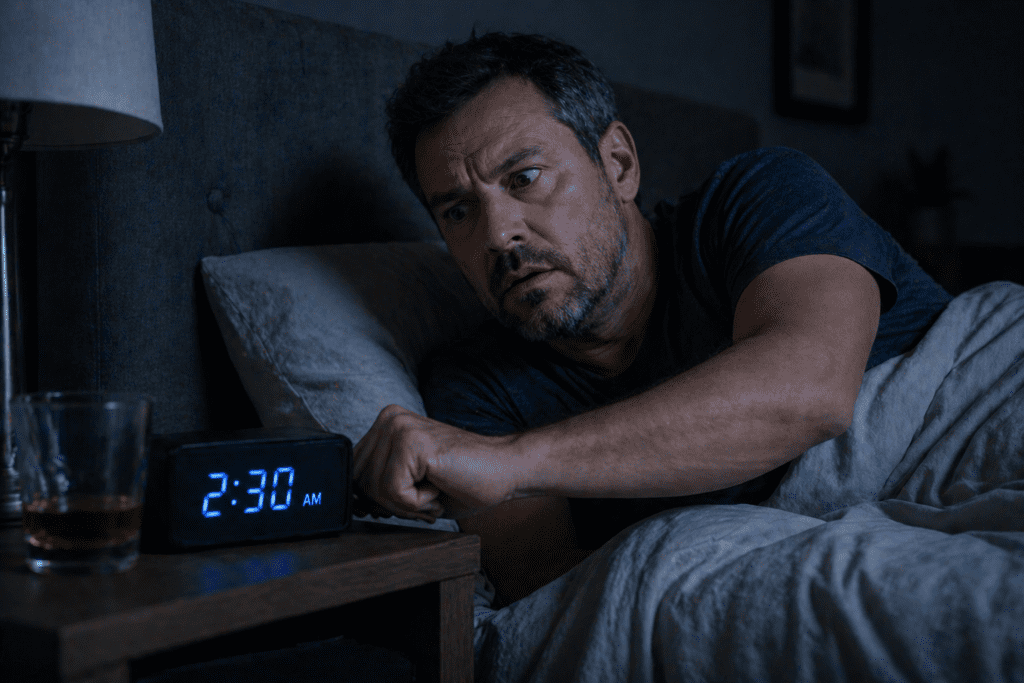
A normal night includes lighter sleep, deeper sleep, and REM sleep. REM sleep is strongly connected to memory, mood, learning, and mental recovery. The NIH explains sleep stages as part of the body’s natural recovery process.
Alcohol can interfere with that pattern.
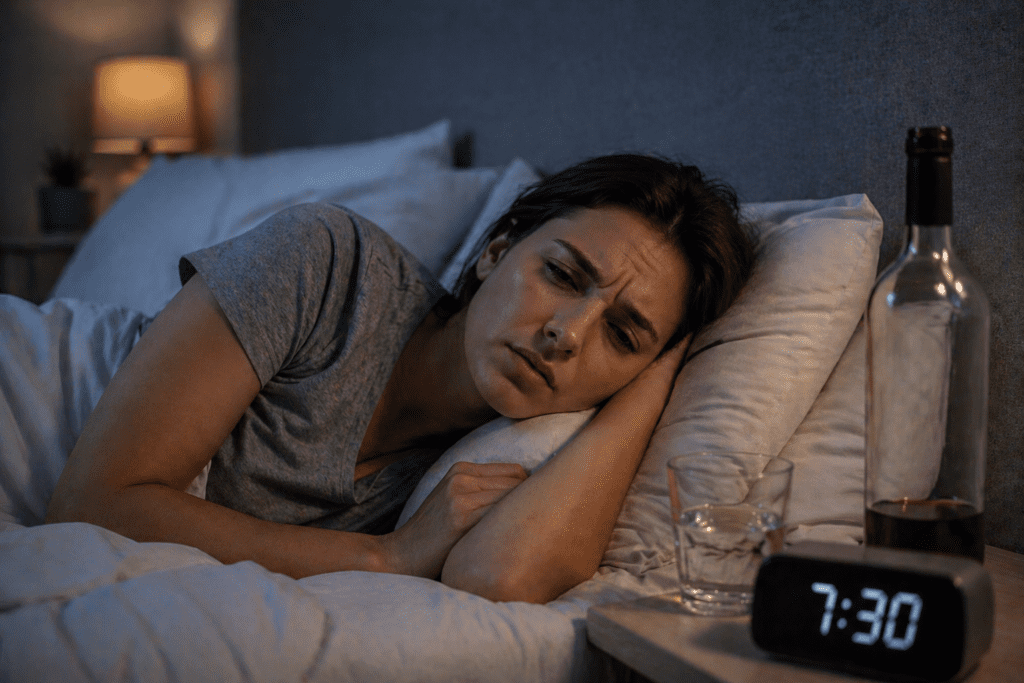
At first, it may help you fall asleep faster. Later, as your body starts processing alcohol, your sleep often becomes lighter and more broken. This is why you may wake up at 2:30 AM, feel restless, need to use the bathroom, or wake up feeling like your sleep was not deep enough.
Key Reasons Alcohol Makes You Sleepy Quickly:
- It increases calming brain signals
- It reduces alertness and mental stimulation
- It slows central nervous system activity
- It creates a false sleep signal
- It can make you fall asleep faster at first
- It disrupts sleep quality later in the night
- It can leave you tired the next morning
The Real Cause Behind Feeling More Tired After Drinking Alcohol
The real problem is not only that alcohol makes you sleepy. The real problem is that alcohol can make you sleepy first and tired later.
That happens because sleepiness and recovery are not the same thing.
Here is the cause-effect chain:
Your body feels sleepy.
You fall asleep faster.
Alcohol disrupts sleep stages.
Your sleep becomes fragmented.
Recovery is incomplete.
You wake up tired.
That chain explains why drinking can feel helpful at night but harmful the next morning.
You may sleep for seven or eight hours and still feel off because your body did not move through sleep smoothly. You may wake up with brain fog, low motivation, dry mouth, a headache, or a heavy feeling in your body.
This overlaps with a pattern many people also notice when they are always tired even after sleeping. The issue is not always sleep length. Sometimes it is sleep quality.
Why do I feel sleepy after drinking alcohol but wake up later?
Alcohol initially helps you fall asleep by slowing brain activity, but as your body metabolizes it, your nervous system becomes more active again. This can lead to lighter sleep, frequent waking, and difficulty staying asleep during the second half of the night.
What Most People Miss About Alcohol and Energy Levels
What most people miss is simple:
This is where things start to become misleading.
This does not mean your body is actually rebuilding energy. In many cases, alcohol reduces the quality of recovery you were expecting.
This is the counterintuitive part.
The faster you fall asleep after drinking, the more you may believe alcohol helped. But if your sleep becomes lighter, shorter, or more interrupted later, your body may pay for it the next day.
Why Alcohol Makes You Feel More Tired Later:
- It can reduce REM sleep
- It can fragment sleep during the second half of the night
- It may increase nighttime bathroom trips
- It can contribute to dehydration
- It may raise stress-related activity overnight
- It can disrupt circadian rhythm timing
- It prevents sleep from feeling fully restorative
Harvard Health notes that alcohol may make people drowsy at first while still interfering with sleep quality later, especially when drinking happens close to bedtime through its discussion of alcohol and fatigue.
How Timing and Amount of Alcohol Change Your Sleepiness Response
The same drink can affect you differently depending on timing, food, hydration, and your energy level before drinking.
If you drink close to bedtime, alcohol is more likely to interfere with sleep because your body is still processing it while you are trying to rest.
If you drink on an empty stomach, the effect may hit faster because alcohol can enter your bloodstream more quickly.
If you drink during a natural low-energy window, such as midafternoon or late evening, the drowsiness may feel stronger.
This is similar to other energy-timing problems. For example, some people feel mentally drained but restless in the afternoon because their body and brain are not aligned at the same energy level.
Alcohol can exaggerate that mismatch.
Is it normal to feel extremely sleepy after one drink?
Yes. Some people are more sensitive to alcohol’s effects, especially if they are tired, dehydrated, or drinking without food. Even one drink can quickly lower alertness and create a strong drowsy feeling.
Why Alcohol Feels Stronger at Night Than During the Day
Alcohol often feels more sedating at night because your body is already moving toward a lower-energy state. Your circadian rhythm naturally reduces alertness in the evening, which means your brain is more sensitive to anything that slows it down further.
When alcohol is added at this time, the effects stack together. Your natural sleep pressure increases, and alcohol amplifies that signal, making even small amounts feel stronger and more sleep-inducing than they would earlier in the day.
This is why the same drink can feel mild during the day but surprisingly sedating at night, even when nothing else changes.
Why Even One Drink Can Make You Feel Extremely Sleepy
Even one drink can trigger a noticeable drop in alertness for some people.
People respond differently to alcohol based on body size, sleep debt, food intake, genetics, stress level, hydration, medication use, and normal alcohol tolerance.
One drink may feel stronger if you:
Had poor sleep the night before
Drank on an empty stomach
Were already slightly dehydrated
Had alcohol during a low-energy time
Were stressed or mentally overloaded
Do not drink often
This is why one glass of wine at dinner may feel relaxing one night and surprisingly sedating another night.
How Alcohol Dehydration Contributes to Energy Loss and Sleepiness
Alcohol is a diuretic, which means it can increase urination and fluid loss. That is one reason you may wake up thirsty, foggy, or sluggish after drinking.
Even mild dehydration can make your body feel heavier and less focused. When dehydration combines with poor sleep, the next-day fatigue can feel stronger.
This does not mean every tired feeling after alcohol is only dehydration. It is usually a combination of factors:
Poor sleep quality
Fluid loss
Changes in blood sugar
Nighttime awakenings
Reduced recovery
Nervous system rebound
That combination is why “just drink water” may help, but it does not fully erase alcohol-related tiredness.
Does alcohol affect sleep quality even if I sleep longer?
Yes. Alcohol can reduce deep and REM sleep, which are critical for recovery. Even if you sleep for many hours, your body may not fully restore energy, leaving you feeling tired, foggy, or low the next day.
Alcohol is only one trigger. If your energy drops after meals, showers, or other normal routines, your body may be reacting to timing, hydration, or recovery patterns you have not connected yet.
Read: Why You Feel Tired After Eating Read: Why Showers Make You TiredHow Alcohol Can Lower Blood Sugar and Trigger a Hidden Energy Drop
Alcohol can also affect how your body manages blood sugar, especially if you drink without eating. Your liver prioritizes processing alcohol over maintaining stable glucose levels.
As a result, your blood sugar can drop more than expected. Even a mild drop can lead to symptoms like fatigue, weakness, and a sudden need to sit down or rest.
This effect is often subtle, but when combined with brain slowdown and poor sleep quality, it can amplify the feeling of sleepiness and make your energy feel unstable both during the night and the next day.
How Alcohol Disrupts Your Circadian Rhythm and Affects Sleep Timing
Your circadian rhythm is your internal 24-hour clock. It helps regulate when you feel alert, when you feel sleepy, and how your body responds to light and darkness.
Alcohol can interfere with that rhythm.
This matters because your body does not only need sleep. It needs sleep at the right time, in the right stages, with enough stability to recover.
The CDC recommends healthy sleep habits, including avoiding alcohol close to bedtime because it can reduce sleep quality.
When alcohol disrupts timing, you may experience a strange pattern:
Sleepy too early
Awake in the middle of the night
Groggy in the morning
Low energy during the day
Restless again at night
That pattern can feel confusing because you technically “slept,” but your body clock did not fully reset.
What Happens When Alcohol Affects REM Sleep and Recovery
REM sleep is one of the biggest reasons alcohol-related sleep can feel misleading.
You may fall asleep faster after drinking, but alcohol can reduce REM sleep early in the night and make your sleep less balanced overall. REM sleep supports memory, mood, emotional processing, and mental sharpness.
When REM sleep is disrupted, you may notice:
Poor focus
Low patience
Strange dreams
Morning grogginess
Moodiness
A foggy, unfocused feeling
This is one reason alcohol sleep does not always feel refreshing.
You may not remember waking up many times. You may not realize your sleep stages were disrupted. But your body still feels the effect the next day.
The Micro-Awakening Pattern That Makes Alcohol Sleep Feel Incomplete
Even when you do not fully wake up, alcohol can cause small interruptions in your sleep known as micro-awakenings. These are brief moments where your brain becomes more active without you being fully aware of it.
You may not remember waking up, but your sleep becomes less continuous. Instead of staying in deeper stages, your brain keeps shifting between lighter states.
This pattern prevents your body from staying long enough in restorative sleep. Over time, these small disruptions add up, which is why you may wake up feeling tired even if you believe you slept through the night.
Why Your Sleep Breaks Down in the Second Half of the Night After Drinking
Many people fall asleep quickly after drinking but wake up several hours later.
This often happens because alcohol’s sedative effect fades as your body metabolizes it. Once that calming effect wears off, your nervous system may become more active. Your sleep becomes lighter, and waking becomes more likely.
You may also wake up because of:
Bathroom trips
Dry mouth
Increased heart rate
Body temperature changes
Restlessness
Vivid dreams
This is why alcohol can feel like it helps at the start of the night but hurts during the second half.
It is also why drinking before bed can make your morning feel worse than expected.
Why do I wake up in the middle of the night after drinking alcohol?
As your body processes alcohol, its sedative effect fades and your nervous system becomes more active. This shift can lead to lighter sleep, increased heart rate, and frequent waking during the night.
How Alcohol Amplifies Social Fatigue and Makes You Feel More Drained
Alcohol is often tied to social situations: dinners, parties, weddings, sports bars, holidays, and weekend gatherings.
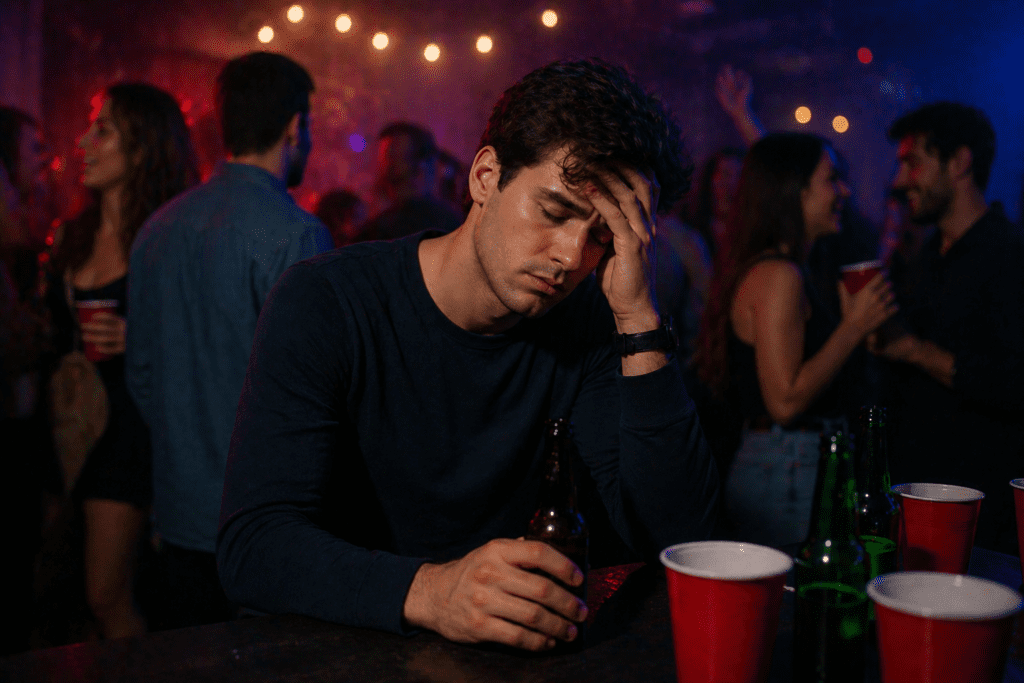
That means alcohol sleepiness may not come from alcohol alone. It may combine with social energy drain.
Talking, listening, standing, driving, bright lights, loud music, and late nights all increase mental and physical load. If you already tend to feel tired after socializing, alcohol can make that crash feel stronger.
This is important because people often blame only the drink. In reality, the full fatigue pattern may include:
Social stimulation
Late timing
Food changes
Dehydration
Alcohol sedation
Poor sleep
That full stack can make one evening feel much more draining than expected.
Why Simple Mental Tasks Feel More Draining After Alcohol Slows Brain Efficiency
After drinking alcohol, even simple mental tasks can feel harder than usual. This is because your brain is operating at a reduced efficiency level.
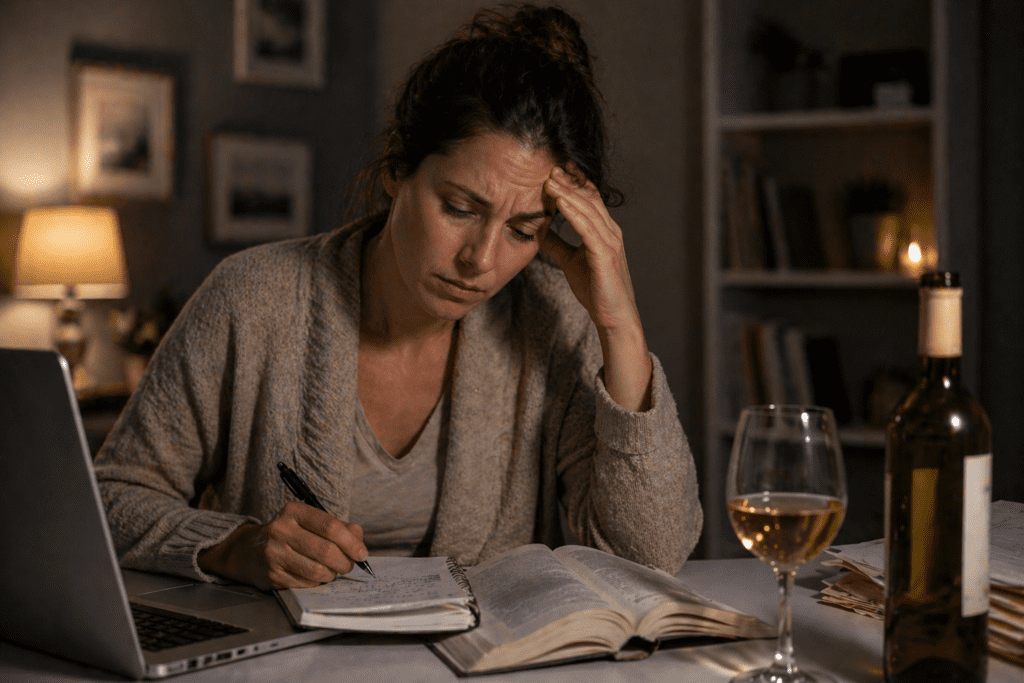
Tasks like following a conversation, reading, or making decisions require more effort when your brain activity is slowed. This extra effort can make you feel mentally tired faster, even if the task itself is not demanding.
That added mental strain contributes to the feeling of sleepiness, especially in social situations where attention and responsiveness are required.
How Drinking Before Bed Can Create a Recovery Debt
Recovery debt happens when your body does not fully restore itself overnight. One night may not seem like a big deal. But repeated nights of alcohol-disrupted sleep can build a pattern.
You may notice:
Morning tiredness
Afternoon crashes
Lower motivation
Reduced workout energy
More cravings
Lower patience
Less mental clarity
This does not mean one occasional drink ruins your health. It means repeated drinking close to bedtime can train your body into a weaker recovery rhythm.
That is the part many people overlook.
The issue is not only alcohol. The issue is alcohol plus timing plus repeated sleep disruption.
The Energy Crash Loop That Makes Alcohol Fatigue Repeat Itself
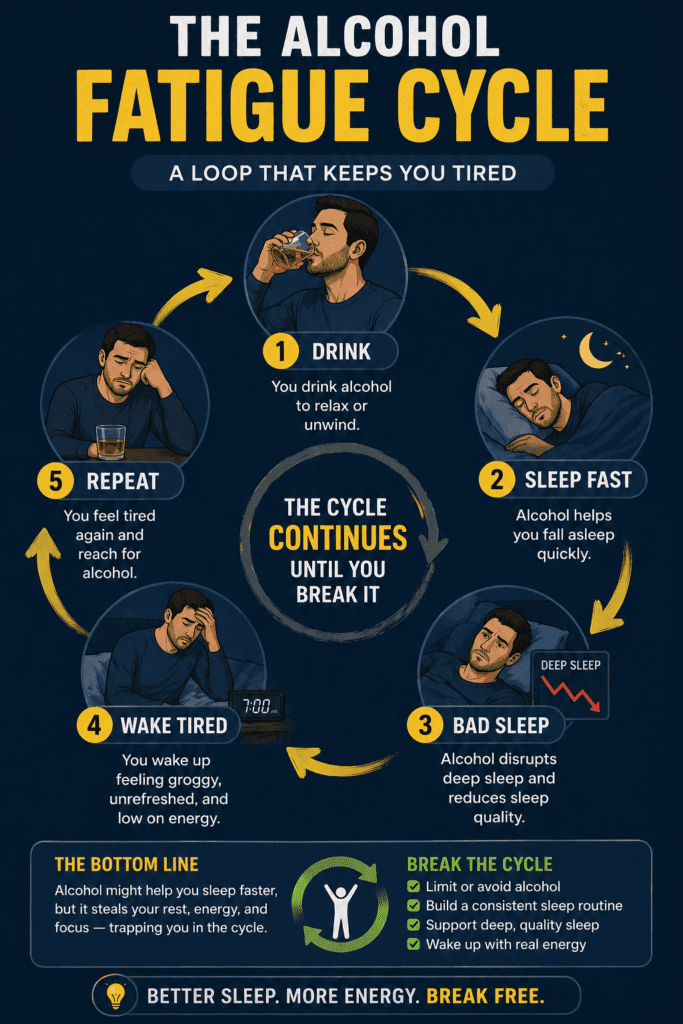
This is where the pattern becomes more noticeable over time.
Alcohol-related sleepiness does not always end when the night is over. It can create a repeating cycle that affects how your body handles energy over time.
The pattern often looks like this:
Alcohol → rapid drowsiness → disrupted sleep → incomplete recovery → next-day fatigue → lower energy baseline → stronger sensitivity to alcohol
This loop explains why some people feel increasingly tired after repeated nights of drinking, even if their habits do not change significantly.
Over time, this pattern can make your baseline energy feel lower, which is why alcohol may start to feel more draining even if your habits stay the same.
What Happens When Your Body Relies on Alcohol to Relax
Some people use alcohol to unwind after work or fall asleep faster. It may feel effective because the sedative effect is real.
But over time, this can create a problem.
Your body may start depending on an external shortcut instead of using natural relaxation signals. That can make sleep feel harder without alcohol, especially if stress, anxiety, or inconsistent routines are already involved.
This is where a relaxing habit can slowly turn into a sleep pattern problem.
A better goal is not “knock yourself out.”
A better goal is “help your body downshift naturally.”
That means lower light, a consistent bedtime, a cooler room, less late caffeine, and fewer intense activities close to bed.
A Simple Protocol to Reduce Alcohol-Related Sleepiness and Next-Day Fatigue
Follow this simple structure to reduce how strongly alcohol affects your sleep and energy:
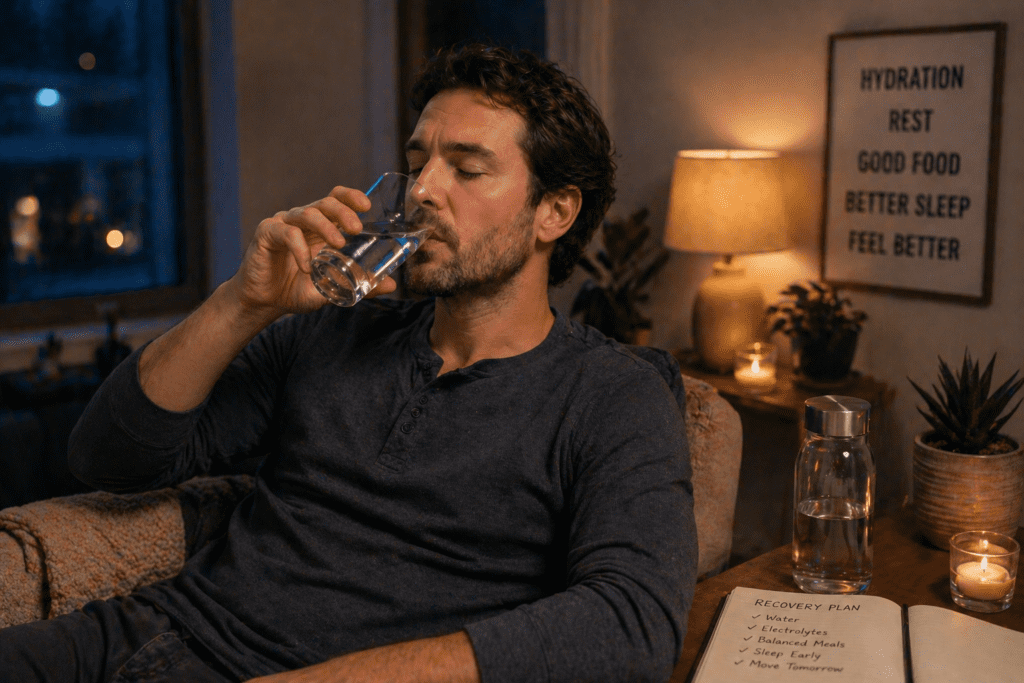
1. Control timing, not just quantity
Drinking earlier in the evening gives your body more time to process alcohol before sleep. This reduces how much it interferes with your sleep cycles.
2. Never drink on an empty stomach
Food slows alcohol absorption and prevents sudden drops in energy. This helps reduce the intensity of early sleepiness.
3. Hydrate before and after drinking
Alcohol increases fluid loss, which can worsen fatigue. Staying hydrated helps reduce next-day sluggishness.
4. Avoid stacking fatigue triggers
Alcohol combined with poor sleep, stress, or late nights increases the impact. The more factors combined, the stronger the fatigue.
5. Protect your sleep environment
A cool, dark, and quiet room helps your body recover better, even if sleep is slightly disrupted.
How long before bed should I stop drinking alcohol?
A practical rule is to stop drinking at least 3 to 4 hours before bed. Some people may need longer, especially if they drink more than one serving, drink on an empty stomach, or are sensitive to alcohol’s effects.
The Counterintuitive Truth About Alcohol and Sleep Quality
The counterintuitive truth is this:
Alcohol can make sleep start faster while making recovery worse.
That is why it feels helpful at first but disappointing later.
It lowers the barrier to falling asleep, but it can damage the quality of what happens after you fall asleep. So the question is not only, “Did I fall asleep?”
The better question is:
“Did my body actually recover?”
If the answer is no, you may wake up feeling tired, foggy, and slow, even after enough hours in bed.
Here’s the key difference most people overlook when it comes to alcohol and sleep:
| What You Experience | What’s Actually Happening |
|---|---|
| You feel sleepy quickly | Brain activity is being suppressed |
| You fall asleep faster | Sleep pressure is artificially triggered |
| You stay in bed for hours | Sleep stages are disrupted |
| You wake up during the night | Nervous system becomes active again |
| You feel tired the next day | Recovery was incomplete |
This is why falling asleep faster does not mean sleeping better. What feels like rest on the surface is often a disrupted recovery process underneath.
Why does alcohol make me feel tired the next day even after sleeping?
Alcohol disrupts normal sleep cycles and reduces REM sleep, which affects recovery. As a result, you may wake up feeling tired even if you slept long enough, because your body did not complete full restorative processes.
The Recovery Delay Effect That Extends Alcohol Fatigue Beyond the Night
Alcohol does not just affect your sleep while you are in bed—it can delay your body’s recovery process even after you wake up. Your system may take longer to return to its normal balance, especially if your sleep was disrupted.
This delayed recovery can make your energy feel slower to rebuild the next day. Instead of waking up refreshed, your body may still be catching up from the previous night.
That is why alcohol-related fatigue can sometimes last longer than expected, even when the immediate effects of drinking have already worn off.
If you’ve ever felt unexpectedly tired after drinking, your body isn’t overreacting—it’s responding exactly the way it’s designed to.
Conclusion: Why Alcohol Makes You Sleepy and Leaves You Tired
Alcohol makes you sleepy because it slows your brain and creates a rapid drop in alertness, giving you the feeling that your body is ready for sleep.
But that feeling is misleading.
Alcohol doesn’t guide your body into real recovery—it interrupts it.
So while you may fall asleep faster, your sleep becomes less effective, your recovery stays incomplete, and your energy doesn’t fully reset.
That’s the difference most people don’t see.
Sleepiness is immediate.
Recovery is what actually matters.
And once you understand that difference, it becomes easier to explain why alcohol can make you feel tired both during the night and the next day—even when it seemed like it was helping at first.
Want to Understand Why Your Energy Feels Off?
If alcohol leaves you sleepy or drained, it may be part of a bigger recovery pattern. Explore these related guides to understand why your body can feel tired even after rest, social time, or a full night of sleep.
Always Tired Even After Sleeping Tired After Socializing Tired But Can’t SleepCommon Questions About Why Alcohol Makes You Sleepy
Why does alcohol make me feel relaxed before it makes me sleepy?
Alcohol often creates a short period of relaxation because it reduces inhibition and lowers mental tension. As your blood alcohol level rises, the sedative effects become stronger, which shifts that relaxed feeling into noticeable sleepiness. This is why the transition can feel gradual at first, then suddenly heavier.
Why do I feel more sleepy from alcohol when I’m already tired?
When your body is already low on energy, your brain is closer to a natural sleep state. Alcohol amplifies this condition by further reducing alertness. This combination makes the sedative effect stronger, which is why even a small amount of alcohol can feel more intense when you are already fatigued.
Why does alcohol sometimes make me feel heavy instead of just sleepy?
Alcohol affects both brain activity and body signals. In addition to slowing mental processing, it can alter circulation, hydration, and muscle relaxation. This combination can create a “heavy” body sensation, where movement feels slower and less responsive, not just mentally but physically as well.
Can alcohol make you feel sleepy even if you don’t fall asleep?
Yes. Alcohol can reduce alertness and slow brain activity without necessarily leading to sleep. You may feel drowsy, unfocused, or mentally slowed while still being awake. This happens because the sedative effect begins before your body fully transitions into sleep.
Why does alcohol affect my energy differently on different days?
Your response to alcohol can vary depending on sleep quality, stress levels, hydration, food intake, and time of day. If your body is already under strain, alcohol may feel more sedating. On days when your energy is stable, the same amount may feel milder.
Does drinking alcohol earlier in the evening reduce sleepiness later?
Drinking earlier can reduce how strongly alcohol interferes with your sleep, but it does not completely remove its sedative effect. Your body has more time to process it before bedtime, which may help reduce sleep disruption, but early drowsiness can still occur.
Why does alcohol make it harder to stay mentally focused?
Alcohol slows communication between brain cells, which makes it harder to process information quickly. Tasks that require attention, memory, or decision-making become more effortful. This reduced efficiency contributes to both mental fatigue and the feeling of sleepiness.
Can alcohol-related sleepiness affect mood the next day?
Yes. When sleep quality is disrupted, your brain may not fully recover overnight. This can affect mood regulation, making you feel more irritable, low-energy, or mentally foggy the next day, even if you slept for enough hours.
About This Content
This article is written for educational purposes and is based on established research about how alcohol affects the brain, sleep cycles, and energy levels. It simplifies complex biological processes into practical, easy-to-understand insights to help you recognize patterns in your daily energy and sleep.
It is not intended as medical advice. If you experience ongoing fatigue, sleep disruption, or unusual symptoms, consider speaking with a qualified healthcare professional.
