
Quick Answer:
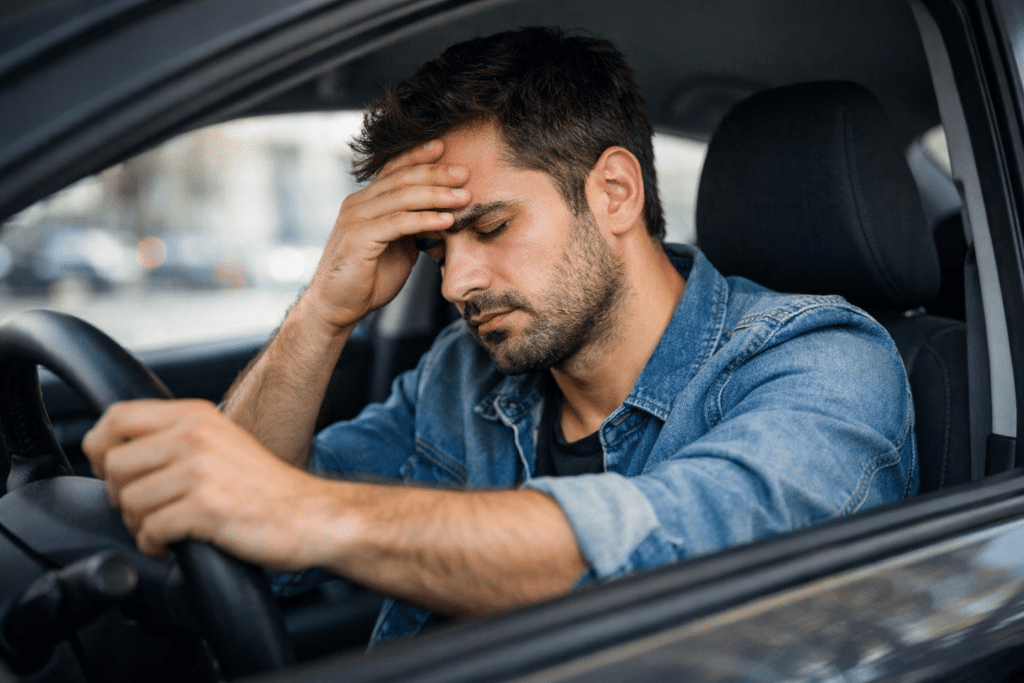
You feel tired after driving because your brain stays highly active during the trip. It constantly processes visual information, makes decisions, and monitors risk, which drains mental energy—even if your body is not physically moving.
Even a 30-minute drive can leave your brain mentally drained without you realizing it.
Why driving makes you tired (quick breakdown):
- Mental overload
- Visual strain
- Lack of movement
- Monotony
- Circadian rhythm dips
This same type of mental fatigue often shows up at other times of the day, especially in the afternoon, as explained in why am I so tired in the afternoon.
You finish a short drive, step out of the car, and suddenly feel exhausted—even though your body didn’t do much physical work.
Many people assume driving should be effortless because you’re sitting the entire time. But the reality is that driving places a unique type of demand on your body: constant mental vigilance combined with physical stillness.
That combination can quietly exhaust the brain and nervous system.
If you often feel tired after driving, even after relatively short trips, the reason usually isn’t laziness or poor fitness. It’s a predictable biological response to sustained attention, sensory processing, and nervous system stress.
Understanding what’s happening inside the body helps explain why driving fatigue occurs and why it can feel surprisingly intense.
Table of Contents
Why Even Short Drives Can Feel Mentally Draining
Even short drives can feel surprisingly exhausting, especially when they involve heavy traffic, bright sunlight, constant braking, or unfamiliar roads.
In these situations, your brain must stay highly alert, processing multiple sources of information at once. This increased cognitive load quickly drains mental energy, which is why you may feel tired even after a short trip.
5 Reasons Driving Can Make You Feel Tired
Before diving deeper, here are the core reasons driving can quickly drain your energy:
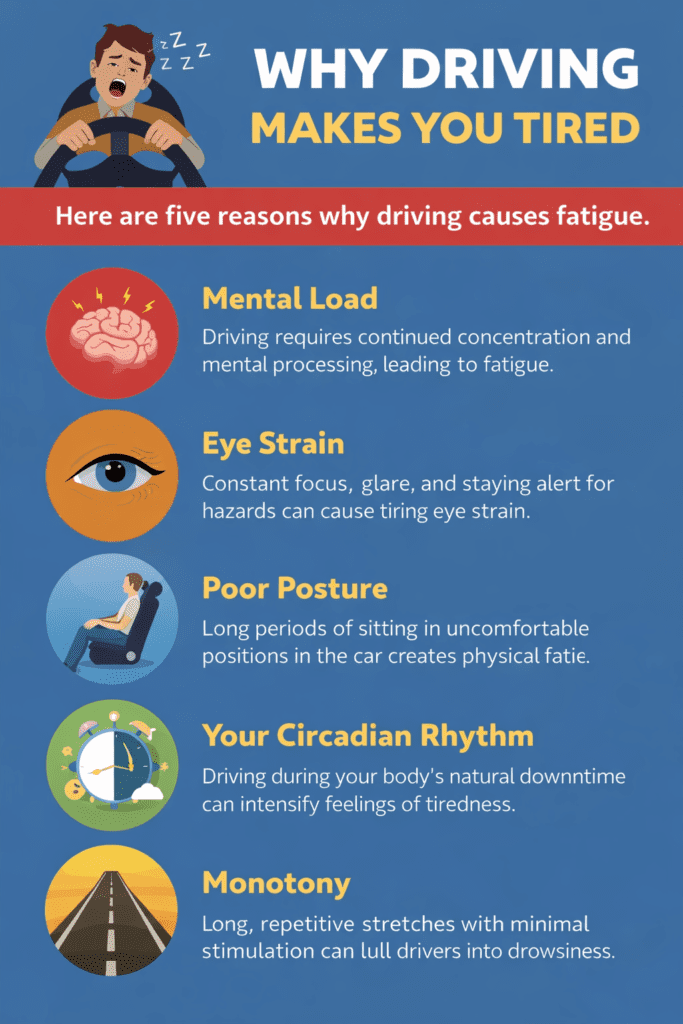
These five factors explain why driving can quickly drain your mental energy.
Why Sustained Attention Drains Your Brain While Driving
Driving requires continuous decision-making.
Even during routine trips, your brain is constantly performing tasks such as monitoring traffic flow, adjusting speed, maintaining lane position, and anticipating sudden changes on the road.
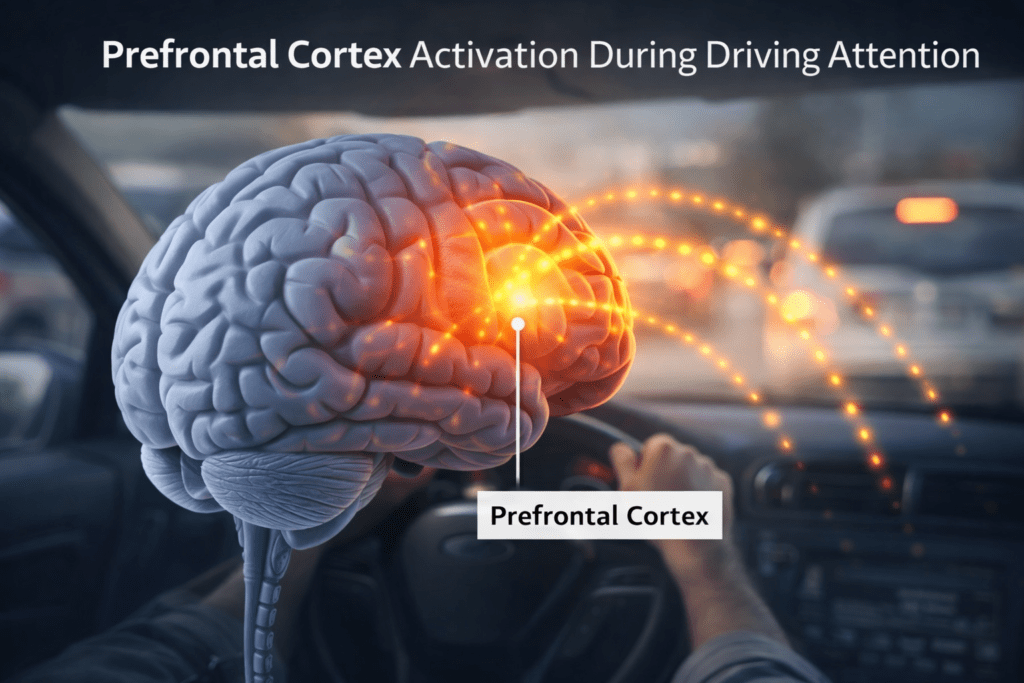
These actions rely heavily on the prefrontal cortex, the area of the brain responsible for focus, planning, and rapid decision-making.
The prefrontal cortex consumes large amounts of metabolic energy. When it stays active for long periods without rest, the brain gradually begins to show signs of cognitive fatigue.
Cognitive fatigue occurs when mental resources slowly decline after extended concentration. Reaction times become slower, attention begins to drift, and the brain starts signaling that it needs recovery.
This is one of the hidden reasons people feel tired after driving.
Your body may be sitting still, but your brain has been performing continuous problem-solving.
Many people experience similar attention fatigue during the day when dealing with afternoon crashes or mental overload, which is explored further in why am I so tired in the afternoon and exhausted at 3pm even after 8 hours sleep.
How Navigation Increases Mental Load While Driving
Driving becomes significantly more mentally demanding when the brain must also manage navigation decisions.
When drivers follow unfamiliar routes or monitor GPS directions, the brain divides attention between road awareness and route planning. This split attention forces the brain to process multiple information streams simultaneously.
The driver must interpret map instructions, check road signs, anticipate lane changes, and maintain safe vehicle control at the same time.
This multitasking increases cognitive load, which gradually depletes mental energy.
Even short drives can feel exhausting when navigation decisions are frequent or unpredictable.
Drivers often experience similar attention strain during mentally demanding parts of the day, particularly during periods of cognitive overload like those explained in
mentally drained but restless in the afternoon.

Why Mental Micro-Decisions During Driving Gradually Exhaust Your Brain
Many driving decisions happen subconsciously, yet they still consume mental resources.
Even during a calm drive, the brain constantly evaluates subtle changes such as adjusting speed, estimating safe following distance, predicting other drivers’ actions, and deciding when to change lanes.
Each of these small decisions requires momentary activation of the brain’s executive control systems.
Individually these decisions seem insignificant, but over time they accumulate into a large cognitive workload.
The brain essentially performs hundreds of small calculations during a single drive.
As this cognitive effort continues, mental energy begins to decline and fatigue signals appear.
This pattern is similar to the attention drain people experience during long work sessions or extended problem-solving tasks, which is also connected to the mental overload patterns discussed in mental fatigue after work 15 minute reset.
Why Your Nervous System Stays Alert While Driving
Another important factor behind driving fatigue involves the sympathetic nervous system.
This system regulates alertness and stress responses in the body.
When you drive, the brain constantly evaluates risk. Even if the road seems calm, the brain stays ready to react to unexpected events like sudden braking, merging vehicles, or pedestrians.
Because of this, the nervous system remains in a mild but sustained state of vigilance.
Small bursts of stress hormones such as cortisol and adrenaline help maintain alertness and reaction speed. However, when this alertness continues for long periods, it gradually drains the nervous system.
Once the trip ends, the nervous system shifts from alertness into recovery mode. This transition often creates a noticeable drop in energy, which is why many people suddenly feel tired after parking the car.
This pattern is similar to other forms of mental fatigue people experience after intense focus, which is also discussed in mental fatigue after work 15 minute reset and midday energy boost without coffee.
How Emotional Stress From Driving Situations Can Increase Energy Drain
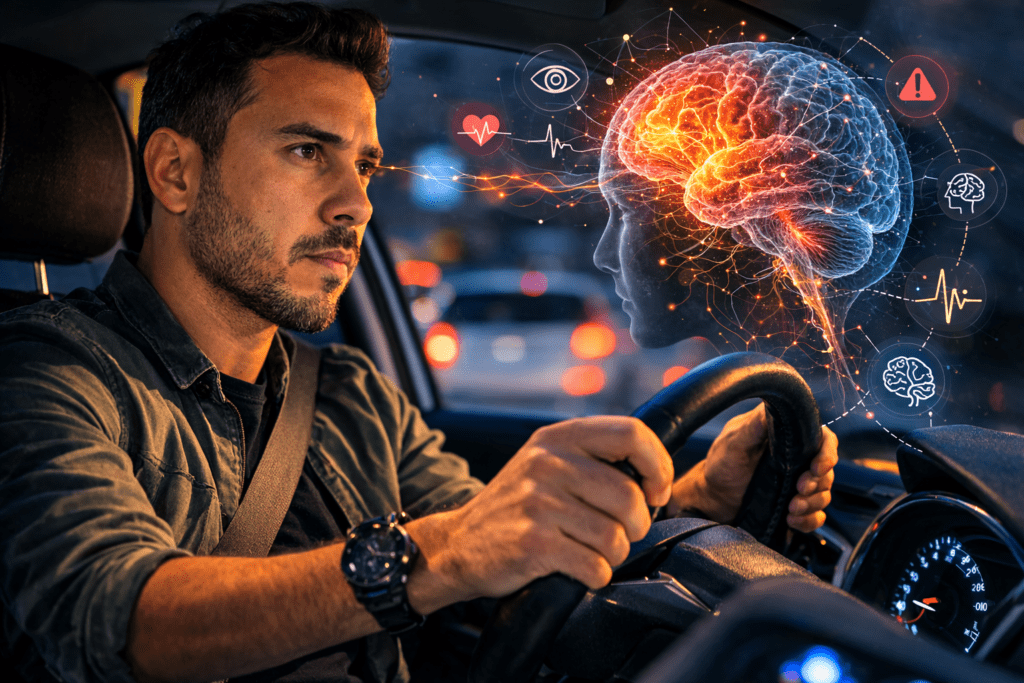
Driving does not only involve cognitive processing. It also triggers emotional responses.
Situations such as aggressive drivers, sudden braking, traffic congestion, or confusing intersections can activate the brain’s emotional regulation centers.
When this happens, the body releases small bursts of stress hormones that increase heart rate and muscle tension.
Although these responses help the driver react quickly, they also consume additional energy.
Over time emotional stress can amplify the fatigue created by sustained attention.
This explains why driving in busy urban areas often feels much more exhausting than driving in quiet rural environments.
Many people experience similar energy drops during stressful parts of the day, especially during afternoon stress periods discussed in
why am I so tired in the afternoon.
The Role Of Dopamine And Attention Regulation During Long Drives
Another overlooked reason people feel tired after driving involves the brain chemical dopamine.
Dopamine plays a key role in motivation, alertness, and sustained attention.
During mentally demanding tasks such as driving, dopamine levels help maintain focus and decision-making speed.
However, when attention is required for long periods without meaningful reward or novelty, dopamine signaling gradually declines.
This decline makes the brain feel mentally drained and less motivated to continue concentrating.
In driving environments that are repetitive or predictable, dopamine stimulation remains low, which accelerates the onset of fatigue.
This process is similar to the attention depletion people experience during long work sessions or repetitive screen use, which is also discussed in why eyes feel tired after looking at screens.

How Your Eyes and Brain Work Hard While Driving
One of the most overlooked causes of driver fatigue is visual processing load.
Driving requires the brain to constantly interpret moving environments.
Your eyes and brain work together to track nearby vehicles, judge distances, monitor road signs, watch traffic signals, and identify potential hazards.
This process requires continuous coordination between the visual cortex and attention centers of the brain.
Unlike looking at a stationary screen, driving forces the brain to process motion, distance, and speed at the same time.
Over time this constant visual interpretation becomes mentally tiring.
Eye muscles also remain engaged during driving because they repeatedly shift focus between near and distant objects.
When these muscles fatigue, the brain must work harder to maintain clear vision.
This is similar to digital eye strain discussed in why eyes feel tired after looking at screens.
The Hidden Energy Cost Of Constant Environmental Awareness While Driving
Another factor contributing to driving fatigue is the brain’s need to constantly monitor the surrounding environment.
Unlike many other daily activities, driving requires monitoring multiple sensory inputs at the same time.
Drivers must remain aware of:
- road signs
- traffic signals
- pedestrians
- cyclists
- nearby vehicles
- navigation directions
This constant environmental scanning forces the brain to process large amounts of sensory information every second.
The brain’s sensory integration centers must filter relevant information while ignoring distractions.
This filtering process consumes significant cognitive resources.
Over time the brain’s attention capacity gradually decreases, which contributes to the feeling of mental fatigue.
This same sensory overload effect can also occur during screen-heavy workdays and prolonged digital exposure, which is discussed in
why eyes feel tired after looking at screens.
How Traffic Stress Increases Driving Fatigue
Driving in heavy traffic places far greater demands on the brain compared to calm highway driving.
When traffic becomes unpredictable, the brain must rapidly evaluate dozens of moving variables. Drivers constantly monitor braking patterns, lane changes, pedestrians, traffic lights, and sudden speed fluctuations.
This creates a high level of cognitive load, meaning the brain processes multiple decisions every few seconds.
Under these conditions the brain consumes more glucose and oxygen to maintain rapid decision-making.
As this demand continues, attention resources begin to decline, and fatigue signals appear.
This explains why a 30-minute drive in dense city traffic can feel more exhausting than a two-hour highway trip.
Drivers who regularly experience fatigue during stressful commutes may also notice similar energy crashes during the day, especially during the mental overload patterns described in mentally drained but restless in the afternoon.
Can Driving Really Cause Mental Fatigue Even Without Physical Activity
Yes. Driving is a mentally demanding task that requires continuous visual scanning, risk prediction, attention switching, and rapid decision-making. Because the brain stays active the entire time, driving can create real cognitive fatigue even though the body is mostly sitting still.
What Happens When Physical Stillness Reduces Circulation During Long Drives
While the brain works intensely during driving, the body stays relatively motionless.
Sitting for long periods can slow circulation in the legs and lower body.
When muscles remain inactive, blood flow decreases and oxygen delivery becomes slightly reduced.
Over time this leads to muscle stiffness, decreased circulation, and a buildup of metabolic byproducts.
The body interprets reduced movement as a signal that physical activity is low, which can promote a more relaxed state.
This relaxed state can contribute to feelings of sluggishness after the drive ends.
Improving posture and taking short movement breaks can help counteract this effect, which is why posture resets like those described in 3 minute posture reset desk workers can also benefit drivers.
Why Low Physical Movement During Driving Reduces Alertness Signals
Alertness in the human body is partly supported by physical movement.
When the body moves, muscles send activation signals to the brain that help maintain wakefulness.
During driving, however, most muscles remain relatively inactive.
The legs stay still, the torso remains supported by the seat, and movement is limited mainly to small steering adjustments.
Because muscle activity is reduced, fewer alertness signals reach the brain.
This reduction can gradually lower stimulation levels and contribute to the feeling of sleepiness during longer drives.
Small movement breaks help restore these signals, which is why short walks and posture adjustments are recommended during long trips.
Movement strategies similar to those described in 3 minute posture reset desk workers can help reactivate circulation and alertness.
How Poor Driving Posture Can Increase Physical Fatigue During Trips
Posture plays a surprisingly important role in how tired drivers feel after a trip.
When drivers lean forward toward the steering wheel or allow their shoulders to round inward, several physiological changes occur.
The diaphragm compresses slightly, reducing breathing efficiency.
Neck and shoulder muscles become tense as they stabilize the head.
Blood circulation through the upper body can also become restricted.
Over time these small physical stresses accumulate and contribute to the sensation of fatigue once the drive ends.
Maintaining a neutral spine and proper seat distance can reduce this strain.
Simple posture adjustments similar to those used by desk workers in 3 minute posture reset desk workers can also improve comfort and reduce fatigue during longer drives.
The Science Behind Highway Hypnosis
One of the strangest experiences drivers report is sudden sleepiness during long stretches of highway driving.
This effect is often called highway hypnosis.
Highway hypnosis occurs when repetitive environments reduce mental stimulation.
Long straight roads, consistent speeds, and minimal traffic can cause the brain to shift into a semi-automatic mode.
In this state, driving actions become habitual while conscious awareness decreases.
Because the brain receives fewer novel stimuli, it begins conserving energy. This reduction in stimulation can lead to drowsiness.
Drivers may feel as if they have been driving for miles without actively remembering the experience.
Traffic safety organizations warn that fatigue-related attention loss significantly increases accident risk according to research on driver fatigue from NHTSA Drowsy Driving Overview.

Why Do Long Highway Drives Make People Sleepy
Long highway drives often reduce mental stimulation because the scenery, speed, and road patterns stay repetitive. When the brain receives fewer new signals, alertness can drop and the mind may slip into a semi-automatic state, which makes long drives feel sleepier and more exhausting.
The Link Between Vehicle Vibration And Relaxation Signals In The Brain
Another unexpected contributor to driving fatigue is low-frequency vibration.
Vehicles produce subtle vibrations through the seat and steering wheel.
These vibrations occur at frequencies that can stimulate relaxation responses in the nervous system.
Gentle rhythmic motion has long been known to promote calmness, which is why infants often fall asleep during car rides.
For adults the effect is less intense, but the brain may still interpret constant vibration as a signal to relax.
Over time, this relaxation signal can reduce alertness and contribute to feelings of sleepiness.
The Hidden Impact Of Cabin Air Quality On Driving Fatigue
Another factor that many drivers overlook is the quality of air inside the vehicle.
During long drives with closed windows, carbon dioxide levels inside the car cabin can slowly increase.
Higher CO₂ levels may reduce alertness and cognitive performance.
Poor ventilation can also reduce oxygen availability slightly, which may increase feelings of drowsiness.
Drivers often notice this effect during long winter drives or when the car’s ventilation system recirculates interior air for extended periods.
Improving airflow by adjusting ventilation settings or briefly opening windows can help maintain better alertness levels.
Hydration also plays a role in maintaining cognitive performance, which is why daily hydration habits discussed in
simple daily hydration habits energy can indirectly support better driving energy as well.
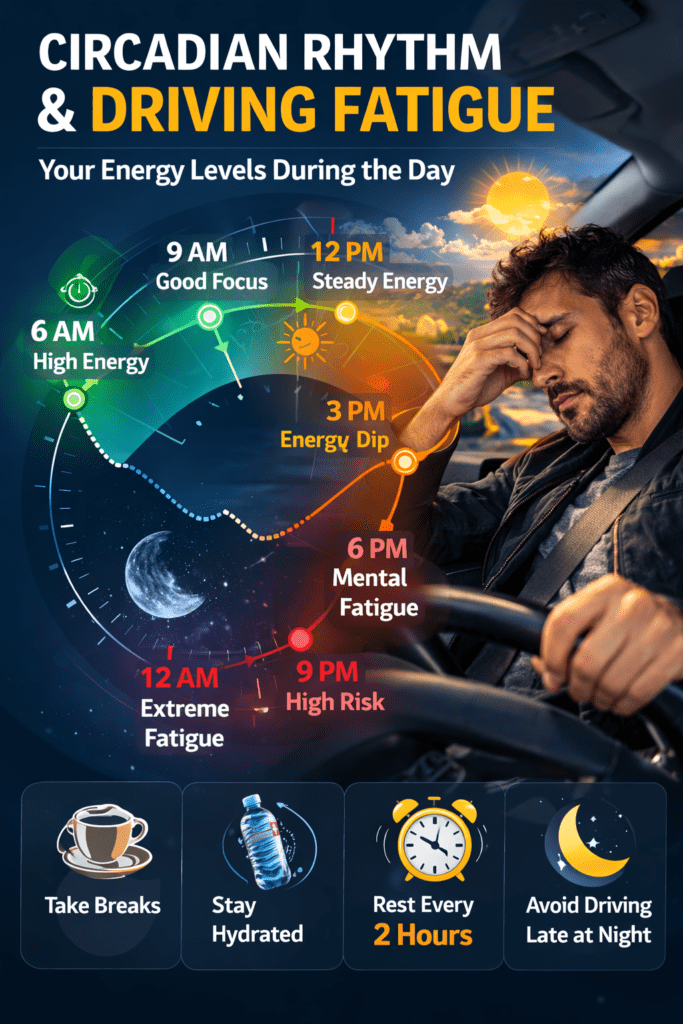
The Impact Of Circadian Rhythm Timing On Driving-Related Fatigue
Your internal body clock also influences driving fatigue.
Energy levels fluctuate throughout the day according to circadian rhythms controlled by hormones such as cortisol and melatonin.
Two periods typically produce natural dips in alertness.
The first occurs in the early afternoon.
The second occurs late at night and early in the morning.
Driving during these biological low points can intensify fatigue.
For example, a long drive at 2 PM may feel far more tiring than the same drive in mid-morning.
Circadian rhythm research also shows that many adults report falling asleep while driving during these periods according to data from the CDC in Study on Falling Asleep While Driving.
What Most People Miss About Why Driving Feels So Exhausting
Many people feel tired after driving, even though they are just sitting.
This happens because driving requires constant attention, decision-making, and mental effort, which can drain your brain over time.
Many people believe driving fatigue happens simply because driving is boring.
But boredom alone does not explain the level of exhaustion drivers sometimes experience.
Driving combines several hidden demands at the same time.
The brain must continuously process moving information, maintain vigilance, control motor coordination, and monitor risk.
Each of these tasks requires energy.
When these systems operate simultaneously for long periods, the brain eventually reduces alertness to conserve energy.
That reduction appears as tiredness.
Driving fatigue is not caused by a single factor. Instead, it involves several overlapping types of fatigue that affect different systems in the body.”
| Fatigue Type | Main Cause | Brain System Involved | Typical Signs | Risk Level |
|---|---|---|---|---|
| Cognitive Fatigue | Continuous attention and decision making | Prefrontal cortex | Brain fog, slower thinking | ⚠️ Medium |
| Visual Fatigue | Constant visual tracking and focus shifting | Visual cortex | Eye strain, blurred focus | ⚠️ Medium |
| Nervous System Fatigue | Prolonged vigilance and stress response | Sympathetic nervous system | Sudden exhaustion after driving | ⚠️ Medium |
| Physical Circulation Fatigue | Reduced movement during long drives | Muscular and circulatory system | Stiff legs, heavy body | ⚠️ Low |
| Circadian Fatigue | Natural energy dips during afternoon or night | Hormonal rhythm system | Sleepiness, reduced alertness | ❌ High |
What Happens When Driving Fatigue Builds Over Time Without Breaks
When driving continues for hours without interruption, fatigue gradually accumulates.
Several changes begin to occur.
Reaction times slow
Attention drifts more frequently
Visual scanning becomes less effective
Posture begins to collapse
Drivers may experience micro-sleep episodes
Traffic safety research shows fatigue significantly reduces reaction speed and decision accuracy according to driver fatigue studies summarized by NHTSA fatigue research.
Driver Fatigue Risk Scale
| Fatigue Level | Warning Signs | What It Means | Risk Indicator |
|---|---|---|---|
| Level 1 – Mild fatigue | Slight tiredness, reduced focus | Brain beginning to lose concentration | ⚠️ Low |
| Level 2 – Moderate fatigue | Frequent yawning, slower reactions | Cognitive resources declining | ⚠️ Moderate |
| Level 3 – High fatigue | Heavy eyelids, drifting attention | Strong fatigue signals from the brain | ❗ High |
| Level 4 – Severe fatigue | Lane drifting, missed exits | Reaction speed dangerously reduced | ❌ Very High |
| Level 5 – Critical fatigue | Micro-sleep episodes | Immediate stop required | ⛔ Critical |
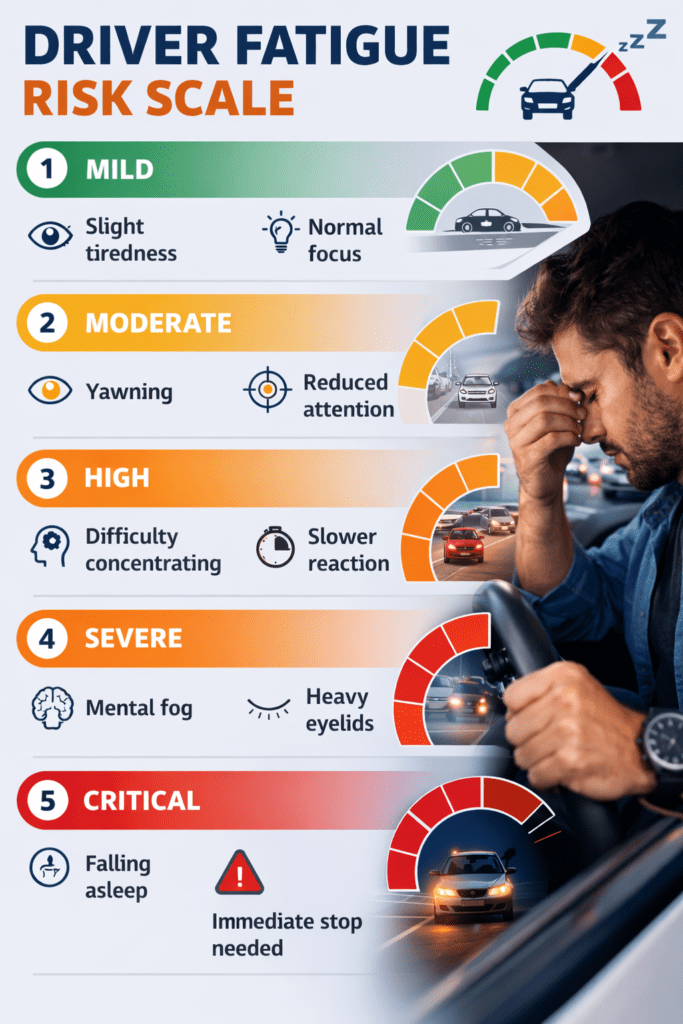
Signs You’re Too Tired to Drive
If you feel tired while driving, it’s important to recognize the warning signs early.
Common signs include:
- Frequent yawning or heavy eyelids
- Difficulty focusing on the road
- Drifting between lanes
- Missing exits or road signs
- Feeling mentally “zoned out”
These signs mean your alertness is decreasing and it’s safer to take a break.

Feeling tired after driving is a common sign of mental fatigue.
How to Stay Alert While Driving
If you start feeling tired while driving, small changes can help restore your alertness quickly.
- Take a break every 1–2 hours to reset your focus
- Drink water regularly to support cognitive performance
- Avoid driving during natural low-energy times like early afternoon or late night
- Keep fresh air flowing inside the car to maintain oxygen levels
- Stay mentally engaged with music, conversation, or active thinking
These simple habits can reduce fatigue buildup and help you stay more alert during both short and long drives.
The Role Of Predictive Thinking In Driving-Related Mental Fatigue
Driving requires more than reacting to events. The brain constantly tries to predict what might happen next.
Drivers anticipate potential lane changes, predict traffic patterns, and estimate how surrounding vehicles might behave.
This predictive thinking allows drivers to react quickly and avoid danger.
However, prediction is a cognitively demanding task.
The brain continuously simulates possible outcomes and prepares responses before events occur.
Maintaining this predictive awareness for long periods gradually increases mental workload.
As the drive continues, the brain’s predictive systems begin to fatigue, which contributes to the sensation of mental exhaustion.
Drivers often notice this effect after long trips when their ability to focus temporarily declines.
Why Long Road Trips Can Cause Mental Overload Even For Experienced Drivers
Many people assume experienced drivers are immune to driving fatigue.
However, long road trips often create a different type of exhaustion known as mental overload.
During extended travel, the brain must continuously monitor navigation, unfamiliar roads, changing speed zones, and surrounding vehicles.
This constant information processing slowly fills the brain’s working memory.
When working memory becomes overloaded, the brain begins prioritizing essential tasks while reducing overall attention capacity.
This mental overload explains why drivers may feel mentally foggy after hours on the road.
Similar cognitive overload patterns can occur during extended workdays, which is why recovery strategies like those discussed in
mental fatigue after work 15 minute reset can help restore mental clarity after demanding tasks.
Why Dehydration Can Quietly Reduce Driving Concentration
Hydration plays an important role in cognitive performance.
Even mild dehydration can reduce attention span, increase perceived effort, and lower mental clarity.
During long drives, people often forget to drink water regularly, especially if they want to avoid frequent stops.
However, reduced hydration can make the brain work harder to maintain focus.
As concentration becomes more difficult, drivers may interpret the mental effort as fatigue.
Maintaining consistent hydration supports better attention stability and helps reduce the likelihood of cognitive fatigue.
Daily hydration patterns that support stable energy throughout the day are also discussed in simple daily hydration habits energy.
Related Reading
If this fatigue pattern sounds familiar, read these next
Many people who feel tired after driving also notice similar dips after eating, during long workdays, or in the middle of the afternoon. These guides explain the most common patterns.
The Real Cause Of Feeling Tired After Driving Even On Short Trips
Sometimes fatigue appears even after short drives.
This usually happens when multiple fatigue triggers occur simultaneously.
Heavy traffic increases cognitive load.
Bright sunlight strains the eyes.
Stressful road conditions activate the nervous system.
Poor posture restricts circulation.
When these triggers overlap, the brain uses more energy to maintain alertness.
Even short drives can therefore feel mentally draining.
Similar daily energy crashes can also be connected to metabolic factors discussed in why do I feel tired after eating.
The Surprising Connection Between Blood Sugar Stability And Driving Energy
Another subtle factor influencing driving fatigue involves blood sugar regulation.
When blood sugar levels fluctuate rapidly, the brain receives less stable energy for cognitive tasks.
Drivers who begin long trips after eating large meals or high-sugar snacks may experience temporary spikes followed by energy crashes.
Because the brain relies heavily on glucose, these fluctuations can reduce attention stability and increase feelings of tiredness.
Choosing balanced meals with protein, fiber, and complex carbohydrates can support more stable energy levels during longer drives.
Energy crashes related to nutrition are also explored in
why do I feel tired after eating.
Why Driving Fatigue Often Appears Suddenly After The Trip Ends
Many drivers feel alert while driving but suddenly tired once they stop.
This happens because the brain maintains alertness during driving through stress hormones and attention signals.
When the drive ends, those signals rapidly decrease.
The nervous system then shifts into recovery mode.
Stress hormones decline.
Muscles relax.
Mental vigilance decreases.
The body finally releases the effort required to maintain attention.
This sudden shift can produce a noticeable drop in energy, leaving drivers feeling unexpectedly tired after driving.
When Should You Be Concerned?
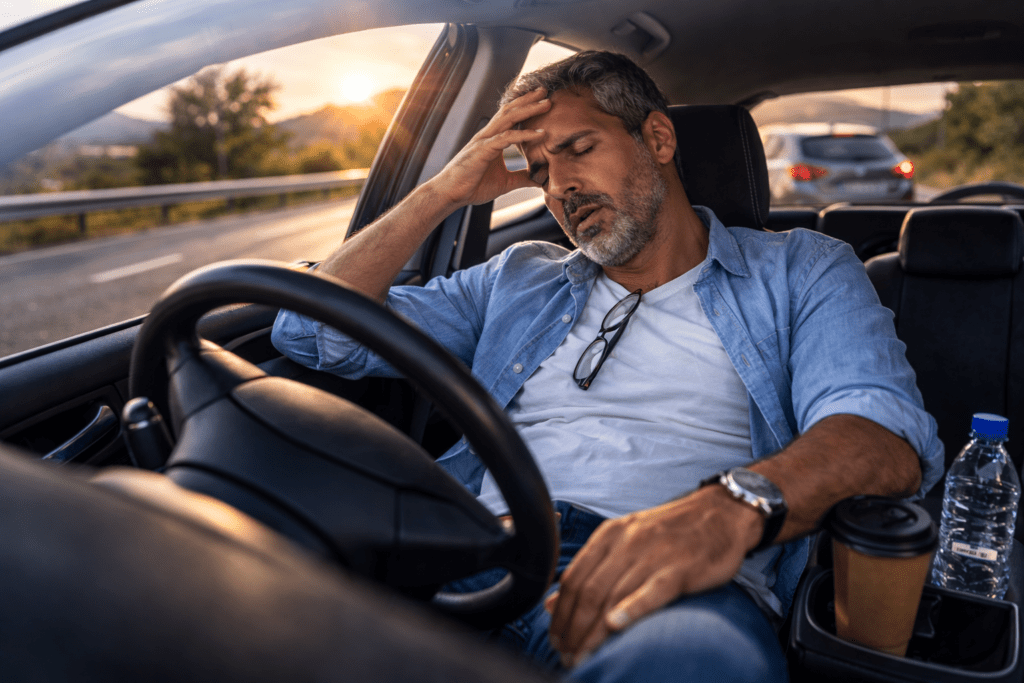
Feeling tired after driving is usually normal. However, if you experience extreme drowsiness, frequent fatigue even after short trips, or difficulty staying alert, it may indicate deeper issues such as sleep deprivation, poor sleep quality, or nervous system imbalance.
If these symptoms happen regularly, improving sleep, taking proper breaks, and adjusting driving habits can help. In more persistent cases, consulting a healthcare professional is recommended.
Final Thoughts
Feeling tired after driving is not just about physical inactivity. It’s mainly the result of continuous mental effort, sensory processing, and nervous system vigilance.
Even short drives can drain your brain if the conditions require constant attention and decision-making.
The key to reducing driving fatigue is understanding these hidden factors and managing them through better breaks, hydration, and awareness of your energy levels.
By recognizing how your brain responds to driving, you can stay more alert, reduce fatigue, and make your daily trips feel less exhausting
Want to fix the habits that quietly drain your energy?
If tiredness shows up after driving, eating, or during the afternoon, your daily energy system may be out of balance. Start with the guides below to rebuild stable energy step by step.
Start Building Better EnergyPeople Also Ask
Why does driving sometimes feel more exhausting than physical activity?
Driving requires continuous attention, visual scanning, and rapid decision-making. Even though the body remains mostly still, the brain stays highly active for long periods. This sustained cognitive effort can drain mental energy faster than light physical movement, which is why drivers may feel surprisingly tired after a trip.
Does driving fatigue affect concentration after the trip ends?
Yes. When a long drive finishes, the brain often shifts from a high-alert state into recovery mode. This transition can temporarily reduce focus and mental clarity, which is why some people notice brain fog, slower thinking, or reduced concentration immediately after driving.
Why do some people feel sleepy while driving on quiet highways?
Quiet highways provide fewer visual changes and less stimulation. When the brain receives repetitive signals from the road environment, attention levels may gradually drop. This phenomenon, often called highway hypnosis, can make drivers feel sleepy even if they were alert earlier.
Can hydration affect how tired you feel while driving?
Yes. Mild dehydration can reduce attention span and increase perceived effort during mentally demanding tasks. Because driving requires sustained concentration, staying hydrated may help support clearer thinking and reduce feelings of fatigue during longer trips.
Why does driving in heavy traffic feel more exhausting than highway driving?
Heavy traffic forces the brain to constantly process changing information, including braking patterns, lane shifts, pedestrians, and traffic signals. This high cognitive load requires continuous decision-making, which can make even short city drives feel more mentally draining than longer highway trips.
Is driver fatigue related to the body’s natural energy rhythms?
Yes. Human alertness follows circadian rhythms that create natural dips in energy during the early afternoon and late night. Driving during these periods can amplify feelings of tiredness because the brain is already experiencing a biological reduction in alertness.
Our Research & Content Standards
This article is based on current understanding of cognitive fatigue, circadian rhythm research, and driver attention mechanisms discussed in transportation safety studies and neuroscience literature. The explanations focus on how sustained mental effort, sensory processing, and nervous system vigilance influence fatigue during everyday activities such as driving.
Content on EverydayHealthPlan is written to translate complex physiological concepts into practical, easy-to-understand guidance for readers interested in energy management, daily health habits, and mental performance. The goal is to provide clear explanations supported by established scientific principles while avoiding exaggerated claims or medical guarantees.
Topics discussed in this guide align with research areas explored by organizations such as the National Highway Traffic Safety Administration (NHTSA) and public health institutions studying driver alertness, cognitive workload, and fatigue-related safety risks. By combining behavioral science, physiology, and practical lifestyle context, the article aims to help readers better understand why everyday fatigue patterns occur and how they relate to common daily activities.
