

If you feel tired after eating carbs, it’s not just digestion—it’s how your body manages energy, blood sugar, and timing.
You grab a quick lunch—maybe a sandwich, pasta, or a bagel—and at first, you feel fine. But within an hour, your energy drops hard. Your focus fades, your eyelids feel heavy, and suddenly you’re reaching for coffee just to stay functional.
If you’ve ever wondered why do I feel tired after eating carbs, you’re not imagining it. This is one of the most common energy problems for busy adults in the United States, especially during workdays filled with quick, carb-heavy meals.
What’s actually happening isn’t random—and it’s not just about digestion. It’s a precise biological chain reaction involving your blood sugar, insulin, and brain energy systems.
What does it mean to feel tired after eating carbs?
Feeling tired after eating carbs usually happens when your body has to manage a fast wave of incoming glucose. This rapid shift reduces available energy for your brain and body, leading to fatigue, sleepiness, and reduced focus within one to two hours after eating.
Why do I feel tired after eating carbs so quickly?
Because fast-digesting carbs can create a rapid energy swing that your body struggles to stabilize.
Why Do You Feel Tired After Eating Carbs Instead of Feeling Energized
Carbohydrates are supposed to give you energy. So why do they sometimes leave you feeling worse?
The short answer is that your body overcorrects.
Your body has to deal with a fast surge of incoming energy that is not always handled smoothly.
But in many cases, your body releases more insulin than needed. This causes your blood sugar to drop too fast, triggering fatigue, brain fog, and sleepiness.
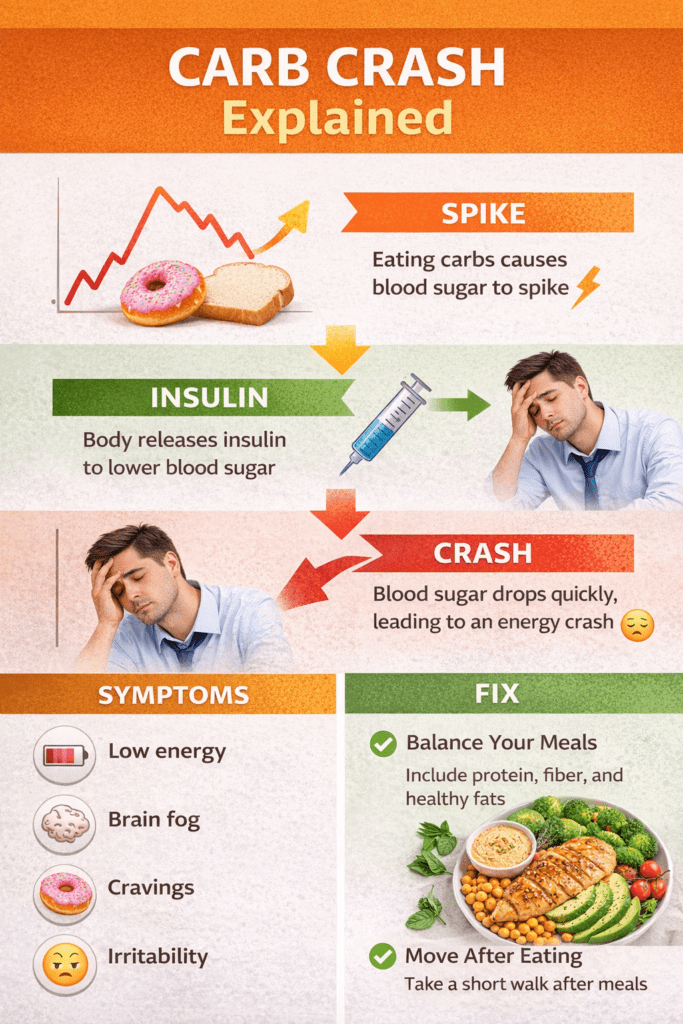
The Science Behind How Carbs Trigger a Rapid Energy Crash in Your Body
Carbohydrates are converted into usable energy, but how quickly that energy moves through your system determines how stable you feel afterward, but how quickly that energy moves through your system determines how stable you feel afterward.
As explained by MedlinePlus, glucose is your body’s main energy source, but it must stay stable to keep energy consistent.
The issue is speed. the key issue is how quickly energy enters and leaves circulation. This instability is what leads to fatigue.
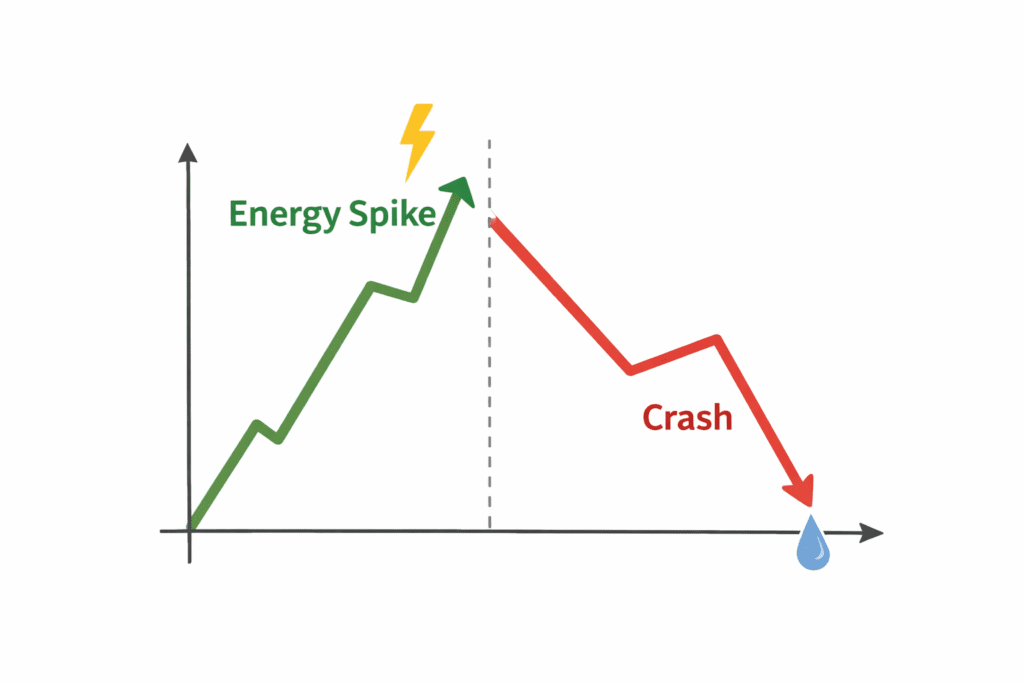
The Role of Hormones Like Cortisol and Serotonin in Post-Carb Fatigue
Blood sugar is only part of the story. Hormones also shape how your body reacts after eating carbs.
Serotonin, a neurotransmitter linked to relaxation, can increase after meals—especially when carbohydrates are involved. This contributes to that calm, sometimes sleepy feeling after eating.
Cortisol, on the other hand, works in the opposite direction. It helps maintain alertness and supports energy availability. When cortisol levels are low—such as in the afternoon—your body is less equipped to counteract drops in energy.
This hormonal balance explains why carb-related fatigue feels stronger at certain times and weaker at others. It’s not just what you eat, but how your internal chemistry responds.
What Happens When You Eat Carbs Step by Step Inside Your Body
Here is the exact mechanism that explains why carbs can make you feel tired.
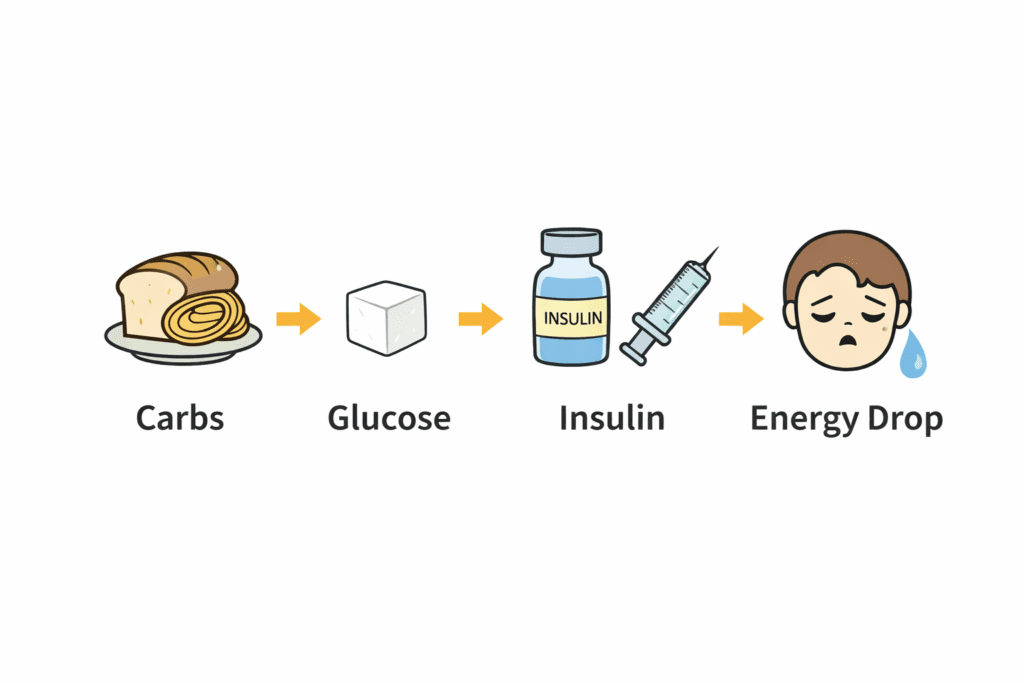
How carbs cause fatigue step by step:
- Carbs break down into glucose
- Blood sugar rises quickly
- Insulin is released to lower glucose
- Cells absorb glucose rapidly
- Blood sugar drops below optimal levels
- Brain energy decreases and fatigue begins
Can eating carbs actually lower your energy levels?
Yes. If insulin lowers blood sugar too quickly, it can create a temporary low-energy state that feels like exhaustion.
This process can begin within 30 to 90 minutes after eating.
The Hidden Reason Why Insulin Overshoot Causes Sudden Fatigue After Meals
Most people assume carbs are the direct cause of tiredness. The deeper issue is how your body responds.
An insulin overshoot happens when your pancreas releases more insulin than necessary. Instead of stabilizing blood sugar, it creates a stronger correction than your body actually needs, which makes the drop feel more sudden.
This creates a short-term drop in available energy, especially for your brain.
According to Cleveland Clinic, post-meal sleepiness is strongly linked to hormonal and blood sugar changes.
Why do carbs make me sleepy instead of energized?
Because your body reduces energy availability faster than your brain expects, signaling your brain to reduce alertness.
What Happens When Your Blood Sugar Drops Too Fast After Eating Carbs
When blood sugar drops rapidly, your body reacts immediately.
You may feel:
- Sudden fatigue
- Brain fog
- Irritability
- Sugar cravings
- Weakness
Common signs of a carb-related energy crash:
- Sudden sleepiness after eating
- Brain fog and low concentration
- Cravings within one to two hours
- Mood swings or irritability
- Physical fatigue or heaviness
If you’ve ever wondered why you still feel exhausted after eating, this broader explanation can help: tired after eating.
Still feel worn out after meals even when they are not carb-heavy?
This broader guide explains why post-meal fatigue happens and what patterns usually make it worse.
Read: Tired After EatingThe Carb Crash Timeline That Explains Why Energy Drops After Eating Carbs
This pattern follows a predictable timeline.
0 to 20 minutes you feel a boost as glucose enters your bloodstream
30 to 60 minutes insulin peaks and begins lowering blood sugar
60 to 120 minutes blood sugar drops leading to fatigue and brain fog

How long does a carb crash usually last?
Most carb-related crashes occur between one and two hours after eating, depending on meal size and metabolism.
This is why many people experience a strong afternoon slump, especially after lunch. Learn more about this pattern here: why am I so tired in the afternoon.
This process follows a predictable pattern. Here’s a simplified breakdown of what happens over time:
| Time After Eating | What Happens in the Body | How You Feel |
|---|---|---|
| 0–20 minutes | Glucose enters bloodstream | Short burst of energy |
| 30–60 minutes | Insulin response increases | Energy starts to dip |
| 60–120 minutes | Blood sugar drops | Fatigue, brain fog, low focus |
Understanding this timeline helps explain why the crash doesn’t happen immediately, but shows up later when your energy suddenly drops
Does this crash hit hardest in the middle of the day?
If your energy drops after lunch or around 3 PM, these two articles connect the carb crash pattern to the most common afternoon slump triggers.
Why Am I So Tired in the Afternoon? Exhausted at 3 PM Even After 8 Hours Sleep
The Early Warning Signs That Show a Carb Crash Is About to Happen
Energy crashes rarely come out of nowhere. Your body usually sends signals before the drop becomes obvious.
You might notice a subtle dip in focus, a slight urge to yawn, or a growing craving for something sweet. Some people feel restless, while others become unusually quiet or distracted.
These early signs are your body reacting to shifting blood sugar levels. Recognizing them early can help you take action—like moving, hydrating, or adjusting your next meal—before the full crash hits.
The Impact of Time of Day on Carb-Induced Energy Crashes
Not all carb-related fatigue happens the same way throughout the day. Your body’s response changes depending on your internal clock.
In the morning, cortisol levels are naturally higher. This hormone helps regulate blood sugar and supports alertness, which makes your body more efficient at handling carbohydrates. That’s why many people tolerate carbs better at breakfast.
By the afternoon, however, cortisol begins to decline. At the same time, your body becomes slightly less responsive to insulin, especially if you’ve been sitting for long periods. This creates a higher chance of unstable blood sugar swings after lunch.
Late in the evening, the effect becomes even more noticeable. Your metabolism slows, and your body starts preparing for rest, not energy output. Eating a high-carb meal at this time can lead to a stronger and longer-lasting crash.
This explains why the same meal can feel energizing in the morning but draining later in the day.
Why Some People Experience Stronger Energy Crashes After Eating Carbs Than Others
Not everyone reacts the same way to carbs.
Several factors influence how strong the crash feels:
- Insulin sensitivity
- Meal composition
- Sleep quality
- Stress levels
- Physical activity
For example, eating refined carbs alone creates faster spikes compared to balanced meals.
If your fatigue comes with shakiness, this related guide explains it further: why do I feel shaky and tired.
Why Sitting After Eating Makes Carb-Related Fatigue Worse
What you do after eating matters just as much as what you eat.
When you stay seated—especially at a desk—your muscles are less active. This reduces how effectively your body uses glucose from the bloodstream.
Instead of being absorbed steadily, glucose lingers longer in your blood, which can trigger a stronger insulin response. The result is a sharper drop later on.
This is one reason why office workers often experience more intense afternoon crashes. Even light movement, like a short walk, can help your body regulate blood sugar more efficiently.
If this pattern sounds familiar, you may also relate to this explanation of tired after sitting too long.
The Link Between Carbs, Brain Fog, and Afternoon Energy Slumps Explained
Your brain depends on stable glucose levels.
When blood sugar drops:
- Focus decreases
- Memory slows
- Reaction time declines
This is why carb crashes often feel like mental fatigue, not just physical tiredness.
As noted by the Mayo Clinic, fatigue is often connected to how your body manages energy, not just sleep.
What Most People Miss About Why Carbs Make Them Feel Sleepy After Meals
Many people think carbs make them sleepy because they are heavy. That is not the real cause.
The real issue is instability.
Refined carbs lack fiber, which normally slows digestion and stabilizes blood sugar. Without that buffer, your system reacts too quickly.
The Hidden Difference Between Refined and Complex Carbs in Energy Stability
Not all carbohydrates behave the same once they enter your system.
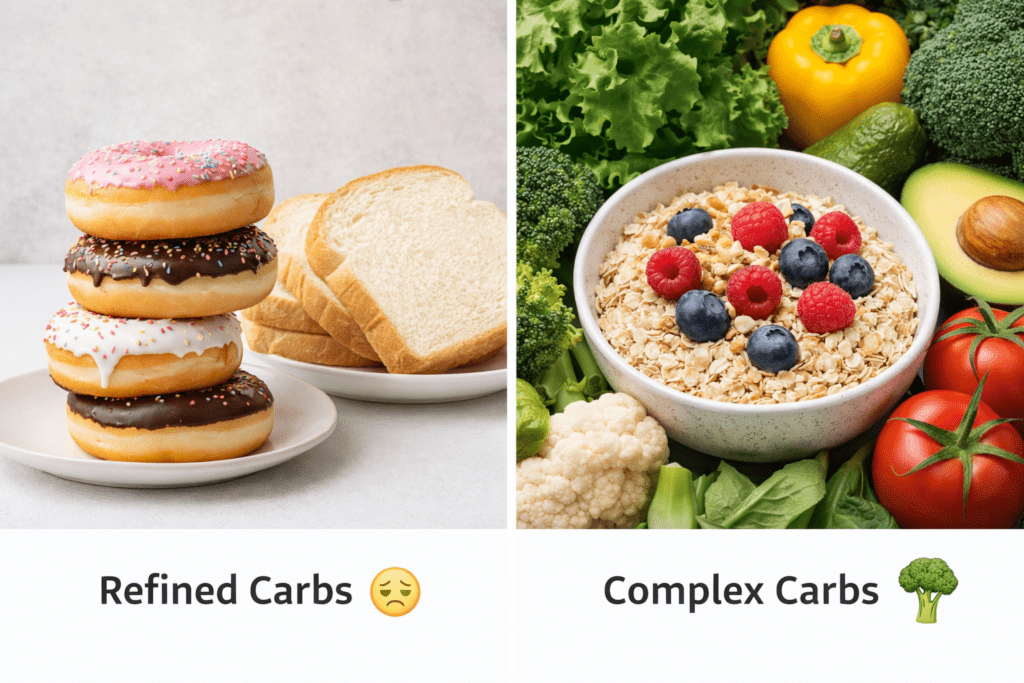
Refined carbs—like white bread, pastries, and sugary snacks—are broken down quickly. This leads to a rapid rise in blood sugar, followed by a sharp insulin response and a fast drop in energy.
Complex carbohydrates, on the other hand, take longer to digest. Foods like oats, brown rice, and vegetables release glucose gradually into your bloodstream. This slower release reduces the intensity of insulin spikes and helps maintain stable energy levels.
The difference isn’t just nutritional—it’s mechanical. It changes how quickly your body processes fuel and how stable your energy remains afterward.
To make the difference clearer, here’s how these two types of carbs affect your body and energy levels in a practical way:
| Type of Carb | Digestion Speed | Blood Sugar Effect | Energy Impact |
|---|---|---|---|
| Refined carbs (white bread, pastries, sugar) | Very fast | Sharp spike followed by rapid drop | Quick energy followed by fatigue |
| Complex carbs (oats, vegetables, whole grains) | Slow | Gradual rise and stable levels | Steady, sustained energy |
This is why the type of carbs you eat matters just as much as the amount. The faster the digestion, the more unstable your energy tends to become.
The Hidden Impact of Liquid Carbs on Faster Energy Crashes
Not all carbs enter your system at the same speed—and liquids are the fastest of all.
When you drink carbohydrates in the form of soda, fruit juice, or sweetened beverages, they bypass much of the digestion process. This allows glucose to enter your bloodstream almost immediately.
Without the natural slowdown that comes from chewing and fiber breakdown, your blood sugar rises sharply and triggers a rapid insulin response.
The result is a quicker spike followed by a faster drop, often leading to an earlier and more noticeable energy crash.
This is one reason why drinking a sugary beverage can leave you feeling tired sooner than eating a solid meal with similar carbohydrate content.
If you’ve ever noticed fatigue after drinking something sweet, you may also relate to this explanation of tired after drinking coffee.

Why do I crash after eating carbs even when I eat healthy?
Because portion size, meal balance, and timing affect how your body processes glucose—not just whether the carbs are healthy.
The Real Cause of That Food Coma Feeling After Carb-Heavy Meals
The so-called food coma is actually a combination of:
- Blood sugar fluctuation
- Insulin response
- Nervous system slowdown
- Energy redirected to digestion
This is why large meals, especially lunch, often lead to a crash. You can see a similar pattern explained here: tired after eating lunch.
The Impact of Meal Size on Post-Carb Energy Crashes
The size of your meal plays a bigger role than most people realize.
When you eat a large carb-heavy meal, your body has to process a higher volume of glucose all at once. This triggers a stronger insulin response, not just to manage the spike, but to handle the total load of incoming energy.
At the same time, your body redirects blood flow toward digestion. This shift reduces the amount of oxygen and energy available for your brain and muscles, making you feel slower and more fatigued.
The combination of a large glucose surge and an aggressive insulin response creates a deeper and longer-lasting crash compared to smaller meals.
This is why a big lunch often leaves you feeling drained, while a lighter, balanced meal may not affect your energy the same way.
How to Prevent Energy Crashes After Eating Carbs Using Mechanism Based Fixes
To prevent energy crashes after eating carbs, you need to control how your body processes glucose—not just what you eat, but how you structure your meals and timing.
A simple system to prevent carb-related fatigue:
- Combine carbs with protein and healthy fats
This slows digestion and reduces rapid blood sugar swings. - Choose fiber-rich carbohydrates
Foods like oats, vegetables, and legumes help stabilize energy release. - Control portion size
Large meals increase the intensity of the insulin response and the likelihood of a crash. - Move your body after eating
Even a 10-minute walk helps your muscles absorb glucose more efficiently. - Avoid drinking sugary beverages with meals
Liquid carbs enter your bloodstream too quickly and increase crash risk.
When you follow this structure consistently, your energy becomes more stable instead of unpredictable.

How can I stop feeling tired after eating carbs?
By stabilizing blood sugar through balanced meals, smaller portions, and light activity after eating.
If you notice fatigue after any type of meal, this guide adds more context: tired after eating.
Why Fiber Slows Down Blood Sugar Spikes and Protects Your Energy Levels
Fiber acts like a natural brake on digestion.
When you eat carbohydrates with fiber, the breakdown of glucose happens more slowly. Instead of flooding your bloodstream, sugar is released at a controlled pace.
This has two important effects. First, it reduces the intensity of the blood sugar spike. Second, it prevents your body from releasing excessive insulin.
According to MedlinePlus, stable glucose levels are essential for consistent energy. Fiber helps create that stability by smoothing out the rise and fall of blood sugar.
Without enough fiber, your body processes carbs too quickly, making energy crashes much more likely.
The Counterintuitive Truth About Carbs and Energy Most People Don’t Realize
Carbs do not always give steady energy.
They often provide temporary energy followed by instability.
The real goal is not to remove carbs but to maintain stable energy levels throughout the day.
That depends on how your body responds to what you eat.
What Happens When Blood Sugar Crashes Become a Daily Pattern Over Time
Occasional fatigue after eating carbs is common. But when it happens daily, it can start affecting your metabolism.
Repeated spikes and crashes force your body to constantly adjust insulin levels. Over time, this can reduce how efficiently your cells respond, leading to less stable energy overall.
You may find yourself relying more on caffeine, experiencing stronger cravings, or feeling tired even after eating.
As noted by the Mayo Clinic, ongoing fatigue is often linked to how your body manages energy—not just how much rest you get.
This is why addressing the pattern early is important—not just for daily productivity, but for long-term energy stability.
Conclusion Why Do You Feel Tired After Eating Carbs and What It Really Means
If you feel tired after eating carbs, it is not random and it is not just digestion.
It is your body reacting to a rapid shift in blood sugar and insulin.
Carbs raise blood sugar. Insulin lowers it. When that shift happens too fast, fatigue follows.
Once you understand that pattern, post-meal tiredness stops feeling random. It becomes something you can predict and control through better meal structure and smarter daily habits.
People Also Ask
Why do I feel tired after eating carbs even when I didn’t eat a lot?
Even small portions of fast-digesting carbs can trigger a noticeable energy dip if your body processes them quickly. This depends more on how your body reacts than how much you eat, especially if the meal lacks fiber, protein, or fat.
Is feeling tired after eating carbs a sign of poor metabolism?
Not necessarily. Occasional fatigue after eating carbs is common, but frequent or intense crashes may suggest your body is struggling to regulate energy efficiently, especially under stress, poor sleep, or irregular eating patterns.
Why do carb crashes feel worse in the afternoon than in the morning?
Your body’s energy regulation changes throughout the day. In the afternoon, natural alertness hormones tend to be lower, making energy dips feel stronger compared to earlier in the day.
Can dehydration make carb-related fatigue worse?
Yes. Even mild dehydration can reduce blood circulation and slow energy delivery to your brain, making any drop in energy feel more intense after eating.
Do mixed meals prevent fatigue better than carb-only meals?
In most cases, yes. Meals that include protein, fat, and fiber tend to create a more stable energy response compared to meals that rely mostly on carbohydrates.
Why do I feel tired after eating carbs but then hungry again soon after?
This pattern often happens when energy drops quickly after a meal, causing your body to signal for more fuel. It can feel like hunger even when you’ve eaten recently.
Does eating carbs at night make fatigue worse?
Carb-heavy meals later in the day may lead to stronger fatigue because your body is already shifting toward rest mode, making energy dips more noticeable.
Can stress affect how tired I feel after eating carbs?
Yes. Stress hormones can interfere with how your body manages energy, making your response to meals less stable and increasing the chances of feeling fatigued.
About This Article
This article is based on current nutritional science and real-world energy patterns observed in daily routines, especially among busy adults dealing with fatigue after meals. It explains the biological mechanisms behind carb-related tiredness using evidence-based concepts such as blood sugar regulation, insulin response, and circadian rhythm.
The content is designed to simplify complex processes into clear, practical insights that readers can apply immediately to improve their energy levels throughout the day.
Why This Information Is Reliable
The explanations in this article are aligned with established medical and nutritional sources, including research on glucose metabolism, hormonal regulation, and fatigue patterns referenced by institutions like MedlinePlus, Mayo Clinic, and Cleveland Clinic.
Rather than offering generic advice, this article focuses on cause-and-effect mechanisms to help readers understand not just what happens, but why it happens.
Who This Article Is For
This guide is written for adults who experience fatigue after eating, especially those dealing with:
- afternoon energy crashes
- brain fog after meals
- unstable energy during work hours
- carb-related tiredness
It is especially relevant for office workers, busy professionals, and anyone relying on quick meals during the day.
Editorial Approach
Every section of this article is structured to:
- explain the biological cause behind fatigue
- connect symptoms to real-life scenarios
- provide actionable strategies based on how the body actually works
The goal is to help readers move from confusion to control when it comes to their daily energy levels.
