

You wake up feeling a little sluggish, so you do what most health advice recommends. You grab a large glass of water and drink it quickly. Hydration is supposed to increase energy, improve focus, and help your body function better.
But instead of feeling refreshed, something strange happens. Within minutes, your body feels heavy, your brain feels foggy, and you suddenly feel tired.
Many people experience this confusing reaction. They drink water expecting an energy boost, yet they end up feeling fatigued instead. Across the United States, hydration advice appears everywhere—from workplace wellness programs to fitness apps—but very few people talk about why someone might actually feel tired after drinking water.
For people trying to improve their daily energy, habits like hydration timing, caffeine intake, and sleep routines all play a role. Practical strategies such as daily habits for energy or building simple daily hydration habits for energy are often recommended to support better focus and stable energy levels throughout the day.
Table of Contents
What Does It Mean If You Feel Tired After Drinking Water
Feeling tired after drinking water can happen when a large amount of plain water temporarily dilutes electrolytes such as sodium in the bloodstream. This shift can influence nerve signaling, blood circulation, and fluid balance, leading to short-term fatigue or brain fog until the body restores electrolyte equilibrium.
Your body does not run on water alone. It operates on a delicate balance between water and minerals like sodium and potassium. These electrolytes control how fluid moves between cells, how nerves transmit signals, and how muscles contract.
When that balance shifts—even slightly—something as healthy as drinking water can temporarily make your body feel slower or more fatigued.
Understanding how this hydration balance works makes it much easier to explain why some people occasionally feel tired after drinking water.

The Science Behind Why Drinking Water Can Sometimes Trigger Temporary Fatigue
Water is essential for almost every process in the body. It helps regulate body temperature, transport nutrients, remove waste, and support blood circulation.
However, hydration is not just about how much water you drink. It is also about how that water interacts with the body’s electrolyte balance.
Electrolytes are minerals that carry an electrical charge. The most important ones involved in hydration include sodium, potassium, chloride, and magnesium.
These minerals help regulate how fluid moves in and out of cells.
Inside the body, fluid balance is tightly controlled by something called plasma osmolarity. This refers to the concentration of dissolved particles, mostly sodium, in the blood.
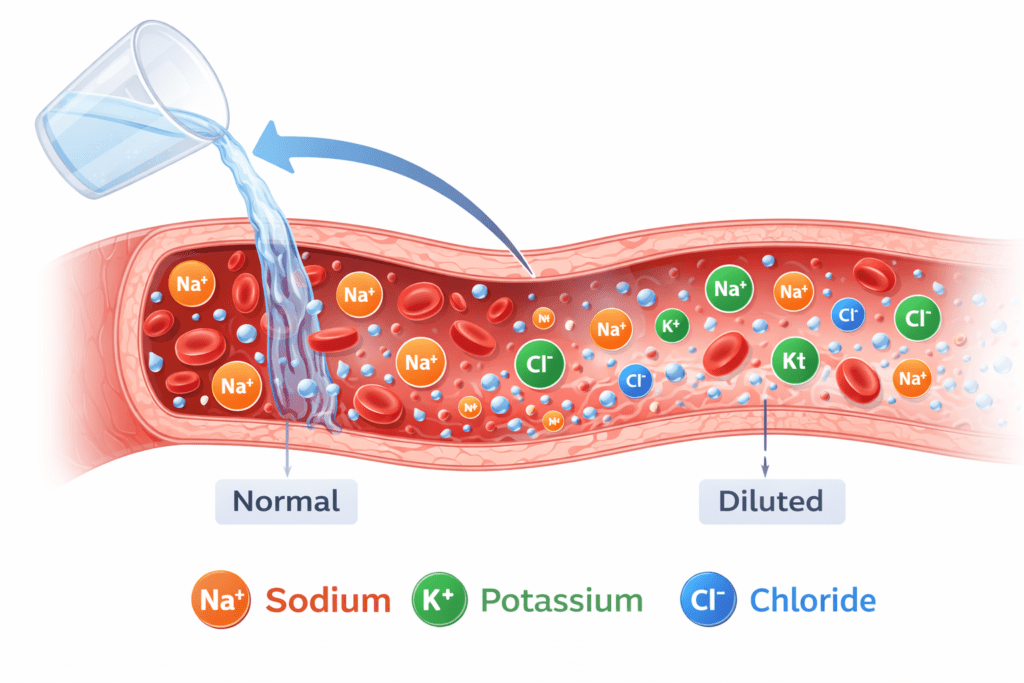
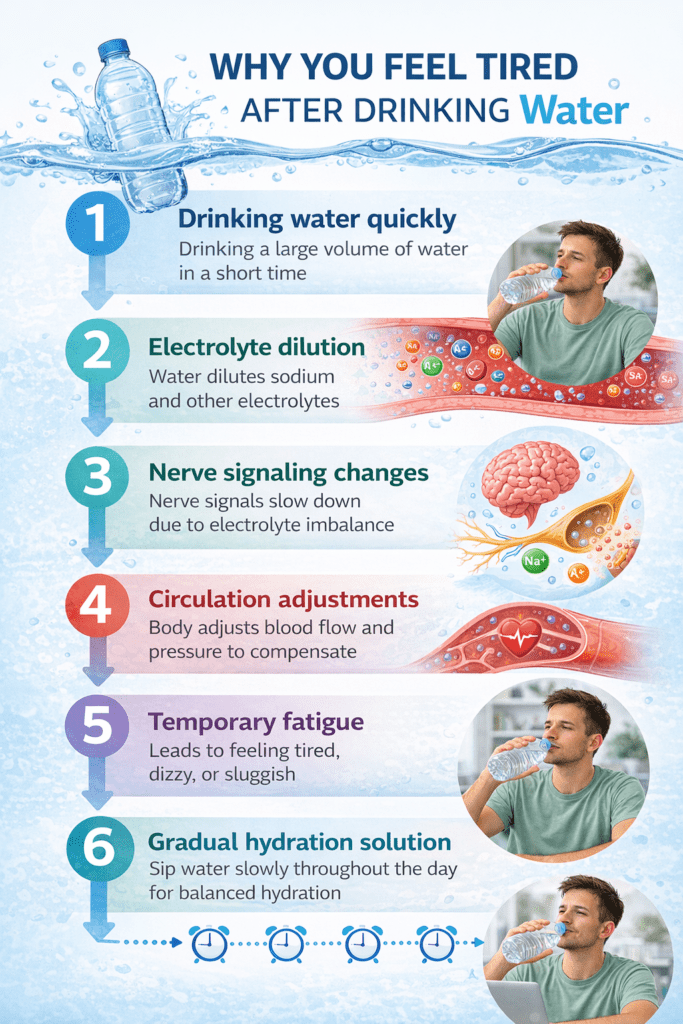
When you drink a large amount of plain water quickly, the concentration of sodium in your blood can temporarily drop. This process is known as electrolyte dilution.
Your body immediately begins adjusting to restore balance. Hormones like aldosterone signal the kidneys to manage fluid and mineral levels.
During this adjustment period, several things can happen that contribute to fatigue.
Blood pressure can temporarily shift as fluid distribution changes. Nerve signals may slow slightly because sodium and potassium levels affect how electrical impulses travel through the nervous system. Muscles may also feel weaker because electrolyte balance controls muscle contraction.
The result is a short period where the body feels slightly off balance.
For some people, this adjustment is barely noticeable. For others, it can create a feeling of fatigue or sluggishness that appears shortly after drinking water.
How Electrolyte Dilution Influences Nerve Signaling and Daily Energy Levels
One of the most important systems influenced by hydration balance is the nervous system.
Every thought, movement, and muscle contraction depends on electrical signals traveling through nerve cells.
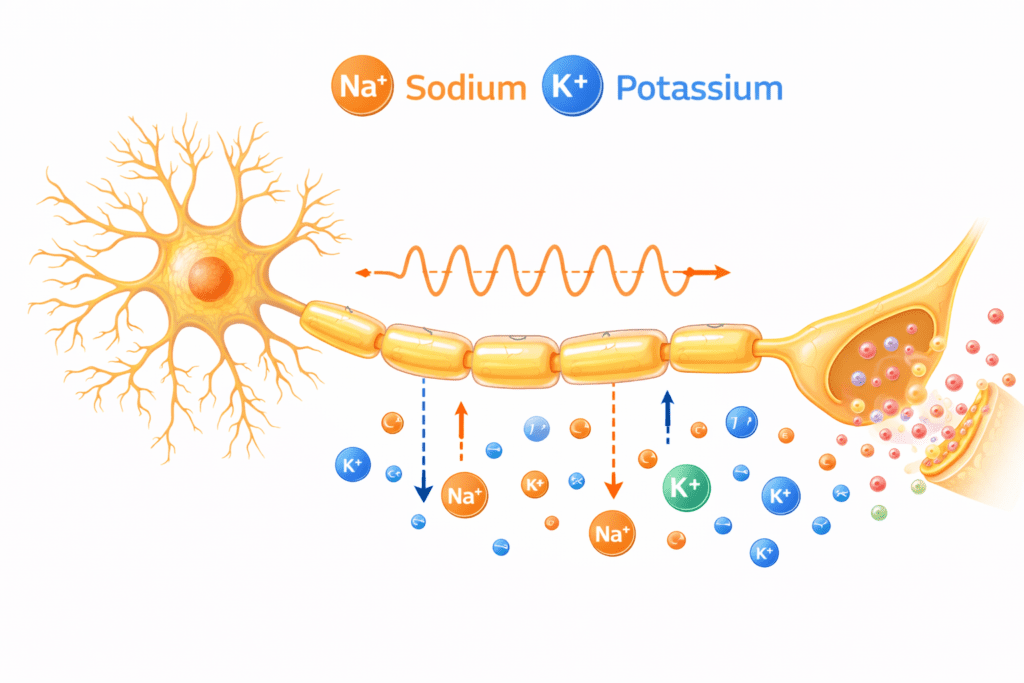
These signals rely on the sodium potassium pump, a biological process that controls how sodium and potassium move across cell membranes.
This pump creates electrical gradients that allow nerves to send signals quickly and efficiently.
When electrolyte concentrations shift, nerve signaling can change as well.
If sodium levels become temporarily diluted after drinking a large amount of water, the electrical activity in nerve cells may become slightly less efficient.
This does not stop the nervous system from functioning, but it can slow signaling enough to affect how the body feels.
Many people describe this as sudden tiredness, mild brain fog, reduced alertness, or low physical energy.
The brain is particularly sensitive to electrolyte balance because it relies on precise electrical communication between billions of neurons.
Even small changes in sodium concentration can influence how alert or energized a person feels.
This is why hydration alone does not always guarantee increased energy.
Your body needs both water and the right electrolyte balance to support optimal nerve function.
The Hidden Reason Large Amounts of Water Can Temporarily Lower Blood Sodium
The body constantly regulates sodium concentration in the bloodstream.
Sodium plays a central role in maintaining blood volume, nerve signaling, and fluid balance.
When someone drinks water slowly throughout the day, the body easily maintains equilibrium.
However, when a large amount of water enters the system quickly, blood sodium concentration may temporarily decrease.
This does not necessarily mean sodium levels become dangerously low. In most healthy people, the kidneys quickly restore balance by adjusting urine production.
But during the short window before that correction occurs, the body may experience mild symptoms associated with diluted electrolytes.
These symptoms can include fatigue, lightheadedness, or a sense of sluggishness.
The brain monitors sodium levels closely because changes in osmolarity influence how fluid moves into and out of brain cells.
When sodium becomes slightly diluted, cells may absorb a small amount of extra fluid. This subtle shift can contribute to the feeling of heaviness or tiredness that some people notice after drinking water.
4 Possible Reasons You Feel Tired After Drinking Water
- Temporary electrolyte dilution from drinking large amounts quickly
- Mild shifts in blood circulation as fluid volume increases
- Changes in nerve signaling caused by sodium balance adjustments
- Rapid hydration after mild dehydration earlier in the day
The most common reasons people feel tired after drinking water usually relate to how the body adjusts fluid and electrolyte balance.
What Causes Fatigue After Drinking Water
| ⚙️ Cause | 🧬 What Happens in the Body | ⚡ Possible Effect |
|---|---|---|
| 💧 Electrolyte dilution | Drinking large amounts of water quickly can temporarily dilute sodium in the bloodstream | Mild fatigue or brain fog |
| 🧠 Nerve signaling shift | Sodium and potassium levels influence how nerves transmit electrical signals | Reduced alertness |
| 🩸 Circulation adjustment | Fluid volume increases and the body redistributes blood plasma | Temporary sluggishness |
| 🌡️ Previous dehydration | Rapid hydration after dehydration forces the body to rebalance fluids | Brief energy dip |
What Happens When Your Body Rapidly Adjusts Fluid Distribution After Hydration
Another reason someone may feel tired after drinking water involves the way fluid moves through the circulatory system.
The bloodstream acts like a transportation network for nutrients, oxygen, and hormones. Fluid levels within the blood influence how efficiently this system operates.
When a person drinks a large amount of water quickly, blood plasma volume increases.
The body must then redistribute that fluid across different compartments, including the bloodstream, interstitial fluid, and cells.
Hormones such as aldosterone and antidiuretic hormone play important roles in this process.
These hormones help regulate kidney function, urine production, electrolyte balance, and fluid retention.
As the body shifts fluid between compartments, blood pressure and circulation can temporarily change.
Some people experience this as a mild drop in alertness or energy.
It is similar to how the body sometimes feels slightly sluggish after a large meal when blood flow is redirected toward digestion.
The body is simply adapting to new internal conditions.
Once fluid balance stabilizes, energy levels usually return to normal.
The Link Between Hydration, Circulation, and Afternoon Energy Slumps
Daily lifestyle patterns can make hydration related fatigue more noticeable.
For example, many office workers spend long hours sitting at desks, focusing on screens, and drinking coffee.
This environment affects circulation, stress hormones, and electrolyte balance.
If someone becomes mildly dehydrated during the morning and then suddenly drinks a large amount of water in the afternoon, the body may respond strongly to the rapid fluid change.
Circulation shifts, electrolyte levels adjust, and the nervous system recalibrates.
This can create a brief window where fatigue appears even though hydration is improving.
Environmental factors also play a role.
Warm temperatures, physical activity, and sweating reduce electrolyte levels. If a person replaces only water without replacing minerals lost through sweat, dilution can occur more easily.
That imbalance can contribute to feelings of tiredness, dizziness, or reduced concentration.
Hydration works best when it is steady and balanced rather than sudden and extreme.
People trying to maintain consistent energy during the workday often combine hydration habits with supportive routines like daily habits for energy and structured hydration systems such as simple daily hydration habits for energy or a practical hydration routine for busy adults.

Want more ways to fix low energy during the day?
If hydration timing, workday fatigue, or afternoon sluggishness sounds familiar, these guides can help you build steadier energy habits without overcomplicating your routine.
How Mild Dehydration Earlier in the Day Can Amplify Fatigue After Drinking Water
Sometimes the reason someone feels tired after drinking water has less to do with the water itself and more to do with what happened earlier in the day. Many people unknowingly spend the first half of the day mildly dehydrated.
Busy mornings, long commutes, and caffeine consumption often reduce early hydration.
When the body finally receives a large amount of water later in the day, fluid balance begins to shift quickly.
Blood plasma volume increases, circulation adjusts, and electrolyte concentrations change slightly as the kidneys respond.
During this transition, the nervous system may briefly reduce alertness while the body stabilizes internal conditions.
This effect can feel similar to the natural energy dip many people experience during the afternoon.
Maintaining steady hydration throughout the day often works better than sudden intake, especially when combined with supportive routines like simple daily hydration habits for energy and structured strategies such as daily habits for energy.
What Most People Miss About Hydration and Electrolyte Balance
Most health advice focuses on drinking enough water.
While hydration is essential, water alone does not fully explain how the body manages energy.
Electrolytes are equally important.
Sodium and potassium regulate fluid movement between cells. Magnesium supports muscle and nerve function. Chloride helps maintain acid base balance in the blood.
These minerals work together to support the body’s electrical and chemical systems.
Common Signs Electrolyte Balance May Be Slightly Off
- Sudden fatigue after drinking water
- Mild dizziness or lightheadedness
- Brain fog or reduced concentration
- Muscle heaviness or sluggishness
- Temporary drop in alertness
When people drink large amounts of water but consume very little sodium or other electrolytes, the ratio between water and minerals can shift.
The result may be subtle symptoms that are easy to overlook.
Someone might feel slightly tired, mentally foggy, or physically sluggish.
Because these symptoms appear after drinking water, the connection can seem confusing.
In reality, the body is responding to a temporary imbalance between fluid and electrolytes.
Understanding this relationship helps explain why hydration strategies often emphasize both water and mineral intake. Scientific explanations of fluid balance and electrolytes are discussed in resources like the NIH overview of electrolytes and fluid balance.
The Hidden Connection Between Electrolyte Balance and Mental Clarity
Electrolyte balance plays a larger role in mental performance than many people realize.
Sodium and potassium are essential for maintaining electrical communication between neurons in the brain.
These minerals help regulate the movement of ions across cell membranes, which allows nerve signals to travel efficiently through neural networks.
When hydration temporarily dilutes electrolyte levels, even small shifts can influence how quickly the brain processes information.
This may explain why some people notice brain fog, slower concentration, or reduced focus shortly after drinking a large amount of water.
The brain requires extremely stable chemical conditions to maintain optimal cognitive performance.
Lifestyle factors such as caffeine timing, sleep quality, and hydration patterns all interact with electrolyte balance to influence alertness during the day.
For example, people experiencing midday fatigue often explore strategies discussed in midday energy boost without coffee and practical approaches like afternoon habits boost energy to support more consistent mental clarity.
The Real Cause Behind Water Related Fatigue in Everyday Situations
In everyday life, fatigue after drinking water usually comes from a combination of factors rather than a single cause.
One common scenario involves someone who has been dehydrated for several hours and suddenly drinks a large amount of water very quickly.
The body then has to process that sudden change in fluid balance.
Another situation occurs when someone has low sodium levels due to sweating, intense exercise, or very low sodium meals.
Drinking plain water without replacing lost electrolytes can temporarily dilute the remaining sodium in the bloodstream.
A third possibility involves circulation patterns during long periods of sitting.
When people remain seated for hours, blood flow slows in the lower body. If they suddenly drink a large volume of water and stand up shortly afterward, circulation adjustments may contribute to fatigue or lightheadedness.
Many fatigue related symptoms throughout the day connect with broader energy patterns discussed in articles such as why am I so tired in the afternoon, exhausted at 3pm even after 8 hours sleep, and dizzy and tired in the afternoon.
In most cases, these effects are mild and temporary.
The body’s regulatory systems quickly restore balance by adjusting kidney function, hormone signals, and fluid distribution.
Once equilibrium returns, the sensation of fatigue usually disappears.
The Impact Of Hydration Timing and Drinking Patterns on Daily Energy
The way someone drinks water throughout the day can influence how their body responds.
Hydration works best when fluid intake is spread across time rather than concentrated in large bursts.
Small consistent amounts of water allow the body to maintain stable plasma osmolarity and electrolyte balance.
This prevents sudden shifts in sodium concentration or blood volume.
Drinking several large glasses of water all at once, especially after a period of dehydration, forces the body to make rapid adjustments.
These adjustments can temporarily affect circulation, nerve signaling, and hormone activity.
Spacing hydration throughout the day allows the kidneys and endocrine system to maintain smoother control over fluid balance.
Many people notice that steady hydration improves focus and energy more reliably than occasional large amounts of water.
Workday fatigue can also be influenced by lifestyle factors such as caffeine timing, meal patterns, and afternoon routines like those explained in midday energy boost without coffee and afternoon habits boost energy.

How Balanced Hydration Supports Stable Energy Throughout the Day
Maintaining healthy energy levels often depends on supporting both fluid and electrolyte balance.
A simple framework can help keep hydration stable.
First, drink water consistently throughout the day rather than all at once.
Second, pay attention to environmental factors that increase fluid loss such as heat, exercise, or sweating.
Third, maintain a balanced diet that includes natural sources of electrolytes such as fruits, vegetables, and lightly salted foods.
Fourth, notice how your body responds to different hydration patterns.
Some people feel best when they drink smaller amounts more frequently, especially during work hours when concentration matters.
Hydration should support the body’s natural regulatory systems, not overwhelm them.
Articles such as micro habits to boost afternoon energy, midday healthy habits energy slump, and daily healthy habits overall health explore additional strategies that support steady daily energy.
Research on hydration recommendations and fluid balance is also summarized by Harvard Health and clinical explanations of sodium imbalance can be found at the Mayo Clinic hyponatremia overview.

Why Gradual Hydration Supports More Stable Energy Than Drinking Water Quickly
The body tends to respond better to hydration that occurs gradually rather than all at once.
When water enters the system slowly, the kidneys, endocrine system, and circulatory system have time to maintain stable electrolyte concentrations.
This prevents sudden shifts in plasma osmolarity and helps the nervous system maintain consistent signaling. In contrast, drinking large amounts of water quickly forces the body to redistribute fluid across multiple compartments at once.
Blood plasma volume increases rapidly, hormones adjust kidney filtration rates, and electrolytes become temporarily diluted.
These adjustments can produce short periods of fatigue, especially if someone has been dehydrated earlier in the day.
Gradual hydration supports smoother fluid regulation and may reduce these temporary fluctuations.
People trying to stabilize their daily energy often combine consistent hydration with behavioral strategies such as micro habits to boost afternoon energy and workday routines like midday healthy habits energy slump.
Why Feeling Tired After Drinking Water Is Usually Temporary
The human body is remarkably skilled at maintaining internal balance.
Even when fluid levels or electrolyte concentrations shift, powerful regulatory systems quickly move things back toward equilibrium.
The kidneys continuously filter blood, adjusting urine production to regulate fluid and mineral levels. Hormones such as aldosterone help control how much sodium the body retains or releases depending on current hydration conditions.
These systems work automatically to restore stability.
Because of this, feeling tired after drinking water is usually brief. As electrolyte balance stabilizes and fluid distribution returns to normal, nerve signaling and circulation also recover.
Energy levels often improve shortly afterward.
Hydration remains one of the most important factors for supporting daily energy and overall health. The key is remembering that the body depends not only on water but also on the delicate balance between water and electrolytes that allows every system to function properly.
Understanding why you may feel tired after drinking water highlights how closely energy levels depend on the balance between hydration, electrolytes, and everyday lifestyle habits.

Keep exploring the real causes of low energy
If this article helped you understand why you may feel tired after drinking water, these next guides can help you uncover other common causes of fatigue and build better daily energy habits.
FAQ – People Also Ask
1. Why do I feel tired after drinking water?
Feeling tired after drinking water can occur when a large amount of water temporarily dilutes the electrolytes (like sodium) in your bloodstream. This shift affects nerve signaling, circulation, and fluid balance, leading to short-term fatigue or brain fog until the body restores electrolyte equilibrium. It usually happens when hydration is rapid, especially after mild dehydration earlier in the day.
2. Can drinking too much water make you tired?
Yes, drinking excessive amounts of water quickly can dilute the sodium in your blood, which affects nerve function and muscle contraction. This temporary electrolyte imbalance can cause fatigue or sluggishness. Your body needs both water and the right balance of electrolytes to maintain energy levels.
3. How does hydration affect energy levels?
Hydration is crucial for maintaining energy, but it’s not just about drinking water. Electrolyte balance plays a significant role. When sodium and potassium concentrations are off, it can impact nerve function and blood circulation, causing fatigue. Hydrating steadily throughout the day, instead of consuming large amounts at once, helps the body maintain stable energy.
4. What is the connection between water and fatigue?
The connection between water and fatigue lies in how the body balances hydration and electrolytes. When you drink large amounts of water at once, your body works to restore electrolyte balance, which can cause temporary feelings of sluggishness or brain fog. Gradual hydration throughout the day helps avoid this energy dip.
5. Why does my brain feel foggy after drinking water?
Brain fog after drinking water is usually due to temporary changes in sodium concentration, which affects nerve signaling in the brain. This occurs when the body’s electrolytes are diluted from rapid hydration, slowing down communication between neurons. Restoring the electrolyte balance helps clear up the fogginess.
E-E-A-T: Experience, Expertise, Authority, and Trust
This article is written by Ayoub Eddarouich, who specializes in health and wellness writing. With a focus on hydration, energy management, and biological health mechanisms, the content draws on credible scientific sources to explain the body’s fluid and electrolyte balance.
We ensure that the information presented aligns with the most trusted and authoritative medical sources, including:
These sources are among the most trusted in the medical field, ensuring the content you read here is accurate and based on the latest scientific research.
