High‑protein snacks under 200 calories are small foods that give you at least about 10–15 grams of protein and stay below 200 calories per serving. They help with weight loss because protein keeps you full longer, reduces mindless snacking, and supports steady energy instead of sugar spikes. For many adults, planning a few high‑protein snacks during the day makes it easier to avoid late‑night fridge raids or drive‑thru stops without feeling overly restricted.
This article walks through realistic, office‑friendly ideas you can grab or prep in a few minutes. Each snack is built to support weight‑loss goals without feeling restrictive or complicated. We’ll also point out common mistakes people make with “high‑protein snacks” and give you a quick checklist to use next time you hit the snack aisle. You can find more snack inspiration in our anchor piece on
Healthy Snacks for Weight Loss (40+ Easy Ideas).
Why protein helps with weight loss (so snacks matter)

Protein is one of the three main macronutrients your body needs every day. When you eat enough of it, it helps you feel satisfied and stabilizes your energy instead of giving you spikes and crashes. That matters for weight loss because the less you snack mindlessly out of boredom or hunger, the easier it is to stay in a gentle calorie deficit.
For light‑to‑moderate weight‑loss plans, many diet experts suggest aiming for about 0.5 to 0.8 grams of protein per pound of your goal body weight per day. For a 150‑pound person targeting 15 mildly 150 pounds, that’s roughly 75–120 grams of protein across the day. Fitting in a few high‑protein snacks helps you spread that amount across meals instead of loading it all into dinner. For more on how to build a simple daily routine around healthy eating and light habits, read our guide on
Daily Healthy Habits That Improve Your Health Without Overwhelm.
High‑protein snacks under 200 calories also make it easier to:
- Avoid late‑night temptation
- Skip drive‑thru food on busy days
- Stay focused at work without a sugar‑crash crash
How to tell if a snack really counts as high‑protein under 200 calories
A true high‑protein snack under 200 calories usually has:
- At least 10–15 grams of protein per serving
- Around 150–200 calories (closer to 200 if it’s filling and balanced)
- Carbs and fat kept reasonable so the calories don’t spiral in one direction
You also want the snack to be:
- Simple or grab‑and‑go (good for office and on‑the‑go)
- Made from common grocery‑store foods (no exotic ingredients)
- Relatively low in added sugar (labels or ingredient lists short and recognizable)
If a “high‑protein” snack is packed with sugar, empty carbs, or heavy sauces, it can undo your calorie control, even if the protein grams look impressive. We’ll use that template to judge each idea below.
Common mistakes people make with high‑protein snacks for weight loss
Before diving into specific snacks, it helps to understand the common traps. Avoiding these makes it easier to pick snacks that actually support weight loss, not just look trendy.
Thinking protein equals “no calories needed”
Some people treat high‑protein bars or protein shakes as free‑for‑all foods. They forget that calories still matter, even with extra protein. You can overeat protein‑rich foods just like anything else, especially if they contain lots of fat, sugar, or hidden calories.
Relying only on processed bars
Protein bars can be handy, but many are loaded with sugar alcohols, “natural” sweeteners, or long ingredient lists. Choosing them as your default snack can keep you stuck on ultra‑processed foods instead of learning how to build meals from real ingredients. For more on choosing cleaner options from the snack aisle, revisit our
Healthy Snacks for Weight Loss (40+ Easy Ideas).
Using snacks as mini‑meals without planning
If every snack turns into a small meal (extra crackers, extra nuts, extra scoop), you can accidentally turn a 200‑calorie treat into a 400–500‑calorie mini‑snack fest. Planning portions ahead of time keeps you aligned with your calorie goals.
Ignoring hunger cues
Eating a high‑protein snack out of boredom or habit, not real hunger, can still lead to excess calories. It’s helpful to ask yourself, “Am I hungry, or am I just bored or stressed?” before reaching for anything.
How we’ll structure your snack choices
The snacks below follow a simple framework:
- Pick a base protein source (yogurt, cheese, egg, shake, canned meat, tofu, etc.).
- Add a small amount of fiber or healthy fat (fruit, veggies, nut butter, seeds) for satisfaction.
- Keep total calories near or under 200 by controlling serving sizes.
You’ll see how each choice fits into different office‑style situations (desk‑friendly, no‑prep, warm vs. cold, longer shelf life, etc.). Think of this as a “starter pack” you can rotate during the week.
High‑protein snack ideas (all under 200 calories)
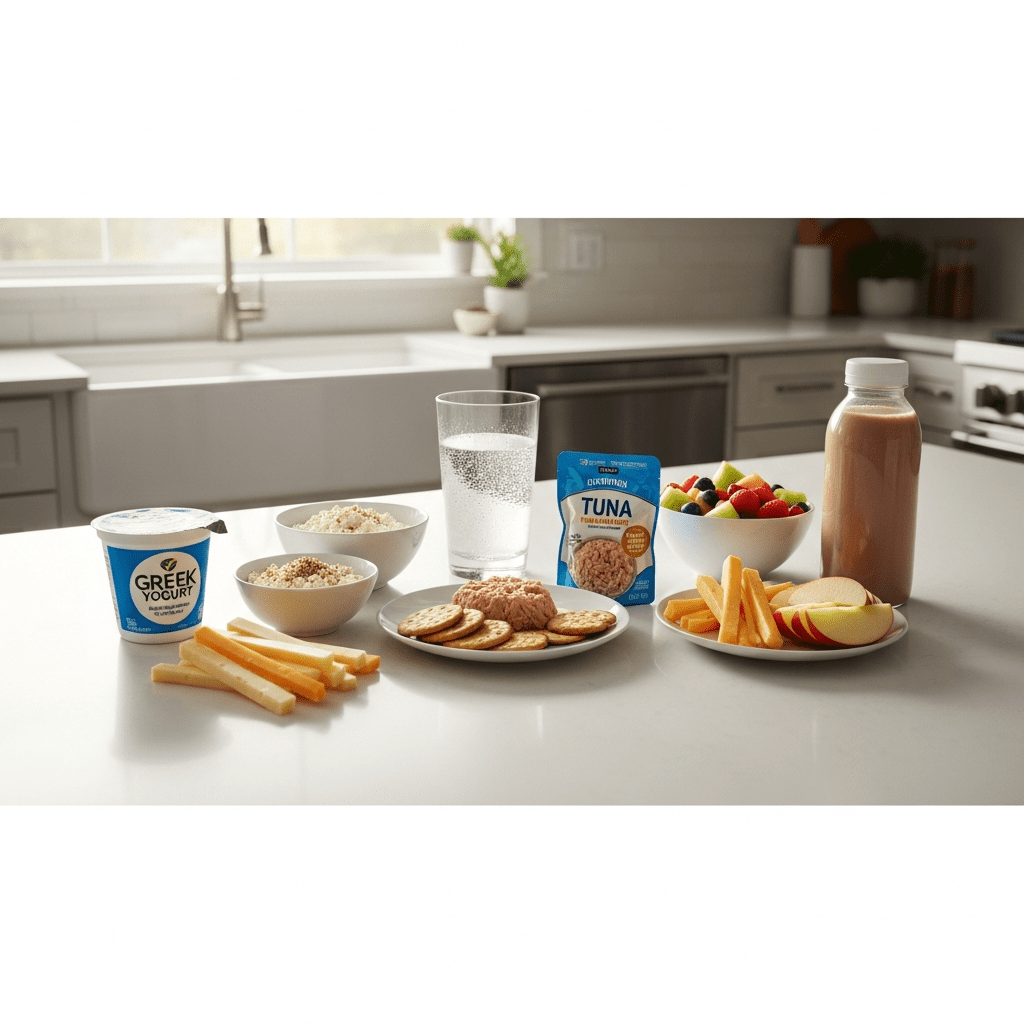
Here are 9 office‑friendly, high‑protein snacks designed to support weight loss without sacrificing practicality. Each option includes a quick calorie and protein estimate so you can mix and match.
1. Greek yogurt with a small handful of berries
A single serving of plain nonfat Greek yogurt (150–170 grams) plus ½ cup of fresh or frozen berries lands around 180–190 calories and roughly 15–17 grams of protein. The berries add natural sweetness, fiber, and antioxidants without a sugar spike.
- Great for: A cool, light snack that feels somewhat like dessert.
- Office tip: Use a small lidded container or microwave‑safe cup if you can’t store it in a fridge; avoid leftover yogurt that sits out for hours.
2. Cottage cheese with a sprinkle of everything bagel seasoning
½ cup low‑fat cottage cheese is about 90–100 calories and around 12–14 grams of protein. Sprinkling a bit of everything bagel seasoning or sea salt and pepper adds flavor without major calories.
- Great for: A savory, filling mini‑snack that keeps you full without heaviness.
- Office tip: Pack in a small lidded container; blend in a few cherry tomatoes or cucumber slices for extra volume.
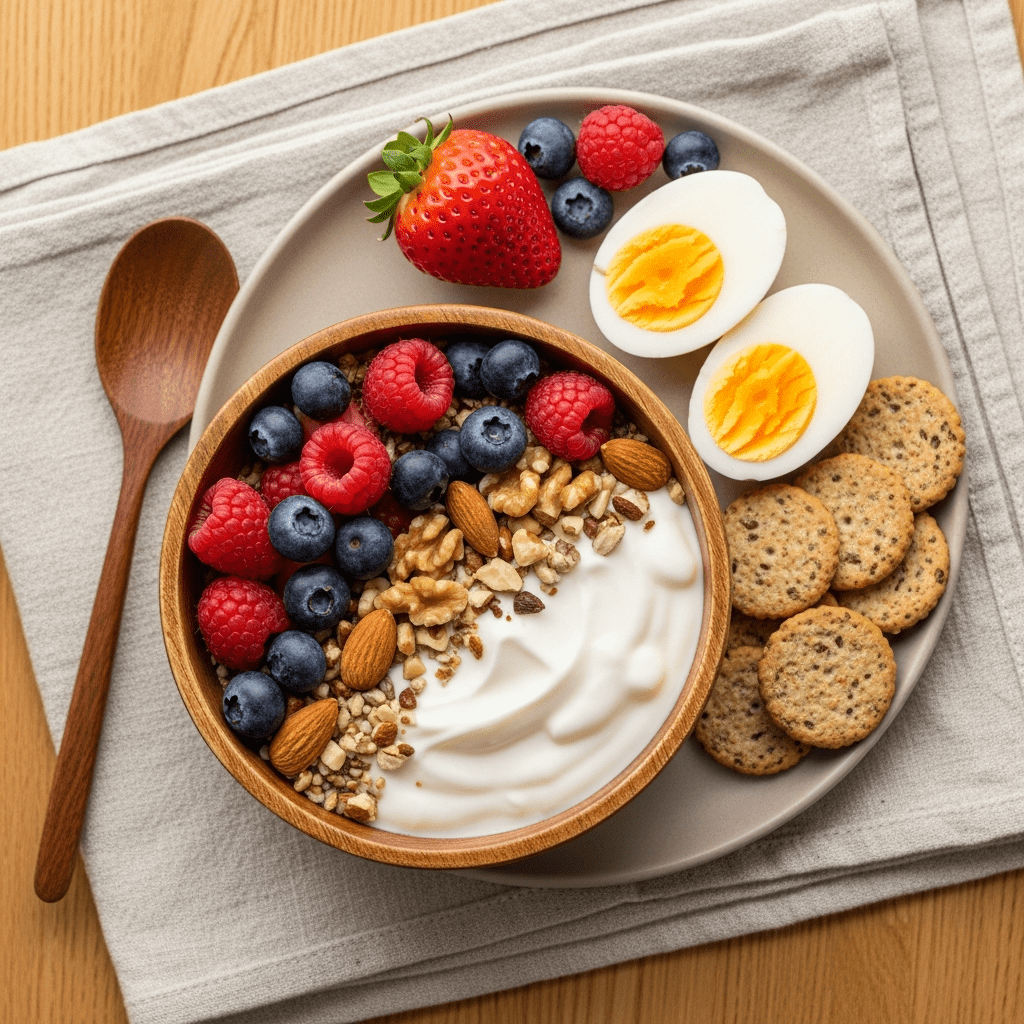
3. Hard‑boiled egg with a slice of whole‑grain toast
One large hard‑boiled egg has about 70 calories and 6 grams of protein. Add one slice of light whole‑grain bread (around 70–80 calories) to get roughly 150–160 calories and 9–10 grams of protein.
- Great for: Quiet, non‑messy, and easy to eat at your desk.
- Office tip: Prepare eggs in advance and store them peeled in a reusable container.
4. Single‑serve high‑protein shake or Greek yogurt drink
Many ready‑to‑drink high‑protein shakes or Greek‑yogurt drinks hit around 150–200 calories and 15–20 grams of protein. Look for products with 10–20 grams of protein and under 5–10 grams of added sugar.
- Great for: Surviving hectic, no‑time‑to‑prep days.
- Office tip: Store a few packs in your gym bag or catch‑all drawer for impromptu days.
5. Tuna pouch with a few whole‑grain crackers
A single‑serving tuna pouch (about 70 calories) plus 5–6 whole‑grain crackers (around 100–110 calories) gets you close to 180 calories and 15+ grams of protein. Choose no‑oil‑in‑water or lightly seasoned tuna to keep sodium and fat reasonable.
- Great for: A savory, salty‑tasting bite that feels more “substantial.”
- Office tip: Pack a small fork or popsicle stick instead of a full utensil; avoid heavy mayo mixes.
6. Light cheese sticks with a few apple slices
A light string cheese or similar low‑fat cheese stick has about 60–80 calories and 6–8 grams of protein. Add one small apple sliced into wedges (around 100 calories) for a light, crunchy pairing at roughly 170–180 calories.
- Great for: Sweet‑salty combo that satisfies sugar and salt cravings at once.
- Office tip: Pre‑slice the apple at home and toss a tablespoon of lemon juice on it to slow browning.
7. Hummus and veggie sticks with modest portion
About 2 tablespoons of hummus (60–80 calories) plus a handful of cucumber, bell pepper, or carrot sticks (about 25–40 calories) stays under 150–160 calories with around 5–7 grams of protein. Not the highest‑protein option on this list, but still better than plain chips.
- Great for: A crunchy snack that feels indulgent without wrecking your calorie count.
- Office tip: Use a small travel container; keep pita chips or extra crackers off‑desk unless planned.
8. Protein‑packed breakfast‑style snack (milk + oats + nut butter)
Mix 1 cup of unsweetened almond milk (30–40 calories), ¼ cup dry oats (about 75 calories), and 1 tablespoon peanut or almond butter (about 90 calories) in the microwave or by soaking overnight. You get roughly 200 calories and about 10–12 grams of protein, plus fiber that keeps you full.
- Great for: A warm, cozy option on cold‑weather or stressful‑day mornings.
- Office tip: Prep it the night before in a lidded cup so it’s ready by the time you sit down.
9. Plain cottage cheese or Greek yogurt with a tablespoon of nut butter
Taking ½ cup low‑fat cottage cheese or Greek yogurt (about 90–110 calories) and stirring in 1 tablespoon of peanut or almond butter (about 90 calories) gets you close to 200 calories and 12–15 grams of protein. The nut butter boosts fat and flavor, making the snack feel more dessert‑like.
- Great for: Sweet‑creamy lovers who want something smoother than berries or hummus.
- Office tip: Stir well so the nut butter spreads naturally; add a sprinkle of cinnamon instead of sugar.
Quick comparison of these snacks
Use the table below to pick the best snack for your situation and hunger type.
| Snack idea (work‑friendly version) | Approx. calories | Approx. protein (g) | Best situation to eat it |
|---|---|---|---|
| Greek yogurt + small handful of berries | 180–190 | 15–17 | Cool, light mid‑morning or afternoon break |
| Cottage cheese + sprinkle of seasoning | 100–110 | 12–14 | Savory mini‑bite when you want something light |
| Hard‑boiled egg + slice of whole‑grain toast | 150–160 | 9–10 | Simple, quiet desk snack on busy days |
| Single‑serve protein shake or yogurt drink | 150–200 | 15–20 | Very‑busy days with no time to prep |
| Tuna pouch + a few whole‑grain crackers | 180–190 | 15+ | Salty‑cravvy craving that still feels filling |
| Light cheese sticks + a few apple slices | 170–180 | 6–8 | Sweet‑salty combo to satisfy cravings |
| Hummus + veggie sticks (modest portion) | 150–160 | 5–7 | Crunchy, “indulgent‑feeling” but light snack |
| Oats‑style mix (milk + oats + nut butter) | ~200 | 10–12 | Warm, cozy option on cold or stressful days |
| Cottage cheese / Greek yogurt + nut butter | ~200 | 12–15 | Sweet‑creamy snack for those who like dessert‑like flavors |
Common mistakes to avoid with these snacks
Even if you follow this list, it’s easy to creep over your calorie or protein target. Watch out for these subtle traps.
Scooping “one more” spoon or slice
That second scoop of hummus, extra handful of crackers, or “just a little more” nut butter can add 50–100 extra calories quickly.
Ignoring drink calories along with snacks
Pairing a high‑protein snack with a sugary soda, flavored coffee drink, or high‑sugar juice can wipe out your calorie savings. Meet the snack with water, unsweetened tea, or black coffee instead.
Using “high‑protein” labels to justify junk ingredients
Some bars combine high protein with high sugar or long lists of additives. Always peek at the sugar content and ingredient list.
Eating every snack at once
If you’re sampling more than one high‑protein snack in a single afternoon (shake, bar, cheese stick), you can easily exceed 400–500 calories without realizing it.
Treating snacks as workouts currency
No workout “earns” you free rein over snacks. Weight loss happens when you consistently eat fewer calories than you burn, not by “burning off” your snack choices later.
Checklist: How to choose the right high‑protein, under‑200‑calorie snack
Use this simple checklist next time you open the fridge or hit a vending‑style option at work.
☐ Check the calorie range: Aim for 150–200 calories for your snack.
☐ Confirm at least 10 grams of protein per serving where possible.
☐ Keep added sugar under 5–10 grams if relying on packaged items.
☐ Add a bit of fiber or vegetables when practical (berries, apple, veggie sticks, oats) to stretch fullness.
☐ Measure portions ahead of time instead of snacking straight from the bag or tub.
☐ Match the snack to your schedule and mood: crunchy for salty cravings, creamy for sweet cravings, shake or bar for ultra‑hurry days.
Running through this quick list takes less than a minute but can keep your snack aligned with your weight‑loss plan instead of accidentally sabotaging it.
Working these snacks into a regular routine
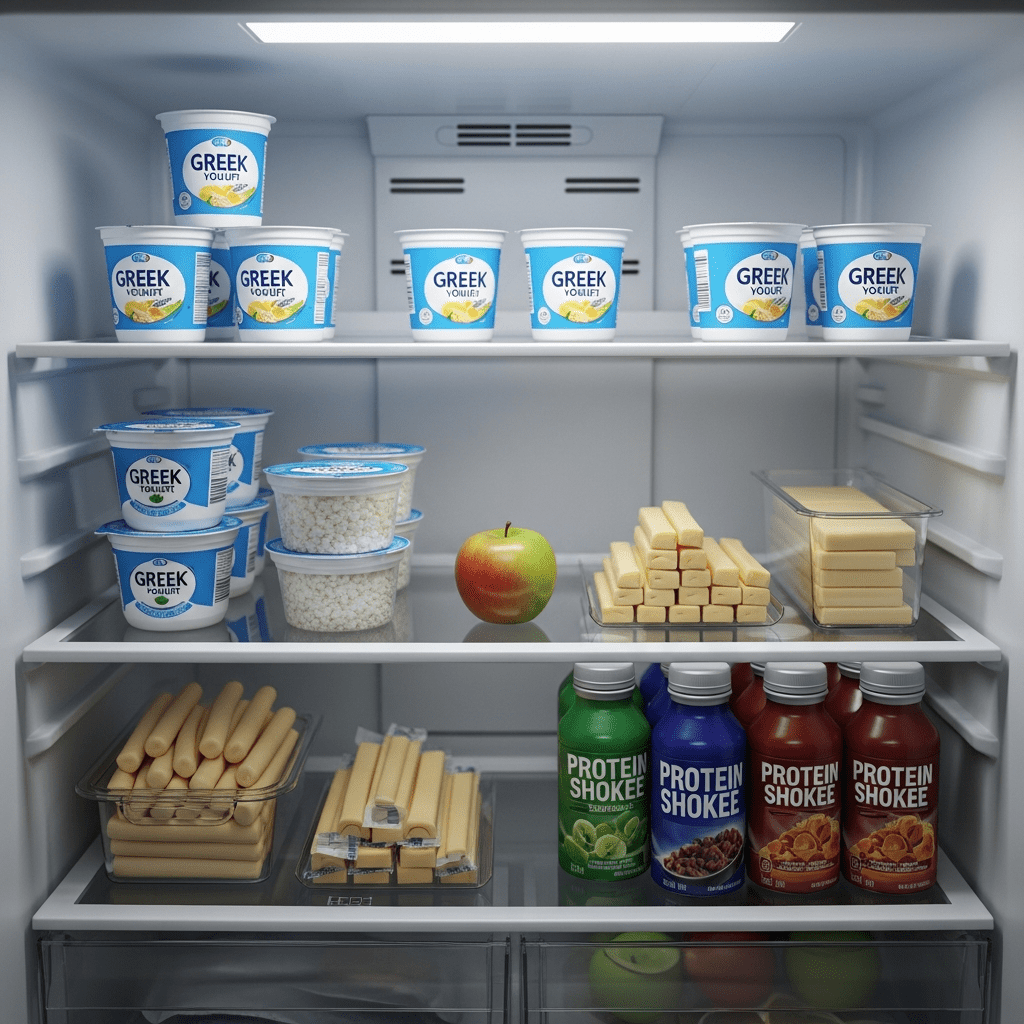
To turn these ideas into a real‑life habit, think about three windows during your day.
Mid‑morning snack
If you eat breakfast by 7–8 a.m., you might start feeling hungry by 10–11 a.m. A Greek‑yogurt or cottage‑cheese‑style snack fits well here. For more about structuring your day around small, realistic habits, see our
Daily Healthy Habits That Improve Your Health Without Overwhelm.
Afternoon slump snack
Between 2–4 p.m., many people hit an energy dip. A high‑protein shake, tuna pouch, or cheese‑apple combo can keep you awake without a sugar crash.
Evening pre‑bed light bite
If you’re truly hungry closer to dinner and know you’ll eat a light main meal, a small cottage cheese or yogurt‑with‑nut‑butter snack can help prevent midnight fridge raids.
Planning these slots ahead of time (for example, “Greek yogurt at 10 a.m., tuna pouch at 3 p.m.”) helps you avoid snack roulette and last‑minute fast‑food stops.
When to skip or rethink a high‑protein snack
High‑protein snacks are helpful, but they’re not magic. There are times you’re better off drinking water, waiting for your next meal, or adjusting something deeper, like sleep or stress levels.
If you’re snacking mostly out of boredom or stress, consider a short walk, a glass of water, or a brief stretch instead. If you have a tight calorie budget, swapping a higher‑calorie treat for a smaller portion of the same food sometimes works better than adding even a “healthy” snack.
If you have any medical condition or are on medication that affects your diet (like diabetes, kidney issues, or blood‑pressure meds), talk to a qualified healthcare provider before making big changes. Snacks that help you lose weight are tools, not long‑term substitutes for balanced meals or professional medical advice. For a broader snack strategy, don’t miss our anchor guide on
Healthy Snacks for Weight Loss (40+ Easy Ideas).
Frequently Asked Questions
1. Can I lose weight just by eating high‑protein snacks under 200 calories?
High‑protein snacks under 200 calories can help you lose weight by keeping you fuller longer and reducing mindless eating, but they’re not a magic fix on their own. To see results, you still need to stay in a gentle calorie deficit across your whole day. Think of these snacks as supportive tools, not a stand‑alone weight‑loss plan.
2. Are all protein bars under 200 calories healthy?
Not all protein bars under 200 calories are healthy. Many are loaded with sugar, sugar alcohols, and long ingredient lists. A good choice should have at least 10–15 grams of protein, under 5–10 grams of added sugar, and simple, recognizable ingredients. Treat them as occasional office options, not everyday staples.
3. What is the best high‑protein snack for an office desk?
For an office‑friendly high‑protein snack, plain Greek yogurt, cottage cheese, a hard‑boiled egg, or a single‑serve protein shake are excellent choices. They’re quiet, low‑mess options that pair well with a small fruit or veggie portion. Avoid strong‑smelling foods or sticky, crumb‑heavy snacks that bother coworkers.
4. Can high‑protein snacks keep me full all day?
High‑protein snacks help you feel fuller longer than sugary snacks, which can smooth energy and reduce crashes. However, they won’t keep you full for an entire workday on their own. For best results, space 1–2 protein‑rich snacks between balanced meals instead of relying only on small bites.
5. Is a tuna pouch and crackers a good weight‑loss snack?
A tuna pouch with a few whole‑grain crackers can be a strong weight‑loss snack when you keep it under 200 calories and around 15+ grams of protein. To keep it healthy, choose tuna in water, skip heavy mayo‑style mixes, and count your crackers so your total calories stay controlled.
6. When should I skip a high‑protein snack at work?
You should skip a high‑protein snack if you’re mostly eating out of boredom, stress, or habit instead of real hunger. You may also want to skip it if your overall calorie target is already tight. In those cases, sipping water, taking a short walk, or waiting for your next meal often supports your plan better than adding more “healthy” calories.
7. How do I avoid turning snacks into mini‑meals at work?
To avoid turning snacks into mini‑meals, portion them ahead of time (not eating straight from the bag) and limit yourself to one pass per break. Avoid stacking a shake, bar, nuts, and crackers in the same sitting. If you notice a snack making you feel uncomfortably stuffed, note it and adjust the combo next time.
8. Can I eat two high‑protein snacks in one day while losing weight?
Yes, most adults can fit in 1–2 high‑protein snacks under 200 calories while losing weight, as long as they stay within their daily calorie target. Plan them instead of grabbing randomly: for example, one mid‑morning yogurt and one afternoon shake. This spreads protein across the day without blowing your budget.
9. Should I worry about sugar in high‑protein snacks at work?
Yes. Even “healthy‑looking” high‑protein snacks can hide added sugar in flavors, bars, and ready‑to‑drink shakes. Aim for under 5–10 grams of added sugar in packaged items when you can. Choosing plain Greek yogurt, cottage cheese, or water‑based canned tuna usually keeps sugar naturally lower.
Read this next:
Daily Healthy Habits That Improve Your Health Without Overwhelm
