
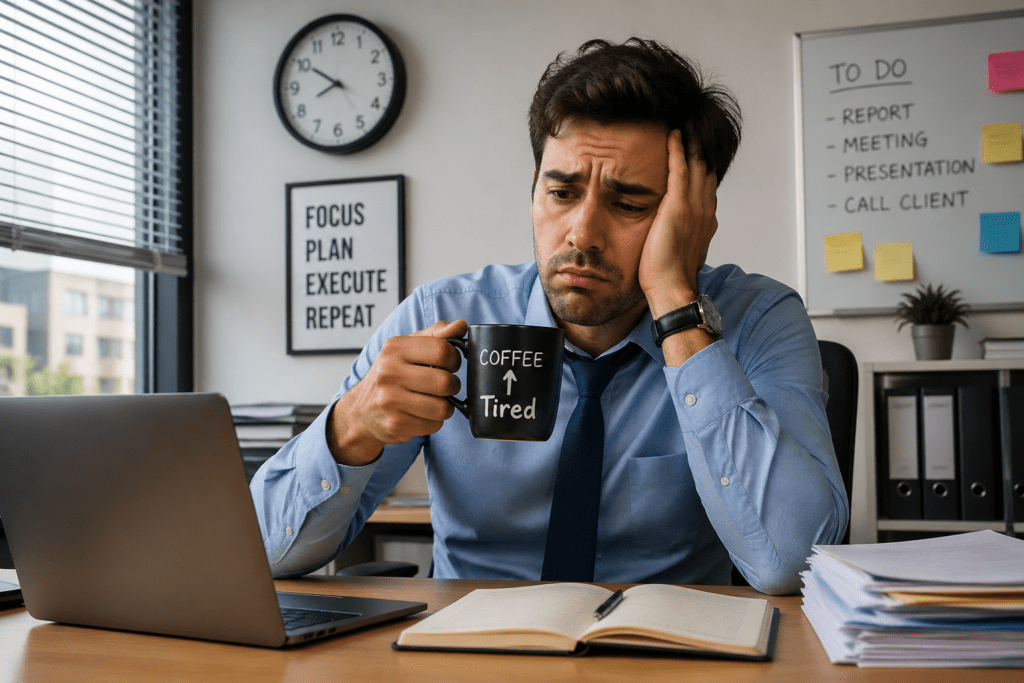
It’s 9:10 AM. You pour your first cup of coffee, expecting the familiar lift. You want clearer focus, quicker thoughts, and that “okay, I’m awake now” feeling.
But within minutes, something feels off—and it doesn’t make sense.
Your eyes get heavier. Your brain slows down. You reread the same line twice. Instead of feeling alert, you feel foggy, quiet, and strangely ready to lie down.
Why does coffee make me sleepy immediately?
Because caffeine can stimulate your brain before your body is fully ready for alertness. If your baseline energy is still low or unstable, that sudden stimulation creates a mismatch—making you feel slower, foggier, or even sleepy instead of energized.
This is not the same as a caffeine crash that happens hours later. Immediate sleepiness shows up early, when your body hasn’t fully shifted into an alert state yet.
And once you understand why this happens, the solution becomes much clearer.
Table of Contents
What Happens Right After Drinking Coffee?
Right after drinking coffee, your body doesn’t instantly switch into full alertness.
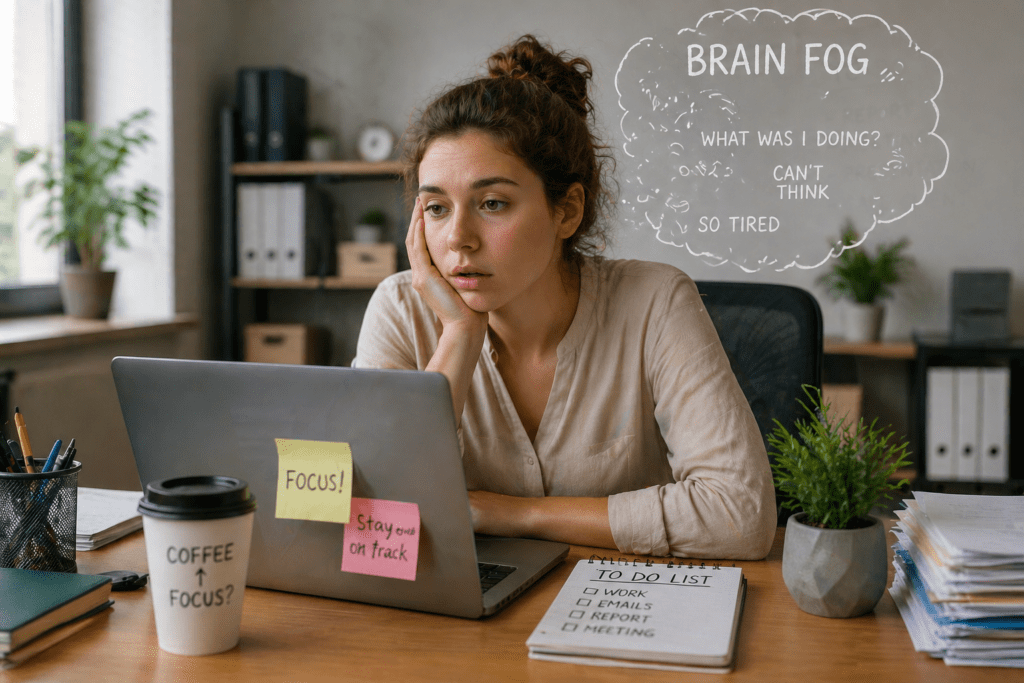
Instead, it enters a short transition phase where signals begin to shift. Caffeine starts sending an “alert” message, but your body may still be in a slower, low-energy state.
During this brief window, your brain is processing both signals at once—stimulation and fatigue—which can make your focus feel uneven or delayed.
This is why the first few minutes don’t always feel like a clean boost. Instead of immediate clarity, you may notice a temporary slowdown, heaviness, or mental fog before things stabilize.
Why Coffee Can Make You Sleepy Immediately Instead Of Alert
Coffee does not create energy inside your body. It changes how your brain interprets alertness and tiredness.
That is why the same cup can feel amazing one morning and useless the next. The coffee did not become weaker. Your starting point changed.
If you slept well, ate normally, got light exposure, and feel mentally steady, caffeine may feel smooth. It adds a clear alertness signal to a stable system.
Caffeine enters a less stable system. Instead of creating clean energy, it can add stimulation on top of fatigue. Your brain receives one signal that says “wake up,” while your body still says “slow down.”
That conflict is the real story behind immediate coffee sleepiness.
Before your body is ready to use it. If your baseline energy is already low, stressed, or unstable, the sudden alertness signal can clash with underlying fatigue. This can lead to brain fog, heavy eyes, reduced focus, or a sudden drop in mental clarity
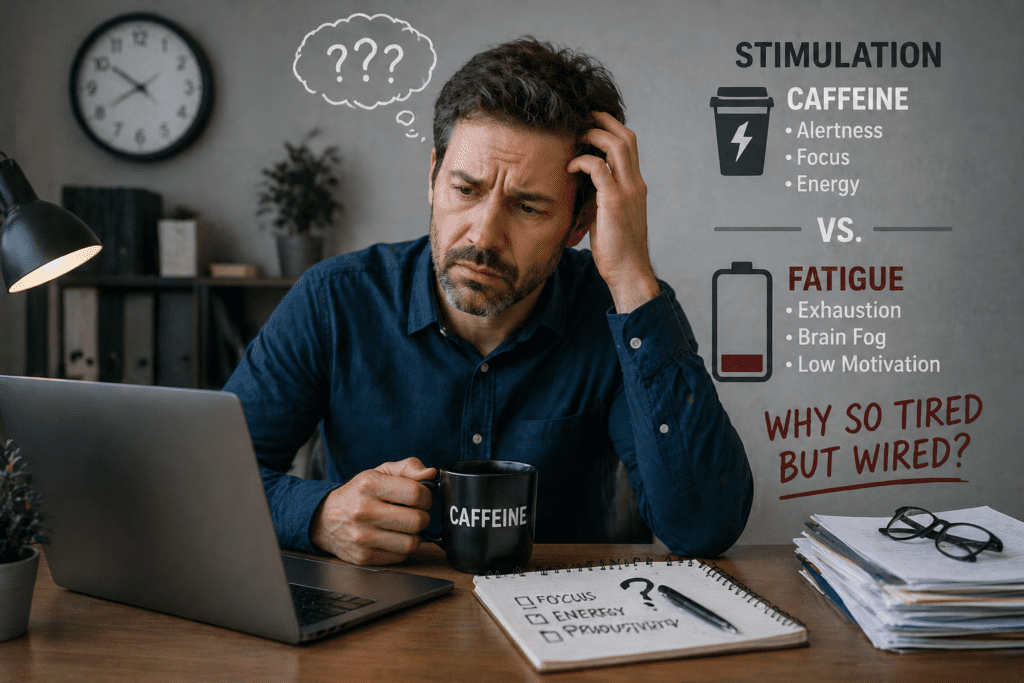
Can coffee make you tired right after drinking it?
Yes. If your body is already low on energy or not fully awake, caffeine may not create a smooth boost. Instead, it can increase stimulation while your system is still fatigued, which may feel like tiredness or mental slowdown right after drinking it.
What Happens When Coffee Hits A Low-Energy Body Too Fast (And Why It Feels Like Sleepiness)
Think of your body like a phone with too many apps open. Coffee is not a charger. It is more like turning the screen brightness all the way up.
If the battery is already low, higher brightness may make the phone look active for a moment, but it doesn’t fully address the underlying state of your energy.
Something similar can happen with coffee.
When caffeine enters your system, it supports alertness partly by affecting adenosine signaling in the brain. Adenosine is involved in sleep pressure, and caffeine is known to block adenosine-related signaling, which is one reason it can increase alertness. The National Institutes of Health explains that caffeine’s effects are strongly connected to adenosine receptor activity in the brain.
But immediate sleepiness is not only about adenosine rebound. Rebound usually matters more later, after caffeine begins fading.
Right after coffee, the bigger issue is the state your body was already in.
If you start from a low-energy baseline, caffeine may create a sharper contrast between what your brain is being pushed to do and what your body can comfortably support. That contrast can feel like sudden mental drag.
The first few minutes may look like this:
You drink coffee while still groggy.
Caffeine begins sending an alertness signal.
Your body is still under-recovered or under-fueled.
Your brain tries to process stimulation and fatigue together.
Focus drops instead of improving.
You feel sleepy, slow, or foggy.
That is the immediate mismatch loop.
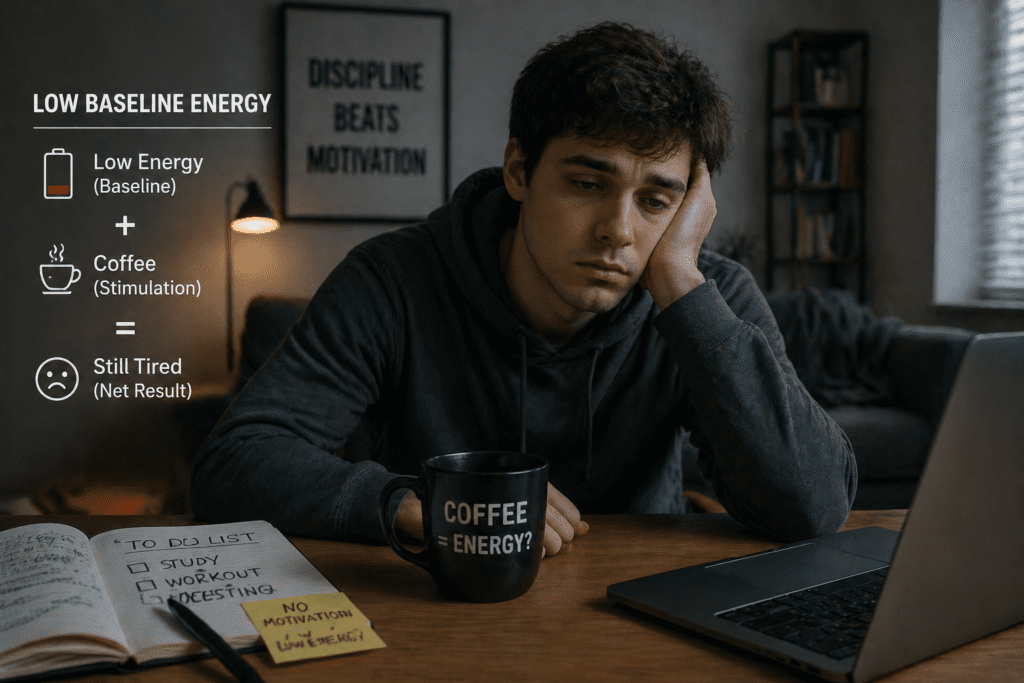
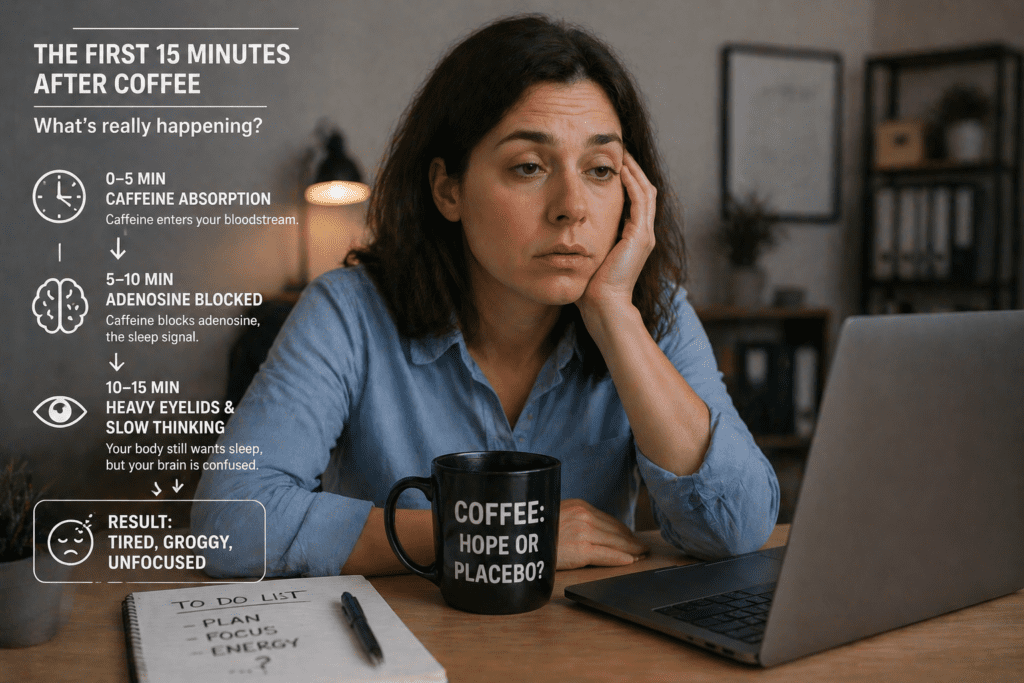
How The First Fifteen Minutes After Coffee Can Feel Backward
The first 5 to 15 minutes after coffee are not always a clean “wake-up” window. For some people, that is when the contradiction begins.
You may notice heavy eyelids, slower thoughts, or a calm, sedated feeling. This does not always mean caffeine has fully peaked. It means your body is reacting to the early shift.
Here is a simple 5-step pattern behind immediate sleepiness after coffee:
- Your body starts in a low, groggy, stressed, or under-fueled state.
- Coffee adds a fast alertness signal before your baseline stabilizes.
- Your nervous system detects stimulation, but your brain still feels tired.
- Mental efficiency drops because the signals do not match.
- You feel sleepy, foggy, or slower instead of awake.
This explains why immediate sleepiness feels different from the classic caffeine crash. A crash is more like “coffee worked, then disappeared.” Immediate sleepiness is more like “coffee never connected properly.”
That small difference gives you a cleaner strategy. You do not need to fight harder with more caffeine. You need to fix the starting conditions.
Right after drinking coffee, the experience can feel confusing. Instead of a clear boost, your body may react in a mixed or unexpected way.
Here’s a simple breakdown of what that moment can look like:
| What’s happening | What you feel |
|---|---|
| Caffeine signal rises quickly | You expect to feel alert |
| Your baseline energy is still low | You feel slow or unfocused |
| Brain receives mixed signals | Mental clarity drops |
| Nervous system detects imbalance | You feel foggy or heavy |
| Processing becomes inefficient | You feel sleepy instead of energized |
This is why the experience feels confusing. The stimulation is there, but your body isn’t ready to use it efficiently yet.
Is it normal to feel sleepy after coffee sometimes?
Yes, it’s normal in certain conditions. This usually happens when your body is already under stress, low on sleep, or out of rhythm. Coffee doesn’t always create energy—it can sometimes expose an unstable baseline instead.
The Hidden Reason Morning Grogginess Changes Coffee’s Effect
Many people drink coffee the second they wake up. It feels logical. You are tired, so you reach for the thing that is supposed to wake you up.
But early morning is a transition period. Your brain is moving out of sleep mode. Your body temperature is shifting. Your alertness rhythm is still rising. If you drink coffee before your system has fully stabilized, the caffeine signal may arrive too early.
This matters most if you wake up feeling heavy, foggy, or unrefreshed. In that state, coffee may not feel like a smooth boost. It may feel like pressure.
If you often feel sleepy right after your first cup, your issue may not be the coffee itself. It may be that you are drinking it before your natural alertness system has had time to come online.
That is also why delaying your first cup by 60 to 90 minutes can help some people. It gives your body time to move from sleep inertia into natural daytime alertness before caffeine enters the picture.
If your bigger pattern is waking up tired even after a full night, connect this article with your guide on waking up tired even after 8 hours. That page supports the baseline side of the problem, while this article focuses on the immediate coffee reaction.
Why Drinking Coffee On An Empty Stomach Can Slow You Down
Coffee on an empty stomach is another common trigger.
When you drink coffee before eating, your body may respond more sharply. Some people feel clear and energized. Others feel shaky, flat, anxious, or sleepy.

The reason is simple: caffeine is not entering a neutral system. It is entering a system that may already be low on fuel.
If you woke up after a long overnight fast, skipped breakfast, and then drink coffee, your brain may be asking for steady fuel while caffeine pushes stimulation. That combination can feel unstable.
This does not mean everyone must eat a big breakfast before coffee. But if coffee makes you sleepy immediately, a small stabilizing meal can change the outcome.
This also connects to your existing article on why blood sugar crash symptoms happen. That article explains the broader energy swing pattern, while this coffee article should stay focused on the immediate first-cup response.
What Most People Miss About Coffee And Nervous System State
Most articles explain coffee sleepiness as tolerance, dehydration, sugar, or lack of sleep. Those can matter, but they do not fully explain why someone feels sleepy almost immediately.
What most people miss is nervous system state.
If your body is already in a low-level stress mode, coffee may not feel clean. It may feel like acceleration without control.
That can happen after:
A poor night of sleep
A rushed morning
A stressful commute
Too many notifications
A tight work deadline
Skipping food
Too much screen time immediately after waking
In that situation, caffeine adds stimulation to a system that is already working hard to regulate itself. Your body may respond by feeling foggy, heavy, or mentally slowed down.
This is the same broad pattern behind feeling mentally drained but restless in the afternoon. In both cases, your body can feel stimulated and tired at the same time.
That is why more coffee is not always the answer. Sometimes more stimulation just makes the mismatch louder.
Still feel drained even when coffee should help?
Your body may be dealing with a bigger energy pattern, not just a coffee reaction. Start by understanding why your brain can feel overstimulated and tired at the same time.
Read this next: Mentally Drained but Restless in the AfternoonHow Coffee Can Make You Sleepy Without Being A Crash
This section is crucial because it protects the article from overlapping with your older caffeine article.
If you’re trying to understand the broader reasons caffeine can make you feel tired in general, this guide explains it in more detail: why does caffeine make me tired
Immediate coffee sleepiness is not the same as a delayed caffeine crash.
A delayed crash often happens one to several hours later. It is usually tied to caffeine wearing off, sleep pressure returning, tolerance, or a stronger rebound effect.
Immediate sleepiness happens right after drinking coffee or within the first short window after it. The main pattern is not “caffeine left my system.” The main pattern is “caffeine entered a system that was not ready.”
Here is the difference:
Immediate sleepiness feels like fog, heaviness, or slow focus soon after coffee.
Delayed crash feels like an energy drop after coffee seemed to work for a while.
Immediate sleepiness is driven by mismatch.
Delayed crash is driven more by rebound and timing.
That distinction makes this article different from your broader caffeine fatigue article. Your older article explains why caffeine can make people tired instead of awake overall. This one explains why the sleepy feeling can show up right away.
Immediate Sleepiness vs Caffeine Crash: What’s The Difference?
Immediate sleepiness happens within minutes after drinking coffee. It usually feels like brain fog, slow thinking, or heavy eyes right away.
A caffeine crash, on the other hand, happens later—often hours after coffee seemed to work. It feels like a drop in energy after a temporary boost.
The key difference is timing.
Immediate sleepiness is caused by a mismatch between stimulation and your current energy state. A crash happens when caffeine wears off and fatigue signals return.
Understanding this difference helps you avoid using the wrong solution for the wrong problem.
The Real Cause Is A Fast Stimulation And Low Baseline Mismatch
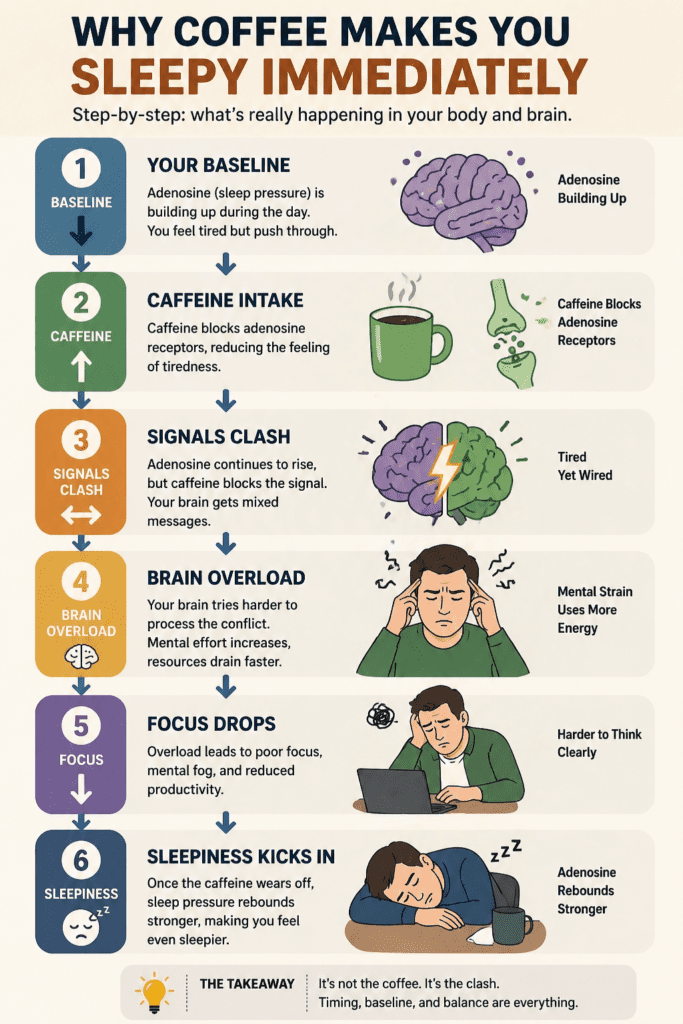
The core mechanism of this article is the energy mismatch loop.
It works like this:
Coffee sends an alertness signal.
Your baseline energy is still low.
Your brain tries to run faster than your body can support.
Mental efficiency drops.
You interpret the drop as sleepiness.
That is the cleanest way to explain the experience without repeating the older article.
Your baseline includes several things: sleep quality, stress level, food timing, hydration, morning light, and mental load.
When those are stable, coffee has a better chance of feeling helpful.
When those are unstable, coffee may feel inconsistent.
This is why one person can drink black coffee and feel alert, while another drinks the same amount and wants a nap. They are not starting from the same internal state.
Coffee is the trigger. Baseline is the amplifier.
Why Coffee Feels Sedating When You Are Already Overloaded
Sometimes coffee feels sleepy because your brain is not just tired. It is overloaded.
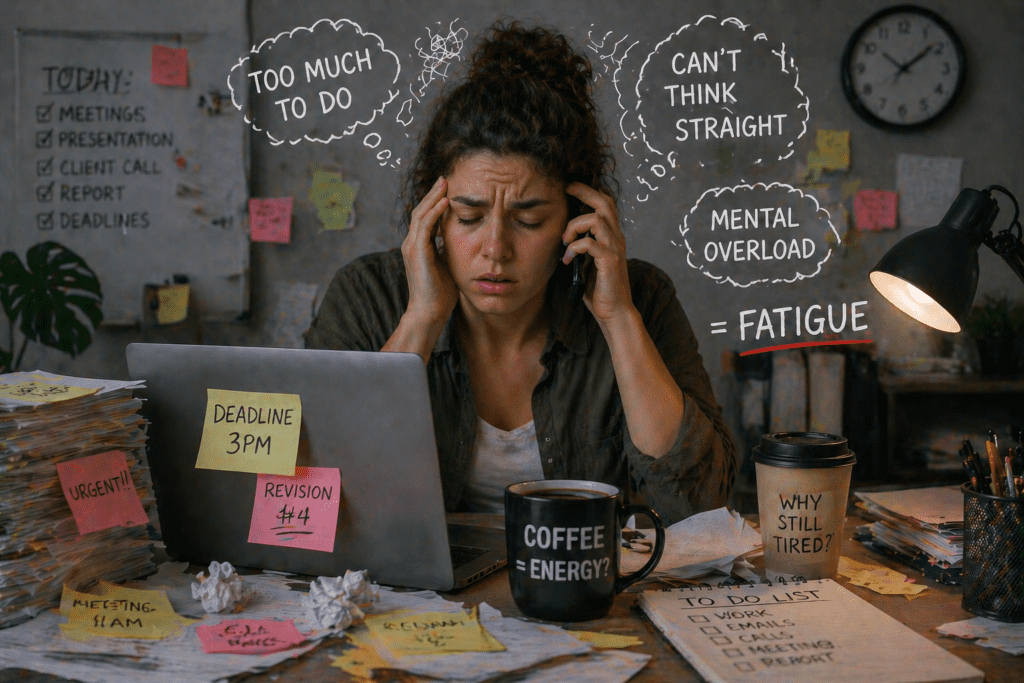
This often happens to people who wake up and immediately jump into email, social media, work messages, news, or a long to-do list. The brain is hit with stimulation before it has fully organized itself for the day.
Then coffee adds another stimulation layer.
Instead of feeling energized, you may feel shut down.
That shutdown feeling can be your brain trying to protect focus. When too many signals arrive at once, mental clarity drops. You may feel slow, quiet, or sleepy even though your body is technically being stimulated.
If this happens often, look at what surrounds the coffee. The problem may be the full morning stack: low sleep, phone first, no food, indoor lighting, stress, and caffeine all at once.
What Happens When You Drink Coffee During A Natural Energy Dip
Immediate coffee sleepiness can also happen later in the day, especially if you drink coffee during a natural low-energy period.
Many people experience an afternoon dip. If you drink coffee when you are already sliding into that dip, the first few minutes may not feel energizing. Your body may be too far into a low-alertness state for caffeine to feel smooth.
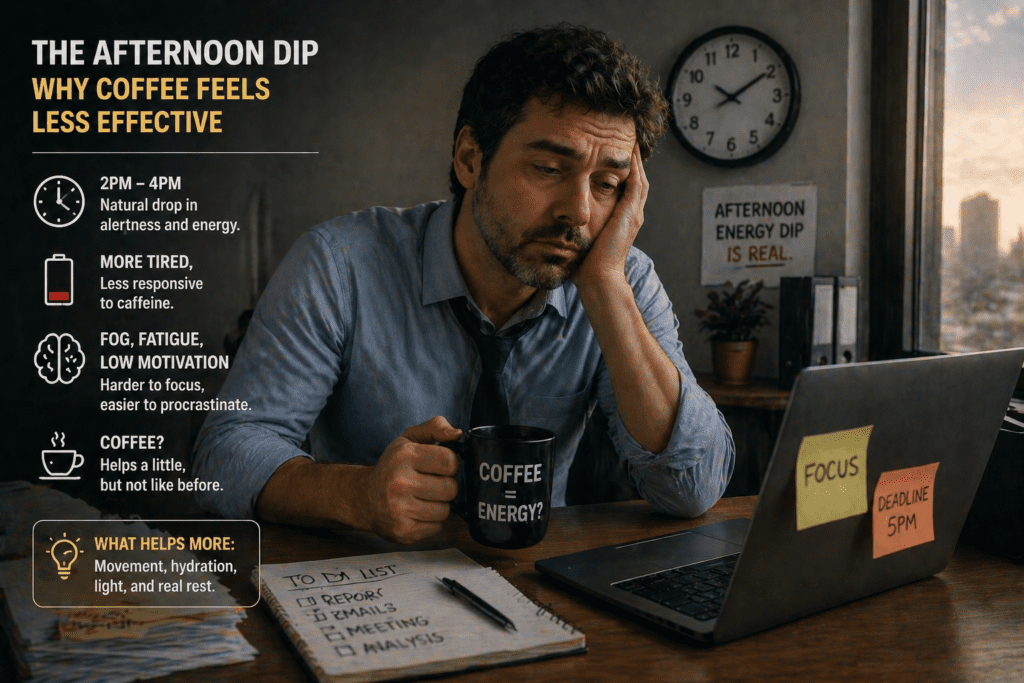
This is different from a later crash. Here, the cup enters during the dip and immediately feels wrong.
Your article on why you’re so tired in the afternoon can support this section because it explains the time-of-day pattern in more detail.
If the coffee makes you sleepy right away in the afternoon, ask one question: did the sleepiness begin before the coffee?
If yes, caffeine may be getting blamed for a dip that already started. The coffee did not create the low-energy state. It failed to cleanly override it.
That is an important distinction for search intent.
The Science Behind Sleep Pressure, Light, And Coffee Timing
Caffeine works inside a bigger daily rhythm. That rhythm is affected by sleep pressure, light exposure, and timing.
Sleep pressure rises the longer you are awake. Light exposure helps your brain understand when it should feel alert. Food timing and movement also send daytime signals.
When those cues are weak, caffeine becomes a louder artificial signal.
Harvard Health explains that deep sleep plays an important role in restoring energy, including support for ATP, the body’s energy molecule, in its article on how sleep boosts your energy. That matters because poor sleep can leave your baseline low before coffee ever enters your system.
Morning light can help too. If you wake up, stay indoors, stare at your phone, and drink coffee in dim light, your brain may not receive a strong “daytime” signal. Coffee then has to do too much work by itself.
How To Tell If Coffee Sleepiness Is Immediate Or Delayed
Before fixing the problem, identify the timing.
Ask yourself when the sleepy feeling appears.
If it happens within minutes, or very soon after drinking coffee, you are probably dealing with immediate mismatch.
If it happens two to five hours later, you are probably dealing with a delayed caffeine crash.
If it happens mainly after sugary coffee drinks, blood sugar swings may be involved.
If it happens only after poor sleep, baseline recovery is the bigger issue.
If it happens after late-day coffee, sleep disruption may be creating next-day fatigue.
Immediate sleepiness needs baseline stabilization before caffeine.
Delayed crashes need caffeine timing, dose control, and sleep protection.
Why do I feel tired instead of alert after caffeine?
This often happens when stimulation from caffeine does not match your actual energy state. Your brain receives an alertness signal, but your body still feels fatigued, creating a mismatch that feels like tiredness or fog instead of clarity.
Why Some People Feel Sleepy After The First Few Sips
Some people say they feel sleepy after only a few sips. That can sound strange because caffeine has not fully peaked yet.
But the first few sips still matter psychologically and physically.
The taste, routine, warmth, and expectation of coffee can signal a shift. For some people, that warm drink becomes associated with slowing down, sitting still, or taking a pause. If you usually drink coffee while exhausted, your brain may connect the ritual with fatigue.
If coffee always appears when you are drained, overwhelmed, or behind on sleep, the coffee ritual may become part of the fatigue pattern. You sit down, sip, and your brain finally notices how tired you were.
Coffee did not create all the sleepiness. It revealed it.
That is why changing the context helps. Drink coffee after light, water, food, and movement, and the same cup may feel very different.
Before trying to fix the problem, it helps to understand what usually triggers this immediate sleepy feeling after coffee.
| Trigger | Why it causes sleepiness |
|---|---|
| Drinking coffee too early | Your body hasn’t fully shifted into alert mode |
| Empty stomach | Your system lacks stable energy support |
| Poor sleep | Baseline energy is already low |
| High stress or overload | Your brain struggles to process stimulation |
| Drinking coffee during an energy dip | Your body is already moving toward fatigue |
Once you recognize these triggers, it becomes easier to adjust how and when you use coffee.
How To Stop Coffee From Making You Sleepy Immediately
You do not have to quit coffee to fix this pattern. The goal is to make your body more ready for caffeine.

Start with these changes:
Delay coffee for 60 to 90 minutes after waking.
Drink water before your first cup.
Get bright outdoor light early in the morning.
Avoid drinking coffee on an empty stomach if it makes you foggy.
Use coffee when energy is stable, not when you are already collapsing.
Avoid stacking coffee with phone stress immediately after waking.
Keep your caffeine timing consistent.
Stop using extra coffee as the first fix for every energy dip.
These steps work because they reduce the mismatch between stimulation and baseline energy.
If you often feel tired after eating, pay attention to whether coffee is being used to fight a meal-related dip. If it is, the real fix may involve meal timing or food balance, not simply more caffeine.
If you often feel wired but tired at night, late caffeine may be feeding a separate sleep rhythm problem. That can make the next morning’s coffee feel worse.
Common reasons coffee makes you sleepy immediately:
- Drinking coffee too early after waking
- Consuming caffeine on an empty stomach
- Low or unstable baseline energy
- High stress or mental overload
- Circadian misalignment
What Most People Should Try Before Drinking More Coffee
The tempting solution is to drink another cup. But if the first cup made you sleepy immediately, a second cup may not solve the real issue.
Try a short reset first:
Step outside for light.
Drink water.
Eat something small with protein or fiber.
Walk for three to five minutes.
Look away from screens.
Take several slow breaths.
Wait 15 minutes before deciding you need more caffeine.
This gives your body a chance to stabilize.
The goal is not to make coffee the enemy. The goal is to stop asking coffee to do a job that sleep, food, light, and recovery are supposed to do.
That shift can make your energy more predictable.
The Link Between Immediate Coffee Sleepiness And Daily Fatigue Patterns
If coffee makes you sleepy immediately once in a while, it may not mean much. But if it happens most days, it may be part of a bigger pattern.
You may be using caffeine to cover a baseline problem: poor recovery, irregular sleep timing, low morning light, high stress, inconsistent meals, or long indoor workdays.
Over time, this can make coffee feel less like a boost and more like a test. Some days it works. Some days it backfires.
That is why this topic connects naturally to your guide on why you feel tired for no reason. That article can handle the larger unexplained fatigue pattern, while this article stays focused on the immediate coffee reaction.
The Pattern Most People Don’t Notice
If coffee makes you sleepy immediately, it’s rarely random.
You’ll often notice a pattern:
- You slept poorly
- You drank coffee too early
- You haven’t eaten yet
- Your mind is already overloaded
Once you recognize this pattern, the experience becomes predictable instead of confusing.
And when something becomes predictable, it becomes easier to fix.
The Counterintuitive Truth About Coffee Making You Sleepy Right Away
The surprising truth is that coffee may simply be highlighting fatigue that was already there.
It may be helping you notice sleepiness that was already there.
Before coffee, you may be moving through the morning on autopilot. Once you sit down with a warm drink, your body gets a pause. Then caffeine adds stimulation, your brain compares that signal with your real baseline, and the mismatch becomes obvious.
That can feel like coffee caused the tiredness.
But often, coffee exposed it.
This distinction matters because it gives you control. If coffee reveals low baseline energy, the solution is not always stronger coffee. It may be better timing, better sleep cues, food before caffeine, or less morning overload.
Coffee is not always the problem.
The state you bring to coffee is often the real issue.
Why does coffee work some days but not others?
Coffee works differently depending on your sleep quality, stress levels, timing, and daily habits. When your baseline energy is stable, caffeine feels smooth. When it’s unstable, the same coffee can feel ineffective or even make you feel tired.
Final Insight: Coffee Works Best When Your Body Is Ready
If coffee makes you sleepy immediately, do not treat it as a mystery or a personal weakness. Treat it as feedback.

Your body may be telling you that caffeine is arriving too early, too fast, or on top of an unstable baseline.
When coffee enters a steady system, it can feel smooth. When it enters a stressed, underfed, groggy, or overloaded system, it can feel strange, foggy, or sleepy.
That is the difference.
Use coffee after your body has had a chance to wake up. Support it with light, water, food, movement, and consistent timing. Then watch whether the same cup feels different.
The goal is not to force caffeine to overpower fatigue.
The goal is to make your body ready enough that coffee does not have to fight your biology.
Want to understand your energy pattern better?
If coffee only reveals the tiredness that was already there, the next step is learning why your body feels low even when nothing obvious seems wrong.
Read next: Why You Feel Tired for No ReasonWhy Coffee Makes You Sleepy: Common Questions Explained
Can coffee make you feel calm or relaxed instead of awake?
Yes. In some cases, coffee can create a calming effect instead of alertness, especially if your brain is already overstimulated. The added stimulation may reduce mental noise rather than increase energy, which can feel like calmness or even sleepiness.
Why do I feel worse after coffee on some mornings?
This can happen when your body hasn’t fully recovered from sleep or is under stress. Coffee doesn’t fix that state instantly. Instead, it can amplify the imbalance, making you feel more tired, foggy, or unfocused.
Does the timing of coffee affect how it makes you feel?
Yes. Drinking coffee too early—especially right after waking—can interfere with your natural alertness rhythm. Waiting until your body starts waking up on its own can make caffeine feel more effective and smoother.
Can drinking coffee without eating make you feel more tired?
Yes. When you drink coffee on an empty stomach, your body may lack stable energy support. This can make caffeine feel less effective and sometimes lead to fatigue, shakiness, or mental slowdown.
Why does coffee sometimes make my focus worse instead of better?
If your brain is already tired or overloaded, caffeine may not improve focus. Instead, it can increase internal pressure without improving efficiency, which makes thinking feel slower or more difficult.
Is it better to avoid coffee if it makes me sleepy?
Not necessarily. In most cases, the issue is not coffee itself but the timing and condition of your body. Adjusting when and how you drink it is usually more effective than removing it completely.
For a deeper look at how caffeine affects your energy overall, you can also read: why does caffeine make me tired
