

It’s 2:30 PM. You haven’t done anything physically demanding. No workout. No long day. And yet—you feel completely drained.
If you keep asking yourself why do I feel tired for no reason, the answer isn’t what most people think.
Your body may not be low on energy at all—it may be misreading it.
Not just a little tired.
Drained. Heavy. Foggy.
And the most frustrating part?
You can’t explain it.
If you’ve ever asked yourself why do I feel tired for no reason, you’re not alone. This is one of the most confusing forms of fatigue—because it feels like your body is running out of energy even when you didn’t use any.
Unexplained fatigue is a state where you feel physically or mentally drained without a clear external cause such as exercise or lack of sleep. It usually results from internal imbalances involving hormones, brain signaling, nervous system activity, and energy regulation rather than actual energy depletion.
But here’s what most people don’t realize:
Your body doesn’t measure energy based on what you did. It measures it based on internal signals—and those signals can be misleading.
What It Actually Feels Like to Be Tired for No Reason All Day
If this sounds familiar, you’re not imagining it:
- You wake up already tired, even after sleeping
- You sit most of the day, but still feel drained
- Coffee helps briefly, then makes things worse
- You feel unmotivated, but not necessarily sleepy
- Your body feels heavy even without physical effort
This type of fatigue doesn’t feel like normal tiredness.
It feels confusing—because nothing you did explains it.
Many people experience this pattern alongside situations like why am I so tired in the afternoon where energy suddenly drops without a clear reason.
This is not laziness. It’s your body signaling imbalance in a way that’s hard to interpret.
Why Do You Feel Tired for No Reason
You feel tired for no reason because your body is misinterpreting internal signals as fatigue. Hormone imbalance, nervous system activation, blood sugar fluctuations, and low oxygen circulation can all trigger a low-energy response—even when you haven’t used much physical energy.

What Happens When Your Body Feels Tired Without Using Actual Energy
Feeling tired without doing anything doesn’t mean your body is out of fuel. It means your internal systems are sending a low energy signal.
Fatigue depends on how your brain interprets your internal state.
Your brain constantly evaluates:
- Safety
- Alertness
- Stability
If anything feels off, it triggers fatigue—without exertion.
This is why people who experience tired after doing nothing all day often feel confused. The issue isn’t activity—it’s internal regulation.
The Real Cause Why You Feel Tired for No Reason Isn’t Energy Loss
Most people assume fatigue means one thing: you used too much energy.
But that’s not what’s actually happening.
The real issue is that your body has lost the ability to regulate energy correctly. Instead of accurately measuring how much energy you used, your system starts relying on internal signals that can become distorted over time.
This is why someone can feel exhausted after hours of sitting, while another person feels energized after physical activity.
Your body isn’t running out of energy. It’s misinterpreting internal signals as exhaustion.
This connects directly to patterns like tired after doing nothing all day where the issue isn’t activity, but internal miscommunication.
Once this regulation breaks down, even normal energy levels can feel like complete depletion.
The Hidden Reason Your Brain Creates Fatigue Signals Without Real Exhaustion
Your brain is designed to protect you, not to optimize your productivity.
Instead of asking:
Did you burn energy?
It asks:
Is something internally unbalanced?
When your body detects disruption—stress, poor recovery, or hormone shifts—it triggers fatigue as a protective response.
That’s why you can feel tired:
- after sitting
- after resting
- even after waking up
Fatigue is a response your brain uses when something feels unstable internally.
The Science Behind How Adenosine Builds Fatigue Without Physical Activity
Adenosine is a brain chemical that builds up the longer you’re awake.
Its role is to create pressure to rest.
But it doesn’t only increase with physical activity.
It also increases with:
- screen exposure
- mental stimulation
- stress
- lack of real recovery
So even a passive day can leave you feeling mentally drained.

Why do I feel tired even when I didn’t do anything?
Even without physical activity, your brain can build up fatigue signals through mental stimulation, screen exposure, and lack of recovery. This makes you feel tired even when your body hasn’t used much energy.
How Cortisol Timing Disruption Leads to Energy Crashes Without Activity
Cortisol is your alertness hormone.
It should:
- peak in the morning
- gradually decline during the day
When disrupted, your energy becomes unstable.
You may feel:
- tired in the morning
- drained midday
- alert at night
This connects with patterns like why am I so tired in the afternoon.
You can explore how body clocks affect energy through NIH circadian rhythm research.

Why do I feel tired at random times during the day?
Random fatigue often happens when your cortisol rhythm is disrupted. Instead of following a natural energy cycle, your body creates unexpected dips in alertness without physical effort.
The Link Between Nervous System Overactivation and Constant Fatigue Signals
Your nervous system has two states:
- activation mode
- recovery mode
Modern life keeps many people stuck in activation:
- notifications
- constant thinking
- background stress
This creates a paradox:
The more your system is “on,” the more tired you feel.
Because your body never fully resets.
Can stress make you tired without doing anything?
Yes. Chronic stress keeps your nervous system active, which drains energy over time. Even without physical activity, your body stays in a low-level stress state that leads to fatigue.
How Blood Sugar Instability Drains Energy Even When You Haven’t Eaten
Blood sugar isn’t only affected by food.
It’s influenced by:
- stress hormones
- inactivity
- previous meals
Small fluctuations can cause:
- fatigue
- brain fog
- low motivation
This is explained in why blood sugar crash symptoms happen.

Why do I feel suddenly tired without eating?
Your body regulates blood sugar continuously. Small fluctuations—even without eating—can cause sudden fatigue, brain fog, and low energy.
What Happens When Oxygen Flow Drops and Triggers Low Energy Feelings
Energy depends on oxygen delivery—not just calories.
When you:
- sit too long
- breathe shallowly
- stay indoors
Your circulation decreases.
This impacts brain function and energy perception.
See how posture and inactivity affect fatigue in why sitting too long makes you tired.

Can sitting too long make you feel tired for no reason?
Yes. Sitting for long periods reduces blood flow and oxygen delivery to the brain, which can lower alertness and make you feel tired even without activity.
What Most People Miss About Why Doing Nothing Can Make You More Tired
Doing nothing can actually make you feel more tired.
Why?
Because movement:
- improves circulation
- regulates hormones
- activates energy systems
Without movement:
- your system slows
- your brain reduces stimulation
- fatigue increases
What Most People Get Wrong About Feeling Tired for No Reason
Most people misunderstand unexplained fatigue completely.
They assume:
- it’s a lack of sleep
- it’s laziness
- it’s something they ate
- or they just need more caffeine
But these explanations miss the real issue.
Fatigue without a clear reason is rarely about how much you did. It’s about how your body is processing internal signals.
For example, people often blame food, but fatigue is more often related to how your body handles glucose over time, as explained in why blood sugar crash symptoms happen.
The biggest mistake is trying to fix fatigue by adding stimulation instead of fixing regulation.
This is why temporary fixes don’t work—and the fatigue keeps coming back.
The Real Cause Behind Feeling Drained Even on “Easy” Low-Effort Days
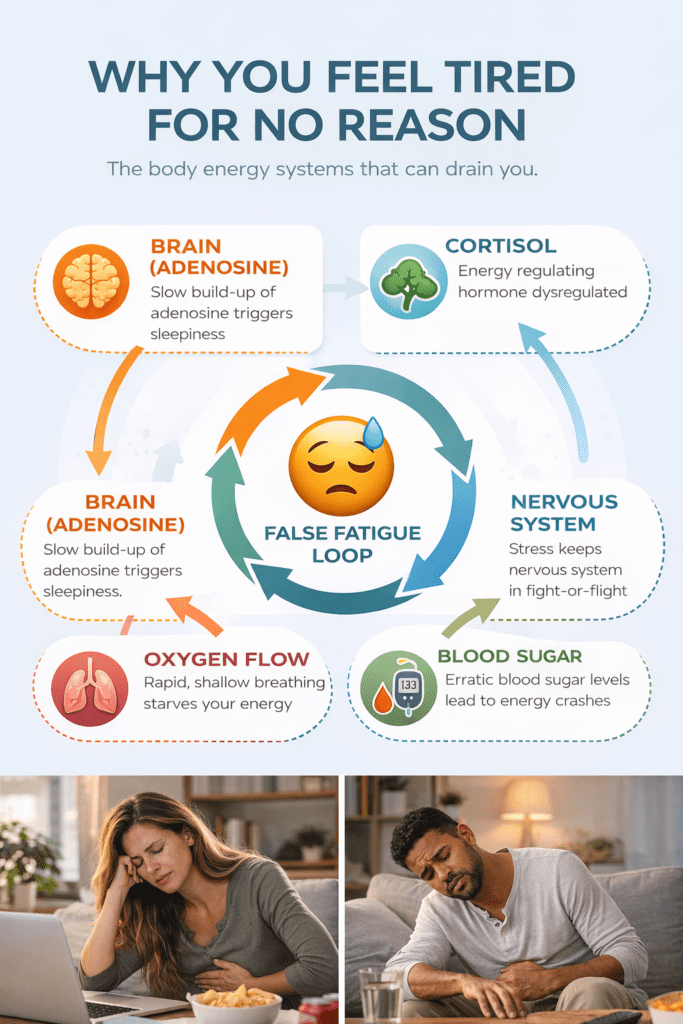
The 5 Hidden Systems That Cause Unexplained Fatigue
- Brain fatigue signaling (adenosine buildup)
- Cortisol rhythm disruption
- Nervous system imbalance
- Blood sugar instability
- Reduced oxygen circulation
When these systems are out of sync, you feel tired—despite minimal movement.
Understanding these systems becomes much easier when you see how each one directly affects your energy levels. The table below breaks down what’s happening inside your body and how it translates into fatigue.
| System Affected | What Goes Wrong | How It Feels | Why It Happens Without Physical Effort |
|---|---|---|---|
| Brain (Adenosine) | Builds fatigue pressure too quickly | Mental exhaustion, heavy thinking | Screen time and mental load increase fatigue signals |
| Cortisol Rhythm | Energy timing becomes unstable | Random tiredness, afternoon crashes | Hormone timing gets disrupted by lifestyle patterns |
| Nervous System | Stays in stress mode too long | Tired but wired feeling | Constant stimulation prevents recovery mode |
| Blood Sugar | Small fluctuations in glucose levels | Sudden fatigue, low focus | Stress and inactivity affect glucose stability |
| Circulation & Oxygen | Reduced oxygen delivery to brain | Brain fog, low alertness | Sitting and shallow breathing reduce blood flow |
When multiple systems in this table are affected at the same time, your body starts to interpret the situation as low energy—even if your actual energy reserves are still available. This is the foundation of what we call the False Energy Depletion System.
At this point, the next step is to identify which specific pattern is driving your fatigue most often.
Want to figure out which hidden trigger is hitting you the hardest?
If your fatigue feels worse after meals, during the afternoon, or after sitting too long, these deeper guides can help you pinpoint the pattern faster.
Once you identify the dominant pattern, the False Energy Depletion System becomes much easier to recognize in daily life.
The Science Behind the False Energy Depletion System in Your Body
What you’re experiencing isn’t random fatigue. It’s part of what we call the False Energy Depletion System.
This happens when your brain signals that your energy is low—even when your body still has available energy reserves.
Instead of measuring actual physical output, your brain relies on:
- stress signals
- hormone timing
- nervous system activity
- blood flow patterns
When these inputs become unstable, your brain creates a false low-energy state.
This is why you may feel drained even if you didn’t do anything physically demanding.
You’ll notice this pattern in situations like always tired even after sleeping where rest doesn’t restore energy—because the problem isn’t energy, it’s regulation.
The Hidden Reasons Why Daily Triggers Make You Feel Tired for No Reason
- Long periods of sitting
- Excessive screen exposure
- Low sunlight exposure
- Irregular sleep timing
- Shallow breathing
- Mental overload
How Fatigue Escalates When Energy Regulation Systems Stay Unbalanced
Fatigue builds over time.
Stage 1:
- occasional tiredness
Stage 2:
- daily low energy
Stage 3:
- brain fog
Stage 4:
- constant exhaustion
This is when people say:
“I feel tired all the time no matter what I do”
A Simple System to Identify Why You Feel Tired for No Reason
Ask yourself:
- Did I move today?
- Did I get sunlight?
- Was I on screens for hours?
- Do I feel mentally overloaded?
- Am I breathing deeply?
These answers reveal whether your fatigue is coming from internal misalignment.
How Modern Lifestyle Triggers Invisible Fatigue Without Physical Effort
Today’s fatigue is not caused by physical work.
It’s caused by:
- digital overload
- constant stimulation
- lack of movement
- artificial environments
This creates invisible fatigue.
According to CDC sleep data, lifestyle patterns play a major role in energy regulation.
The Impact Of Daily Habits On How Your Body Interprets Energy Levels
Your body responds to patterns.
If your day includes:
- sitting
- screens
- low sunlight
Your system shifts toward low energy.
This explains patterns like always tired even after sleeping.
What Most People Miss About Fixing Unexplained Fatigue Patterns
Most people try:
- caffeine
- pushing harder
- sleeping more
But ignore:
- system regulation
- movement
- nervous system balance
Medical sources like Mayo Clinic fatigue causes confirm fatigue often comes from multiple interacting factors.
What Causes Fatigue When You’re Not Active
It’s usually a combination of:
- brain signaling
- hormonal imbalance
- low circulation
- nervous system overload
Why do I feel tired for no reason even after resting all day?
Rest alone doesn’t fix physiological mismatches. If your hormones, nervous system, or brain signals are off, you can still feel tired even after doing nothing.
A Simple 5-Minute Reset Protocol to Reduce Unexplained Fatigue Fast
If your fatigue is coming from regulation breakdown, small adjustments can quickly improve how your body responds.
Try this simple reset:
- Stand up and move for 2 minutes to improve circulation
- Take 5 slow, deep breaths to reset your nervous system
- Step outside for natural light exposure
- Drink water to support blood flow and brain function
- Take a 10-minute break from screens
These actions target the systems responsible for fatigue—not just the symptoms.
Even short movement breaks can make a difference, especially if you spend long hours sitting like in why sitting too long makes you tired.
This protocol works because it restores balance instead of masking fatigue.

Conclusion: Why Do I Feel Tired for No Reason Is Never Random
If you’re asking why do I feel tired for no reason, the answer is this:
It’s not random.
Your body is reacting to:
- brain signals
- hormones
- nervous system activity
- circulation
Once these systems fall out of balance, fatigue appears—even without effort.
There is always a reason. You just need to understand the system behind it.
Your body is not broken. It’s reacting exactly as it was designed to — just to the wrong signals.
If this article helped you understand the system, the next step is finding the trigger that matches your exact fatigue pattern.
Still tired and not sure which pattern matches you?
Start with the fatigue trigger that sounds most like your day-to-day experience. That’s the fastest way to understand what your body may actually be reacting to.
- Always tired even after sleeping
- Tired after doing nothing all day
- Why you feel tired after eating
- Wired but tired at night
People Also Ask
Why do I feel tired for no reason even when I rest all day?
You can feel tired even after resting because fatigue is not always caused by physical effort. Your brain may be reacting to disrupted hormone timing, stress signals, poor circulation, unstable blood sugar, or nervous system overload rather than actual energy loss.
Can doing nothing all day make you feel more tired?
Yes. Long periods of inactivity can reduce circulation, lower stimulation, and make your body feel sluggish. In some cases, doing too little can leave you feeling more drained than light movement.
Why do I feel tired even when I didn’t do anything physical?
Physical effort is only one part of fatigue. Mental stimulation, screen time, stress, poor sleep quality, and internal energy regulation problems can all make you feel tired without exercise or manual work.
Can stress make you feel tired without any obvious reason?
Yes. Chronic stress keeps your nervous system active for too long. That can drain your energy, reduce recovery, and make fatigue show up even on days that seem easy.
Why do I feel random energy crashes during the day?
Random crashes often happen when your cortisol rhythm, blood sugar stability, or nervous system balance is off. These dips can feel sudden because your body is reacting to internal signals, not just what you are doing in the moment.
Can sitting too long make you feel tired?
Yes. Sitting for long stretches can reduce blood flow, encourage shallow breathing, and lower alertness. That can lead to brain fog, heaviness, and low energy.
Why do I feel tired after sleeping enough hours?
Sleeping enough hours does not always mean you got restorative sleep. If your sleep quality is poor or your body’s energy systems are still out of balance, you can wake up tired even after a full night in bed.
What is the difference between normal tiredness and unexplained fatigue?
Normal tiredness usually follows a clear cause like exercise, a busy day, or short sleep. Unexplained fatigue feels harder to connect to one trigger and often points to a deeper issue with recovery, regulation, or internal stress.
About the Authoritative Value of This Content
This article was built to explain unexplained fatigue in a clear, structured way using a mechanism-first model rather than a generic list of causes. It focuses on how fatigue can result from disrupted energy regulation involving hormones, nervous system activity, blood sugar stability, circulation, and recovery patterns.
The content is designed for readers who want a practical explanation of why they feel tired even without obvious effort. It uses plain American English, short sections, and real-life examples to make complex physiology easier to understand.
This article also fits into a larger fatigue and energy cluster, which strengthens its usefulness by connecting it to related topics such as afternoon fatigue, blood sugar crashes, sitting-related tiredness, and waking up tired. That context helps readers go deeper into the specific pattern that matches their own experience.
The goal is educational clarity, strong internal relevance, and a better user experience for people searching for answers about constant fatigue.
