

Have you ever taken a nap hoping to recharge your energy, only to wake up feeling even more tired than before?
For many people, naps seem like the perfect solution for an afternoon energy drop. A short rest should help the body recover and restore mental clarity. But sometimes the opposite happens.
You wake up feeling groggy, your mind feels slow, and your body seems heavier than it did before you fell asleep.
This confusing experience makes many people ask a simple question: why do I feel tired after taking a nap?
In most cases, the reason has nothing to do with poor sleep habits or laziness. Instead, it is often caused by a biological process called sleep inertia—a temporary state where the brain struggles to transition from sleep mode back to full alertness.
Understanding what happens inside the brain after a nap can explain why some naps leave you refreshed while others make you feel sluggish for the next hour.

Table of Contents
What Is Sleep Inertia and Why It Causes Post-Nap Fatigue
Sleep inertia is a temporary state of brain sluggishness that occurs immediately after waking from sleep, especially from deeper sleep stages. During this period, parts of the brain responsible for alertness and decision-making remain less active, which can make a person feel tired, confused, or mentally slow after a nap.
The Science Behind Why You Feel Tired After Taking a Nap
When you fall asleep—even during a short nap—your brain doesn’t simply shut off and turn back on like a light switch.
Instead, your brain moves through several sleep stages, each controlled by different neurological and hormonal systems.
These stages include:
- Light sleep
- Deep sleep (slow-wave sleep)
- REM sleep
Each stage plays a role in physical recovery, memory processing, and brain restoration.
The problem happens when a nap ends in the wrong stage of sleep.
If you wake up during deep sleep, your brain is still operating in a slow restorative mode. Blood flow in certain brain regions is reduced, neural activity is slower, and alertness signals haven’t fully restarted.
This creates a temporary neurological state called sleep inertia.
Sleep inertia is the main reason people ask why do I feel tired after taking a nap.
During this state, the brain is technically awake, but parts of it are still functioning as if you were asleep.
For example, if someone already struggles with daytime fatigue from factors like digestion or blood sugar fluctuations discussed in why do I feel tired after eating, the brain may fall into deeper sleep faster during a nap, increasing the risk of waking up groggy.
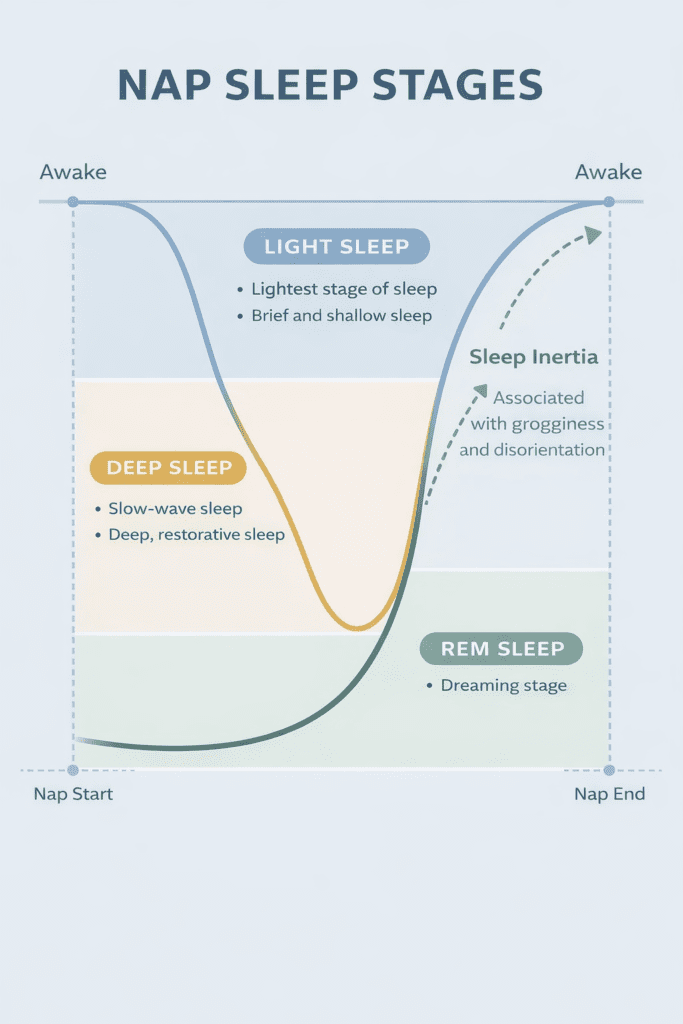
5 Main Reasons You Feel Tired After Taking a Nap
- Waking up during deep sleep stages
- Temporary brain sluggishness from sleep inertia
- Adenosine sleep pressure not fully resetting
- Circadian rhythm timing conflicts in the afternoon
- Slow restoration of blood flow to alertness centers in the brain
How Sleep Inertia Slows Brain Alertness and Causes Fatigue After Naps
Sleep inertia can feel like mental fog, physical heaviness, or low motivation.
But what’s actually happening inside your brain?
When deep sleep begins, the brain reduces activity in areas responsible for decision making, focus, reaction speed, and logical thinking.
These areas include the prefrontal cortex, which controls planning, attention, and self-control.
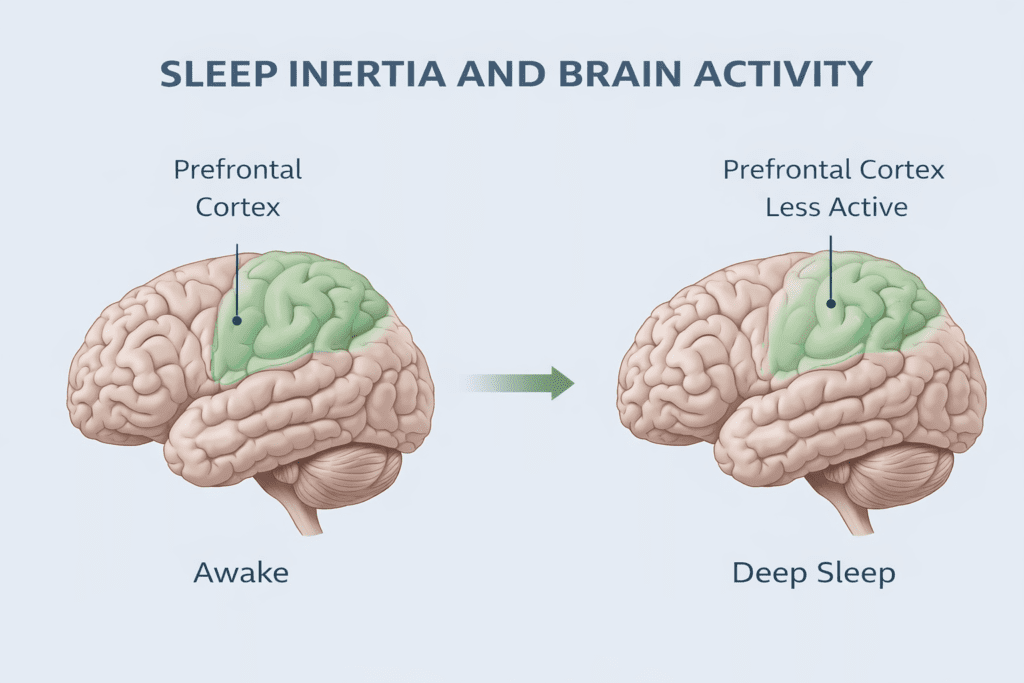
During deep sleep, the prefrontal cortex temporarily powers down to conserve energy while other brain regions perform recovery tasks.
If your nap ends while this recovery process is still active, your brain wakes up in an unfinished transition state.
That means alertness signals are still low, reaction speed is reduced, and mental clarity is temporarily impaired.
This mismatch between waking consciousness and sleeping brain activity is exactly why you might feel confused, groggy, or unusually tired after taking a nap.
People who already experience fatigue from long periods of inactivity—similar to what is explained in why sitting too long makes you tired—may also experience stronger grogginess when waking from naps because circulation and alertness signals are already low.
What Happens When a Nap Interrupts Deep Sleep and Brain Recovery
Deep sleep is incredibly important for physical restoration.
During this stage, your body releases growth hormone, repairs tissues, strengthens the immune system, and consolidates memory.
But deep sleep also creates a problem if it’s interrupted too early.
When a nap enters slow-wave sleep and then suddenly ends, the brain experiences a biological shock.
Here’s the chain reaction:
- Deep sleep begins and neural activity slows.
- The brain shifts into recovery mode.
- The nap alarm wakes you abruptly.
- Alertness hormones haven’t yet increased.
- Your brain struggles to transition into wakefulness.
This transition delay is what causes the sensation of feeling more tired after a nap than before it.
Some people may experience sleep inertia for 10 minutes, while others feel it for 30 to 60 minutes.
The Hidden Role of Adenosine in Post-Nap Fatigue
Another biological factor explains why you feel tired after taking a nap: adenosine.
Adenosine is a chemical that builds up in the brain throughout the day. Its job is to create sleep pressure, encouraging your body to rest after long periods of wakefulness.
The longer you stay awake, the more adenosine accumulates.
When you fall asleep, your brain begins clearing adenosine to reset the sleep pressure cycle.
But naps usually aren’t long enough to complete this process.
Instead, the nap reduces sleep pressure partially, but not fully.
This creates an awkward middle state where your body still carries some sleep pressure while your brain hasn’t fully restored alertness.
The result is a strange sensation where you feel both rested and tired at the same time.
Research from the National Heart, Lung, and Blood Institute explains how sleep cycles and wake signals are regulated by the body clock and circadian rhythms in the brain’s sleep-wake system described in How Sleep Works: Your Sleep/Wake Cycle.
The Hidden Link Between Caffeine and Feeling Tired After a Nap
Many people drink coffee shortly before taking a nap, believing caffeine will help them wake up refreshed.
In some cases this works, but it can also backfire. Caffeine blocks adenosine receptors in the brain, which temporarily reduces sleep pressure.

If the body begins clearing adenosine during a nap while caffeine is still active, the brain can wake up in a confused state where alertness signals and sleep signals overlap.
This mismatch may cause grogginess and mental fog after waking. People who frequently experience fatigue after coffee may notice similar effects, which are explained in more detail in tired after drinking coffee.
Why the Time of Day Makes Some Naps Worse
Circadian rhythm also plays a major role in how naps affect your energy.
Your body runs on a 24-hour biological clock controlled by a region of the brain called the suprachiasmatic nucleus.
This clock regulates hormones like cortisol, which promotes alertness, and melatonin, which signals the body to prepare for sleep.
During the early afternoon, the body naturally experiences a mild drop in alertness. This is often called the afternoon energy dip.
Taking a nap during this period can sometimes help. But if the nap becomes too long, the brain may slip into deeper sleep stages.
When that happens, sleep inertia becomes more likely.
This is one reason people who already experience fatigue during the afternoon, similar to the patterns described in why am I so tired in the afternoon, often struggle with grogginess after naps.
How Daylight Exposure Helps Your Brain Recover Faster After Naps
Light exposure plays a major role in how quickly your brain recovers after sleep.
When bright daylight reaches the eyes, specialized retinal receptors send signals to the brain’s circadian clock.
This signal increases alertness hormones like cortisol and suppresses melatonin production. As a result, stepping outside after a nap can significantly reduce grogginess and improve mental clarity.

People who spend most of their day indoors often experience stronger afternoon fatigue patterns similar to those discussed in why am I so tired in the afternoon.
What Most People Miss About Feeling Tired After Naps
Many people believe naps automatically restore energy.
But the truth is more complicated.
Naps can either boost alertness or increase fatigue depending on timing and duration.
One counterintuitive fact most people don’t realize is that longer naps often create more grogginess than shorter naps.
This happens because longer naps allow the brain to enter deep sleep stages, which increase the risk of sleep inertia.
Short naps, on the other hand, usually stay within light sleep, which allows the brain to wake up more easily.
Common signs of sleep inertia include:
- grogginess immediately after waking
- difficulty concentrating
- slower reaction time
- temporary confusion or brain fog
- low motivation for 10 to 30 minutes
Still feeling tired during the day even after a nap?
Post-nap grogginess is only one part of the picture. If your energy drops after meals, during the afternoon, or after sitting too long, these guides can help you understand what your body may be responding to.
The Nap Timing Risk Scale and Its Impact on Brain Alertness
Low Risk: 10–20 Minute Power Nap
A short nap usually keeps the brain in light sleep.
Possible benefits include improved alertness, better reaction time, and a temporary mental refresh.
Sleep inertia risk remains low because deep sleep usually hasn’t started yet.
Moderate Risk: 30–45 Minute Nap
This nap length may allow the brain to enter deeper sleep stages.
Possible outcomes include mild grogginess, mental fog for a short period, and slower thinking.
Some people wake up refreshed, but others experience sleep inertia.
High Risk: 60–90 Minute Nap
Long naps often include deep sleep and REM sleep cycles.
Waking during these stages increases the risk of heavy grogginess, low motivation, and mental confusion.
Studies on power naps and cognitive alertness discussed by Harvard Health in The Science Behind Power Naps show that short naps tend to improve focus while longer naps increase the likelihood of sleep inertia.
Nap Length vs Grogginess Risk
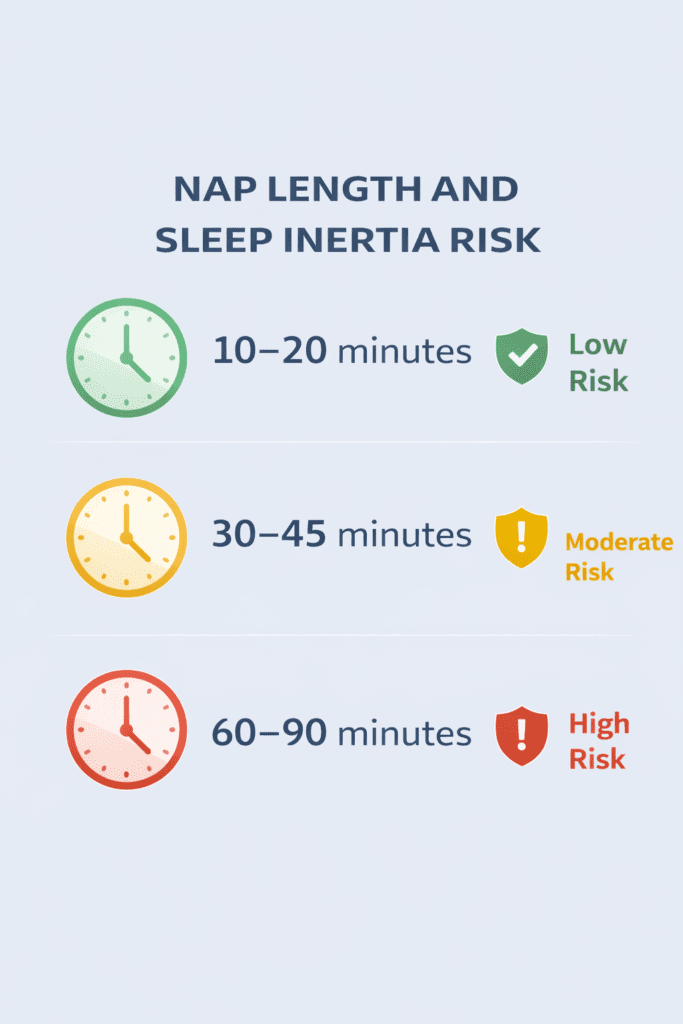
Here is a quick comparison showing how nap length affects grogginess and alertness:
| Nap Length | Sleep Stage Reached | Energy Effect | Sleep Inertia Risk |
|---|---|---|---|
| 10–20 minutes | Light sleep 😴 | Quick energy boost ⚡ | Low risk ✅ |
| 30–45 minutes | Light → Deep sleep transition | Mixed results ⚖️ | Medium risk ⚠️ |
| 60–90 minutes | Deep sleep + REM | May feel groggy 😵 | High risk ❌ |
The Link Between Brain Blood Flow and Post-Nap Grogginess
Another hidden factor behind post-nap fatigue is brain circulation.
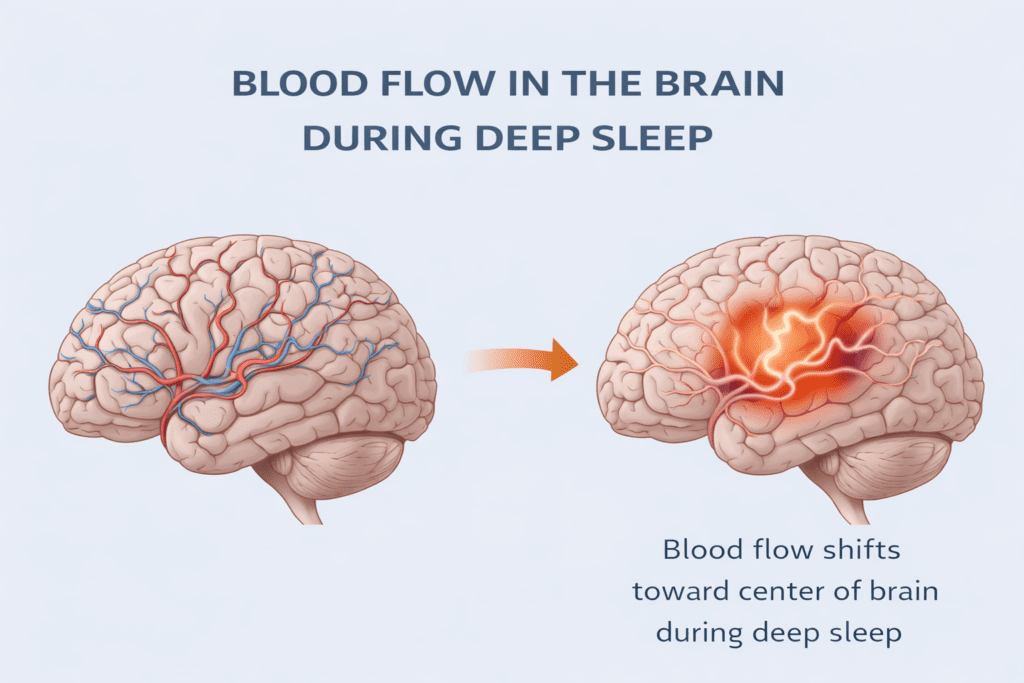
During deep sleep, blood flow shifts away from certain regions involved in higher thinking and alertness.
Instead, circulation supports areas responsible for physical recovery and memory consolidation.
When you wake suddenly from deep sleep, blood flow hasn’t yet returned to normal levels in the brain’s alertness centers.
This temporary circulation imbalance can produce symptoms such as slow thinking, low energy, and poor concentration.
Over time, circulation normalizes and mental clarity gradually returns.
People who already deal with fatigue caused by mental overload—similar to the patterns described in mental fatigue after work—may notice that sleep inertia amplifies these effects.
The Impact of Hydration on Post-Nap Energy Levels
Hydration levels can also influence how your body feels after waking from sleep.
Even mild dehydration can reduce blood circulation efficiency and oxygen delivery to the brain.
When combined with sleep inertia, this can amplify feelings of fatigue and mental sluggishness after a nap. Drinking water shortly after waking may help restore circulation and support normal brain function.

Maintaining steady hydration throughout the day is also important for energy regulation, as discussed in simple daily hydration habits for energy.
Why Some People Experience Stronger Sleep Inertia Than Others
Not everyone experiences the same level of post-nap fatigue.
Several factors influence how strongly sleep inertia affects someone.
These include sleep deprivation, irregular sleep schedules, long naps, stress levels, and circadian rhythm disruption.
People who are already sleep-deprived are more likely to enter deep sleep quickly during a nap, increasing the chance of waking during slow-wave sleep.
Shift workers and people with inconsistent sleep schedules may also experience stronger sleep inertia because their circadian rhythms are misaligned.
Individuals who frequently wake up tired even after a full night of sleep, as discussed in wake up tired even after 8 hours, may also be more sensitive to post-nap grogginess.
The Real Cause and Effect Chain Behind Post-Nap Fatigue
To understand why you feel tired after taking a nap, it helps to follow the full biological sequence.
Here is the typical chain of events:
- Daytime fatigue triggers the urge to nap
- The brain enters light sleep
- If the nap lasts longer, deep sleep begins
- An alarm interrupts the sleep cycle
- The brain wakes before alertness systems reactivate
- Sleep inertia temporarily reduces mental clarity
This chain reaction explains why waking from naps can sometimes feel surprisingly difficult.
Sleep Inertia Recovery Time (Example Observations)
| Wake-Up Condition | Typical Feeling | Alertness Recovery Time | Common Symptoms |
|---|---|---|---|
| Short power nap (15 min) 😴 | Refreshed | 5–10 minutes | Mild grogginess |
| Medium nap (40 min) 💤 | Slightly tired | 15–25 minutes | Brain fog |
| Long nap (90 min) 🛌 | Very groggy | 30–60 minutes | Confusion, slow thinking |
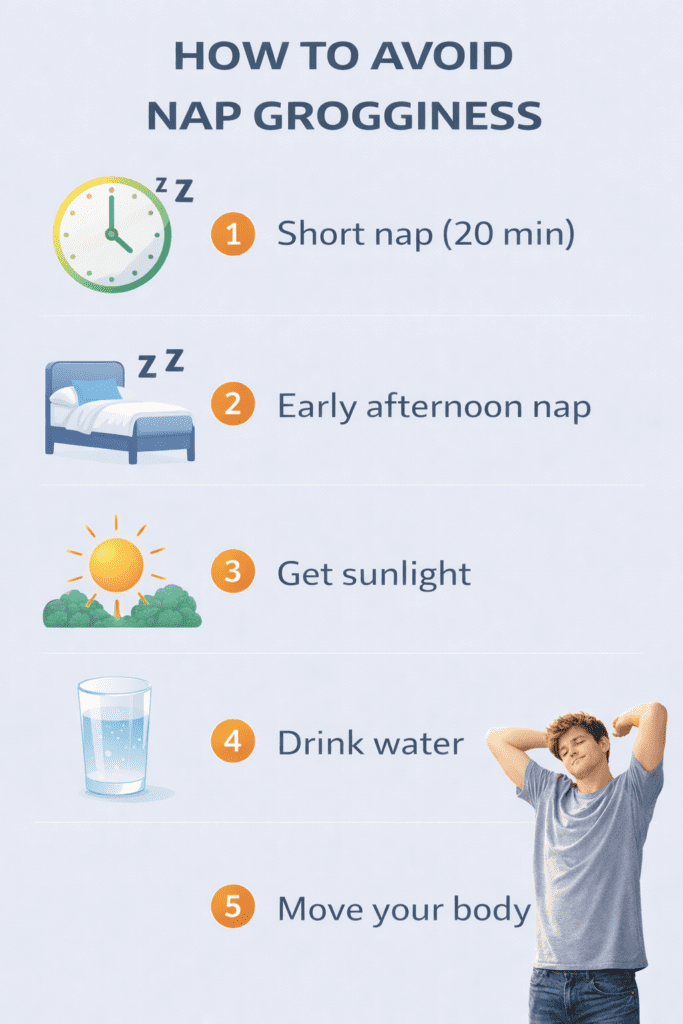
A Simple Protocol to Reduce Post-Nap Fatigue
If naps often leave you feeling worse, a few adjustments can reduce the risk of sleep inertia.
Keep naps short
Aim for naps between 10 and 20 minutes whenever possible. Short naps usually avoid deep sleep stages.
Nap earlier in the afternoon
Try resting between 1 PM and 3 PM when the body naturally experiences a mild circadian energy dip.
Get light exposure after waking
Natural daylight signals the brain to increase alertness hormones.
Move your body
Gentle movement increases circulation and oxygen flow to the brain.
Hydrate
Drinking water after waking can help restore normal physiological balance and reduce fatigue.
Why Physical Movement After a Nap Can Restore Alertness Faster
Physical movement is one of the fastest ways to break through sleep inertia.
When muscles begin moving, the body increases heart rate, circulation, and oxygen flow to the brain.
This helps reactivate areas responsible for focus and alertness.
Even light movement such as stretching or walking for a few minutes can accelerate the brain’s transition from sleep mode to wake mode.

Desk workers who experience fatigue from long periods of sitting often notice improved energy when combining short naps with brief movement breaks, similar to the strategies described in why sitting too long makes you tired.
Fast Ways to Reduce Post-Nap Grogginess
| Action | Why It Helps | Speed of Effect |
|---|---|---|
| Walk outside ☀️ | Light activates circadian alertness | Fast |
| Drink water 💧 | Improves circulation | Medium |
| Stretch body 🤸 | Boosts blood flow | Fast |
| Deep breathing 🌬️ | Increases oxygen to brain | Fast |
Conclusion
If you have ever wondered why do I feel tired after taking a nap, the most common explanation is sleep inertia.

When a nap enters deeper sleep stages and ends suddenly, the brain needs time to reactivate its alertness systems.
During this transition, mental clarity, energy levels, and focus may temporarily drop.
Understanding how sleep stages, circadian rhythms, and brain chemistry interact can help explain why naps sometimes leave you feeling worse before you start feeling better.
Understanding why you feel tired after taking a nap is the first step toward using naps more effectively.
With the right timing and duration, naps can still restore energy without causing the grogginess that makes you regret taking one in the first place.
Build a smarter energy routine with these next reads
If this article helped you understand why you feel tired after taking a nap, the next step is learning how sleep, hydration, and daytime habits affect your energy as a whole. Start with these practical guides from Everyday Health Plan.
- Wake Up Tired Even After 8 Hours
- Simple Daily Hydration Habits for Energy
- Afternoon Habits to Boost Energy
- Mental Fatigue After Work: 15-Minute Reset
Frequently Asked Questions
Why do I feel more tired after taking a nap instead of refreshed?
This usually happens because the nap ended during a deeper stage of sleep. When the brain wakes up suddenly from slow-wave sleep, it enters a temporary state called sleep inertia. During this period, alertness systems have not fully restarted, which can make you feel groggy or mentally slow for several minutes.
How long does sleep inertia last after a nap?
Sleep inertia usually lasts between 10 and 30 minutes. In some cases, especially after longer naps, the groggy feeling may last up to an hour while the brain gradually restores normal alertness and blood flow to cognitive centers.
What is the best nap length to avoid feeling tired afterward?
Short naps of about 10 to 20 minutes are usually the most effective. They allow the body to rest without entering deep sleep stages, which reduces the risk of waking up with sleep inertia or heavy grogginess.
Why do longer naps sometimes make me feel worse?
Longer naps often allow the brain to enter deeper sleep stages such as slow-wave sleep or REM sleep. Waking up during these stages interrupts recovery processes, which can make the brain slower to regain full alertness.
Is it normal to feel confused after waking from a nap?
Yes, temporary confusion or brain fog is a common symptom of sleep inertia. As the brain transitions from sleep mode to wake mode, areas responsible for attention and decision-making may take several minutes to fully reactivate.
Can caffeine before a nap help reduce grogginess?
Some people try a “coffee nap,” where they drink coffee right before a short nap. Since caffeine takes about 20 minutes to affect the brain, it may help increase alertness as the person wakes up. However, the nap should remain short to avoid deeper sleep stages.
Do afternoon naps affect nighttime sleep?
Long naps taken late in the afternoon or evening can reduce sleep pressure and make it harder to fall asleep at night. Short naps earlier in the afternoon are generally less likely to interfere with nighttime sleep patterns.
Why do I sometimes wake up with a headache after a nap?
Headaches after naps can occur due to dehydration, changes in blood flow during sleep, or poor sleep posture. Ensuring proper hydration and keeping naps short may help reduce this effect.
Experience, Expertise, Authority, and Trust
This article was written and reviewed to explain the biological mechanisms behind everyday fatigue experiences such as feeling tired after taking a nap. The explanations are based on established sleep science concepts including sleep inertia, circadian rhythm regulation, adenosine sleep pressure, and the body’s sleep-wake cycle.
The content draws on information commonly discussed by recognized health and sleep research organizations such as the National Institutes of Health, the National Heart Lung and Blood Institute, and Harvard sleep research publications. These institutions study how sleep stages, brain chemistry, and circadian rhythms influence daytime energy and cognitive alertness.
The goal of this article is to translate scientific research into clear, practical explanations that readers can easily understand. By focusing on how the brain transitions between sleep and wakefulness, the article helps readers recognize normal biological responses rather than assuming fatigue after naps is unusual.
Everyday Health Plan publishes informational wellness content designed to help readers better understand common daily health experiences such as fatigue, energy fluctuations, sleep patterns, hydration, and stress. Articles are written with the intention of providing accurate, research-informed explanations while remaining easy to read and useful for everyday life.
