

It’s 10:30 p.m. You’ve been tired all evening.
Your body feels heavy after a long day. Your eyes burn from hours of work. You’re clearly exhausted.
But the moment you lie down in bed, something strange happens.
Your brain suddenly becomes active.
Thoughts start racing. You replay conversations from earlier in the day. You think about tomorrow’s tasks. Your body feels drained, yet your mind refuses to slow down.
You’re tired, but sleep doesn’t come.
This experience—often described as physically tired but mentally awake at night—is surprisingly common among busy adults. Many people describe it as having a tired body but a brain that refuses to switch off, similar to the “wired but tired” state explained in wired but tired at night.
In many cases, this happens because different systems in your body are sending opposite signals. Your body may be ready for sleep, while your brain remains in an alert state. This same mismatch between physical fatigue and mental stimulation can also appear during the day, especially in patterns like the afternoon fatigue cycle described in why am I so tired in the afternoon.
Understanding why this happens requires looking at how sleep pressure, brain chemistry, stress hormones, and circadian timing interact.
Feeling physically tired but mentally awake at night usually happens when the body’s sleep pressure builds during the day while the brain remains stimulated by alertness signals. Hormones such as cortisol, dopamine activity, circadian rhythm timing, and nervous system activation can keep the brain alert even when the body feels exhausted.
Table of Contents
The Science Behind Why You Feel Physically Tired but Mentally Awake at Night
To understand this problem, you need to know that physical tiredness and mental alertness are controlled by different biological systems.
Your body does not use one single sleep switch.
Instead, several systems work together to determine whether you feel awake or ready for sleep.
The most important ones include
- Adenosine buildup
- Cortisol rhythm
- Dopamine signaling
- Circadian timing
- Nervous system activation
When these systems align, falling asleep feels natural.
But when they fall out of sync, the result can be the strange sensation of a tired body with an alert mind.
How Adenosine Buildup Creates Physical Sleep Pressure Throughout The Day
One of the main drivers of physical fatigue is a chemical called adenosine.
Adenosine builds up in the brain throughout the day as your cells use energy.
The longer you stay awake
- the more adenosine accumulates
- the stronger the signal for sleep becomes
This is what scientists call sleep pressure.
By the evening, adenosine levels are typically high enough to make your body feel
- heavy
- sluggish
- physically exhausted
Your muscles may feel tired. Your posture may slump. Your eyelids may droop.
But here’s the important part.
Adenosine mainly influences physical fatigue, not always mental calmness.
So even when your body feels drained, your brain can remain active if other alertness systems are stimulated.
Research on sleep pressure and adenosine shows how this chemical accumulates during wakefulness and signals the brain to sleep later in the day according to the National Institutes of Health at sleep pressure and adenosine.
The Hidden Reason Stress Hormones Can Keep Your Brain Alert At Night
Another key factor is the hormone cortisol.
Cortisol is often called the body’s alertness hormone.
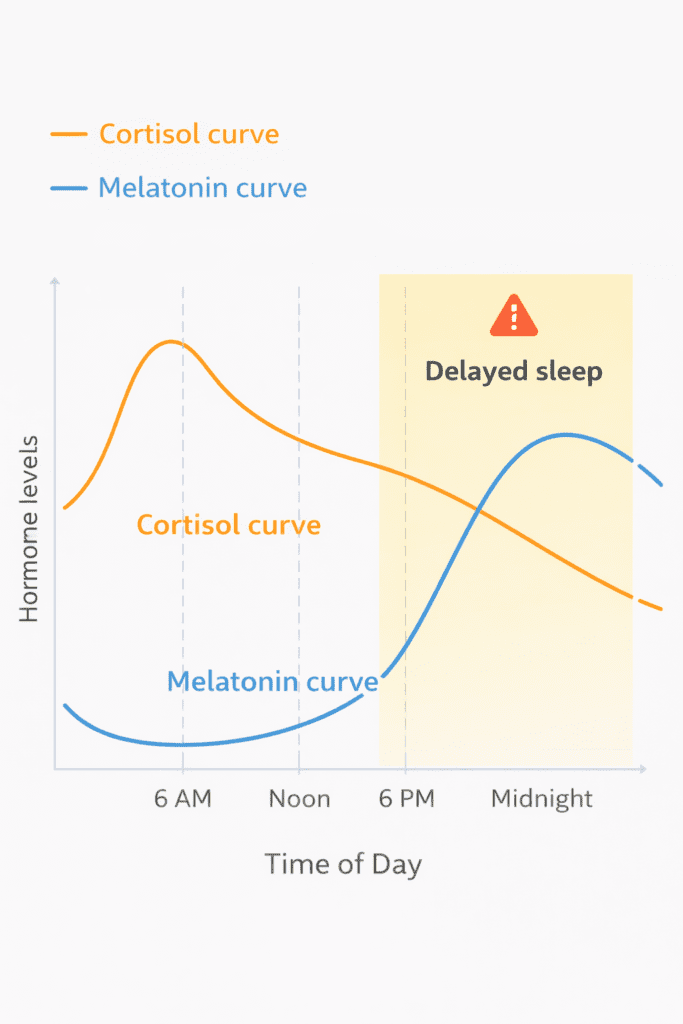
Normally, cortisol follows a predictable daily rhythm.
Morning
Cortisol rises to help you wake up.
Afternoon
Levels gradually decline.
Night
Cortisol should be low to allow sleep.
But modern lifestyles often disrupt this pattern.
Late night work, screen exposure, emotional stress, and irregular routines can cause cortisol to spike in the evening.
When that happens, your brain receives a signal that says stay alert.
Even if your body is physically tired.
This creates a biological conflict between
- high sleep pressure from adenosine
- alertness signals from cortisol
The result is the wired but tired state many people experience.
You can read more about how stress hormones affect sleep in the Mayo Clinic overview of the effects of cortisol on sleep.
The Link Between Dopamine Activity And Racing Thoughts Before Sleep
Mental alertness is strongly influenced by dopamine, a neurotransmitter involved in
- motivation
- focus
- reward anticipation
- mental stimulation
During the day, dopamine helps keep your brain engaged with tasks and challenges.
But certain behaviors late in the evening can trigger dopamine activity again.
Common triggers include
- scrolling social media
- watching stimulating shows
- planning tomorrow’s tasks
- responding to work messages
- problem solving late at night
When dopamine levels rise, your brain becomes mentally engaged, even if your body is exhausted.
This explains why many people feel tired yet suddenly experience racing thoughts once they lie down.
The brain shifts into an alert cognitive mode while the body remains fatigued.
This pattern is closely related to the phenomenon known as wired but tired at night, where the body feels exhausted but the brain remains alert.
How Circadian Rhythm Timing Determines When Your Brain Allows Sleep
Your circadian rhythm is the internal biological clock that coordinates sleep and wakefulness.
This system relies on environmental signals such as
- light exposure
- meal timing
- activity patterns
- temperature changes
A key hormone in this system is melatonin, which signals the body that nighttime has arrived.
Melatonin normally begins rising a few hours before bedtime.
But several modern habits can delay melatonin release including
- bright artificial lighting
- late screen exposure
- irregular sleep schedules
- late caffeine intake
When melatonin release is delayed, the brain’s sleep system remains partially inactive.
So even if you feel physically tired from the day’s activities, your brain may not yet be ready to transition into sleep.
This mismatch is another reason people feel tired but mentally awake at night.
The relationship between the body clock and sleep hormones is explained in research about circadian rhythm and melatonin.
Circadian rhythm timing also affects daytime fatigue patterns such as the afternoon slump described in why am I so tired in the afternoon.
Quick 60-Second Reset (Try This Tonight)
If you feel physically tired but mentally awake at night, don’t guess. Use this quick reset to help your brain shift out of alert mode before bed.
- Dim the room lights for 10 minutes (lower light = stronger sleep signal).
- Put your phone face-down and step away from screens.
- Do 6 slow breaths: inhale 4 seconds, exhale 6 seconds.
- Write 3 “tomorrow tasks” on paper to unload your brain.
Want a simple daily system for steadier energy and better nights? Read daily habits for energy next.
Common Triggers That Keep The Brain Alert Before Bed
- Late screen exposure from phones or laptops
- Evening work emails or problem solving
- Stress from unfinished tasks
- Bright indoor lighting late at night
- Late caffeine consumption
- Irregular sleep schedules
These triggers can delay melatonin release and increase brain alertness at night.
The Impact Of Nervous System Overactivation On Late Night Alertness
Your nervous system has two main modes.
Sympathetic system
Responsible for alertness and stress responses.
Parasympathetic system
Responsible for relaxation and recovery.
Throughout the day, the sympathetic system helps you
- concentrate
- respond to challenges
- make decisions
- stay productive
But if this system stays active too long, your body struggles to transition into rest mode.
Another overlooked factor behind feeling physically tired but mentally awake at night is how long periods of sitting affect circulation and oxygen delivery to the brain. When someone spends most of the evening sitting at a desk, on the couch, or looking at a screen, blood flow can slow down and muscles remain inactive for hours. This combination can leave the body feeling sluggish while the brain remains stimulated by light and information. Over time, reduced circulation can contribute to the type of fatigue many desk workers notice after long periods of inactivity, similar to what happens when people feel exhausted from staying sedentary too long as explained in tired after sitting too long.

Even if you feel exhausted.
Common triggers of nervous system overactivation include
- long workdays
- mental overload
- emotional stress
- constant notifications
- multitasking
When bedtime arrives, your body may feel drained while the nervous system is still running in high alert mode.
This keeps the brain active.
What Happens When Your Body Sends Conflicting Sleep Signals To The Brain
How Different Body Systems Send Opposite Signals Before Sleep
| ⚙️ Body System | 🔔 Signal It Sends | 😴 Effect On Your Body |
|---|---|---|
| 🧠 Adenosine | Builds sleep pressure throughout the day | Makes the body feel physically tired and ready for rest |
| ⚡ Cortisol | Promotes alertness and stress response | Keeps the brain mentally active even when the body is exhausted |
| 🎯 Dopamine | Stimulates thinking and mental engagement | Can trigger racing thoughts before sleep |
| ⏰ Circadian Rhythm | Controls sleep timing and melatonin release | Determines when the brain allows sleep to begin |
| 🔄 Nervous System | Activates alert mode during stress | Prevents the body from relaxing before bedtime |

When all these factors combine, the brain receives conflicting messages.
One system says it is time to sleep.
Another says stay alert.
This creates a neurological tug of war.
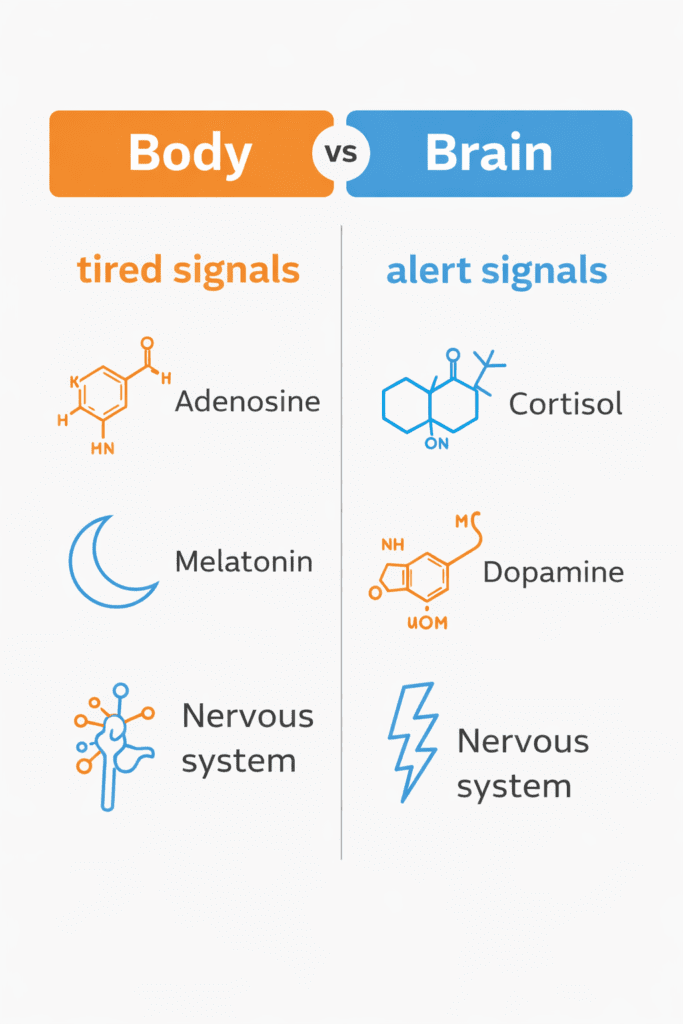
5 Biological Reasons You Feel Physically Tired but Mentally Awake at Night
- Adenosine sleep pressure builds throughout the day
- Evening cortisol spikes keep the brain alert
- Dopamine stimulation triggers racing thoughts
- Delayed melatonin release disrupts circadian timing
- Nervous system overactivation prevents relaxation
These systems operate at the same time.
Your body feels tired.
Your brain feels awake.
And sleep becomes difficult.
What Most People Miss About The Wired But Tired Phenomenon
Many people assume this problem happens because they are not tired enough.
In reality, the opposite is often true.
Extreme fatigue can sometimes make the nervous system more reactive.
After a long day of cognitive work or emotional stress, the brain may stay active as it processes unfinished thoughts.
This is similar to how a computer continues running background processes after heavy use.
Your brain tries to resolve mental loops, which keeps it alert even when the body is exhausted.
This explains why people sometimes feel mentally restless after a day of cognitive strain such as described in mentally drained but restless in the afternoon.
The Real Cause Many Busy Adults Experience Late Night Mental Alertness
For many people, the biggest trigger of this problem is evening cognitive overload.
Modern lifestyles rarely allow the brain to gradually slow down.
A typical evening may look like this

- finishing work tasks
- checking emails
- scrolling social media
- watching fast paced entertainment
- planning tomorrow’s schedule
These activities stimulate the brain repeatedly.
So when bedtime arrives, the brain has not yet transitioned into rest mode.
Instead it remains mentally engaged.
Meanwhile the body after a full day of activity feels physically drained.
Even nutrition timing can influence this nighttime alertness pattern. Eating very late in the evening forces the body to prioritize digestion when it would normally begin preparing for sleep. During digestion, blood flow shifts toward the digestive system, and metabolic activity increases. This can temporarily raise body temperature and delay the brain’s transition into sleep mode. Some people notice a similar energy shift during the day when meals trigger metabolic changes that affect alertness levels, which is explored in more detail in why do I feel tired after eating.
This mismatch creates the familiar experience of exhaustion combined with mental alertness.
How The Body’s Sleep Systems Normally Synchronize For Natural Sleep
When sleep happens naturally, several biological events occur together.
1 Adenosine sleep pressure reaches a peak
2 Cortisol levels fall
3 Dopamine activity decreases
4 Melatonin rises
5 The parasympathetic nervous system activates
When these signals align, the brain shifts into sleep mode smoothly.
But if one or more of these systems remains active, the transition to sleep becomes more difficult.
Daily lifestyle patterns such as nutrition, hydration, and movement habits can also influence energy stability as discussed in daily habits for energy and metabolic fatigue cycles explained in why blood sugar crash symptoms happen.
The Counterintuitive Insight About Why You Feel Tired But Cannot Sleep
A surprising truth about sleep biology is this.
Feeling tired does not always mean the brain is ready for sleep.
Physical fatigue mainly reflects
- muscle exhaustion
- metabolic depletion
- adenosine buildup
But mental sleep readiness depends on
- circadian timing
- hormone balance
- nervous system state
- cognitive stimulation levels
When these systems fall out of sync, the brain and body can behave as if they are on different schedules.
Why This State Happens More Frequently In Busy Adults
Busy adults are especially vulnerable to this problem because their days often involve
- prolonged screen exposure
- constant mental decision making
- irregular schedules
- high cognitive workload
- limited downtime
These factors increase nervous system stimulation and delay the brain’s transition into nighttime mode.
Meanwhile physical fatigue continues accumulating throughout the day.
The result is a common modern experience.
A body ready for rest.
A brain still running.
The Escalation Cycle That Makes Nighttime Alertness Worse Over Time
When this pattern repeats regularly, it can create a feedback cycle.
Nighttime mental alertness can lead to
- delayed sleep
- shorter sleep duration
- increased next day fatigue
In response many people rely on
- more caffeine
- longer work hours
- increased stimulation
These behaviors can further disrupt cortisol rhythm and circadian timing.
Over time the mismatch between physical fatigue and mental alertness becomes more frequent.
How Understanding The Biology Of Sleep Conflict Changes The Way You View Fatigue
When people understand that this problem results from competing biological signals, it becomes easier to interpret the experience.
Instead of assuming something is wrong with their ability to sleep, they can recognize that
- the body may already be fatigued
- the brain may still be in alert mode
Sleep occurs most easily when both systems agree.
When physical sleep pressure and mental calmness align, the transition into sleep becomes natural.
Hydration status can also play a subtle role in how the brain regulates alertness at night. Even mild dehydration can increase fatigue signals in the body while still allowing the brain to remain active. When hydration levels drop, blood volume decreases slightly, which can reduce oxygen delivery to tissues and increase feelings of physical tiredness. At the same time, the brain may continue processing thoughts and stimulation from the day. Maintaining stable hydration habits throughout the day can help stabilize energy levels and prevent the type of mixed fatigue signals that sometimes appear later in the evening, similar to the patterns described in simple daily hydration habits for energy.
Explore More Causes of Nighttime Fatigue and Energy Crashes
If you’ve ever felt physically tired but mentally awake at night, it usually means different systems in the body are sending mixed signals about energy and rest. Understanding these signals can help explain why fatigue sometimes appears at unexpected times of the day.
To learn more about the hidden causes behind fatigue, sleep disruption, and energy crashes, explore these related guides:
- Why You Feel Tired After Drinking Coffee – discover why caffeine sometimes makes people feel sleepy instead of alert.
- Mentally Drained but Restless in the Afternoon – learn why mental fatigue and restlessness often happen at the same time.
- Why Am I So Tired in the Afternoon? – understand the biological reasons behind the afternoon energy crash.
- Daily Habits for Energy – simple habits that help stabilize energy levels throughout the day.
Learning how sleep pressure, hormones, and daily routines affect your energy can make it easier to recognize why your body sometimes feels exhausted while your mind stays alert.
Final Thoughts
Feeling physically tired but mentally awake at night can feel frustrating, especially when your body clearly needs rest but your mind refuses to slow down. In most cases, this experience is not random. It happens when different biological systems in the body send conflicting signals about whether it is time to sleep or stay alert.
Sleep pressure from adenosine may be telling your body to rest, while hormones such as cortisol, dopamine activity, and nervous system stimulation keep the brain active. When these systems fall out of sync, the result is the familiar “wired but tired” feeling many people experience after a long day.
Understanding how these biological signals interact can help explain why nighttime alertness happens even when you feel exhausted. When daily routines, circadian rhythm timing, and mental stimulation begin to align more naturally with the body’s sleep signals, the transition into sleep becomes much smoother.
Frequently Asked Questions
Why do I feel physically tired but mentally awake at night?
This usually happens when the body’s sleep pressure builds during the day while the brain remains stimulated. Chemicals like adenosine create physical fatigue, but alertness signals from cortisol, dopamine, or nervous system activation can keep the brain active, making it harder to fall asleep.
Why does my mind start racing when I lie down at night?
When daily distractions stop, the brain finally has time to process unfinished thoughts and stress from the day. Dopamine activity and mental stimulation can keep the brain engaged even when the body feels tired, which often leads to racing thoughts before sleep.
Can stress make you feel wired but tired at night?
Yes. Stress can increase cortisol levels and activate the sympathetic nervous system. This keeps the brain alert and focused, even when the body is physically exhausted after a long day.
Does screen time before bed keep the brain awake?
Yes. Exposure to bright screens from phones, tablets, or laptops can delay the release of melatonin, the hormone that signals the body to sleep. This delay can make the brain stay alert longer than expected at night.
Why do I feel exhausted all day but awake at bedtime?
This can happen when circadian rhythm timing becomes misaligned. The body may build sleep pressure throughout the day, but if the brain’s internal clock is delayed by light exposure, stress, or irregular routines, alertness signals can still remain active at night.
Can caffeine cause mental alertness even when you feel tired?
Yes. Caffeine blocks adenosine receptors in the brain, temporarily reducing the feeling of sleep pressure. Even when the body is physically tired, caffeine can keep the brain stimulated and delay the natural sleep process.
Does dehydration affect nighttime alertness?
Mild dehydration can increase fatigue signals in the body while the brain continues to process stimulation from the day. Maintaining consistent hydration throughout the day helps stabilize energy levels and may reduce conflicting fatigue signals in the evening.
Why do busy adults experience this problem more often?
Busy schedules often involve constant mental stimulation, late screen use, irregular routines, and ongoing stress. These factors can keep the brain in alert mode while the body accumulates physical fatigue, creating the feeling of being tired but unable to sleep.
Is it normal to feel tired but unable to sleep sometimes?
Yes. Many people occasionally experience this state when biological signals for sleep and alertness become temporarily misaligned. Lifestyle factors, stress levels, and daily habits can all influence this balance.
Experience And Content Trust
This article explains the biological mechanisms behind feeling physically tired but mentally awake at night using established sleep science concepts such as sleep pressure, circadian rhythm regulation, hormone signaling, and nervous system activity. The explanations are based on widely recognized physiological research about how adenosine, cortisol, dopamine, and melatonin influence sleep readiness.
The goal of this content is to help readers understand the cause-and-effect relationship between daily behaviors, brain chemistry, and nighttime alertness so they can better recognize why the body sometimes feels exhausted while the mind remains active. The information focuses on educational insight into sleep biology and everyday lifestyle patterns that influence energy and rest.
