

You’re sitting at your desk around 3 PM. Lunch is over. Your to-do list is still staring at you. You try to focus, but your brain feels slow, your eyes feel heavy, and suddenly you’re wondering: why do I feel exhausted at 3 PM even though I slept 8 hours?
If you feel exhausted at 3 PM despite getting enough sleep, it’s usually not about sleep quantity. It’s often caused by your natural circadian rhythm dip, blood sugar fluctuations after lunch, mild dehydration, mental fatigue, or sitting too long without movement. The afternoon slump is common, predictable, and fixable.
Let’s break down exactly what’s happening—and what you can do about it.
Why Do I Feel Exhausted at 3 PM?
Most people assume afternoon fatigue means:
- They didn’t sleep enough
- They need more caffeine
- They’re just “not disciplined”
But 3 PM exhaustion happens even to healthy, productive adults who sleep 7–9 hours per night.
The key is understanding that energy works in waves.
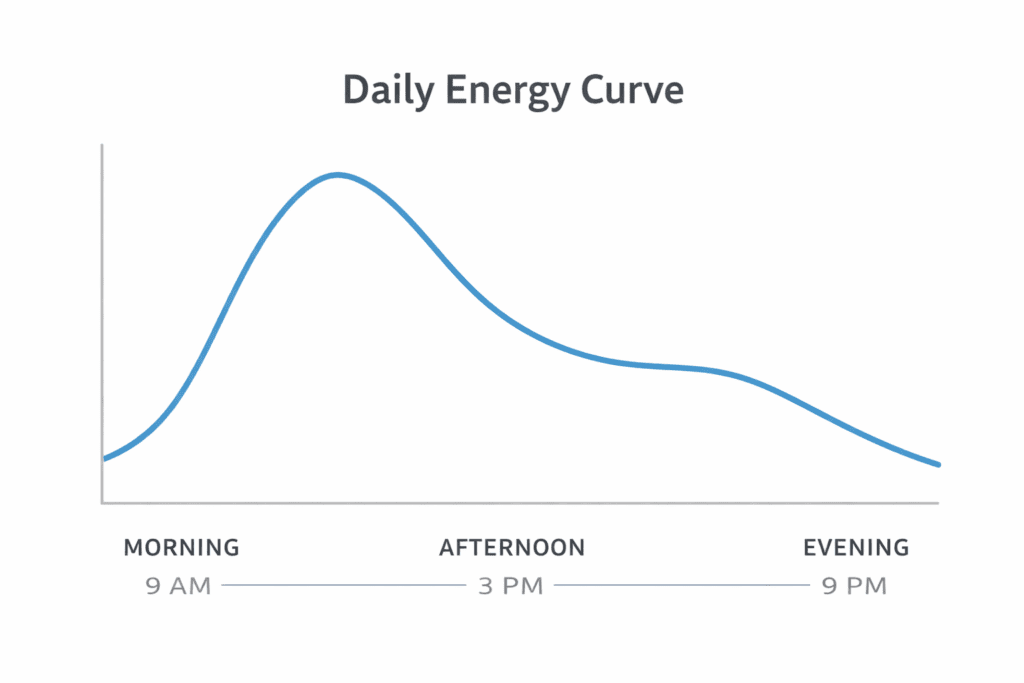
Your body runs on an internal clock called the circadian rhythm. This rhythm controls sleep, alertness, hormone release, and body temperature. According to research on circadian rhythm and sleep patterns from the National Heart, Lung, and Blood Institute , alertness naturally rises and falls during the day.
One of those natural dips usually happens in the early to mid-afternoon.
That means your 3 PM crash may not be a failure. It may be biology.
The Natural Circadian Rhythm Dip Explained
Your circadian rhythm is influenced by light, movement, and consistent sleep timing.
Around 1 PM to 3 PM:
- Core body temperature slightly drops
- Alertness decreases
- Reaction time slows
This happens even if you:
- Slept 8 hours
- Ate breakfast
- Exercised in the morning
It’s a built-in energy valley in your daily cycle.
Quick Tip
Instead of scheduling your hardest cognitive tasks at 3 PM, move deep work earlier in the day and leave lighter admin tasks for this window.
See Why Am I So Tired in the Afternoon for a thorough explanation of the causes of afternoon fatigue.
How Blood Sugar Swings Trigger Afternoon Fatigue
Now let’s talk about lunch.
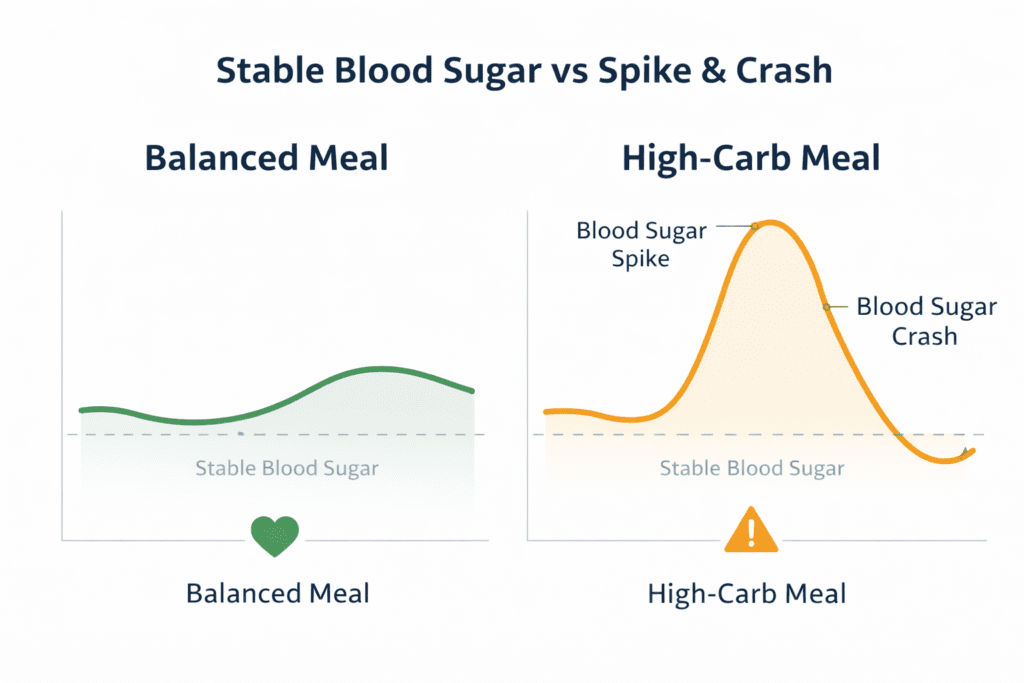
If your lunch is high in refined carbohydrates—like white bread, pasta, chips, or sugary drinks—your blood sugar rises quickly. Your body releases insulin to bring it down. Then blood sugar can drop just as quickly.
That drop often hits between 2 PM and 4 PM.
Symptoms include:
- Brain fog
- Sleepiness
- Irritability
- Cravings
What Most People Get Wrong
They blame poor sleep when it’s actually unstable blood sugar.
Try This Instead
Build your lunch around:
- 20–30 grams of protein
- High-fiber vegetables
- Healthy fats
- Moderate complex carbs
For more structured strategies, you can reinforce these habits with afternoon energy crash prevention strategies here: https://everydayhealthplan.com/afternoon-energy-crash-prevention/
Dehydration and Hidden Energy Loss
By mid-afternoon, many office workers have had multiple cups of coffee but very little water.
Even mild dehydration can affect concentration and alertness. Harvard Health explains how hydration supports cognitive performance and daily energy at https://www.health.harvard.edu/staying-healthy/the-importance-of-staying-hydrated.
Common signs of mild dehydration:
- Headache
- Low focus
- Fatigue
- Slower thinking
You may not feel thirsty—but your brain feels it.
Quick Reset
Drink 16–20 ounces of water and walk for 5 minutes. Many people feel noticeably more alert within 10–15 minutes.
To build consistency, follow simple daily hydration habits for steady energy at https://everydayhealthplan.com/simple-daily-hydration-habits-energy/

Why Sitting All Day Makes You Sleepy
If you’ve been sitting since 9 AM, circulation slows.
Less movement means:
- Reduced oxygen delivery
- Lower blood flow
- Decreased metabolic activity
Your body shifts toward “rest mode.”
And rest mode feels like exhaustion.
This is why so many people notice they feel tired after sitting too long, which is explained in detail here: https://everydayhealthplan.com/tired-after-sitting-too-long/
Simple 3-Minute Movement Reset:
- 10 bodyweight squats
- 30 seconds marching in place
- 10 shoulder rolls
- 5 slow deep breaths

No equipment needed. Just movement.
Mental Fatigue and Decision Overload
By 3 PM, your brain has been making decisions for hours.
Emails. Meetings. Notifications. Messages. Small choices all day long.
This creates decision fatigue.
Mental fatigue often feels like physical exhaustion—even when your body is fine.
| Cause | Why It Happens | Quick Fix |
|---|---|---|
| Circadian dip | Natural energy valley | Light movement |
| Blood sugar crash | High-carb lunch | Add protein |
| Dehydration | Low water intake | Drink 16–20 oz water |
| Sitting too long | Reduced circulation | Stand & move |
| Mental fatigue | Decision overload | Take micro-break |
Pro Insight
Your brain uses glucose for decision-making. When cognitive load builds without breaks, energy feels depleted.
If your afternoons feel mentally heavy, structured midday resets like these midday healthy habits to prevent energy slumps can help: https://everydayhealthplan.com/midday-healthy-habits-energy-slump/
The 5-Layer Energy Stability Model
Instead of guessing why you feel exhausted at 3 PM, look at these five layers:
- Sleep rhythm
- Blood sugar balance
- Hydration
- Movement
- Cognitive load
If two or more are unstable, the afternoon crash becomes stronger.
You don’t need perfection in all five. You need consistency.
Layer 1: Sleep Rhythm (Not Just Hours)
Sleeping 8 hours at inconsistent times can disrupt your internal clock.
Going to bed at midnight on weekdays and 2 AM on weekends shifts your rhythm. That makes the afternoon dip more intense.
Consistency matters more than occasional long sleep.
Layer 2: Blood Sugar Stability
Balanced meals prevent spikes and crashes.
A simple formula:
Protein + Fiber + Healthy Fat + Moderate Carbs
This slows digestion and supports steady energy.
Layer 3: Hydration Timing
Front-load hydration:
- 16–20 ounces within 30 minutes of waking
- Another 16 ounces before lunch
By 3 PM, you’re less likely to dip.
Layer 4: Micro-Movement
Even 60 seconds of standing increases circulation.
Energy isn’t just fuel. It’s flow.
Layer 5: Cognitive Load Management
Batch similar tasks together.
Avoid constant task-switching.
Schedule deep work when your alertness is highest.
The 3 PM Energy Reset Framework
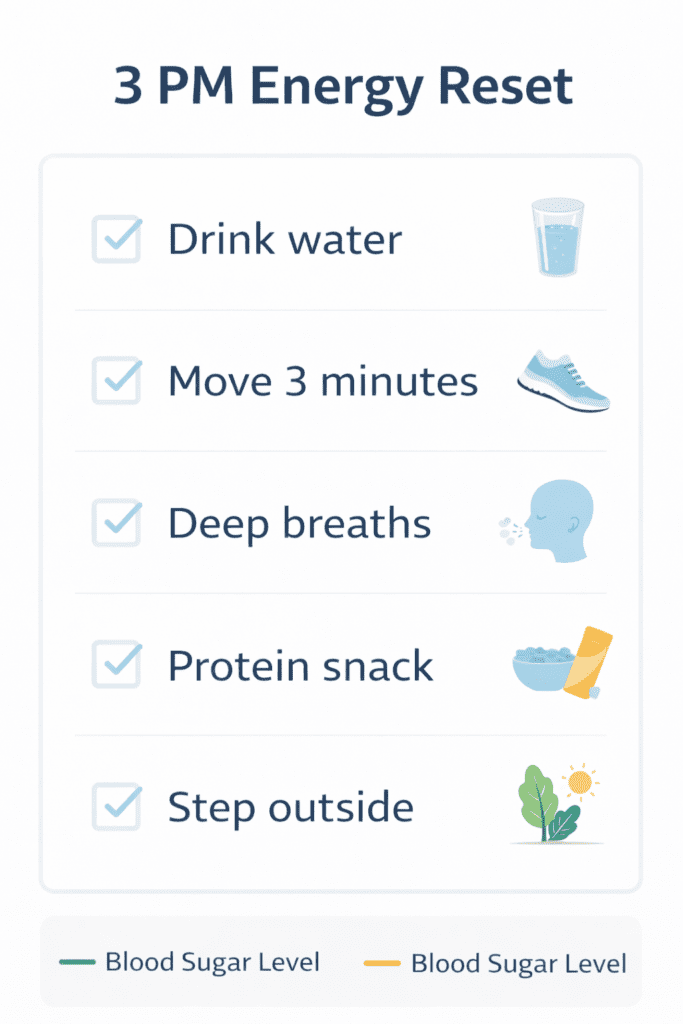
Instead of reacting emotionally to your slump, use this simple system.
Step 1: Hydrate
Drink water first.
Step 2: Move
Stand up and walk for 2–5 minutes.
Step 3: Breathe
Take 5 slow, deep breaths.
Step 4: Evaluate Lunch
If lunch was carb-heavy, add a protein snack.
Step 5: Shift Task Type
Move to lighter or creative tasks during the dip.
This small ritual can change how your afternoons feel.
Common Mistakes That Make 3 PM Exhaustion Worse
Mistake 1: Drinking More Coffee
Caffeine at 3 PM may disrupt nighttime sleep, which makes tomorrow’s slump worse.
Mistake 2: Skipping Lunch
This destabilizes blood sugar.
Mistake 3: Doom-Scrolling
Scrolling social media feels like a break, but it often increases mental fatigue.
Mistake 4: Powering Through Without Breaks
Your brain needs micro-recovery periods.
How to Prevent Tomorrow’s 3 PM Crash
Energy stability starts earlier in the day.
Morning:
- Get natural light within 30 minutes of waking
- Eat protein at breakfast
- Hydrate early
Midday:
- Eat balanced meals
- Take at least two short movement breaks
Afternoon:
- Hydrate again
- Shift workload strategically
- Avoid late caffeine
Small adjustments compound over time.
One Change That Often Works Fast
If you only change one thing, increase protein at lunch.
Many busy adults under-eat protein midday. Adding 25–30 grams can reduce blood sugar crashes and help stabilize afternoon energy.
Simple. Sustainable. Effective.
Real-Life Example
Imagine a remote worker who sleeps 7.5 hours but eats a bagel for breakfast and pasta for lunch. By 3 PM, he feels drained daily.
After making small changes:
- Adds eggs or Greek yogurt at breakfast
- Drinks water consistently
- Takes 3-minute standing breaks
- Balances lunch
His 3 PM exhaustion softens noticeably within weeks.
No extreme routine. Just rhythm alignment.
When Afternoon Fatigue Feels Unusual
Occasional 3 PM fatigue is normal.
But if exhaustion is:
- Persistent every day
- Severe or worsening
- Paired with dizziness or unusual symptoms
It’s worth speaking with a healthcare professional.
Most mid-afternoon crashes, however, are lifestyle-driven and highly manageable.
The Bigger Picture
If you’ve been asking, “Why do I feel exhausted at 3 PM?” the answer is rarely just sleep.
It’s:
- Circadian rhythm
- Blood sugar balance
- Hydration
- Movement
- Mental load
When you stabilize these inputs, your afternoon improves.
You don’t need another energy drink.
You don’t need extreme productivity hacks.
You need consistent fundamentals.
Start with water.
Stand up.
Balance lunch.
Work with your biology—not against it.
Your 3 PM self doesn’t need more willpower.
It needs better rhythm.
FAQ (People Also Ask)
Why do I crash every day at 3 PM?
Many people experience a natural dip in alertness between 1 PM and 3 PM due to their circadian rhythm. When that biological dip combines with blood sugar changes after lunch, dehydration, or mental fatigue, the crash feels stronger. It’s usually a predictable daily pattern—not a sign that something is wrong.
Why am I tired in the afternoon even after sleeping well?
Sleeping 7–9 hours doesn’t guarantee stable daytime energy. Afternoon fatigue can result from inconsistent sleep timing, carb-heavy meals, low hydration, long periods of sitting, or cognitive overload. Sleep quality and daily habits both influence how steady your energy feels.
Does eating carbs cause afternoon sleepiness?
Large, refined-carb meals can cause a blood sugar spike followed by a drop. That drop may lead to sleepiness, brain fog, and cravings a few hours later. Pairing carbohydrates with protein, fiber, and healthy fats helps slow digestion and reduce energy crashes.
Is it normal to feel sleepy at 3 PM?
Yes, a mild dip in alertness during the mid-afternoon is normal due to natural circadian rhythm changes. However, extreme or worsening fatigue every day may suggest lifestyle imbalances or sleep quality issues that should be evaluated.
Should I drink coffee at 3 PM to boost energy?
Coffee may provide temporary alertness, but caffeine late in the day can interfere with nighttime sleep for some people. Instead of relying on stimulants, try hydrating, moving your body, and stabilizing your meals to support more consistent energy.
How can I boost energy naturally in the afternoon?
Drink 16–20 ounces of water, take a short walk, stretch for a few minutes, step outside for natural light, and eat a protein-based snack if needed. These habits help restore circulation, stabilize blood sugar, and reduce mental fatigue without disrupting sleep.
Why does sitting all day make me tired?
Prolonged sitting reduces circulation and oxygen flow, which can signal the body to slow down. This can lead to sluggishness and decreased focus. Taking brief standing or walking breaks every hour helps maintain energy and alertness.
Can dehydration really cause fatigue?
Yes. Even mild dehydration can reduce cognitive performance and concentration. Many people don’t realize they’re under-hydrated by mid-afternoon. Consistent water intake throughout the day supports mental clarity and more stable energy levels.
✅ (TRUST DISCLAIMER)
This article is for educational purposes only and is not intended to diagnose or treat medical conditions. Occasional afternoon fatigue is common. If exhaustion is persistent, severe, or accompanied by other symptoms, consult a qualified healthcare professional for evaluation.
Content is based on established sleep science, hydration research, and behavioral energy management principles.
Quick 3 PM Reset: Do This in the Next 5 Minutes
If you’re hitting that mid-afternoon wall, don’t overthink it. Try this simple reset right now: drink a full glass of water, stand up and move for 2 minutes, then take 5 slow breaths. Most people feel noticeably better within 10–15 minutes.
Want a simple routine you can actually stick to? Start with this: afternoon energy crash prevention strategies and build your personal 3 PM plan from there.
Try it today: Set a daily reminder for 2:50 PM called “Water + Move” and do the reset for one week.
