

You wake up after a full night of sleep—7 or even 8 hours. You expect to feel refreshed. Instead, you feel heavy, foggy, and unmotivated.
You drag yourself out of bed, maybe grab coffee, and hope it kicks in. But by mid-morning, you’re still tired. By afternoon, you’re completely drained.
If you’ve been asking yourself why am I always tired even with enough sleep, you’re not alone—and the answer isn’t simply “sleep more.”
Because here’s the truth most people never hear:
You are not just tired—you are under-recovered.
And that’s a completely different problem.
What It Really Means When You Feel Tired Even After Sleeping Enough Hours
Feeling tired even after getting enough sleep means your body is not fully recovering overnight due to imbalances in key energy systems like hormones, blood sugar, brain activity, and circadian rhythm. Sleep duration may be adequate, but internal recovery processes are incomplete.
Why You Still Feel Tired Even After Sleeping Enough Every Night
Even if you sleep 7–8 hours, you can still feel tired if your body doesn’t fully recover overnight. This happens when key systems like hormones, blood sugar, and brain activity are out of balance, preventing true energy restoration despite adequate sleep.
Why Sleep Alone Doesn’t Restore Energy and What Your Body Actually Needs
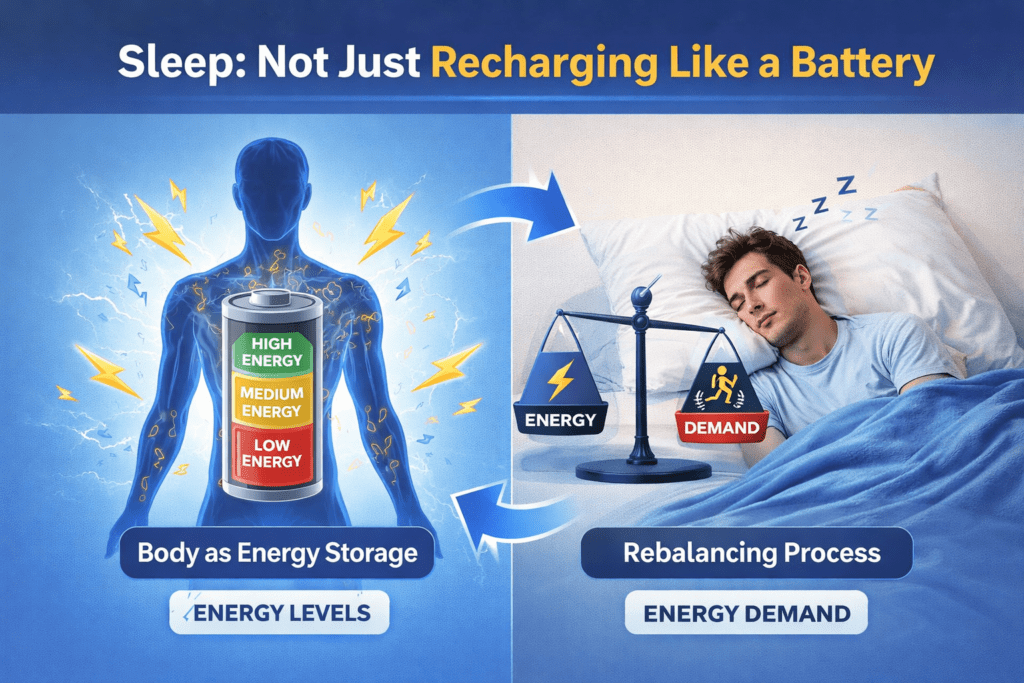
Most people think of sleep like charging a phone:
Sleep equals recharge
More sleep equals more energy
But your body doesn’t work like a battery.
Energy is not stored—it’s regulated in real time.
While you sleep, your body depends on:
Stable blood sugar
Balanced hormones
A calm nervous system
Proper brain recovery
Correct circadian timing
If even one of these is disrupted, your body doesn’t reset properly. That’s why even after reading about wake up tired even after 8 hours many people still feel exhausted.
The Science Behind Why You Feel Tired Even After Sleeping Enough Hours
Energy is the result of coordination between systems—not just rest.
During sleep, your body is supposed to:
Regulate cortisol which controls alertness
Balance melatonin which controls sleep
Stabilize blood sugar overnight
Clear waste from the brain
Reset dopamine and mental focus
According to Sleep Foundation sleep quality and timing play a critical role in how restored you feel the next day.
Here’s the key chain most people miss:
👉 Poor recovery → low brain energy → higher cortisol stress → morning fatigue
At a deeper level, your energy follows a clear cause-and-effect chain inside your body.
When one system is disrupted, it creates a ripple effect that leads directly to fatigue.
Here’s how that process works:
| Root Problem | What Happens in the Body | Result You Feel |
|---|---|---|
| Poor cortisol rhythm | Weak morning alertness signal | Grogginess |
| Blood sugar instability | Brain gets less fuel | Energy crashes |
| Nervous system stress | Poor overnight recovery | Constant fatigue |
| Dopamine depletion | Reduced motivation signals | Brain fog |
| Circadian misalignment | Inefficient recovery cycles | Tired all day |
This is why simply sleeping more doesn’t fix the problem.
If the underlying system is still out of balance, your body will continue producing low energy no matter how many hours you spend in bed.
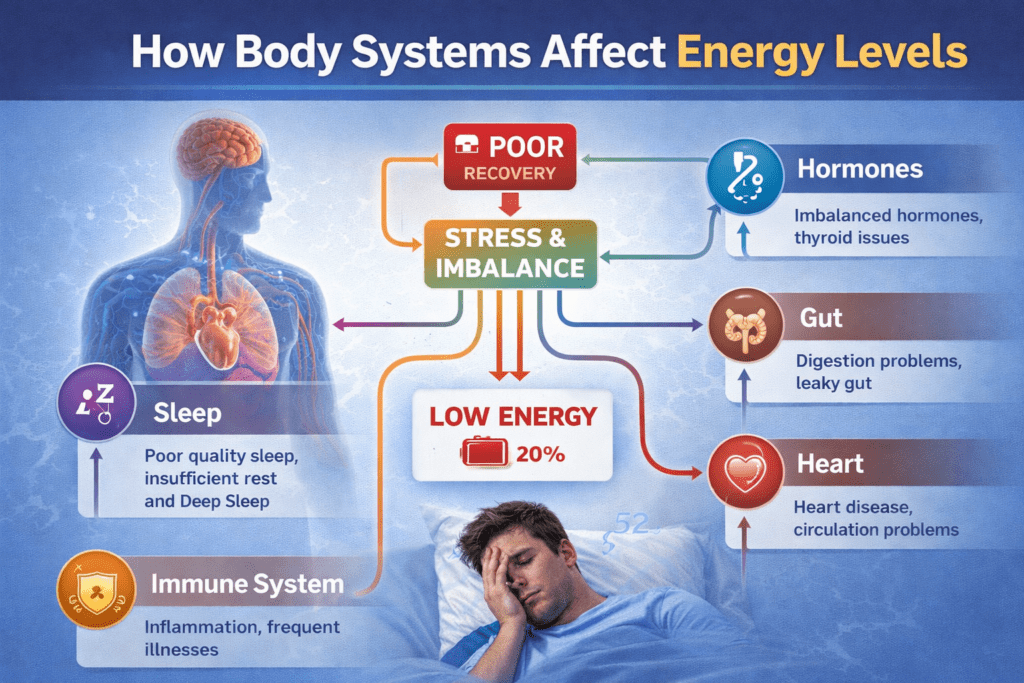
Why Sleep Doesn’t Fix Fatigue Even When You Get Enough Hours Every Night
Sleep only restores energy if your recovery systems are functioning correctly. If your cortisol rhythm is off, your nervous system is overstimulated, or your blood sugar drops overnight, your body wakes up already in a depleted state.
This is why some people feel worse even after long sleep periods.
The Hidden Biological Reasons Your Body Feels Exhausted Despite Good Sleep
You can have what looks like good sleep but still experience poor recovery.
Your cortisol rhythm may be off
Your blood sugar may drop overnight
Your brain may not fully recover
Your nervous system may stay in stress mode
Your circadian rhythm may be misaligned
These issues explain why many people also experience patterns like wired but tired at night
What Happens When You Feel Tired All the Time Even After Sleeping Enough
Occasional tiredness is normal, but feeling tired every day is usually a sign that your body’s energy systems are not functioning properly. This can be caused by stress, poor recovery cycles, or imbalances in hormones and daily habits.
What Most People Miss About Why They Feel Tired All Day Even After Sleeping Enough
Here’s the insight that changes everything:
Most people who feel tired after sleeping are not sleep-deprived—they are recovery-deprived.
Energy depends more on:
Hormonal balance
Daily habits
Nervous system state
Brain recovery
Not just sleep duration.
The Real Difference Between Feeling Tired and Being Completely Exhausted All Day
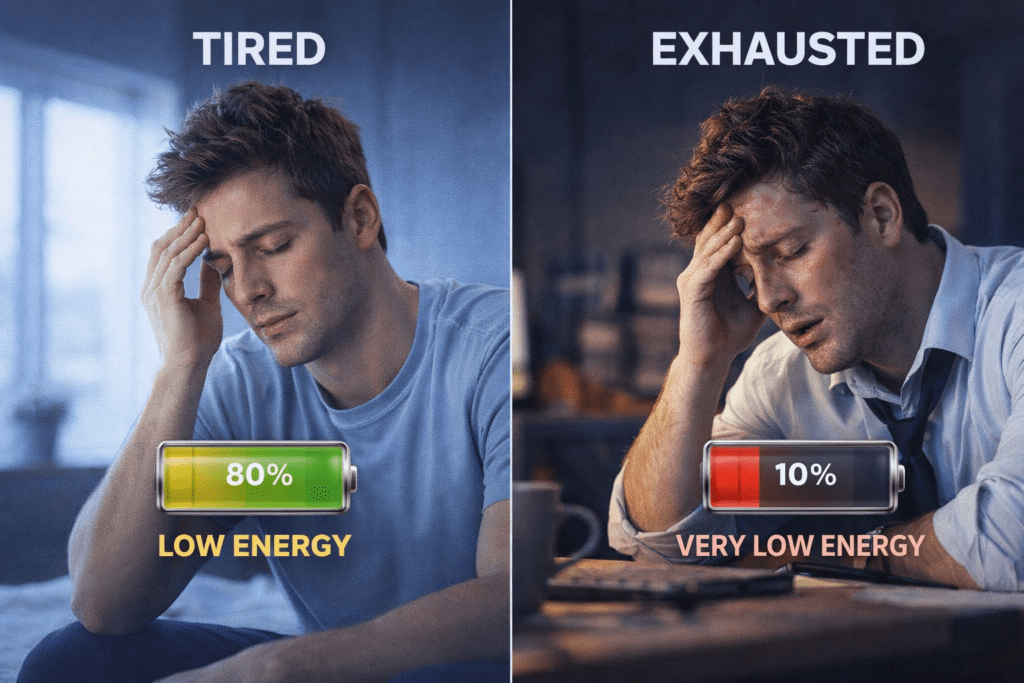
Most people use the word “tired” to describe how they feel—but there’s a big difference between being tired and being exhausted.
- Tired means your body needs rest and can recover quickly
- Exhausted means your entire energy system is out of balance
When you’re tired:
- A good night of sleep usually fixes it
When you’re exhausted:
- Sleep doesn’t help much
- Energy stays low all day
- Motivation and focus drop
This distinction matters because if you’re constantly exhausted, the issue is not sleep—it’s how your body is managing energy across hormones, brain function, and daily habits.
What Happens When Your Sleep Isn’t Truly Restoring Your Energy Levels
Waking up feeling heavy or foggy
Needing caffeine to function
Energy crashes in the afternoon
Difficulty focusing early in the day
Feeling mentally drained
If this sounds familiar, you may also relate to patterns explained in why am I so tired in the afternoon
The Real Cause Behind Constant Fatigue and the 5 Hidden Energy Systems
These are the five core systems that most strongly control how much energy you feel each day.
- Disrupted cortisol rhythm affecting alertness
- Blood sugar instability overnight
- Brain fatigue and dopamine depletion
- Nervous system stuck in stress mode
- Misaligned circadian rhythm timing
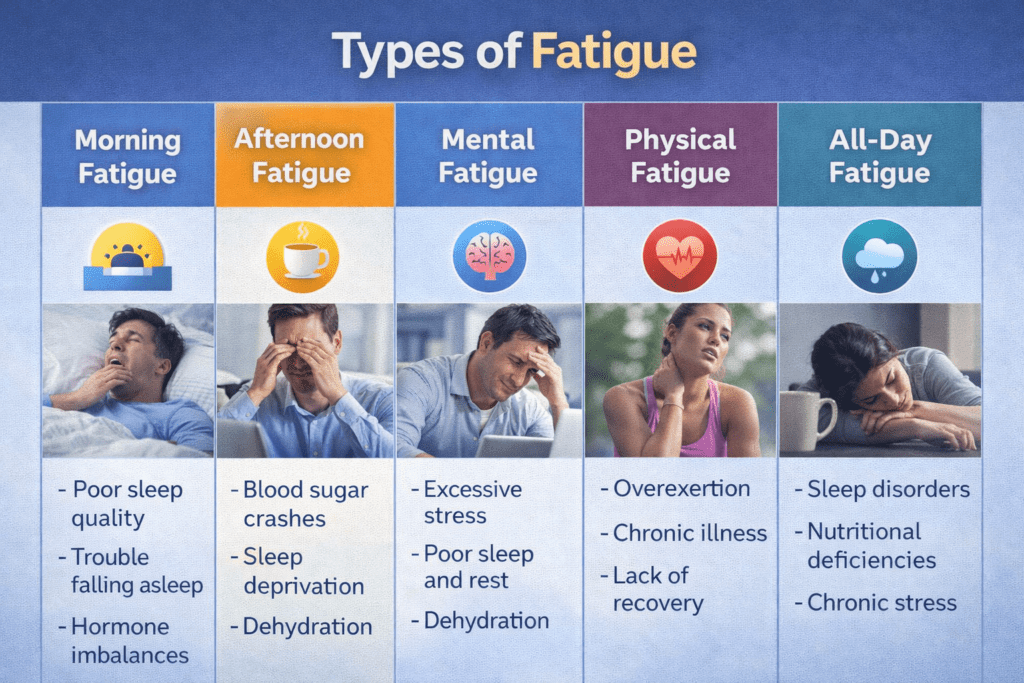
What Your Type of Fatigue Reveals About the Real Cause of Your Low Energy Levels
Morning fatigue
If you feel tired right after waking up:
- Likely linked to low cortisol or poor overnight recovery
- Your body hasn’t fully transitioned into an alert state
Afternoon fatigue
If your energy crashes between 2 PM and 4 PM:
- Often caused by blood sugar instability
- Your body runs out of steady fuel
This pattern is common and explained further in why am I so tired in the afternoon
Mental fatigue
If your brain feels drained but your body feels okay:
- Caused by dopamine depletion
- Linked to overthinking, focus overload, or screen time
Physical fatigue
If your body feels heavy, slow, or weak:
- Often related to circulation, hydration, or muscle recovery
All-day fatigue
If you feel tired from morning to night:
- Multiple systems are out of balance
- Hormones, brain energy, and habits are all contributing
👉 Understanding your fatigue type helps you stop guessing and start fixing the real problem.
To make this easier to understand, here’s a simple breakdown of how different fatigue patterns connect to specific underlying causes:
| Fatigue Type | When It Happens | Most Likely Cause | What It Signals |
|---|---|---|---|
| Morning fatigue | Right after waking up | Low cortisol / poor recovery | Body didn’t reset overnight |
| Afternoon fatigue | 2–4 PM | Blood sugar crash | Energy instability |
| Mental fatigue | After thinking/work | Dopamine depletion | Brain overload |
| Physical fatigue | Body feels heavy | Poor circulation / hydration | Low physical recovery |
| All-day fatigue | Constant | Multiple imbalances | Full system disruption |
The goal is not to guess better. It’s to match the right fix to the right fatigue pattern.
Find the fatigue pattern that matches you most
If your tiredness shows up at a specific time, these guides will help you identify the cause faster.
If your fatigue hits in the morning, read Wake Up Tired Even After 8 Hours. If it shows up in the afternoon, go to Why Am I So Tired in the Afternoon?. If it gets worse after meals, read Why Do I Feel Tired After Eating?.
Why You Feel More Tired on Some Days Even After the Same Amount of Sleep Hours
You may notice that some days you feel fine, while other days you feel exhausted—even after getting the same amount of sleep.
That’s because recovery depends on more than just sleep duration. Factors like stress, meal timing, and mental load from the previous day all affect how your body restores energy overnight.
Small changes can affect recovery:
- Higher stress levels increase cortisol and reduce deep sleep quality
- Irregular meal timing affects blood sugar stability overnight
- Mental overload drains dopamine and reduces brain recovery
Even if you sleep the same number of hours, your body may not recover the same way every night.
👉 This is why fatigue can feel unpredictable—it’s driven by cumulative stress, not just sleep.
The Role of Hormones and How Cortisol and Melatonin Affect Your Energy Levels
This system controls when you feel awake and when you feel sleepy. If cortisol is low in the morning, you wake up tired.
The Link Between Blood Sugar Stability and Your Energy Levels Throughout the Day
Blood sugar drops → brain gets less fuel → fatigue increases → cravings rise
This is closely linked to fatigue patterns like why do I feel tired after eating
The Impact of Nervous System Balance Between Stress Mode and Deep Recovery
If your body stays in stress mode overnight, recovery is incomplete.
According to Mayo Clinic stress plays a major role in long-term fatigue.
How Brain Energy and Dopamine Levels Control Your Focus and Motivation Daily
Mental overload reduces dopamine → low motivation → brain fatigue carries into the next day
This is why many people feel similar to mental fatigue after work
Circadian Rhythm Timing and Why Sleep Timing Matters More Than Duration
Sleeping at the wrong time weakens recovery—even if you sleep long enough.
What Happens When You Ignore Feeling Tired Even After Sleeping Enough Every Day
At this point, most people start blaming themselves. They think they’re lazy or unmotivated.
But what’s really happening is biological.
Stage 1
Mild fatigue and brain fog
Stage 2
Afternoon crashes and caffeine dependence
You may try fixes like afternoon energy crash prevention
Stage 3
Constant fatigue and low motivation
Stage 4
Burnout-like exhaustion
The Hidden Reason Caffeine Can Make Your Energy Worse Over Time
Caffeine feels like a solution—but it can actually make fatigue worse if your system is already imbalanced.
Here’s what happens:
Caffeine blocks a chemical called adenosine, which is responsible for making you feel sleepy.
- You feel temporarily alert
- But your body is still tired underneath
Once caffeine wears off:
- Adenosine builds up again
- You experience a stronger energy crash
Over time, caffeine can also:
- Disrupt your cortisol rhythm
- Reduce sleep quality
- Increase nervous system stress
This means caffeine may give short-term energy while making long-term fatigue harder to fix in tired after drinking coffee.

The Link Between Daily Habits and Why You Feel Tired Even After Sleeping Enough
Your energy starts the day before—not in the morning.
A common US routine:
Skipping breakfast
High-carb lunch
Coffee in the afternoon
Late-night phone scrolling
This creates:
Blood sugar spikes → crashes → fatigue
Dopamine overstimulation → brain exhaustion
Hormonal disruption → poor recovery
Hydration also plays a key role as explained in simple daily hydration habits for energy
The Hidden Impact of Screen Time on Your Energy Levels Throughout the Day
Most people think screen time only affects sleep—but it also affects your energy directly.
When you spend long hours on your phone or computer:
- Your brain stays in a constant stimulation loop
- Dopamine is repeatedly triggered
- Mental fatigue builds up
Over time, this leads to:
- Reduced focus
- Faster burnout
- Lower mental energy
Even if you sleep well, your brain may not fully recover from this constant stimulation.
This is closely related to patterns seen in why eyes feel tired after looking at screens

The Hidden Role of Hydration in Why You Feel Tired Even After Sleeping
Even mild dehydration can significantly affect your energy levels.
When your body lacks fluids:
- Blood volume decreases
- Oxygen delivery to the brain drops
- Your heart works harder
This leads to:
- Fatigue
- Brain fog
- Low focus
Since your body loses water overnight through breathing and sweating, you often wake up slightly dehydrated.
If you don’t rehydrate early in the day, your energy can stay lower than expected for the rest of the day.
Building better daily hydration habits can help your body maintain stable energy and reduce unnecessary fatigue, as explained in simple daily hydration habits for energy.

How to Stop Feeling Tired All the Time Even After Sleeping Enough Every Night
To stop constant fatigue, you need to fix the systems behind your energy—not just sleep more. This means stabilizing blood sugar, improving circadian timing, reducing stress, and supporting full-body recovery.
The 5 Step Daily Energy Reset System That Restores Natural Energy Levels
Step 1 Reset Your Morning Signal and Cortisol Rhythm Naturally
Wake up at the same time daily
Get sunlight within 30 minutes
The CDC explains why consistency matters https://www.cdc.gov/sleep/about_sleep/how_much_sleep.html
Step 2 Stabilize Your First Meal to Prevent Energy Crashes Later
Eat protein and healthy fats
Avoid sugar-heavy breakfasts
Step 3 Protect Your Afternoon Energy by Preventing Midday Crashes
Limit caffeine after 2 PM
Move regularly
Support this with micro habits that boost afternoon energy
Step 4 Reduce Evening Stimulation to Improve Sleep Quality and Recovery
Limit screens
Avoid intense mental activity
Improve recovery using sleep quality evening habits
Step 5 Support Deep Recovery by Aligning Sleep Timing With Your Body Clock
Keep consistent sleep timing
Create a calm routine
Harvard explains how sleep affects brain recovery
https://www.health.harvard.edu/heart-health/sleep-and-brain-health-whats-the-connection
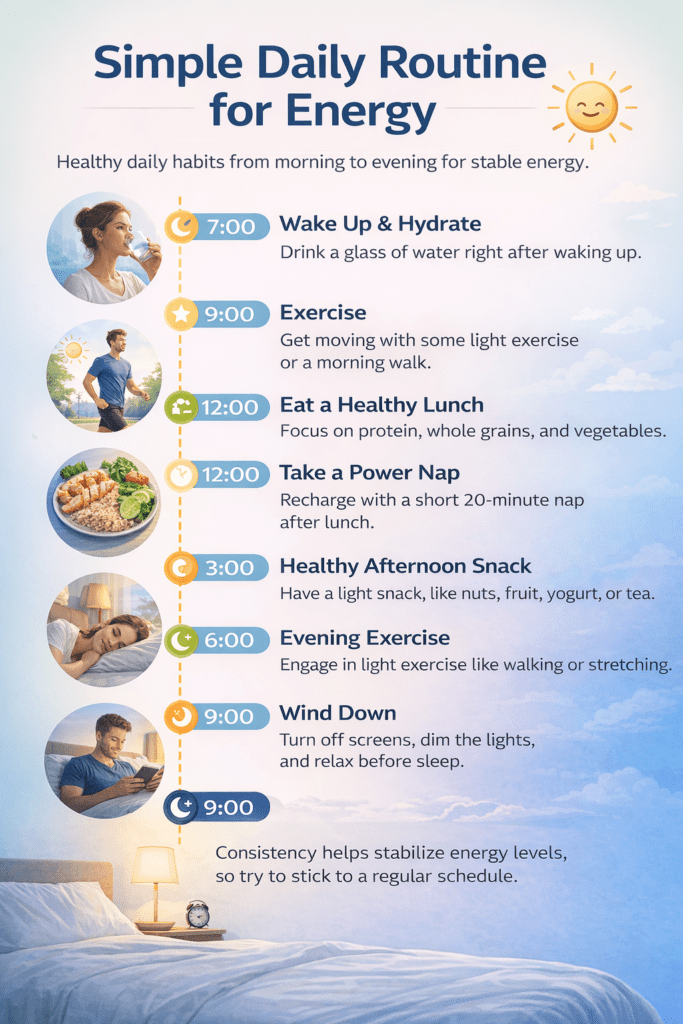
How a Simple Daily Routine Helps Restore Your Energy Naturally
Here’s how a simple daily routine might look when your energy systems are aligned:
Morning:
- Wake up at the same time
- Get sunlight exposure
- Eat a balanced meal
Midday:
- Stay hydrated
- Avoid heavy sugar spikes
- Take short movement breaks
Afternoon:
- Limit caffeine
- Keep meals balanced
- Avoid long periods of sitting
Evening:
- Reduce screen exposure
- Keep your environment calm
- Prepare your body for sleep
This kind of routine helps your body stay consistent, which is the key to stable energy.
Why Morning Light Exposure Plays a Critical Role in Fixing Your Energy Levels
One of the most overlooked factors in energy is light exposure—especially in the morning.
When your eyes are exposed to natural sunlight:
- Your brain increases cortisol at the right time
- Your circadian rhythm becomes aligned
- Your body knows when to be alert
Without enough light exposure:
- Your wake-up signal stays weak
- Your energy remains low
- Your sleep timing becomes inconsistent
👉 This is why people who spend most of their time indoors often feel more tired—even if they sleep enough.

Why Small Daily Changes Create a Powerful Shift in Your Energy Levels
You don’t need extreme changes.
Small improvements lead to:
Better hormone balance
Stronger recovery
Higher natural energy
Consistency always beats intensity.
What Happens When Your Energy Systems Start Working Together Again Naturally
When your systems realign, you’ll notice:
Clearer mornings
Less caffeine dependence
Stable energy throughout the day
Better focus and motivation

The Bottom Line What Really Causes You to Feel Tired Even After Sleeping Enough
If you’re always tired even after sleeping enough, the problem isn’t your effort—it’s your system.
Your body is trying to function with misaligned signals, unstable energy, and incomplete recovery.
Once you fix the systems behind your energy—your hormones, habits, and timing—fatigue stops being something you fight and becomes something you prevent.
Now that you understand what’s actually causing your fatigue, the next step is identifying your exact pattern and fixing the right system.
The fastest way to find the real cause is to look at when your tiredness hits. If your fatigue shows up in specific patterns, these next guides can help you narrow it down.
- Wake Up Tired Even After 8 Hours
- Why Am I So Tired in the Afternoon?
- Why Do I Feel Tired After Eating?
Start with the one that matches your pattern most closely, then work outward from there.
Additional Questions About Why You Feel Tired Even After Sleeping Enough
Why do I feel tired even after 7–8 hours of sleep?
Even after 7–8 hours of sleep, you can feel tired if your body doesn’t fully recover overnight. This usually happens when key systems like cortisol rhythm, blood sugar stability, and brain recovery are out of balance, preventing real energy restoration.
Why do I wake up feeling tired instead of refreshed?
Waking up tired is often caused by sleep inertia, where your brain hasn’t fully transitioned into alertness. It can also be linked to low morning cortisol levels or poor overnight recovery, leaving your body in a low-energy state.
Can poor sleep quality make me feel tired even if I sleep enough?
Yes, poor sleep quality can make you feel tired even if you sleep enough hours. If your sleep cycles are disrupted or your body doesn’t reach deep recovery stages, your brain and body won’t fully restore energy.
Why do I feel tired all day even after a full night’s sleep?
Feeling tired all day often means multiple energy systems are out of balance, including hormones, blood sugar, and nervous system function. When these systems don’t work together, your body struggles to maintain stable energy.
Does stress make you feel tired even after sleeping?
Yes, stress can keep your nervous system in an alert state, preventing full recovery during sleep. Even if you sleep enough hours, your body may not fully relax, leading to ongoing fatigue.
Why does my brain feel tired even when my body isn’t?
Mental fatigue happens when your brain uses a lot of energy and doesn’t fully recover. This is often linked to dopamine depletion and cognitive overload, which can carry into the next day even after sleep.
What is the most common cause of feeling tired all the time?
The most common cause is not a lack of sleep, but an imbalance in the body’s energy systems. This includes disrupted hormones, unstable blood sugar, poor recovery, and lifestyle habits that affect how your body restores energy.
About This Content
This article is based on well-established principles of how the human body regulates energy, including circadian rhythm timing, hormone balance, nervous system function, and brain energy use. It explains everyday fatigue using research-backed concepts in sleep science and metabolic health, translated into practical, easy-to-understand insights.
The goal is to help you recognize patterns in your own energy levels and understand why feeling tired even after enough sleep is often linked to how your body functions—not just how long you rest.
