
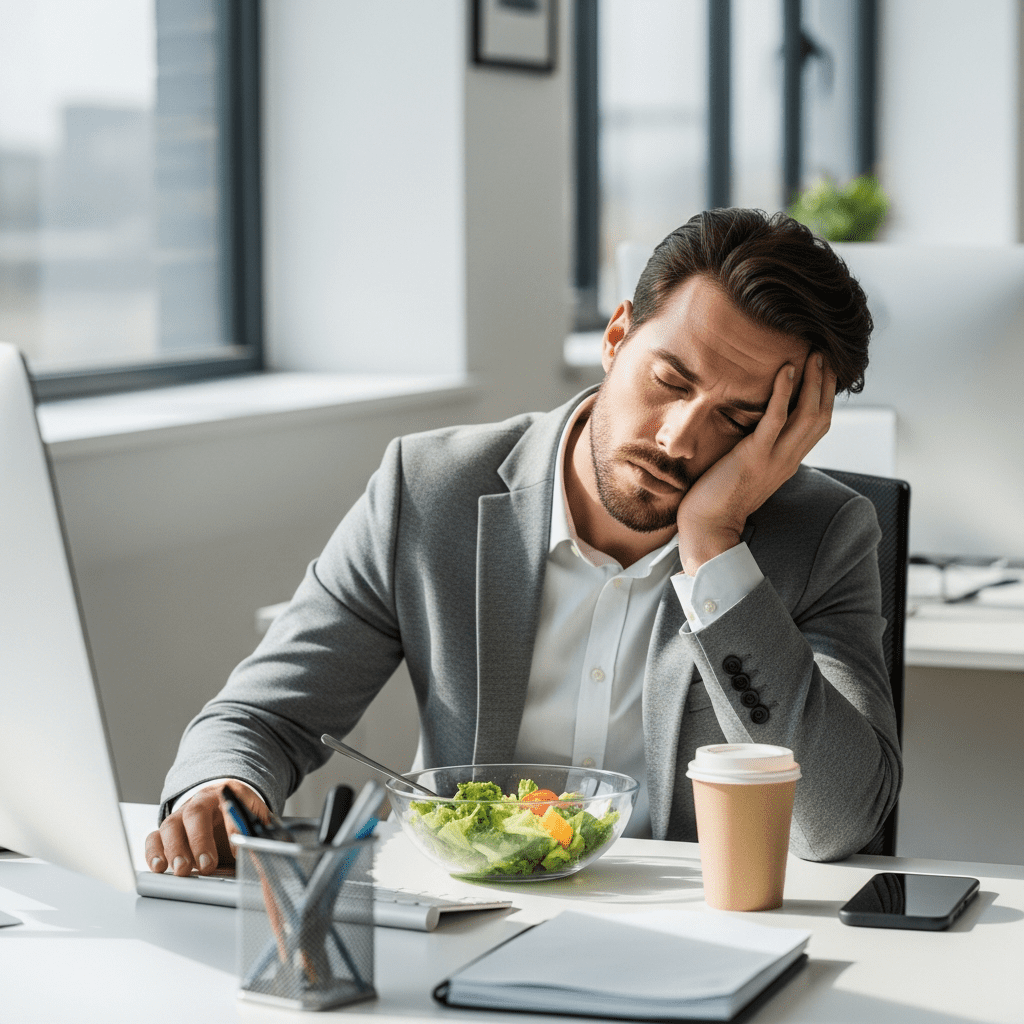
It is 1:30 PM. You just finished lunch, but instead of feeling focused again, your eyelids feel heavy, your body feels slow, and your brain wants a break. If you keep asking, “Why am I so tired after lunch?” the answer is usually connected to your meal size, carb balance, hydration, digestion, sitting habits, and your natural early-afternoon rhythm.
A mild tired feeling after lunch can be normal. This post-meal sleepiness is often called a food coma or postprandial somnolence. It usually becomes stronger after large meals, refined carbs, sugary drinks, low-protein lunches, poor hydration, or long sitting right after eating.
Quick Answer: You may feel so tired after lunch because digestion, blood sugar changes, large portions, low protein, dehydration, sitting afterward, and the natural early-afternoon dip can stack together. To reduce it, build lunch with protein and fiber, drink water, avoid refined-carb-heavy meals, eat slowly, and take a short walk after eating.
If your tiredness happens later in the afternoon even when lunch was balanced, read our guide on why you feel tired in the afternoon. This article focuses specifically on tiredness that starts after eating lunch.
Why You Feel So Tired After Lunch: Quick Cause Map
| What You Notice After Lunch | Most Likely Trigger | What to Try First |
|---|---|---|
| Sleepy within 30–60 minutes | Large meal or digestion load | Reduce portion size and slow down eating |
| Brain fog and cravings 1–2 hours later | Refined carbs or sugary drink | Add protein, fiber, and water to lunch |
| Heavy body and low focus | Sitting still after eating | Take a 5–10 minute easy walk |
| Sleepy even after a healthy lunch | Meal size, speed, hydration, or natural circadian dip | Track portion size, water, and movement |
| Shaky, sweaty, dizzy, or confused | Possible blood sugar issue | Speak with a healthcare professional |
Why Am I So Tired After Lunch?
You may feel tired after lunch because eating changes how your body manages digestion, alertness, and blood sugar for a short time. A heavier meal, refined carbs, sugary drinks, low protein, dehydration, poor sleep, or sitting still after eating can make the post-lunch dip feel stronger.
The timing matters. If the tired feeling starts within about 30 minutes to two hours after lunch, the meal itself may be part of the pattern. If it happens daily, feels extreme, or comes with shakiness, dizziness, sweating, confusion, or fainting, it is safer to speak with a healthcare professional.
Is it normal to feel tired after eating lunch?
Yes, mild tiredness after lunch can be normal, especially after a large meal or a refined-carb-heavy meal. But if the fatigue is severe, daily, sudden, or comes with shakiness, dizziness, sweating, confusion, chest discomfort, or fainting, speak with a healthcare professional.
What Happens Inside Your Body After You Eat
The “Rest and Digest” Process
After lunch, your nervous system enters a parasympathetic state, commonly called “rest and digest.” This means your body temporarily prioritizes digestion over alertness and productivity.
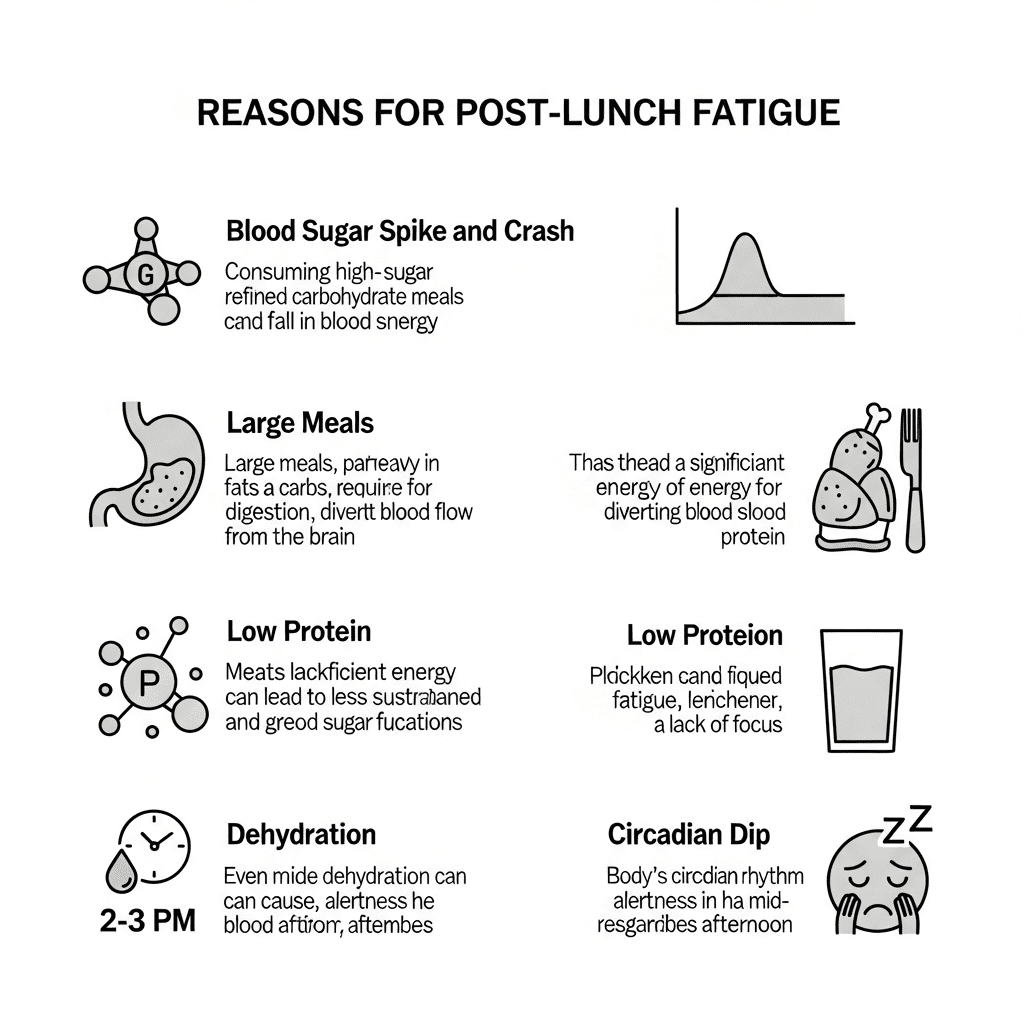
Key changes include:
- Insulin release: Blood sugar rises after a meal. Insulin moves glucose into your cells for energy.
- Blood sugar drop: If sugar rises too fast, your body overshoots with insulin, causing a rapid drop and resulting in fatigue.
- Neurochemical shifts: Serotonin levels rise slightly, promoting relaxation.
This is why even healthy eaters sometimes feel sleepy.
7 Hidden Causes of Feeling Tired After Lunch
1. Your Lunch Was High in Refined Carbs
Refined carbs such as white bread, pasta, sweets, chips, and sugary drinks can digest quickly. That fast rise and fall in energy may leave you sleepy, foggy, or craving more food later.
Why do carbs make me sleepy after lunch?
Carbs can make you sleepy after lunch when they digest quickly and cause a fast rise and fall in energy. Refined carbs like white bread, pasta, sweets, and sugary drinks are more likely to trigger this pattern, especially when eaten without protein or fiber.
2. Your Portion Was Bigger Than Your Body Needed
A large lunch can make you feel heavy because digestion takes more work. Even healthy foods may make you sleepy if the portion is much larger than your body needs at that time of day.
Can eating too much at lunch make you tired?
Yes, a large lunch can make you tired because digestion takes more work and may make your body feel heavy for a short time. Even healthy foods can cause sleepiness if the portion is much larger than your body needs.
3. Your Meal Was Low in Protein or Fiber
Protein and fiber slow digestion and support steadier energy. When lunch is mostly starch or sugar, the meal may not keep you full or focused for long.
4. You Were Already Mildly Dehydrated
Low fluid intake can make fatigue feel stronger. If you start lunch already under-hydrated, the post-lunch dip may feel heavier and your focus may drop faster.
5. You Sat Still Right After Eating
Sitting immediately after lunch can make the heavy feeling worse, especially if you already spent the morning at a desk. A short easy walk can help your body feel more alert after eating.
6. Your Natural Early-Afternoon Dip Overlapped With Digestion
Lunch often happens close to the body’s natural early-afternoon alertness dip. When digestion and this daily rhythm overlap, post-lunch tiredness can feel stronger.
7. You Ate Too Fast or While Stressed
Eating quickly or while working can make it easier to overeat and harder to notice fullness. Stress may also make lunch feel less restorative and leave your body tense instead of settled.
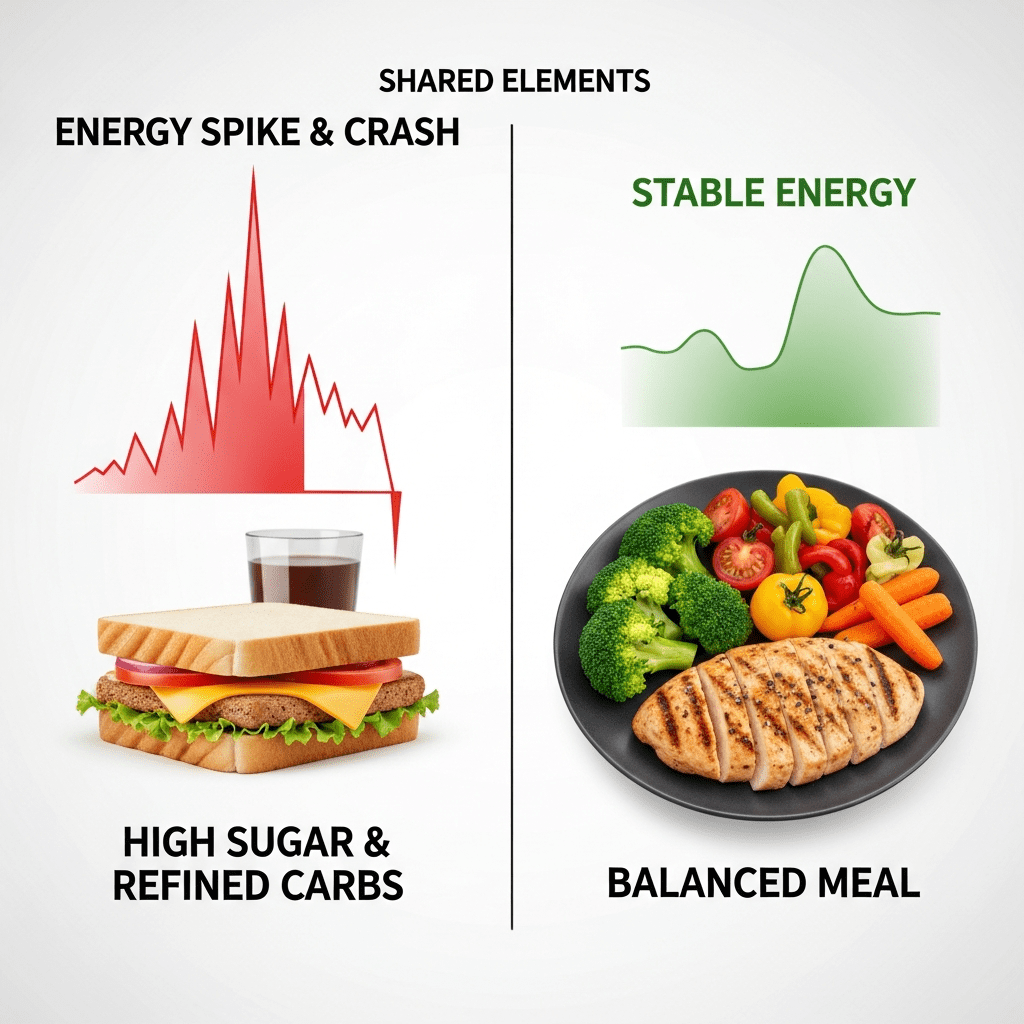
Lunch Choices That Trigger Fatigue vs Lunches That Feel Steadier
| Lunch Pattern | Why It Can Make You Tired | Better Swap |
|---|---|---|
| White bread sandwich + chips + soda | Refined carbs and sugar can create a quick rise and dip. | Whole-grain wrap with turkey, vegetables, and water |
| Large pasta bowl with no protein | High starch plus low protein may feel heavy and short-lived. | Smaller pasta portion with chicken, beans, or vegetables |
| Salad with no protein or fat | Too light for some people, leading to hunger and low focus later. | Salad with eggs, beans, tuna, avocado, or Greek yogurt dressing |
| Fast-food fried meal | Heavy fat and large portions may slow you down. | Grilled protein, side salad, fruit, or smaller portion |
| Skipping lunch then snacking later | May trigger cravings and unstable energy. | Smaller balanced lunch plus a protein snack if needed |
Diets high in added sugars can cause rapid energy fluctuations, leading to post-lunch fatigue, according to Centers for Disease Control and Prevention.
Even small adjustments—like swapping white rice for brown rice or adding vegetables—can make post-lunch energy feel steadier.
The No-Crash Lunch Formula
The easiest way to reduce post-lunch fatigue is to build lunch around three parts: protein, fiber, and smart carbohydrates. This does not mean avoiding carbs completely. It means pairing them so the meal digests more steadily.
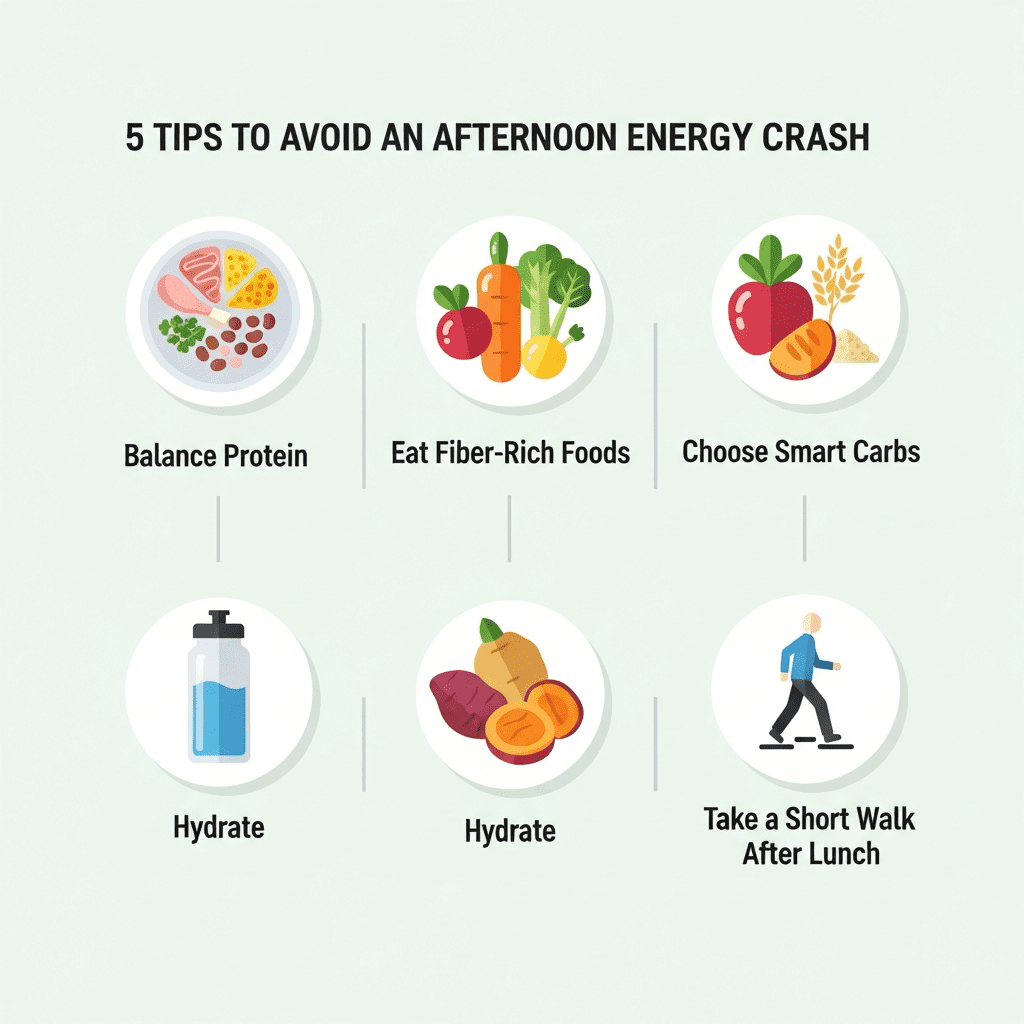
- Protein: chicken, eggs, fish, beans, tofu, Greek yogurt, or cottage cheese
- Fiber: vegetables, lentils, beans, berries, oats, or whole grains
- Smart carbs: brown rice, quinoa, sweet potatoes, oats, fruit, or whole-grain bread
- Healthy fats: avocado, olive oil, nuts, seeds, or nut butter
Simple rule: Do not eat carbs alone at lunch. Pair them with protein, fiber, or healthy fats so the meal feels steadier.
What should I eat for lunch to avoid feeling tired?
Choose a lunch that combines protein, fiber, healthy fats, and slow-digesting carbs. Examples include grilled chicken with vegetables and brown rice, beans with salad, Greek yogurt with fruit and nuts, or eggs with whole-grain toast.
Step-by-Step: How to Avoid Feeling Tired After Lunch
- Balance Your Plate: Protein + fiber + smart carbs
- Control Portion Size: Stop at 80% full
- Avoid Refined Carbs & Sugar: Skip white bread, pasta, soda
- Eat Slowly: 15–20 minutes per meal, focus on chewing
- Hydrate: 1–2 cups of water with lunch
- Move After Eating: 5–10 minute walk improves digestion and alertness
- Keep Lunch Light But Satisfying: Avoid heavy fried foods
Does walking after lunch help with tiredness?
Yes, a short walk after lunch can help you feel less sluggish by adding light movement and supporting circulation. It does not need to be intense. Even 5–10 minutes of easy walking can make the post-lunch dip easier to manage.
Common Mistakes That Make You Tired After Lunch
- Skipping Breakfast: Leads to overeating at lunch
- Drinking Sugary Beverages: Rapid spikes → crashes
- Eating Too Fast: Overeating without noticing
- Relying on Coffee: Masks fatigue but doesn’t solve the root cause
- Eating at Your Desk While Stressed: Worsens digestion and alertness
Why do I feel tired after a healthy lunch?
You can feel tired after a healthy lunch if the portion is large, you ate quickly, the meal was low in protein, or you sat still right afterward. A healthy meal can still feel heavy if timing, portion size, hydration, and movement are not balanced.
Simple Post-Lunch Reset Without More Coffee

- Walk for 5–10 minutes after eating.
- Drink water before reaching for caffeine.
- Get light exposure near a window or outside.
- Stand, stretch, or change posture.
- Take a short screen break before returning to deep work.
If your main goal is energy without caffeine, read our guide on how to get energy without coffee.
For managing mental fatigue, see Mental Fatigue After Work – 15 Minute Reset.
Why Office Workers Feel More Tired After Lunch
Desk workers may feel more tired after lunch because:
- Long periods of sitting
- Low movement after eating
- Existing mental fatigue from screens
Solution:
- Stand or walk
- Adjust posture
- Eat balanced meals
For sitting-related fatigue, see Tired After Sitting Too Long.
Behavioral Factors That Make You Tired After Lunch
Energy is not just physical—it’s behavioral. Your habits—meal timing, portion size, movement, and hydration—directly influence afternoon energy.
Simple Habit Changes:
- Add protein today
- Walk after lunch tomorrow
- Reduce sugar next week
Small adjustments compound into noticeable energy improvements.
Advanced Tips to Reduce Post-Lunch Fatigue
- Keep a consistent lunch schedule
- Include hydration cues: water before and during meals
- Avoid multitasking while eating
- Stand or move after lunch
- Track meals to identify triggers of fatigue
If your tiredness continues later in the day, use our guide on afternoon energy crash prevention.
When Feeling Tired After Lunch May Need Attention
Mild post-lunch sleepiness is common. But it is worth getting medical advice if the fatigue is severe, new, worsening, happens after most meals, or interferes with driving, work, or daily life.
Also pay attention if tiredness after lunch comes with shakiness, sweating, confusion, dizziness, fainting, shortness of breath, chest discomfort, unusual thirst, frequent urination, blurred vision, or loud snoring and breathing pauses at night.
This does not mean something serious is always happening. It simply means the tiredness may be connected to something beyond lunch composition, such as blood sugar regulation, sleep quality, medications, or another health issue.
Build a Lunch That Does Not Backfire
If lunch keeps making you tired, test one simple change tomorrow: add protein, add fiber, drink water, and take a short walk after eating.
- Protein: chicken, eggs, Greek yogurt, beans, fish, or tofu
- Fiber: vegetables, lentils, berries, oats, or whole grains
- Water: drink before or with lunch
- Movement: walk for 5–10 minutes after eating
About This Content
This article is for informational purposes only and does not replace professional medical advice. Mild tiredness after lunch is common, especially after large or refined-carb-heavy meals. If your fatigue is severe, sudden, worsening, happens after most meals, or comes with other symptoms, speak with a qualified healthcare professional.
Content is based on established guidance around post-meal sleepiness, balanced meals, hydration, movement, blood sugar patterns, and healthy daily routines.
