

At around 2:30 PM, many office workers in the United States experience the same confusing moment. You’ve been sitting at your desk answering emails, reviewing documents, or working through tasks for hours, yet suddenly your energy drops. Your eyes feel heavy, your focus fades, and your brain feels slower than it did earlier in the day.
Quick Answer: Sitting too long can make you tired because your body is not designed to stay still for hours. When movement drops, circulation slows, breathing becomes shallower, muscle activity decreases, and the brain receives fewer alertness signals. This can make you feel sleepy, foggy, and low-energy even if you have not done anything physically demanding.
That is what makes sedentary fatigue so confusing: the tiredness appears after stillness, not effort. In fact, you may have spent most of the day sitting.
Understanding why sitting too long makes you tired reveals something important about how the human body regulates energy. Energy is not simply about avoiding effort — it depends on circulation, oxygen delivery, muscle activation, nervous system signaling, and cellular energy production.
When prolonged sitting reduces stimulation in these systems, the body gradually shifts toward a lower-energy state. This is why many desk workers experience fatigue during long work sessions, a pattern also discussed in why am I so tired in the afternoon. Research on sedentary behavior from organizations like the Centers for Disease Control and Prevention also highlights how extended sitting can influence energy levels throughout the day.
Several biological mechanisms contribute to the fatigue that appears after long periods of sitting. The sections below explain the main processes involved.
Table of Contents
What Happens When Sitting Too Long Makes You Feel Tired
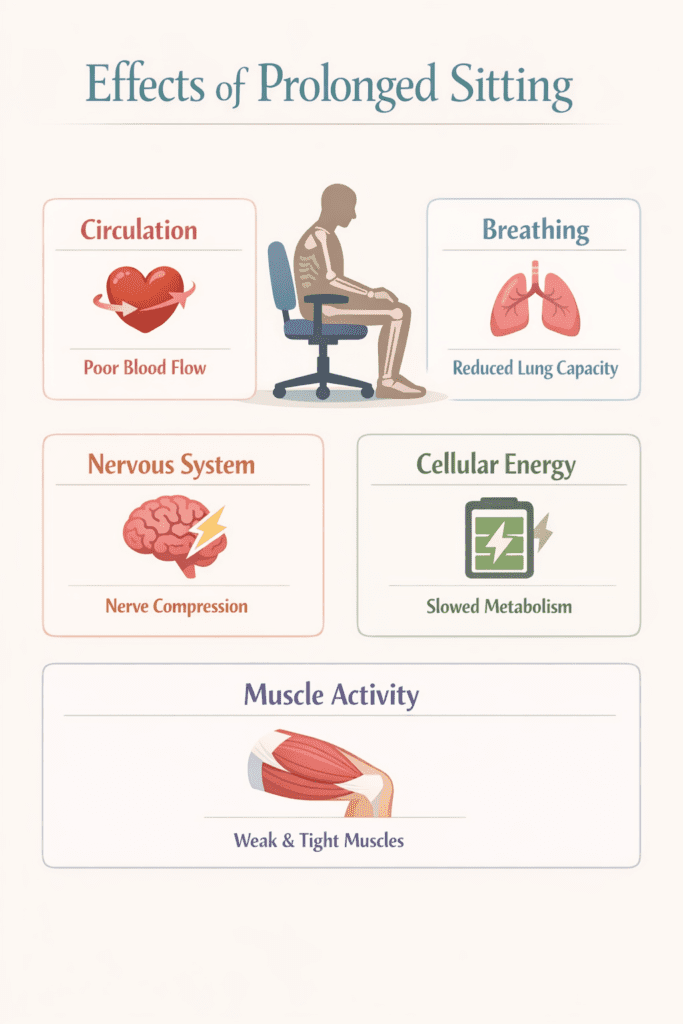
Sitting too long can make you feel tired because prolonged physical inactivity slows blood circulation, reduces oxygen delivery to the brain, and lowers nervous system alertness. These changes decrease cellular energy production and mental stimulation, which can lead to fatigue even when the body has not performed significant physical work.
| ⚙️ Body System | 🔬 What Happens During Long Sitting | ⚡ Effect on Energy |
|---|---|---|
| 🫀 Circulation | Blood flow slows because muscles are inactive | Brain receives slightly less oxygen |
| 🫁 Breathing | Posture encourages shallow chest breathing | Oxygen intake becomes less efficient |
| 🧠 Nervous System | Alertness signals decrease due to inactivity | Mental fatigue increases |
| 🔋 Cellular Energy | Mitochondria receive less stimulation | Energy production slows |
| 🦵 Muscle Activity | Muscle pump system becomes inactive | Circulation support drops |
The Hidden Reason Physical Inactivity Slows Circulation And Reduces Energy Delivery
Your body relies on movement to maintain efficient circulation.
While your heart pumps blood continuously, your muscles play a critical supporting role in moving blood throughout your body. When muscles contract, they squeeze nearby veins and help push blood back toward the heart. This mechanism is sometimes called the muscle pump system.
When you sit still for long periods, this pumping assistance decreases dramatically.
Blood circulation in the lower body slows, and the overall efficiency of oxygen and nutrient delivery becomes slightly reduced. Even small reductions in circulation can influence how energized you feel. This pattern is one of the reasons many people report feeling tired after long periods of inactivity, a phenomenon explored further in tired after sitting too long.
Your brain consumes about 20 percent of the body’s oxygen supply despite accounting for only about 2 percent of body weight. Because the brain depends heavily on oxygen and glucose, subtle circulation changes can affect alertness faster than people expect.
When circulation slows due to prolonged sitting, the brain may receive slightly less oxygen-rich blood. This doesn’t cause immediate medical problems, but it can create noticeable symptoms such as mental fog, reduced concentration, sluggish thinking, and increased fatigue.
Over time, the brain interprets this lower stimulation as a signal that the body is entering a more relaxed or low-activity state.
Instead of feeling energized, you begin to feel sleepy.

What Happens When Muscle Inactivity Interrupts The Body’s Natural Energy Pump
Many people think muscles are only important for movement or strength. But they also act as regulators of circulation and metabolic activity.
When you walk, stretch, or even shift your posture, your muscles activate thousands of small contractions throughout your body.
These contractions create several important effects.
- They stimulate blood flow through the veins
- They increase oxygen delivery to tissues
- They activate cellular energy production
- They keep the nervous system alert
When sitting still for extended periods, those micro-contractions stop happening.
This creates what researchers sometimes describe as metabolic idling.
Your muscles use less glucose, your cells receive fewer stimulation signals, and the body gradually transitions into a low-energy operating mode.
The surprising result is that inactivity can make your body feel less energized than light activity.
That’s why people often feel more alert after a short walk than after another hour of sitting.
Your body evolved for movement, not long stretches of immobility.

The Science Behind Reduced Oxygen Flow To The Brain During Long Sitting Periods
Another key factor explaining why sitting too long makes you tired involves oxygen delivery to the brain.
The brain constantly requires oxygen to maintain cognitive functions like memory, focus, and decision-making.
When circulation slows during prolonged sitting, two things happen simultaneously.
First, less blood circulation reaches the brain per minute. The reduction is usually small but still meaningful for alertness.
Second, breathing patterns often change during sedentary work.
Many desk workers unconsciously switch to shallow chest breathing when sitting in front of computers. This type of breathing reduces the amount of oxygen drawn into the lungs with each breath.
Over time, shallow breathing slightly lowers oxygen exchange.
Combined with reduced circulation, this can decrease the brain’s oxygen availability enough to influence mental clarity.
The brain responds by reducing alertness signals.
You begin to feel tired even though your body has barely used physical energy.
Many people experience energy drops during extended sitting or desk work. If you want to understand other common causes of daily fatigue and how to restore energy naturally, these guides may help:
The Impact Of Prolonged Sitting On Circulation, Oxygen Flow, And Energy Levels
| 🧪 Observed Effect | 🔬 What Happens in the Body | ⚡ Impact on Energy |
|---|---|---|
| 🫀 Reduced circulation | Blood flow slows when muscles stay inactive for long periods | Brain receives slightly less oxygen |
| 🫁 Shallow breathing | Sitting posture often restricts lung expansion | Oxygen intake becomes less efficient |
| 🧠 Lower nervous system stimulation | Fewer movement signals reach the brain | Alertness gradually drops |
| 🔋 Reduced mitochondrial stimulation | Cells receive fewer signals to produce energy | Energy production slows |
| 🦵 Inactive muscle pump | Leg muscles stop assisting circulation | Blood movement becomes less efficient |
How Sitting Posture Quietly Restricts Breathing And Lowers Oxygen Intake
Posture plays a bigger role in fatigue than most people realize.
When people sit for long periods, especially at desks, their posture tends to shift gradually into a forward-rounded position.
Shoulders roll forward.
The upper back curves.
The head moves closer to the screen.
This posture compresses the chest and limits how fully the lungs can expand.
When the lungs cannot expand completely, each breath pulls in less oxygen.
The body compensates by increasing breathing frequency slightly, but this compensation often remains shallow.
Over time, this posture-related breathing restriction can contribute to fatigue.
You may not consciously notice the change in breathing, but your brain still detects the reduced oxygen efficiency.
As oxygen levels fluctuate, the nervous system shifts toward a more relaxed state.
This is one of the hidden reasons desk work can feel mentally draining after several hours.
For example, poor sitting posture is often linked with prolonged desk work environments where people remain seated for long periods without breaks. A simple movement reset such as a quick posture adjustment can help reactivate circulation. A practical example is explained in 3 minute posture reset for desk workers.

The Link Between Sedentary Behavior And Nervous System Alertness Signals
Your nervous system constantly balances two major modes.
The sympathetic nervous system increases alertness and prepares the body for activity.
The parasympathetic nervous system promotes rest, digestion, and relaxation.
Physical movement naturally stimulates the sympathetic system in healthy amounts. Even simple movements like walking, standing, or stretching increase alertness signals to the brain.
But prolonged sitting reduces this stimulation.
As the body remains still, sympathetic activation decreases and the parasympathetic system becomes more dominant.
This shift signals the brain that activity levels are low.
Over time, the brain interprets the environment as one where alertness is less necessary.
The result is reduced mental energy.
This is why people working at desks for long hours often feel sleepy in the afternoon even if they slept well the night before. Many people notice this pattern during common daily energy dips discussed in why am I so tired in the afternoon.
The Hidden Reason Low Sensory Stimulation During Sitting Gradually Reduces Mental Alertness
Another overlooked mechanism behind sedentary fatigue involves sensory stimulation levels in the brain.
When the body moves through space—walking, standing, or interacting physically with the environment—the brain receives a constant stream of signals from muscles, joints, balance systems, and visual changes. These signals help maintain alertness by activating several brain regions responsible for awareness and attention.
But during long sitting periods, especially in quiet office environments, sensory input becomes repetitive and minimal. The brain processes the same visual field, the same posture signals, and the same environmental conditions for hours at a time.
As a result, the brain gradually lowers its alertness signals because the environment appears stable and low-demand. This reduction in stimulation contributes to the heavy, foggy feeling many people experience during extended desk work. Some people notice this pattern especially when they feel mentally drained but unable to fully rest, a state explored further in mentally drained but restless in the afternoon.

What Most People Miss About Sedentary Fatigue And Brain Energy Use
Many people believe fatigue only occurs when the body uses too much energy.
But the opposite problem can also happen.
When the body uses too little energy, certain biological systems become under-stimulated.
The brain depends on constant input from the body including signals from muscles, circulation, breathing, and sensory stimulation.
Movement helps maintain these signals.
Without movement, the brain receives fewer activation signals.
This leads to a surprising phenomenon called low stimulation fatigue.
Instead of being tired from overwork, you feel tired because your body hasn’t generated enough biological stimulation.
This explains why people sometimes feel more awake after a quick walk around the office than after drinking another cup of coffee.
Movement restarts several energy systems simultaneously.
How Reduced Muscle Glucose Use During Sitting Quietly Lowers Brain Energy Availability
Another biological reason sitting too long makes you tired involves how muscles regulate blood sugar stability during the day. When muscles remain inactive for long periods, they use far less glucose from the bloodstream. Normally, light activity such as walking, standing, or stretching helps muscles absorb glucose efficiently and maintain stable energy delivery to the brain.
Without that activity, glucose usage slows and the body’s metabolic rhythm becomes less dynamic. This does not always cause dramatic blood sugar swings, but it can reduce the steady energy flow that the brain depends on for focus and alertness.
Over time, this reduced metabolic engagement can contribute to subtle symptoms like slower thinking, reduced concentration, and mental sluggishness during desk work. These patterns often overlap with common afternoon fatigue triggers described in why am I so tired in the afternoon and daily metabolic dips that people try to counter using strategies such as midday energy boost without coffee.
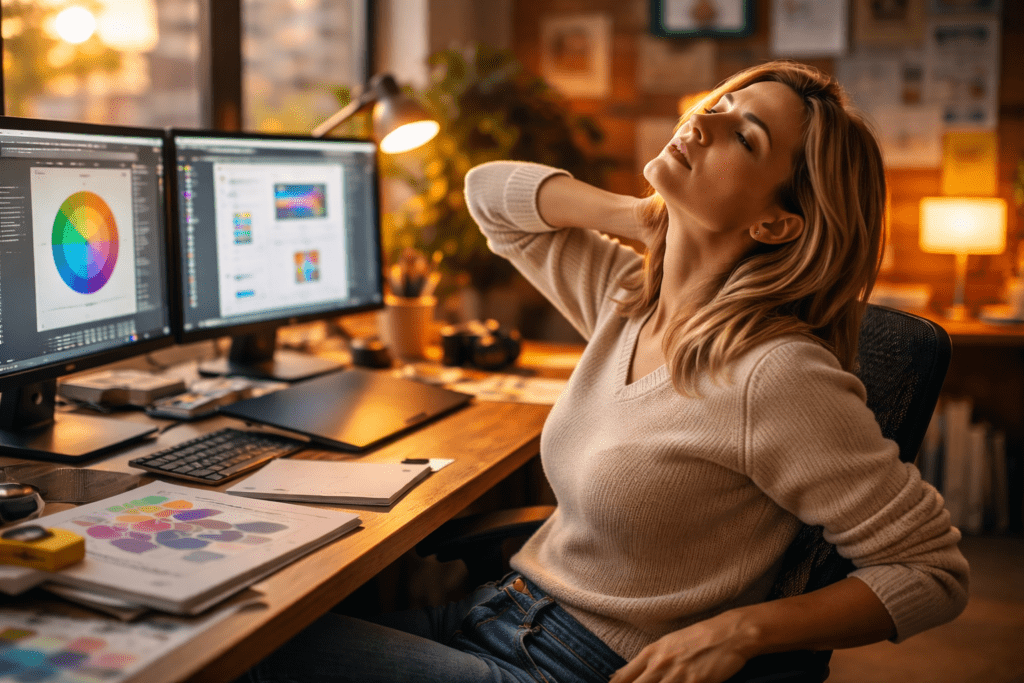
The Real Cause Behind Afternoon Fatigue For Many Desk Workers
Many people blame afternoon tiredness entirely on lunch or caffeine timing.
But prolonged sitting during the first half of the day often plays a major role.
Imagine a typical workday in the United States.
A person arrives at work around 9 AM and immediately begins sitting at a computer.
From 9 AM to noon they may stand only once or twice.
Lunch follows and then another extended sitting period begins.
By 2 or 3 PM the body has experienced five or six hours of minimal movement.
During this time circulation gradually slowed, breathing became shallow, muscle activation dropped, and nervous system stimulation decreased.
The result is a biological environment that encourages fatigue.
Even if sleep and nutrition were adequate the body’s energy systems have been running at reduced activity for most of the day.
For people experiencing afternoon energy crashes, lifestyle habits that restore circulation and hydration can help improve energy levels as explained in simple daily hydration habits energy and afternoon energy crash prevention.
How Mitochondrial Energy Production Slows During Long Periods Of Inactivity
Another lesser-known mechanism involves mitochondria, the tiny structures inside cells responsible for producing energy.
Mitochondria generate energy in the form of ATP which powers nearly every biological process in the body.
Their activity level responds strongly to physical movement.
When muscles contract and the body moves mitochondria increase energy production to meet demand.
But when movement decreases dramatically mitochondrial stimulation also declines.
This doesn’t mean mitochondria stop working but they operate at a lower level of activity.
Over time reduced mitochondrial stimulation can contribute to feelings of sluggishness or fatigue.
In other words your body produces energy most efficiently when it expects movement.
Extended sitting signals the opposite.
Research on sedentary behavior and physical inactivity has highlighted these physiological effects in public health literature such as guidance from the Centers for Disease Control and Prevention and studies discussed by Harvard Health Publishing.
How Small Movement Breaks Reactivate The Body’s Energy Systems
Fortunately the mechanisms causing sedentary fatigue can reverse quickly.
Even brief movement reactivates many systems involved in alertness and energy.
When you stand up and walk several biological responses happen almost immediately.
Circulation increases
Muscles begin pumping blood again
Breathing deepens
Oxygen delivery improves
Nervous system alertness rises
These changes can occur within minutes.
Small movement breaks do not need to feel like exercise. Even micro-movements, such as standing briefly, shifting your feet, rolling your shoulders, or walking across the room, can help interrupt the low-stimulation state that builds during long sitting.
This matters because sitting fatigue often grows quietly. The goal is not to wait until you feel exhausted, but to give your body regular movement signals before circulation, posture, and alertness drop too far.
That’s why many people feel noticeably more awake after walking down a hallway climbing stairs or stretching.
The body is designed to respond quickly to movement.
If you want a faster routine, this quick desk reset for sitting fatigue shows how to restore energy in just a few minutes.
Short activity breaks during the workday are often recommended by health organizations including the National Institutes of Health (NIH), which encourage people to move more and sit less throughout the day.
For people who feel mentally drained during the workday simple reset strategies such as movement or brief mental breaks can restore alertness similar to approaches described in mentally drained but restless in the afternoon or quick resets without caffeine like midday energy boost without coffee.

The Impact Of Reduced Lower-Body Circulation On Temperature Regulation And Energy Levels
Another physiological factor that contributes to sedentary fatigue involves circulation and temperature regulation in the lower body.
When sitting for extended periods, blood flow in the legs and lower extremities slows because muscles are not contracting to assist circulation. Over time, this reduced movement can slightly affect how efficiently heat and metabolic activity are distributed throughout the body.
The body’s thermoregulation system responds by shifting toward energy conservation rather than energy production. In simple terms, the body interprets the prolonged inactivity as a signal that it does not need to remain highly energized.
If sitting also makes your legs feel shaky or weak, this guide on feeling shaky and tired after sitting explains the more specific lower-body circulation angle.
Although these changes are subtle, they can accumulate during long work sessions and contribute to the overall sensation of sluggishness. This is one reason simple movement resets—such as standing, stretching, or short posture corrections like the method described in 3 minute posture reset for desk workers—can quickly restore circulation and improve alertness. Supporting hydration also helps circulation efficiency during sedentary work as discussed in simple daily hydration habits energy.
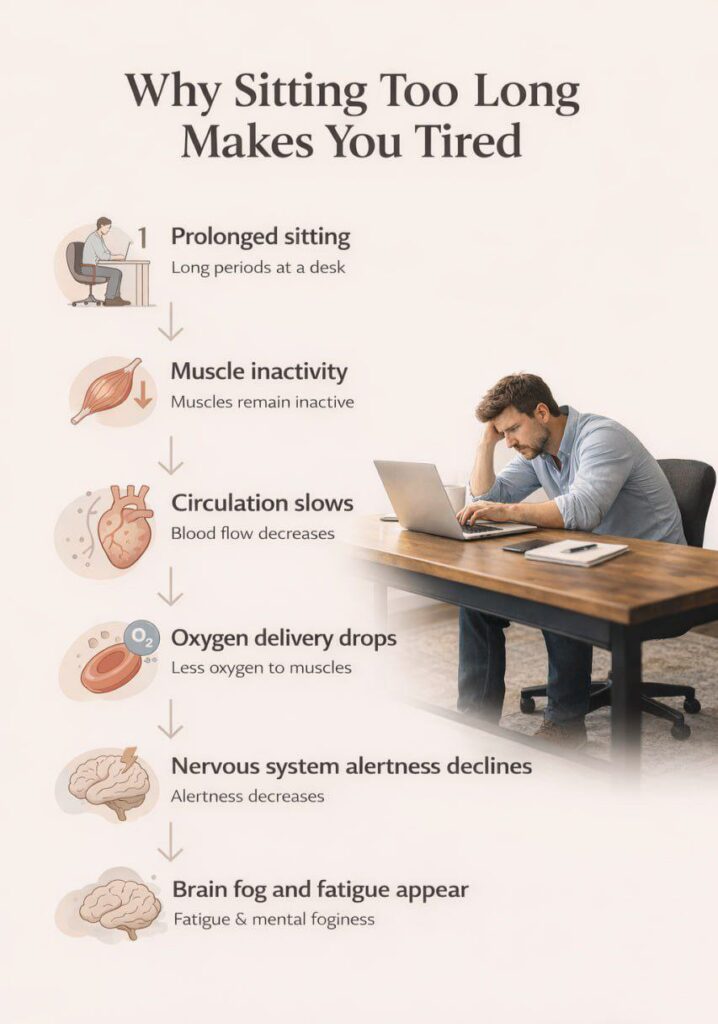
The Sedentary Fatigue Chain Explained
- Muscle activity decreases
- Circulation slows in the lower body
- Oxygen delivery to the brain becomes less efficient
- Nervous system alertness signals drop
- Cellular energy production slows
- Mental fatigue and sluggishness develop
Common Signs Of Fatigue Caused By Prolonged Sitting
- Brain fog or difficulty concentrating
- Heavy or tired eyes during desk work
- Sudden afternoon sleepiness
- Reduced mental motivation
- Feeling sluggish despite little physical activity
- Temporary improvement after walking or stretching
Several common symptoms can signal that fatigue is being caused by prolonged sitting rather than physical overexertion.
Why Sitting Too Long Makes You Tired Even Without Physical Effort
Understanding why sitting too long makes you tired reveals something important about how the human body works.
Energy is not just about conserving physical effort.
It depends on several systems working together.
Circulation
Oxygen delivery
Muscle activation
Nervous system signaling
Cellular energy production
When prolonged sitting reduces stimulation in these systems the body gradually shifts toward a lower-energy state.
This type of fatigue can feel confusing because it appears without heavy activity.
But from a biological perspective the body simply responds to reduced movement and lower stimulation.
Recognizing this pattern explains why so many people feel exhausted after long periods of desk work studying or driving.
Your body expects movement throughout the day.
When that movement disappears, energy systems slow down and tiredness follows. This explains why sitting too long makes you tired even when your body has not performed physical work.
Explore More Ways to Restore Your Daily Energy
If long periods of sitting leave you feeling drained, you’re not alone. Many everyday habits can influence how your body produces and maintains energy throughout the day.
These helpful guides explain other common causes of fatigue and simple ways to improve your daily energy levels:
- How to Fix Sitting Fatigue in Minutes
- Mentally Drained but Restless in the Afternoon
- Simple Daily Hydration Habits for Energy
- How to Prevent Afternoon Energy Crashes
Understanding the biological reasons behind fatigue can help you make small daily changes that support better focus, energy, and overall well-being.
Frequently Asked Questions
Can sitting too long really make you feel tired even without physical activity?
Yes. Sitting for long periods can reduce circulation, lower oxygen delivery to the brain, and decrease nervous system stimulation. These changes can gradually reduce alertness and mental energy, which is why many people feel tired after extended desk work even if they have not done physically demanding tasks.
Why do I feel sleepy after sitting at a desk all day?
Long periods of sitting reduce muscle activity and slow circulation. At the same time, desk posture often leads to shallow breathing and lower oxygen intake. Together, these factors can reduce mental alertness and contribute to sleepiness during or after long work sessions.
Does sitting too long reduce blood flow to the brain?
Prolonged sitting can slightly slow overall circulation because muscles are not actively helping move blood through the body. While the heart continues pumping normally, reduced movement can decrease the efficiency of circulation, which may influence oxygen delivery and mental alertness.
Why do I feel more awake after standing or walking for a few minutes?
Standing or walking activates muscles that help pump blood through the body. Movement also increases oxygen intake, stimulates the nervous system, and improves circulation. These changes can quickly restore alertness and reduce the sluggish feeling caused by prolonged sitting.
Can poor posture while sitting make fatigue worse?
Yes. Slouched or forward-leaning posture can compress the chest and limit how fully the lungs expand. This can lead to shallower breathing and slightly reduced oxygen intake, which may contribute to mental fatigue during long periods of desk work.
Is sedentary fatigue different from normal tiredness?
Sedentary fatigue occurs when inactivity reduces biological stimulation rather than when the body uses too much physical energy. In this case, the body receives fewer movement signals, circulation slows slightly, and mental alertness can gradually decrease.
How often should you move to avoid fatigue from sitting?
Health organizations often recommend standing, stretching, or walking briefly every 30 to 60 minutes during long periods of sitting. Even short movement breaks can improve circulation and help maintain energy and concentration throughout the day.
Can dehydration make fatigue from sitting worse?
Yes. Proper hydration supports healthy circulation and helps maintain blood flow throughout the body. When dehydration occurs, circulation efficiency can decrease, which may intensify feelings of fatigue during long periods of sedentary work.
Does sitting too long affect energy production in cells?
Physical movement helps stimulate mitochondria, the structures in cells responsible for producing energy. When movement decreases for long periods, mitochondrial stimulation can also decline, which may contribute to sluggishness or reduced energy levels.
Author Experience and Content Credibility
This article was written by AYOUB EDDAROUICH, who studies everyday lifestyle habits that influence energy levels, fatigue patterns, and daily productivity. The content focuses on explaining common experiences—such as why sitting too long makes you tired—by connecting them to well-known biological processes like circulation, oxygen delivery, and nervous system activity.
The information in this article is based on publicly available educational resources from respected health institutions, including the Centers for Disease Control and Prevention (CDC), Harvard Health Publishing, and the National Institutes of Health (NIH), which provide research and guidance on sedentary behavior and physical activity.
These sources help explain why prolonged sitting can affect circulation, energy regulation, and alertness—an issue commonly experienced by many office workers in the United States during long hours of desk work.
