

You finish a balanced lunch. Grilled chicken. Brown rice. Roasted vegetables. Maybe sparkling water instead of soda. You feel proud of your choices.
Then 30 minutes later, your eyelids feel heavy. Your focus drops. You want coffee or a nap.
If you’ve ever wondered why you feel tired after eating — even when the meal was healthy — you’re not alone. This isn’t just about overeating or junk food. It’s a predictable biological response involving hormones, blood flow, brain chemistry, and your internal clock.
Feeling tired after eating is usually the result of a coordinated metabolic shift that moves your body from alert mode into digest mode. The bigger the shift, the stronger the fatigue.
Post-meal fatigue, also called postprandial somnolence, is a temporary drop in alertness that happens after eating due to insulin release, parasympathetic nervous system activation, serotonin shifts, and blood flow redistribution toward digestion. It is a normal metabolic response that can feel stronger depending on meal size, sleep quality, and time of day.
Post-meal fatigue (also called postprandial somnolence) is a temporary drop in alertness that happens after eating. It occurs when insulin rises, digestion activates the parasympathetic nervous system, serotonin levels shift, and blood flow redirects toward the gut, reducing short-term mental and physical energy.
Let’s break down exactly what happens inside your body from the first bite to the energy dip.
Why Do You Feel Tired After Eating?
Feeling tired after eating usually happens because your body shifts into digestion mode. Several biological changes occur at the same time:
- Blood sugar rises after food intake.
- Insulin is released to regulate glucose.
- Serotonin levels increase, promoting relaxation.
- The parasympathetic nervous system activates (rest and digest mode).
- Natural afternoon circadian dips can amplify sleepiness.
When these factors overlap, post-meal fatigue becomes more noticeable.
The Science Behind Why You Feel Tired After Eating
The 5-Step Biological Chain Reaction That Causes Post-Meal Sleepiness
- Blood sugar rises after food intake.
- Insulin is released to regulate glucose.
- Tryptophan availability increases in the brain.
- Serotonin levels shift toward relaxation.
- Parasympathetic rest and digest mode lowers alertness.
| Trigger | What Happens in the Body | Why You Feel Tired |
|---|---|---|
| Blood sugar rises | Insulin is released to regulate glucose | Energy shifts from alert mode to storage mode |
| Digestion begins | Parasympathetic nervous system activates | Body enters rest-and-digest state |
| Tryptophan availability increases | Serotonin levels shift | Relaxation and mild sleepiness increase |
| Afternoon circadian dip | Cortisol naturally declines | Alertness drops more easily |
When you eat, your body launches a complex cascade designed to process nutrients efficiently. That cascade involves insulin, blood glucose, the parasympathetic nervous system, serotonin, cortisol timing, and adenosine sensitivity.
Here’s the simplified biological chain reaction again in context.
Food enters your digestive system. Blood sugar rises. Insulin is released from the pancreas. Blood flow shifts toward digestion. The nervous system switches into parasympathetic dominance. Brain alertness temporarily decreases.
Each step plays a role in why you feel tired after eating.
How Insulin Spikes Can Trigger Post-Meal Fatigue
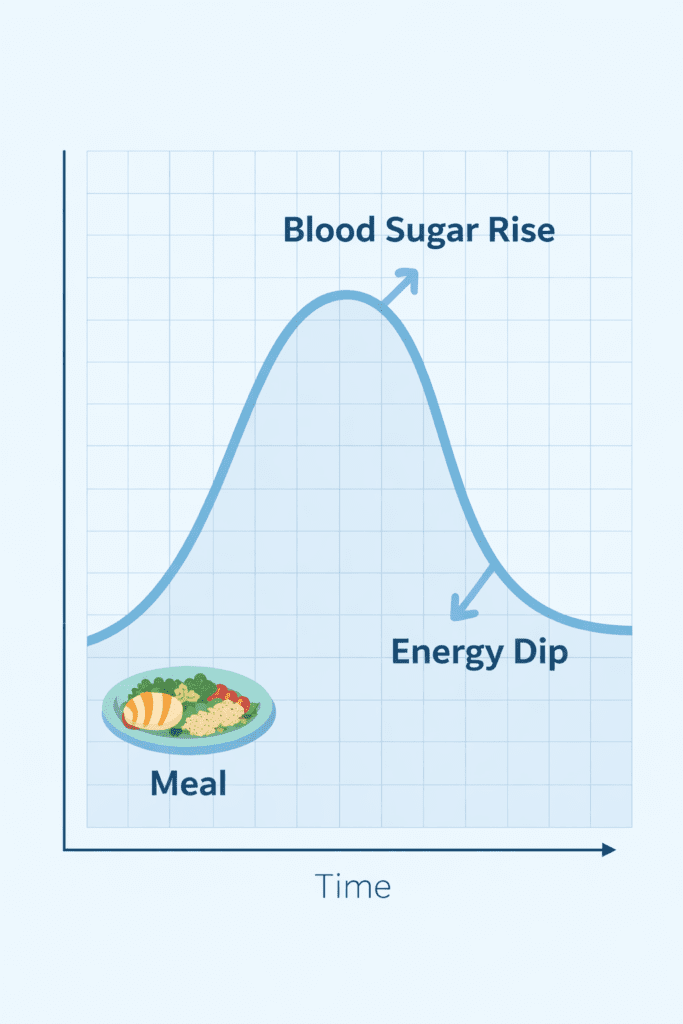
Even healthy meals raise blood sugar. Brown rice, fruit, sweet potatoes, and whole grains still convert into glucose.
When glucose enters your bloodstream, your pancreas releases insulin. Insulin’s job is to shuttle glucose into cells for storage or energy use. The National Library of Medicine explains how insulin regulates blood sugar and metabolic balance on its diabetes overview page.
But here’s what most people miss.
Insulin doesn’t just lower blood sugar. It also influences amino acid transport in the brain.
Specifically, insulin increases the relative availability of tryptophan. Tryptophan is the precursor to serotonin, a calming neurotransmitter. Serotonin can later convert into melatonin, your sleep hormone.
So when insulin rises, serotonin production can increase. That subtle chemical shift can make you feel relaxed, calm, and sleepy.
This happens even if your meal was high in protein. Protein contains tryptophan. Combine that with insulin response, and the effect compounds.
If you frequently experience shakiness along with fatigue, you may also want to understand why blood sugar crash symptoms happen, because rapid glucose shifts can intensify the drop in energy.
The Hidden Reason Digestion Redirects Your Blood Flow
After you eat, your body prioritizes digestion.
Blood is redirected toward the stomach and intestines to support stomach acid production, enzyme release, nutrient absorption, and intestinal movement.
This shift slightly reduces blood flow available for skeletal muscles and, to a small degree, the brain.
The result is subtle but noticeable. You may feel physically sluggish and mentally slower.
If you are sitting at a desk in a quiet office at 1:30 PM, that small dip feels amplified.
The Link Between the Parasympathetic Nervous System and Meal Drowsiness
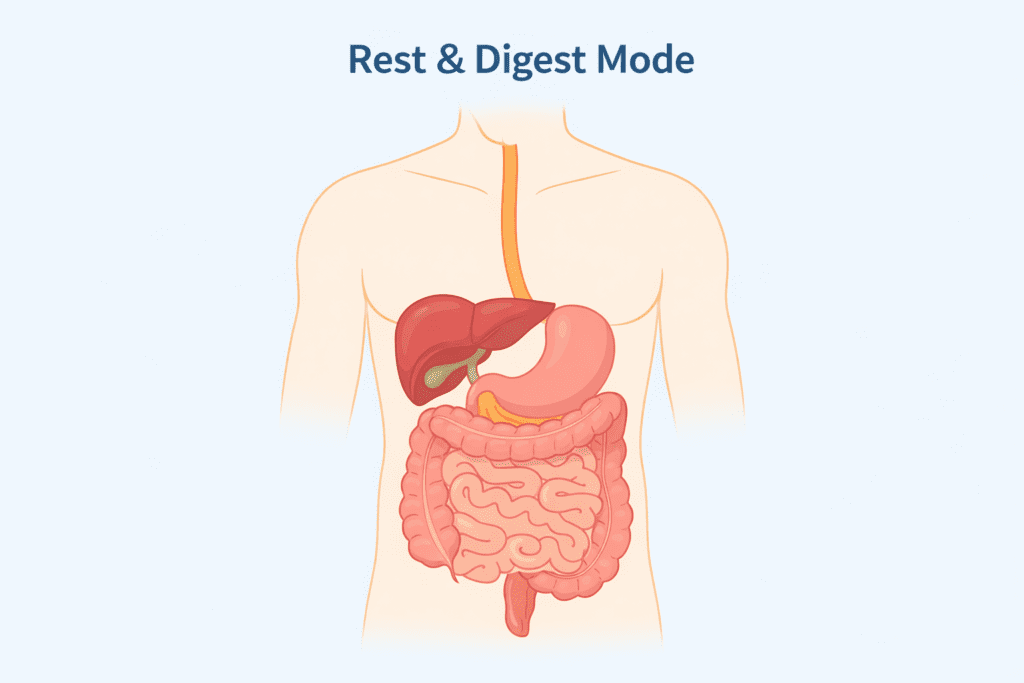
Your nervous system has two major modes: sympathetic, often called fight or flight, and parasympathetic, known as rest and digest.
Eating strongly activates the parasympathetic branch, primarily through vagus nerve stimulation.
This rest and digest mode lowers heart rate, relaxes muscles, and reduces alertness.
You are not malfunctioning. Your body is intentionally shifting into processing mode.
The stronger the parasympathetic activation, the stronger the sensation of fatigue.
Large meals amplify this effect. High-fat meals slow digestion, prolonging parasympathetic dominance. That is why heavy dinners can make you feel like collapsing on the couch.
What Happens When Circadian Rhythm Amplifies Post-Meal Sleepiness
Timing matters.
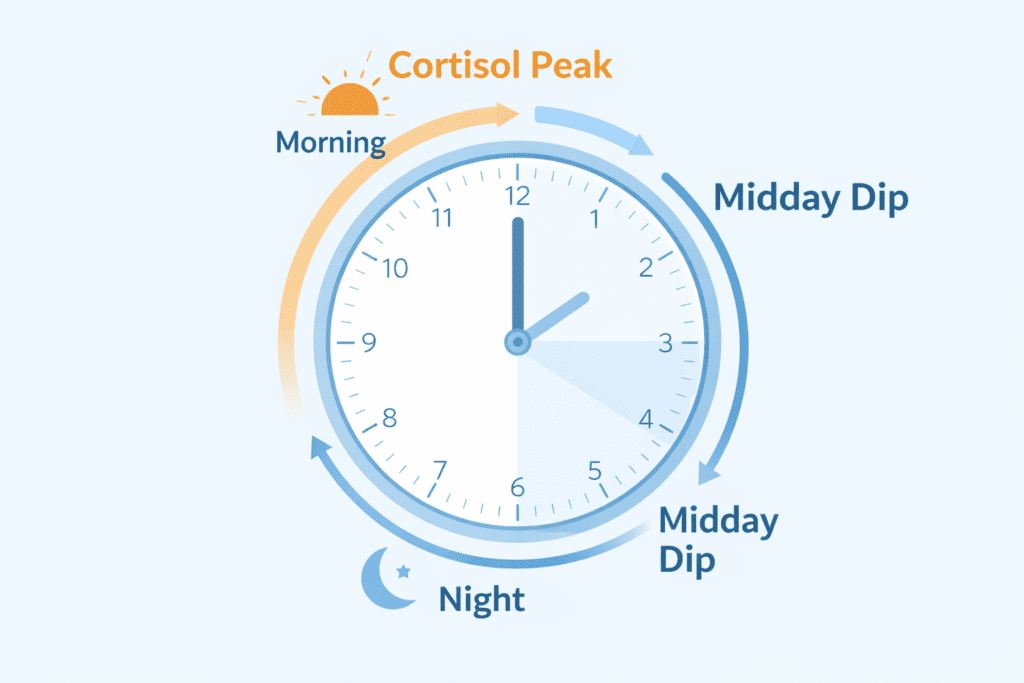
Cortisol, your alertness hormone, peaks in the morning and gradually declines throughout the day. According to the National Institute of General Medical Sciences, circadian rhythms regulate daily patterns of alertness and hormone release on its circadian rhythm fact sheet.
Between 1 PM and 3 PM, most Americans naturally experience a circadian dip in alertness. This happens regardless of food.
Now combine natural cortisol decline, insulin release, serotonin increase, and blood flow redistribution.
That combination creates the classic afternoon crash.
This is why many people feel especially tired after eating lunch. If that pattern feels extreme, you might relate to feeling exhausted at 3PM even after 8 hours sleep, which often involves the same hormonal timing overlap.
It is not just the food. It is the interaction between digestion and your biological clock.
Why Even Healthy Meals Can Make You Sleepy
There is a common belief that only high-carb junk food causes fatigue after eating.
Not true.
Here is why balanced meals can still make you tired.
Protein stimulates insulin, though less than refined carbs. Complex carbs still convert to glucose. Fat slows digestion, prolonging parasympathetic dominance. Large portions increase digestive workload. Eating quickly spikes insulin faster.
Even a grilled chicken salad can trigger tiredness if the portion is large, you were already in a circadian dip, you slept poorly the night before, or you are sedentary.
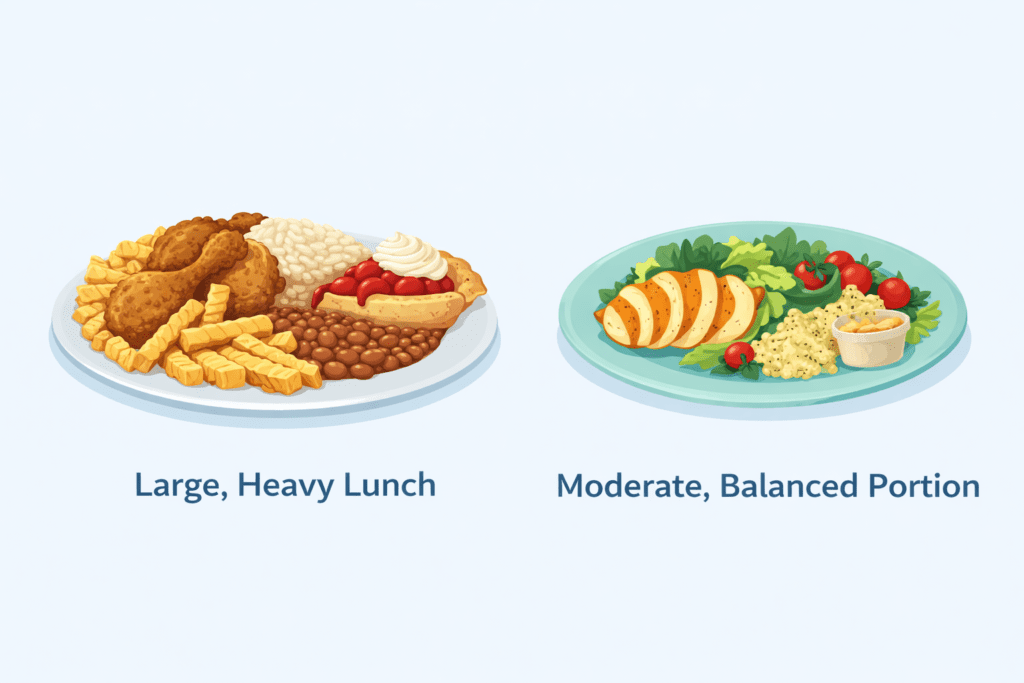
The context around the meal matters as much as the meal itself.
If your tiredness mostly happens at lunchtime, you may find it helpful to explore why do I feel tired after eating lunch for more time-specific patterns.
The Real Cause of the Food Coma Feeling
The so-called food coma has a technical name: postprandial somnolence.
It is not a disease. It is a metabolic coordination effect.
Here is the cause-effect chain in full.
Meal size increases. Digestive workload increases. Parasympathetic dominance increases. Insulin response increases. Serotonin shift increases. Alertness decreases.
Now layer in poor sleep, which raises adenosine buildup. Add stress, which disrupts cortisol rhythm. Add high sugar intake, which causes rapid glucose swings.
The effect escalates.
What feels like random tiredness is actually cumulative biology.
What Most People Miss About Feeling Tired After Eating
Most advice says eat smaller meals.
That is helpful but incomplete.
What most people miss is that post-meal fatigue is often magnified by pre-meal metabolic instability.
If you skipped breakfast, drank coffee on an empty stomach, were stressed all morning, or sat for hours without movement, your blood sugar and cortisol rhythm are already unstable.
Then lunch becomes the tipping point.
It is not just the meal. It is the entire metabolic context of your day.
For some people, this pattern overlaps with feeling wired at night yet exhausted during the day. If that sounds familiar, learning about being wired but tired at night can help you see the bigger circadian picture.
Not Sure Which Pattern Matches You?
Post-meal fatigue is often connected to a bigger daily energy rhythm. If your tiredness follows a predictable time pattern or comes with shakiness or brain fog, these deeper breakdowns can help you pinpoint the real trigger.
- Why Blood Sugar Crash Symptoms Happen
- Why Am I So Tired in the Afternoon?
- Why Do I Feel Shaky and Tired?
Understanding your specific energy pattern makes it much easier to stabilize your day.
How Glucose Variability Makes You Tired After Eating
Stable blood sugar rises gradually and falls gradually.
But in many busy adults, glucose spikes quickly and drops quickly.
That rapid drop, even if it does not reach clinical low blood sugar levels, can create brain fog, shakiness, irritability, and sudden fatigue.
The faster the spike, the stronger the crash.
Refined carbs do this more aggressively, but large portions of healthy carbs can still create noticeable swings.
When people repeatedly feel tired after eating, glucose variability is often a hidden driver.
The Impact Of Adenosine and Sleep Debt on Post-Meal Fatigue
Adenosine builds up in your brain throughout the day. It creates sleep pressure.
If you did not sleep enough the night before, adenosine accumulates faster.
When you eat and serotonin rises slightly, your brain becomes more sensitive to that sleep pressure.
That is why someone who slept six hours feels dramatically more tired after lunch than someone who slept eight.
The meal did not cause the exhaustion. It revealed it.
Counterintuitive Insight: Sometimes Protein Makes You Sleepier
Most people think protein equals energy.
But here is the nuance.
Protein contains tryptophan. Tryptophan supports serotonin production.
If your meal is high in protein, moderate in carbs, and large in volume, you may still experience relaxation and mild drowsiness.
This surprises many people who switch to high-protein lunches expecting zero fatigue.
It is not that protein is bad. It is that digestion itself is metabolically calming.
A Structured Metabolic Stability Checklist
If you regularly feel tired after eating, review this checklist.
Pre-Meal Factors
Did you skip breakfast?
Did you overconsume caffeine?
Did you sleep under seven hours?
Were you sedentary all morning?
Are you highly stressed?
Meal Factors
Large portion?
High refined carb load?
Low fiber?
Ate quickly?
Heavy in fat?
Post-Meal Factors
Sitting immediately?
Low light environment?
Afternoon circadian dip?
Common Reasons You Feel Tired After Eating
- Large meal portions
- High carbohydrate load
- Low fiber intake
- Poor sleep the night before
- Afternoon circadian dip
- Sedentary behavior
- High stress levels
The more boxes checked, the stronger the fatigue response.
How Sedentary Behavior Magnifies Meal-Related Fatigue
Sitting for long periods reduces muscle glucose uptake efficiency.

Muscles are major glucose disposal sites.
If you have been sitting at a computer all morning, your muscles are metabolically cold.
When you eat, glucose clearance is slower. Insulin response can be stronger.
A brief five to ten minute walk after meals improves glucose stability and reduces fatigue in many people.

Movement changes the hormonal environment.
Escalation Pattern: When Post-Meal Tiredness Becomes Chronic
Occasional tiredness after eating is normal.
But frequent intense fatigue may signal insulin resistance, chronic sleep deprivation, elevated stress hormones, high sugar intake patterns, or poor circadian alignment.
Over time, repeated glucose spikes can increase hunger later, increase sugar cravings at night, disrupt sleep, and worsen afternoon crashes.
This creates a loop.
Energy instability feeds itself.
A Realistic American Workday Scenario

Imagine this.
You wake up at 6:30 AM. Coffee before food. Commute in traffic. Emails all morning. Minimal movement.
Lunch at 12:45 PM. Turkey sandwich, baked chips, fruit.
By 1:30 PM, your eyes are heavy.
Why?
Cortisol already declining. Adenosine elevated. Insulin released. Parasympathetic shift activated. Sitting reduces circulation.
That is a perfect biological storm.
Understanding the mechanism helps you see it is not weakness or lack of willpower. It is physiology.
The Bottom Line on Why You Feel Tired After Eating
Feeling tired after eating is usually the result of a coordinated metabolic shift involving insulin, serotonin, blood flow redistribution, parasympathetic activation, and circadian timing.
Even healthy meals can trigger this response.
The intensity depends on portion size, blood sugar stability, sleep quality, stress levels, time of day, and activity level.
Your body is not malfunctioning. It is following its biological design.
When you understand why you feel tired after eating, you can see the cause-and-effect chain clearly. Fatigue after meals is not random. It is predictable, explainable, and deeply connected to how your metabolism and nervous system work together.
Want to Stabilize Your Energy All Day?
If you regularly feel tired after eating, it’s usually part of a bigger daily energy pattern. Understanding your afternoon crash, blood sugar swings, and nighttime “wired but tired” cycle can help you break the loop.
Start here next:
- Why Blood Sugar Crash Symptoms Happen
- Why Am I So Tired in the Afternoon?
- Wired But Tired at Night Explained
The more you understand what’s driving your energy dips, the easier it becomes to build a routine that actually feels steady.
FAQ / People Also Ask
1. Why do I feel tired after eating?
Feeling tired after eating usually happens because your body shifts into “rest and digest” mode. Insulin rises to regulate blood sugar, serotonin levels may increase, and blood flow redirects toward digestion. This combination can temporarily lower alertness, especially in the afternoon.
2. Is it normal to get sleepy after meals?
Yes, mild sleepiness after meals is normal. Digestion activates the parasympathetic nervous system, which promotes relaxation. The effect may feel stronger if you ate a large meal, slept poorly the night before, or are in the natural afternoon circadian dip between 1 PM and 3 PM.
3. Why do I feel tired after eating even healthy food?
Healthy meals still raise blood sugar and stimulate insulin release. Insulin affects brain chemistry, including serotonin production, which promotes calmness. Large portions, high carbohydrate intake, or eating during a natural energy dip can increase post-meal fatigue even if the food is nutritious.
4. Does protein make you tired after eating?
Protein can contribute to post-meal sleepiness because it contains tryptophan, an amino acid involved in serotonin production. While protein stabilizes blood sugar better than refined carbs, large high-protein meals can still activate digestion and trigger mild drowsiness.
5. Why am I extremely tired after lunch?
Extreme fatigue after lunch often results from multiple factors combining: natural afternoon cortisol decline, insulin release, blood sugar fluctuations, and accumulated sleep pressure. Sedentary behavior and stress can intensify the energy dip.
6. How can I stop feeling tired after eating?
To reduce post-meal fatigue, try smaller portions, balanced macronutrients, slower eating, and light movement after meals. Improving sleep quality and reducing stress also helps stabilize blood sugar and circadian rhythm, which can minimize energy crashes.
7. Can blood sugar crashes make you tired after eating?
Yes. Rapid spikes and drops in blood sugar can cause fatigue, shakiness, and brain fog. Even if levels don’t reach clinical hypoglycemia, quick glucose fluctuations can trigger noticeable energy drops.
8. Why do I feel shaky and tired after meals?
Shakiness and fatigue after eating may be linked to rapid blood sugar changes. When insulin lowers glucose quickly, your body can temporarily react with weakness, irritability, or low energy, especially if you were stressed or skipped earlier meals.
9. Is post-meal fatigue a sign of diabetes?
Occasional tiredness after eating is common and not automatically a sign of diabetes. However, persistent severe fatigue combined with excessive thirst, frequent urination, or unexplained weight changes should be evaluated by a healthcare professional.
About This Article
This article was developed using current physiology research on glucose metabolism, insulin response, circadian rhythm biology, and nervous system regulation. It is written for educational purposes to explain common metabolic patterns in daily life. It does not replace individualized medical care.
