

It’s 10:47 PM.
You were dragging all afternoon. You could barely focus after lunch. You promised yourself you’d go to bed early.
Now you’re exhausted — but wide awake.
Your body feels heavy. Your eyes burn. But your brain won’t shut off. You scroll. You replay conversations. You think about tomorrow’s to-do list.
If this sounds familiar, you’re likely experiencing wired but tired at night — a state where your body is physically drained but your nervous system is still in alert mode.
The good news? This pattern is common among busy adults, especially office workers. And in many cases, it can be improved with simple daily recovery habits.
Table of Contents
What Does “Wired but Tired” Mean?
Feeling wired but tired at night means your body feels physically exhausted while your mind feels alert, restless, or overstimulated. Instead of smoothly transitioning into sleep mode, your nervous system stays switched on.
This usually happens when your stress response remains active longer than it should. Even if you slept 7–8 hours the night before, your body may struggle to shift from “go mode” into “rest mode.”
This isn’t always the same as clinical insomnia. Often, it’s a rhythm problem — not a permanent sleep disorder.
Why You Feel Wired but Tired at Night
Most people assume they’re not tired enough. In reality, they’re often too stimulated to relax.
Your nervous system has two primary gears:
- Sympathetic mode — alert, productive, problem-solving
- Parasympathetic mode — calm, recovery, sleep-ready
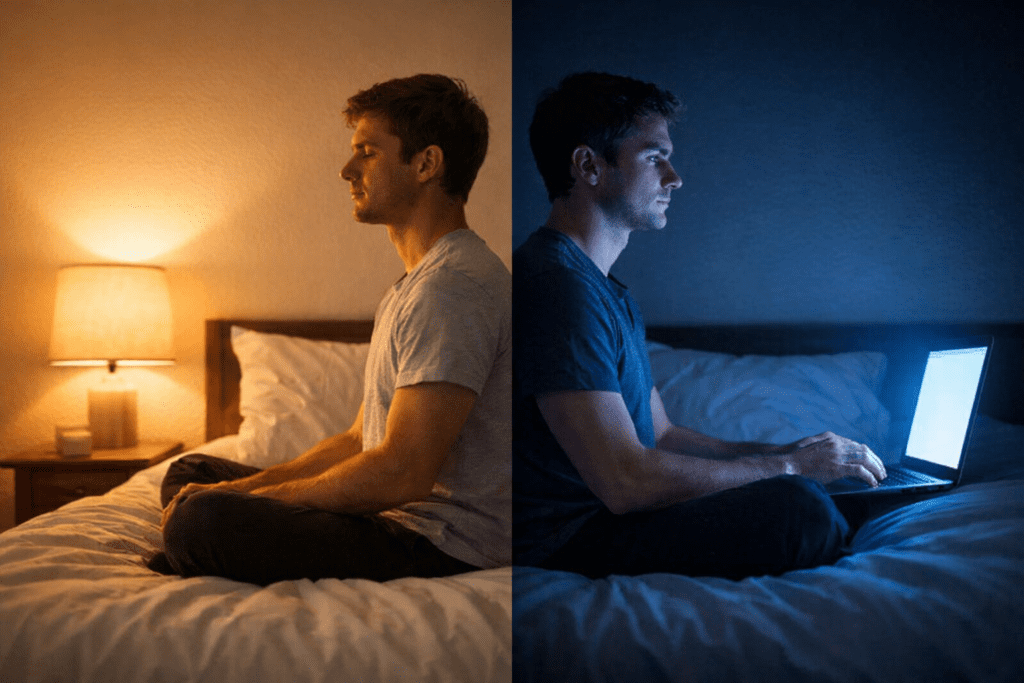
If your day is packed with screens, notifications, meetings, traffic, and multitasking, your body doesn’t instantly downshift at bedtime. It needs a transition.
Here are the most common reasons this happens.
1. You Never Fully Slowed Down During the Day
Many adults move nonstop:
Emails.
Meetings.
Texts.
Driving.
Dinner prep.
Streaming.
Scrolling.
There’s no real pause.
When nighttime finally becomes quiet, your brain uses that space to process everything it postponed. That’s when racing thoughts show up.
Pro insight: Your brain often saves unfinished stress for the first quiet moment of the day — which is usually bedtime.
If you regularly feel drained in the afternoon, addressing daytime energy patterns can help. Articles like this one on preventing afternoon energy crashes may give you insight into how earlier habits affect nighttime alertness:
https://everydayhealthplan.com/afternoon-energy-crash-prevention/
2. Late-Day Caffeine or Sugar
Even if you “can fall asleep” after coffee, caffeine can stimulate your nervous system for hours. The same goes for sugary evening snacks.
You may not feel jittery. But your body may still be in alert mode.
Quick tip: Try stopping caffeine at least 6–8 hours before bed and notice how your evening feels after a week.
3. Mental Exhaustion Without Physical Movement
There’s a difference between being mentally tired and physically tired.
Mental fatigue comes from decision-making, screen time, and cognitive overload. Physical fatigue comes from movement.
If you sat most of the day, your body may not feel physically ready for deep sleep — even if your brain feels fried.
A short walk after dinner or gentle stretching can help your body feel ready to rest.
If you often feel mentally drained after work, this 15-minute reset routine can help you decompress earlier in the evening:
https://everydayhealthplan.com/mental-fatigue-after-work-15-minute-reset/
4. The Nighttime “Second Wind”
Ever notice a burst of energy around 9 or 10 PM?
This can happen when stress hormones remain elevated during the day. Once you finally sit down, your brain shifts into processing mode.
It feels like sudden productivity — but it’s often delayed stress activation.
According to Harvard Health, the stress response is designed to keep us alert during perceived challenges. When it doesn’t fully power down, it can interfere with relaxation at night. You can learn more about how the stress response works here:
https://www.health.harvard.edu/staying-healthy/understanding-the-stress-response
5. Screens as Your Only Wind-Down Routine
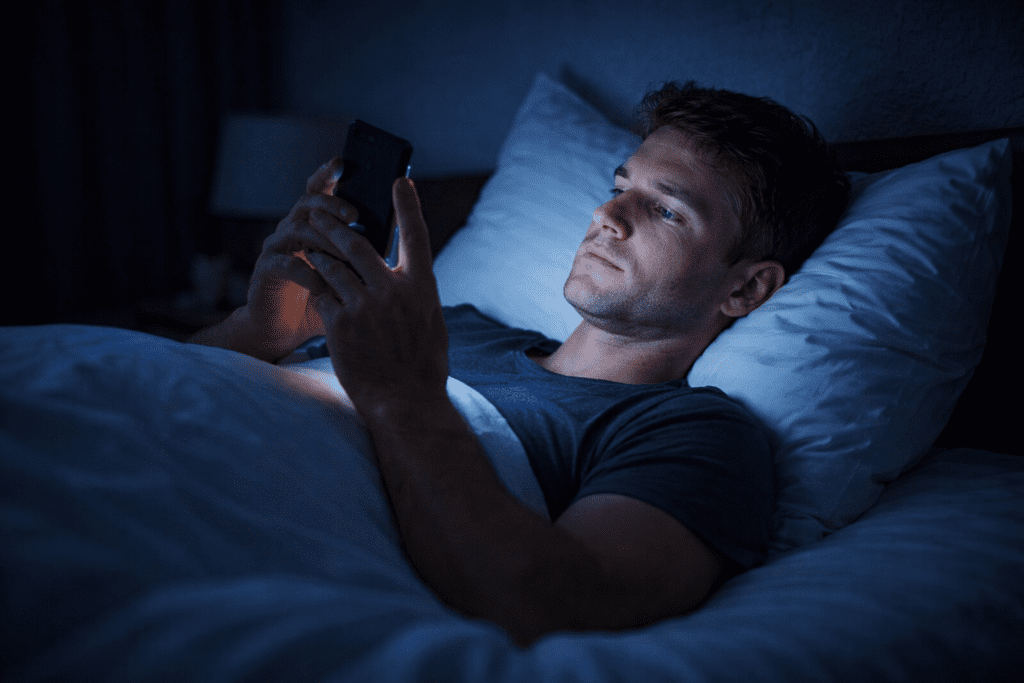
Scrolling feels relaxing. But fast-moving content keeps your brain stimulated.
Bright light signals daytime to your body. Emotional content — even funny videos — keeps your nervous system engaged.
The CDC explains that consistent sleep habits and reduced screen exposure before bed support better sleep hygiene. You can read more here:
https://www.cdc.gov/sleep/about_sleep/sleep_hygiene.html
If you rely heavily on screens at night, start small. Dim the brightness. Switch to slower content. Set a gentle cutoff time.
The Nervous System Connection (Simple Explanation)
Your body doesn’t sleep just because you’re tired. It sleeps when it feels safe enough to power down.
If your nervous system senses stress — even subtle, modern stress — it stays alert.
Deadlines. Notifications. Bright light. Noise. Multitasking.
Your brain interprets stimulation as “stay awake.”
To fix wired but tired at night, the goal isn’t to force sleep. It’s to send calm signals consistently.
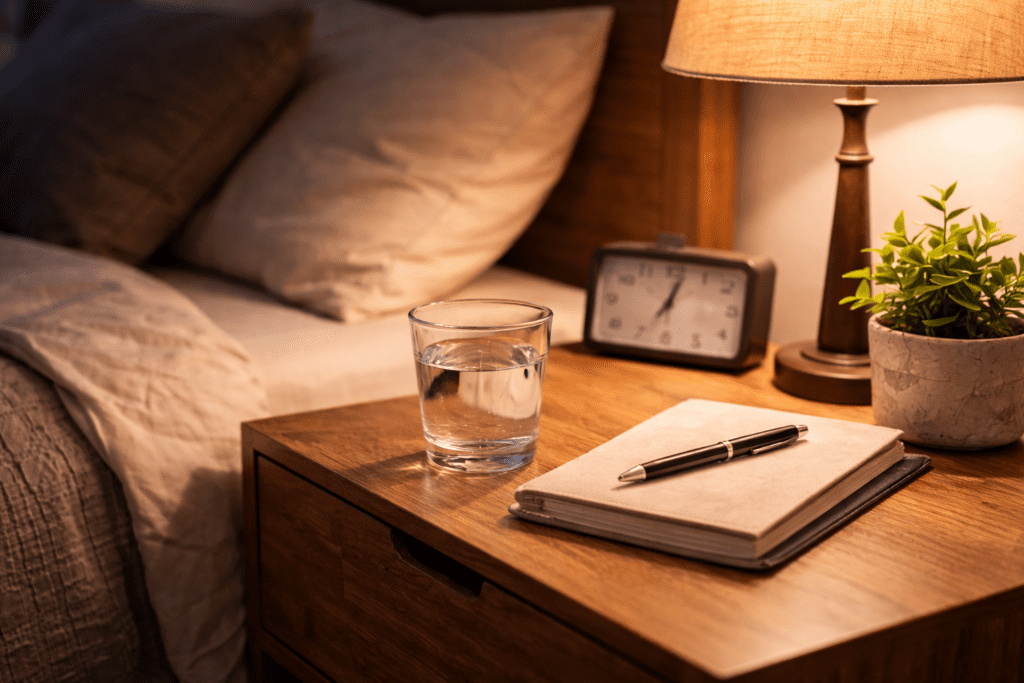
A 3-Step Nervous System Reset Before Bed
Instead of random tips, use this simple structure.
Step 1: Create a Clear “Work Is Over” Signal
Your brain needs closure.
Try one of these:
- Write tomorrow’s top three priorities
- Clean your desk or kitchen
- Change into comfortable clothes
- Take a 5-minute slow walk
This creates a psychological shift from productivity to recovery.
Step 2: Reduce Stimulation Gradually
Don’t jump from bright screens to total darkness.
Instead:
- Dim lights 60 minutes before bed
- Lower background noise
- Switch from fast content to slower activities
Think of it as easing off the gas — not slamming the brakes.

Step 3: Activate the Parasympathetic Response
This is your body’s calm switch.
Try:
- Slow breathing (inhale 4 seconds, exhale 6 seconds)
- Light stretching
- A warm shower
- Gentle music
- Reading something low-stress
If breathing exercises help you relax during the day, revisit these simple techniques:
https://everydayhealthplan.com/5-simple-breathing-exercises-to-reduce-daily-stress/
Consistency matters more than intensity.
Daytime Habits That Prevent Nighttime Alertness
Wired but tired often begins earlier than you think.
Try adding:
- One screen-free lunch break
- A 3-minute breathing reset mid-afternoon
- 10–15 minutes of natural sunlight exposure
- A short post-dinner walk
Hydration also plays a role in energy rhythm. If you’re unsure whether you’re drinking enough water, review these daily hydration habits:
https://everydayhealthplan.com/simple-daily-hydration-habits-energy/

Small pauses during the day reduce the stress load your body carries into the evening.
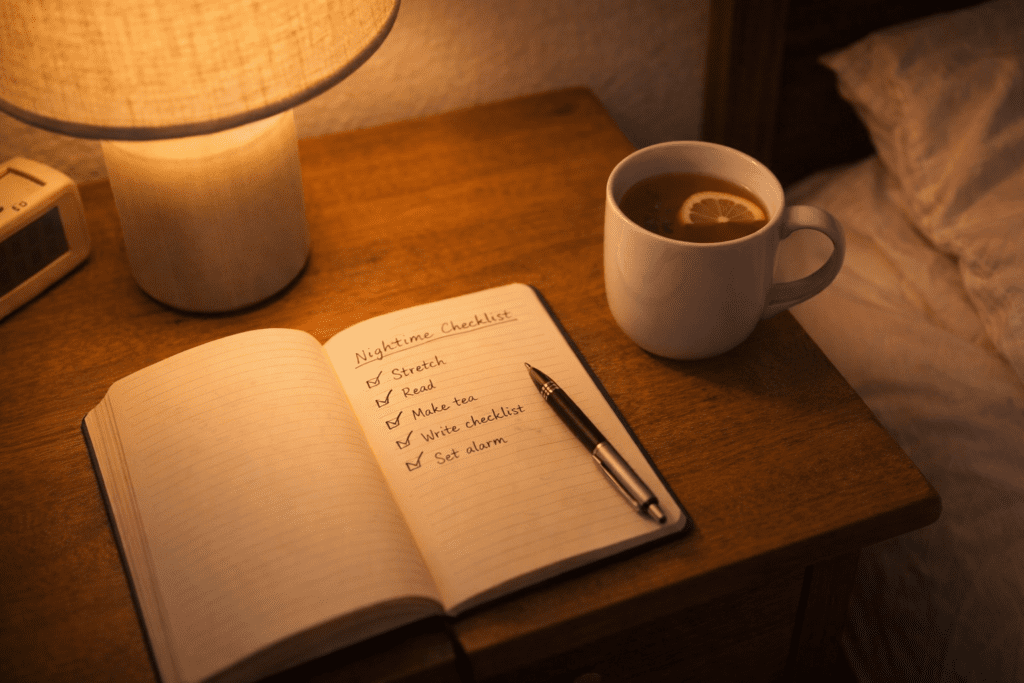
10-Minute Night Reset Routine
If you feel wired but tired tonight, try this simple reset:
- Put your phone in another room.
- Dim your lights.
- Take 10 slow breaths with longer exhales.
- Stretch your neck and shoulders.
- Write down one worry and one win from the day.
That’s it.
No complicated ritual. Just clear signals that it’s safe to rest.
Wired but Tired vs. Insomnia: What’s the Difference?
Wired but tired is often situational and habit-driven. It’s linked to overstimulation patterns.
Insomnia is a clinical sleep disorder involving persistent difficulty sleeping despite adequate opportunity.
If sleep problems last several weeks, significantly disrupt daily functioning, or cause distress, speaking with a healthcare professional is a smart next step.
For many busy adults, though, simple rhythm changes improve the situation.
Evening Reset Checklist

Use this checklist nightly:
- Stop caffeine at least 6–8 hours before bed
- Dim lights 60 minutes before sleep
- Reduce fast-paced content
- Take 5–10 slow breaths
- Do light stretching
- Write tomorrow’s priorities
- Keep your bedroom cool and dark
Repeat consistently for at least 1–2 weeks before judging results.
What Most People Get Wrong
They focus only on bedtime.
But if your entire day is overstimulating, five minutes of breathing won’t undo it.
Recovery is a rhythm — not a single action.
Start earlier. Add small pauses. Lower stimulation gradually.
Your nervous system adapts through repetition.
When to Seek Professional Help
Occasional wired-but-tired nights are common. But consider speaking with a licensed healthcare provider if:
- Sleep disruption lasts more than a few weeks
- You experience persistent anxiety symptoms
- You wake frequently and cannot fall back asleep
- Daytime fatigue severely affects work or safety
Professional guidance ensures underlying causes are properly evaluated.
A Gentle Reminder
If you feel wired but tired at night, your body isn’t broken.
It’s overstimulated.
Modern life keeps us in alert mode longer than we realize. But your nervous system is adaptable. It responds to consistent, calming signals.
Start small tonight.
Pick one habit — dim lights earlier, take 10 slow breaths, or write tomorrow’s tasks.
Repeat it tomorrow.
Sleep isn’t something you force. It’s something you allow.
And often, all your body needs is a smoother transition from activity to recovery.
Try This Tonight: Your 10-Minute “Wired but Tired” Reset
If you’re feeling wired but tired at night, don’t force sleep. Give your nervous system a clear “safe to rest” signal with a simple routine you can do right now.
- Dim the lights and put your phone face down (or in another room)
- Take 10 slow breaths (longer exhale than inhale)
- Do 60 seconds of gentle stretching (neck + shoulders)
- Write down tomorrow’s top 3 tasks to “close the loop”
Want a simple plan you can follow without overthinking it? Grab the free printable below and use it for 7 nights.
Get the 7-Night Reset ChecklistNo pressure, no perfection — just a calmer wind-down that supports better sleep over time.
People Also Ask (PAA)
Why do I feel wired but tired at night?
This usually happens when your nervous system remains in stress mode even though your body feels exhausted. High stimulation during the day — such as screens, multitasking, caffeine, and mental overload — can delay your body’s natural transition into sleep mode.
Is wired but tired a sign of anxiety?
It can be related to stress or mild anxiety patterns, but it is not automatically an anxiety disorder. Occasional nighttime alertness is common in busy adults. Persistent or intense symptoms should be evaluated by a healthcare professional.
How do you calm your nervous system before bed?
You can calm your nervous system by dimming lights, reducing screen time, practicing slow breathing with longer exhales, doing gentle stretching, and creating a consistent wind-down routine. The goal is to gradually shift your body into recovery mode.
Why do I get a second wind late at night?
A “second wind” often happens when stress hormones remain elevated during the day. When you finally stop moving, your brain processes unfinished thoughts, which can create a temporary burst of alertness.
How long does it take to reset your nervous system?
For most people, small habit adjustments begin to show results within one to two weeks. Consistency matters more than intensity. Gradual daily cues help retrain your stress and sleep rhythm.
Does scrolling before bed make wired but tired worse?
Yes. Bright screens and fast-paced content stimulate the brain and signal wakefulness. Even if scrolling feels relaxing, it can delay melatonin release and make it harder to fall asleep.
Can exercise help with wired but tired symptoms?
Moderate daytime movement can improve sleep readiness and stress regulation. However, intense workouts very close to bedtime may increase alertness for some people.
When should I see a doctor about sleep problems?
If sleep difficulties last more than a few weeks, significantly impact your daytime functioning, or are paired with anxiety, mood changes, or health concerns, consult a licensed healthcare provider for proper evaluation.
✅ (TRUST DISCLAIMER)
Our Approach to Sleep & Nervous System Health
This article is based on current educational research about the stress response, sleep hygiene, and nervous system regulation. It is designed to provide practical, habit-based strategies that support overall wellness.
We focus on realistic routines for busy adults rather than medical treatment plans. All information is for educational purposes only and should not replace personalized advice from a licensed healthcare professional.
If you experience persistent sleep disruption, severe anxiety, chronic fatigue, or other concerning symptoms, consult a qualified medical provider for proper evaluation.
Healthy sleep is highly individual. What works best often depends on lifestyle, stress load, and daily habits.
