

You sit down after work, planning to cook dinner, exercise, or finally start that personal project — but your brain feels completely empty. Even simple decisions feel overwhelming. If this sounds familiar, you’re not lazy or unmotivated. Feeling mentally drained after work is a normal response to sustained cognitive effort, decision fatigue, screen exposure, and stress accumulation throughout the day.
The good news is that mental fatigue can often be reversed quickly with simple recovery habits that reset your brain and restore focus. This guide will show you exactly why mental exhaustion happens and a simple step-by-step system to recharge your mind in about 15 minutes.
Understanding Mental Fatigue After Work
Mental fatigue happens when your brain uses large amounts of cognitive energy for extended periods without recovery. Unlike physical tiredness, mental exhaustion can appear even when your body feels fine.
Common signs include:
- Difficulty focusing
- Irritability
- Low motivation
- Brain fog
- Decision avoidance
- Feeling overwhelmed by small tasks
Your brain consumes energy differently than your muscles. Activities like problem-solving, meetings, multitasking, and constant notifications require sustained attention, which gradually drains mental resources. By the end of the workday, your cognitive system is often overloaded.
Why Work Drains Your Brain More Than You Realize
Most people assume mental exhaustion comes from “working too hard,” but the real causes are more specific.
Decision Fatigue
Every decision — even small ones — consumes mental energy. Choosing what to reply in emails, prioritizing tasks, switching between apps, and managing schedules all add up. By late afternoon, your brain has made hundreds of decisions. That’s why simple choices feel harder at night.
Constant Context Switching
Switching between tasks forces your brain to reset repeatedly. Examples include:
- Email → spreadsheet → meeting → message notification
- Phone interruption during focused work
- Multitasking across multiple tabs
Each switch reduces mental efficiency and increases fatigue.
Screen Exposure and Cognitive Load
Spending hours looking at screens requires continuous visual processing and attention. Your brain must:
- Filter information
- Maintain posture awareness
- Interpret text and images
- Respond to stimuli quickly
This sustained processing contributes to mental exhaustion even without physical movement.
Stress Hormone Accumulation
Work pressure increases cortisol and adrenaline levels. These chemicals help you stay alert temporarily but can leave you feeling depleted later. This is why many people experience an energy drop after work.
Lack of Mental Recovery Breaks
Many people take physical breaks but not mental ones. Scrolling social media during breaks often adds more stimulation instead of allowing the brain to recover. True mental recovery requires lowering cognitive demand.
For more on work-related fatigue, see CDC – Fatigue and Work.
The 15-Minute Mental Reset Framework
Instead of trying to “push through” mental fatigue, you can reset your brain using a structured recovery routine. This simple framework includes four steps:
- Physical reset
- Sensory reset
- Cognitive reset
- Intentional restart
Together, these steps restore mental clarity and energy.
Step 1: Physical Reset (3–5 Minutes)

Movement increases blood flow and oxygen delivery to the brain, which helps restore alertness. You don’t need a workout. Simple movement works.
Examples:
- Walk around your home
- Stretch your shoulders and back
- Do light mobility exercises
- Stand and move after sitting all day
Even short movement sessions can improve mental clarity. Physical motion signals to your nervous system that the workday stress cycle is ending.
Related: 3-Minute Posture Reset Desk Workers
Step 2: Sensory Reset (3 Minutes)

Your brain becomes overloaded with digital stimulation during work. A sensory reset reduces incoming information.
Try:
- Sitting quietly without your phone
- Looking out a window
- Closing your eyes briefly
- Taking slow breaths
- Stepping outside for fresh air
Reducing sensory input helps your nervous system shift out of “work mode.” This is one of the fastest ways to reduce mental fatigue.
Step 3: Cognitive Reset (5 Minutes)

Mental exhaustion often comes from unfinished tasks and lingering thoughts. A quick “brain reset” clears mental clutter.
Method:
- Write down unfinished tasks
- List tomorrow’s top three priorities
- Capture anything still on your mind
This process reduces cognitive load because your brain no longer needs to remember everything. Your mind relaxes when tasks are stored externally.
Step 4: Intentional Restart (2–3 Minutes)

After resetting, your brain needs a clear transition into personal time. Choose one small action:
- Prepare a healthy snack
- Start dinner prep
- Change clothes
- Play music
- Do a simple home task
This signals a shift from work mode to personal mode. Your energy often returns once you begin moving again.
Learn more about energy management: Harvard Health – Energy & Fatigue Overview
Why This 15-Minute Reset Works
This routine works because it addresses multiple causes of mental fatigue at once. It:
- Restores circulation
- Reduces stimulation
- Clears cognitive load
- Creates psychological transition
Mental exhaustion isn’t just “being tired.” It’s accumulated cognitive strain. Recovery requires lowering that strain.
Common Mistakes That Keep You Mentally Drained
Even people who rest after work sometimes stay exhausted because their recovery habits don’t actually restore mental energy.
Mistakes:
- Collapsing on the Couch Immediately – Passive rest feels good but doesn’t reset your nervous system.
- Scrolling as “Relaxation” – Endless scrolling keeps your brain stimulated.
- Skipping the Transition Between Work and Home – Going directly from work to home responsibilities increases exhaustion.
- Trying to Be Productive Immediately – Starting chores or projects while mentally drained leads to frustration.
- Ignoring Mental Fatigue Signals – Mental exhaustion is a signal, not a weakness. Ignoring it can lead to burnout.
A Simple Daily Mental Recovery Routine
- Move your body briefly
- Reduce sensory input
- Clear mental clutter
- Start a small personal action
Consistency matters more than duration. Over time, this creates a reliable energy recovery pattern.
Comparison: Passive Rest vs Mental Reset
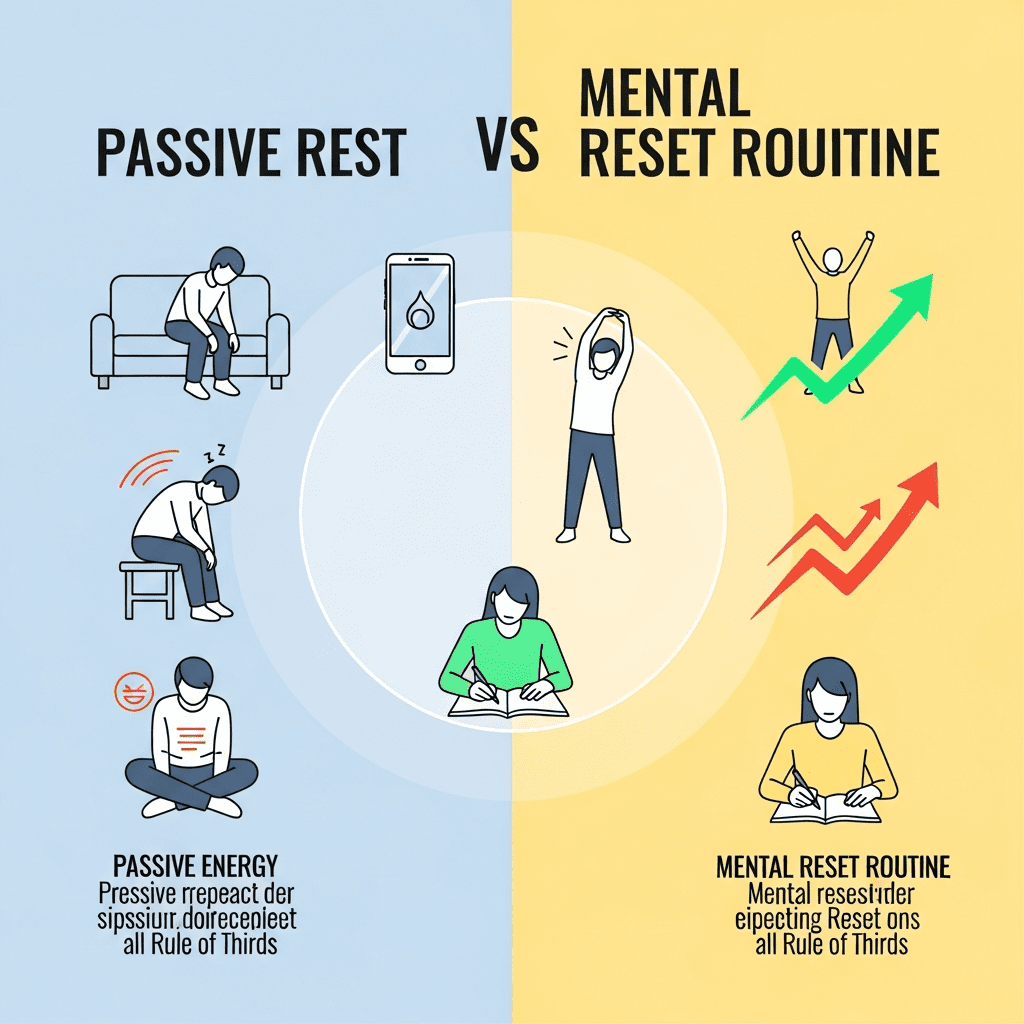
| Passive Rest | Mental Reset Routine |
|---|---|
| Sitting immediately | Light movement first |
| Phone scrolling | Sensory reduction |
| Thinking about work | Writing tasks down |
| No transition | Intentional restart |
| Energy stays low | Energy gradually returns |
How Mental Recovery Improves Evening Energy
Resetting mentally after work can lead to:
- Better mood
- More patience
- Improved focus
- Less evening procrastination
- Better sleep readiness
Building the Habit Without Overthinking
Attach your mental reset to a consistent trigger:
- When you arrive home
- After closing your laptop
- Before dinner
- After changing clothes
Habit stacking makes the reset automatic.
When Mental Fatigue Becomes Stronger
Some days feel more draining than others. This usually happens when:
- Work involves intense problem-solving
- Meetings last most of the day
- You multitask frequently
- Sleep quality is low
- Stress levels are high
On these days, mental recovery becomes even more important.
The Science Behind Mental Energy Recovery
Your brain uses glucose and oxygen to maintain focus. Sustained cognitive activity gradually reduces efficiency in neural circuits responsible for decision-making and attention control. Short breaks with movement, relaxation, and cognitive unloading restore these systems. This is why structured recovery works better than passive rest.
Actionable Checklist: Mental Reset After Work
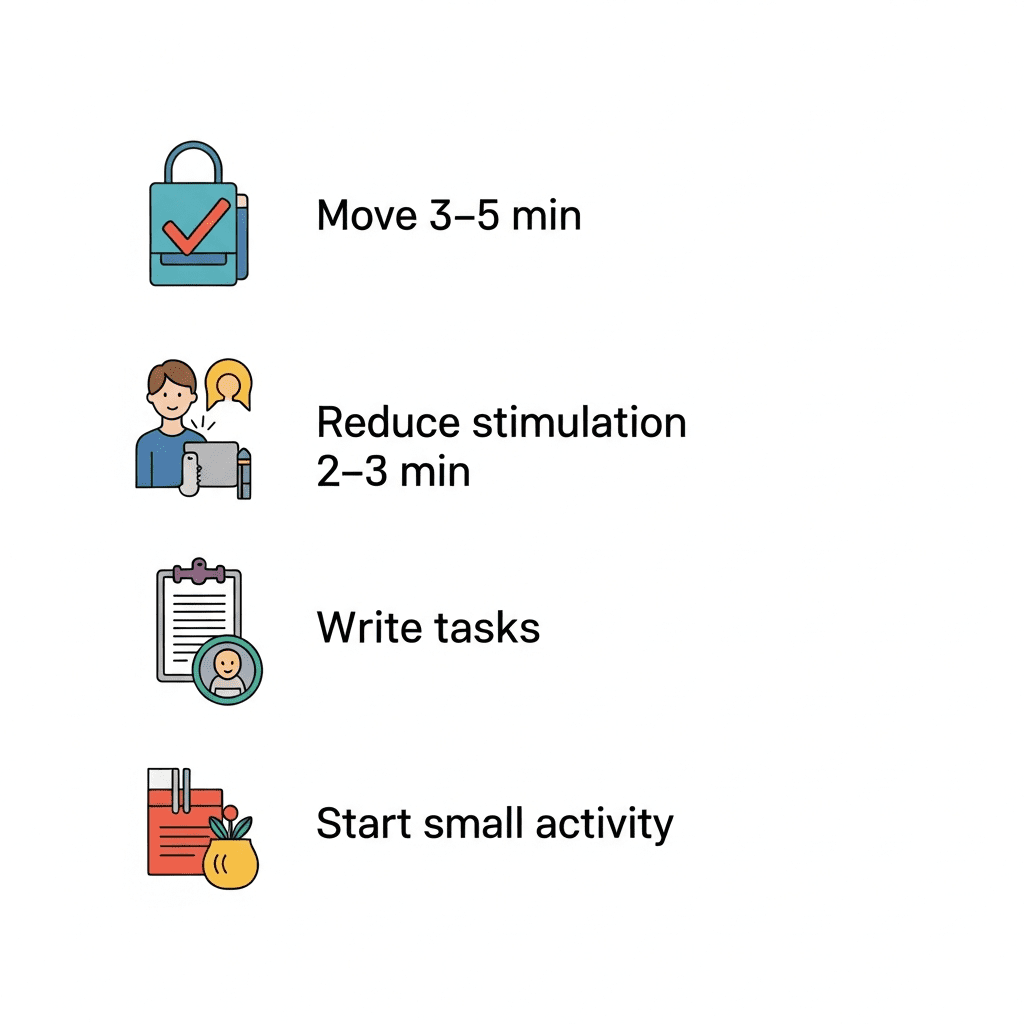
- Stand up and move for 3–5 minutes
- Reduce sensory input for 2–3 minutes
- Write down unfinished tasks
- Choose tomorrow’s top priorities
- Start one small personal activity
- Avoid scrolling during the reset
- Keep the routine under 15 minutes
Real-Life Example

Imagine finishing a long day of meetings and emails. Instead of collapsing on the couch:
- Walk around your home for three minutes
- Sit quietly and breathe slowly
- Write tomorrow’s priorities
- Start preparing a snack
Within minutes, your mind feels clearer. Energy returns gradually.
The Long-Term Benefit of Mental Reset Habits

Practicing mental recovery daily can:
- Reduce evening fatigue
- Improve emotional balance
- Increase productivity at home
- Support better sleep habits
- Lower stress accumulation
Small routines create long-term resilience.
Why Mental Fatigue Is Normal
Modern work environments demand constant attention. Your brain was not designed for:
- Nonstop notifications
- Continuous screen exposure
- Back-to-back meetings
- Rapid task switching
Mental fatigue is a natural response to cognitive overload. Recovery habits help your brain adapt.
The Key Insight to Remember
Mental exhaustion after work is not a motivation problem. It’s an energy management issue. When you reset your brain intentionally, energy often returns faster than expected.
If this mental reset routine helped you understand your energy patterns, start using it today and build one small recovery habit after work. Consistent resets can make evenings feel calmer, clearer, and more productive. Mental energy is renewable — but only when you give your brain time to recover. A short reset can change how the rest of your evening feels.
FAQ / People Also Ask
- What causes mental fatigue after work?
Mental fatigue is caused by prolonged cognitive effort, decision fatigue, multitasking, screen exposure, and stress accumulation. All these factors overload the brain’s energy resources, leading to difficulty focusing, irritability, and low motivation. - How can I recharge mentally in 15 minutes?
A 15-minute mental reset includes four steps: light physical movement, sensory reduction, writing down tasks, and starting a small personal activity. Together, these steps restore focus, clarity, and energy. - Why does scrolling social media not help mental recovery?
Endless scrolling keeps your brain stimulated, preventing real recovery. True rest requires reducing cognitive input so the nervous system can reset. - Can physical movement reduce mental exhaustion?
Yes. Light movement like stretching or walking improves blood flow and oxygen delivery to the brain, boosting alertness and helping mental recovery. - How do I build a mental reset habit?
Attach it to a consistent trigger, such as arriving home, closing your laptop, or before dinner. Habit stacking ensures the routine becomes automatic over time. - Is mental fatigue normal in modern work?
Absolutely. Constant notifications, multitasking, and extended screen time demand high cognitive effort. Mental fatigue is a natural response to these conditions.
E‑E‑A‑T / Trust Disclaimer
This content is for informational purposes only and does not replace professional medical advice. Mental fatigue strategies are general wellness recommendations based on research from CDC and Harvard Health.Start Your 15-Minute Mental Reset Today
Feeling drained after work is normal, but your evenings can feel calmer and more productive. Begin with one simple mental reset habit: stand up, breathe, and write down tomorrow’s priorities. Within minutes, your focus and energy return.
Start Your Reset Now