

At 2:30 in the afternoon, your shoulders start creeping toward your ears. Your lower back feels tight, your neck feels stiff, and you realize you’ve been staring at your laptop for hours without moving.
This is exactly when a posture reset routine for desk workers can help. Instead of waiting for discomfort to build, a simple three-minute reset helps open your chest, relax your shoulders, lengthen your spine, and bring your body back into a more comfortable working position.
This guide walks you through a simple, repeatable posture reset you can do anywhere — at your desk, at home, or even during a meeting break — using a step-by-step system designed for busy adults.
Why Desk Posture Breaks Down During the Day
The human body is built for movement, not long periods of stillness. Sitting for extended stretches causes certain muscles to tighten while others become inactive.
Here’s what typically happens during long desk sessions:
- Chest muscles tighten from leaning forward
- Upper back muscles weaken from lack of engagement
- Hip flexors shorten from sitting
- Neck muscles strain from screen positioning
Lower-body stiffness builds from staying seated
Over time, these changes create the familiar “desk posture” pattern — rounded shoulders, forward head position, and a stiff lower back. A posture reset briefly reverses these positions, returning the body to neutral alignment.
Even a short reset interrupts tension buildup and restores comfort. For the broader fatigue explanation, read our guide on why sitting too long makes you tired. This article focuses only on posture, desk stiffness, shoulder tension, and breathing position.
The CDC also encourages short movement breaks during long periods of sitting, which supports the idea that brief posture resets can help reduce desk-related discomfort.
The 3-Minute Posture Reset Routine for Desk Workers
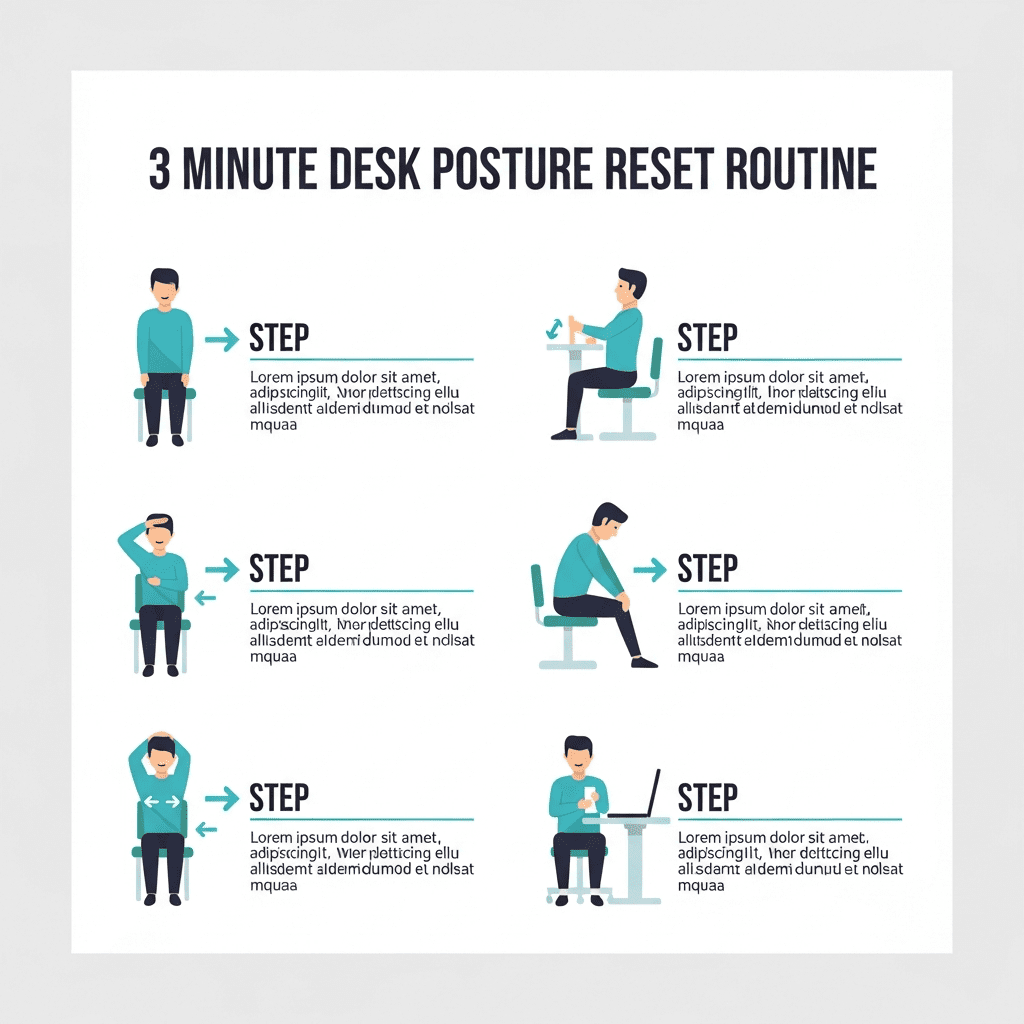
This routine follows a simple progression:
- Open the front of the body
- Activate the back muscles
- Restore spinal alignment
- Reset breathing posture
Each step takes 30–45 seconds. You don’t need equipment, workout clothes, or extra space.
Step 1: Shoulder Roll and Chest Opening (45 seconds)

Sit or stand upright with your arms relaxed. Slowly roll your shoulders backward in large circles, squeezing your shoulder blades at the back of each rotation.
After 10 rolls, clasp your hands behind your back (or hold your chair) and gently lift your chest upward. Keep your neck relaxed. This counteracts forward-rounded shoulders caused by typing and scrolling.
Tip: Feel a light stretch across your chest and shoulders — that’s your body resetting.
Step 2: Upper-Back Activation (45 seconds)

Sit tall, elbows bent at 90 degrees. Pull your elbows slightly back while squeezing shoulder blades together. Hold 3 seconds and relax. Repeat 8–10 times.
Activating upper-back muscles supports upright posture. Desk workers often feel immediate relief at this stage.
For more upper-back exercises, see Desk Breathing Exercises for Office Workers.
Step 3: Neck Alignment Reset (30 seconds)

Look straight ahead. Gently pull your chin backward as if creating a “double chin.” Hold 3 seconds, release, and repeat 8 times.
This corrects forward-head posture caused by screen use. The movement is small but effective.
Step 4: Seated Spinal Lengthening (30 seconds)
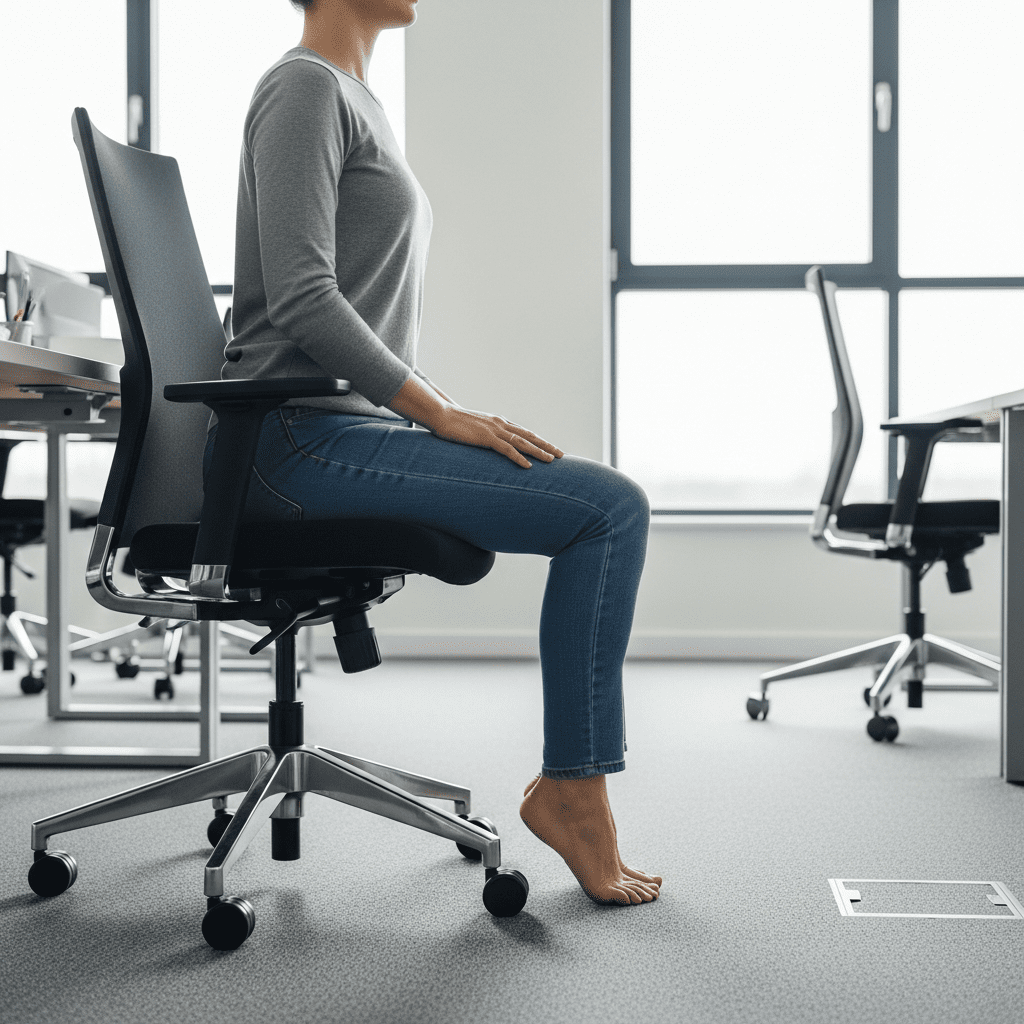
Sit at the edge of your chair with both feet flat. Imagine a string pulling the top of your head upward. Lengthen your spine, relax your shoulders, and place your hands on your thighs. Take slow breaths to reinforce upright posture.
Step 5: Standing Hip Reset (30 seconds)

Stand, place your hands on your hips, and gently push hips forward while keeping your chest upright. Hold 10 seconds and repeat twice.
This counters tight hip flexors from sitting and helps your lower body feel less stiff.
Step 6: Breathing Posture Reset (30 seconds)

Sit or stand upright, place one hand on your ribs, and take slow, deep breaths. Focus on expanding the rib cage without lifting your shoulders. This restores breathing efficiency and reinforces alignment.
What Makes This Routine Effective
This reset targets common desk-related imbalances:
- Rounded shoulders
- Forward head posture
- Tight hips
- Weak upper-back muscles
- Shallow breathing
Instead of random stretching, the sequence follows a logical correction path. That’s why it only takes three minutes. Consistency matters more than duration.
When to Use a Posture Reset
Perform the reset:
- Mid-morning
- Mid-afternoon
- After long meetings
- When stiffness appears
- Before finishing the workday
Your body often signals when it needs movement. Shoulder tension, fidgeting, or neck stiffness are cues to reset.
Signs Your Posture Needs Resetting
Early warning signs:
- Leaning closer to the screen
- Shifting frequently in your chair
- Tightness between shoulder blades
- Neck stiffness
- Slouched breathing
- Lower-back pressure
A quick reset restores balance before discomfort grows.
For more on desk-related fatigue, see Computer Eye Fatigue Relief.
Why Short Resets Work Better Than Long Stretching Sessions
Many believe posture improvement requires long routines. In reality, frequent small corrections work best. Three-minute resets multiple times per day often beat one long session. Think of it like brushing your teeth — small daily maintenance prevents bigger problems.
Comparison Table:
| Approach | Time Required | Best For | Realistic Consistency |
|---|---|---|---|
| Posture reset routine | 3 minutes | Daily desk tension | Very high |
| Full stretching session | 20–40 minutes | Flexibility | Moderate |
| Occasional exercise class | 45–60 minutes | General fitness | Low |
Short resets are easier to maintain. Consistency improves posture more than intensity.
Common Mistakes Desk Workers Make
- Moving too quickly – slow, controlled movements engage stabilizing muscles.
- Overstretching the neck – gentle alignment is more effective than forced stretching.
- Forgetting to breathe – slow breathing relaxes muscles.
- Only resetting when pain appears – preventive resets are more effective.
- Slouching immediately after – adjust chair, screen, and keyboard for lasting results.
How Posture Affects Breathing, Comfort, and Focus
Posture can affect how comfortable you feel during desk work. When your shoulders round forward and your chest collapses, breathing may feel tighter and your upper back may work harder to hold you upright.
A posture reset helps by opening the front of the body, reactivating the upper back, and giving your neck and shoulders a break from the same fixed position. This can make desk work feel easier without turning the routine into a full workout.
Building the Posture Reset Into Your Day
Attach resets to existing habits:
- After sending a few emails
- After meetings
- Before lunch
- After restroom breaks
- When refilling water
Habit stacking makes resets automatic.
The Science Behind Posture Resets
Muscles adapt to prolonged positions — called postural adaptation. Short corrective movements reactivate muscles and improve circulation. The nervous system responds quickly, which is why even brief resets reduce stiffness.
Making the Routine Sustainable
Keep it simple, short, repeatable, and convenient. Three minutes removes barriers, no equipment is needed, and clear steps reduce confusion. Consistency is key.
Actionable Daily Posture Reset Checklist
- Roll shoulders backward
- Open chest
- Squeeze shoulder blades
- Perform chin retractions
- Lengthen spine
- Stand and open hips
- Take slow breaths
- Sit back upright
Real-Life Example
A typical workday: 9 AM start, 11 AM reset, 2 PM reset, 4 PM reset. Instead of ending stiff, your body feels balanced. Small resets prevent tension accumulation.
Why Awareness Matters More Than Perfect Posture
There is no single “perfect posture.” Healthy posture is dynamic. Resetting alignment periodically is more realistic than sitting perfectly all day.
Long-Term Benefits
Consistent resets may help:
- Reduce stiffness
- Improve comfort
- Support breathing habits
- Maintain upper-back strength
- Increase body awareness
Small daily actions compound over time.
A Simple Reminder Strategy
Set a timer every two hours for one week. After a few days, your body will naturally prompt posture resets.
If your main problem is low energy after sitting, try this 2-minute desk reset for sitting fatigue.
Frequently Asked Questions
How often should I do a posture reset at work?
Perform every 1–2 hours or whenever stiffness appears. Frequent resets can reduce stiffness and make long desk sessions feel more comfortable.
Can a 3-minute posture reset really make a difference?
Yes, it can help by reactivating postural muscles, opening the chest, reducing stiffness, and making your desk position feel more comfortable.
Do I need special equipment?
No. A chair or standing space is enough.
Is posture more important than stretching?
Both matter. Frequent small posture corrections complement longer exercise sessions.
What are the signs I need a reset?
Shoulder tightness, neck stiffness, slouched breathing, frequent shifting, and lower-back pressure.
Can posture resets help focus during desk work?
Yes, posture resets can help focus by reducing shoulder tension, opening the chest, and giving your body a brief movement break. They work best as small comfort resets during long desk sessions, not as a replacement for sleep, hydration, or regular movement.
Trust Notice & Medical Disclaimer
This content is for informational purposes only. It is not a substitute for professional medical advice. Consult a healthcare provider before starting any new exercise or wellness routine.
Final Thoughts
Desk posture changes because the body adapts to stillness, not weakness.A short, repeatable posture reset routine can improve comfort and help your body feel less locked into one desk position. Three minutes is enough to interrupt tension patterns. Done consistently, small resets keep your body balanced even during long workdays.
Try It Tomorrow!
Spend just 3 minutes performing this posture reset routine — once before lunch and once in the afternoon — and feel the difference in your shoulders, neck, and lower back. Small daily resets can transform your workday comfort!
Start Your Posture Reset