
You made it through a long morning, but now your focus is fading. Your eyes feel heavy, your body feels slow, and another cup of coffee sounds tempting — even though you know it might backfire later.
If you are wondering how to get energy without coffee, the goal is not to replace caffeine with another quick stimulant. A better reset uses water, movement, natural light, breathing, posture, protein, and task switching to help your body and brain feel more alert.
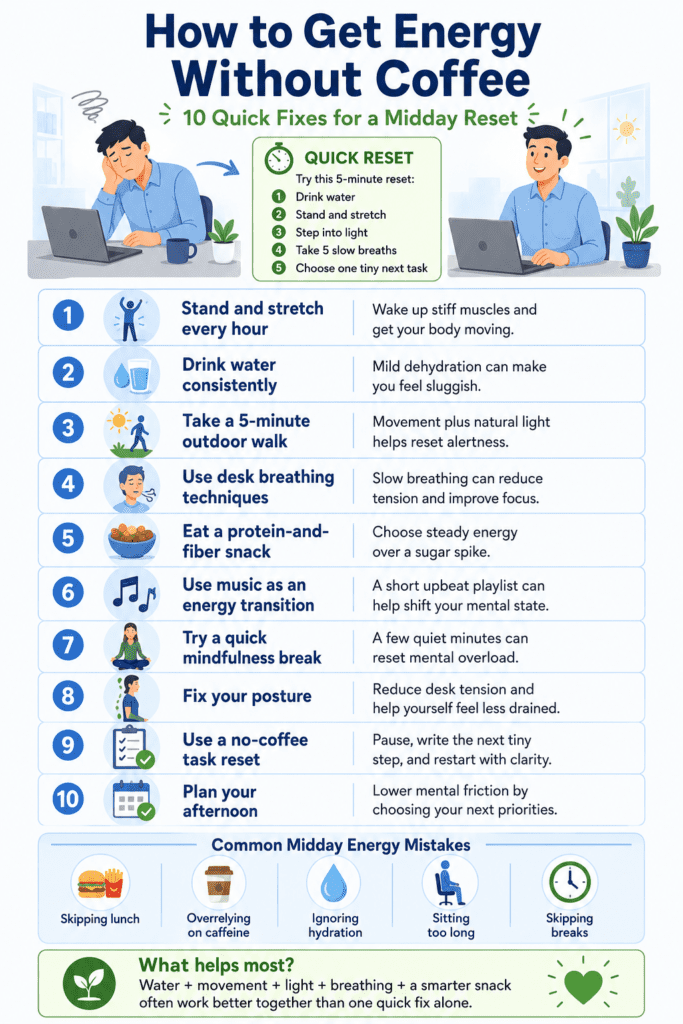
Quick Answer: The fastest way to get energy without coffee is to combine a glass of water, 2–5 minutes of movement, natural light, a protein-and-fiber snack, slow breathing, and a small task reset. These habits can help fight the midday slump without relying on another caffeine hit.
For the broader prevention system, read our guide on afternoon energy crash prevention. This article focuses only on quick coffee-free resets you can use during the middle of the day.
How to Get Energy Without Coffee: Quick Reset Map
| What You Feel | Coffee-Free Reset | Why It Helps |
|---|---|---|
| Heavy eyes | Step into natural light or a bright area. | Light supports wake signals and helps your brain stay oriented to daytime. |
| Brain fog | Drink water and take a short walk. | Hydration and movement can help you feel less sluggish. |
| Low motivation | Switch to one smaller task. | A task reset reduces friction and makes restarting easier. |
| Sugar cravings | Choose protein plus fiber. | This supports steadier energy than a sweet snack alone. |
| Desk stiffness | Stand, stretch, and roll your shoulders. | Movement gives your body more alertness signals. |
| Mental tension | Use slow breathing for 2–3 minutes. | Breathing can lower tension and make focus feel easier. |
What Most People Get Wrong About Coffee-Free Energy
Most people try to get energy without coffee by looking for one replacement drink. But the real issue is often not the missing coffee. It is low movement, low hydration, screen fatigue, poor task pacing, or a snack that causes a quick rise and drop in energy.
The best coffee-free reset does not copy coffee. It works differently. Instead of forcing stimulation, it helps your body remove the small barriers that are making you feel slow, foggy, or stuck.
What is the fastest way to get energy without coffee?
The fastest way to get energy without coffee is to combine water, light movement, natural light, slow breathing, and one small task reset. This helps address common midday triggers like dehydration, stiffness, screen fatigue, and mental overload without relying on caffeine.
1. How Standing and Stretching Every Hour Boosts Midday Energy
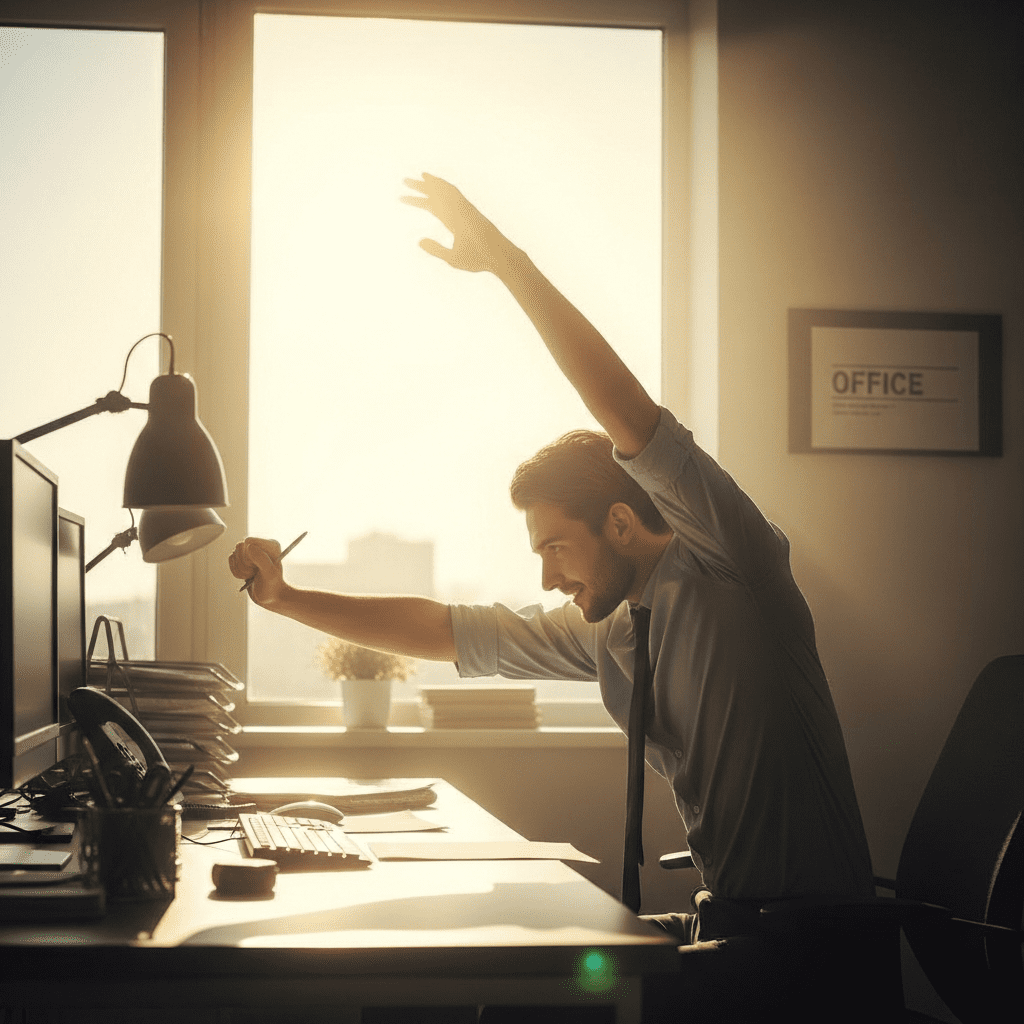
Sitting for hours slows blood circulation, stiffens muscles, and drains energy. Frequent standing and stretching breaks sharpen your mind and prevent fatigue.

How to do it:
- Set a timer every 60 minutes.
- Stand and perform 2–3 minute full-body stretches: shoulder rolls, hamstring stretches, torso twists, and calf raises.
Examples:
- Stretch while on a phone call.
- Fold forward to stretch hamstrings before starting a report.
- Walk down the hallway and do gentle lunges for circulation.
Why it helps: The CDC notes that adults who sit less and engage in even small amounts of physical activity throughout the day gain health benefits, including improved circulation and reduced fatigue from prolonged sitting.
Pro tip: Combine stretching with deep breathing for extra energy. For more tips on eye and posture health while working at a desk, see our article on Computer Eye Fatigue Relief.
How can I wake myself up at work without coffee?
To wake yourself up at work without coffee, stand up, stretch, drink water, step into brighter light, and switch to one small task. If your tiredness comes from long sitting or screen fatigue, a short physical reset may help more than forcing another caffeine boost.
2. Why Consistent Hydration Prevents Afternoon Slumps
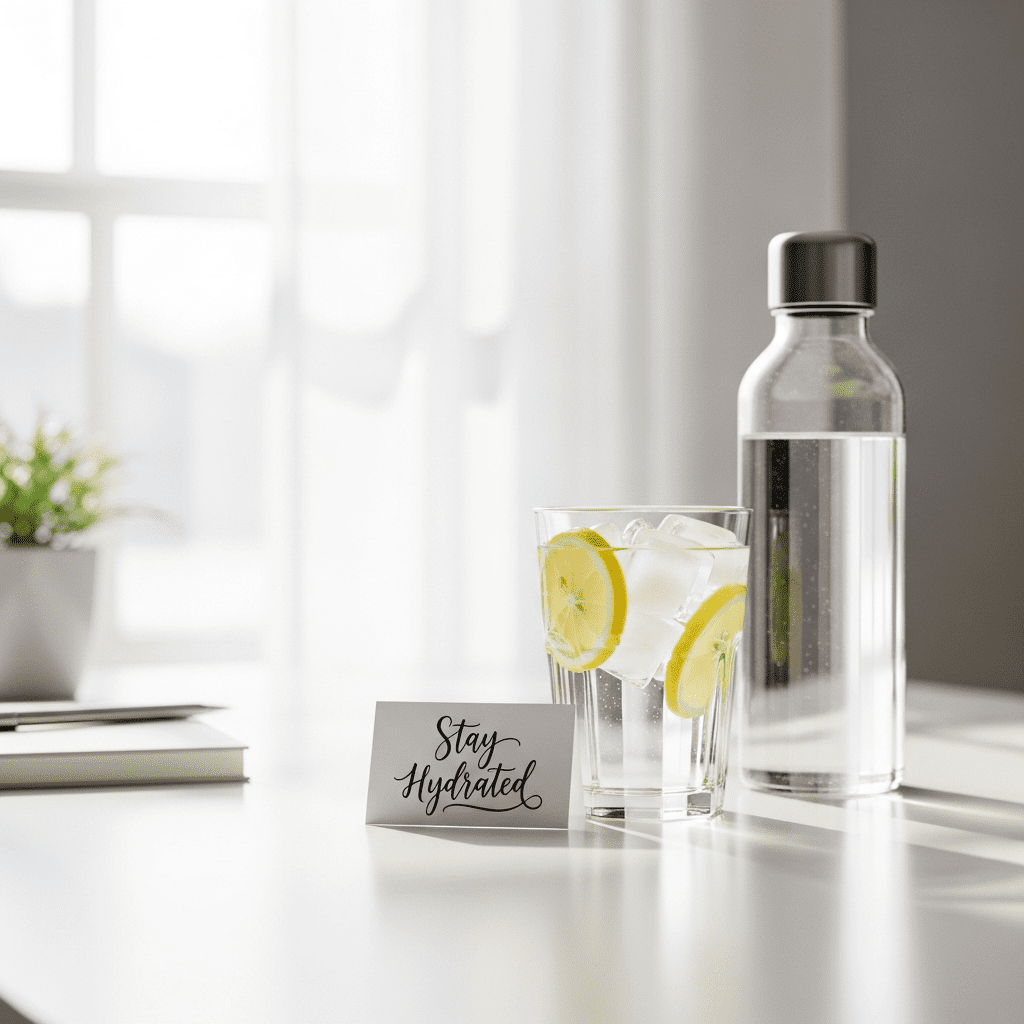
Even mild dehydration can make you feel sluggish, impair focus, and reduce alertness.
How to do it:
- Keep a 16–20 oz water bottle on your desk.
- Drink at least 8 oz every hour.
- Add lemon, cucumber, or a pinch of electrolyte powder for taste.
Examples:
- Sip water before starting a task.
- Drink a full glass mid-morning to prevent the post-lunch crash.
- Pair hydration with a short walk for double benefits.
Why it helps: Planning lowers the number of decisions your brain has to hold at once, which can make it easier to restart without caffeine.
Pro tip: Track your intake with an app or marked water bottle. Learn more about daily hydration routines in our article Simple Daily Hydration Habits for Energy.
Can drinking water give you energy without coffee?
Water does not stimulate your body like caffeine, but it can help if low fluid intake is making you feel sluggish. Dehydration can make focus, mood, and alertness feel worse, so drinking water is often the first coffee-free reset to try.
3. How a 5-Minute Outdoor Walk Recharges Your Mind
A short outdoor walk refreshes the mind, improves mood, and stimulates circulation.
How to do it:
- Walk around your building or nearby area.
- Focus on surroundings—trees, sky, sounds—for a mental reset.
Examples:
- Walk to a nearby coffee shop (without coffee).
- Stroll around the office floor.
- Practice mindful observation during the walk.
Science: Research shows that daytime light exposure — especially natural sunlight — influences alertness and cognitive performance by affecting the body’s circadian rhythms and wakefulness levels.
Pro tip: Pair this walk with light stretching or deep breathing for maximum effect.
Does walking help you feel more awake without caffeine?
Yes, walking can help you feel more awake without caffeine because it changes your posture, increases movement signals, and gives your brain a break from the same task. Walking outside may help even more because natural light supports daytime alertness.
4. Desk Breathing Techniques to Boost Alertness Fast
Controlled breathing improves oxygen flow, reduces tension, and enhances mental clarity.
How to do it:
- 4-7-8 method: inhale 4s, hold 7s, exhale 8s. Repeat 3–5 times.
- Box breathing: inhale 4, hold 4, exhale 4, hold 4.
Examples:
- Close your eyes during stressful emails and practice 4–7–8 breathing.
- Use box breathing before meetings to focus your mind.
Science: Mayo Clinic research shows controlled breathing reduces stress hormones and improves focus. For more breathing exercises, see 5 Simple Breathing Exercises to Reduce Daily Stress.
5. Best Midday Snacks for Sustained Energy Without Sugar
Smart snacks prevent the afternoon energy crash. Aim for protein, fiber, and healthy fats.
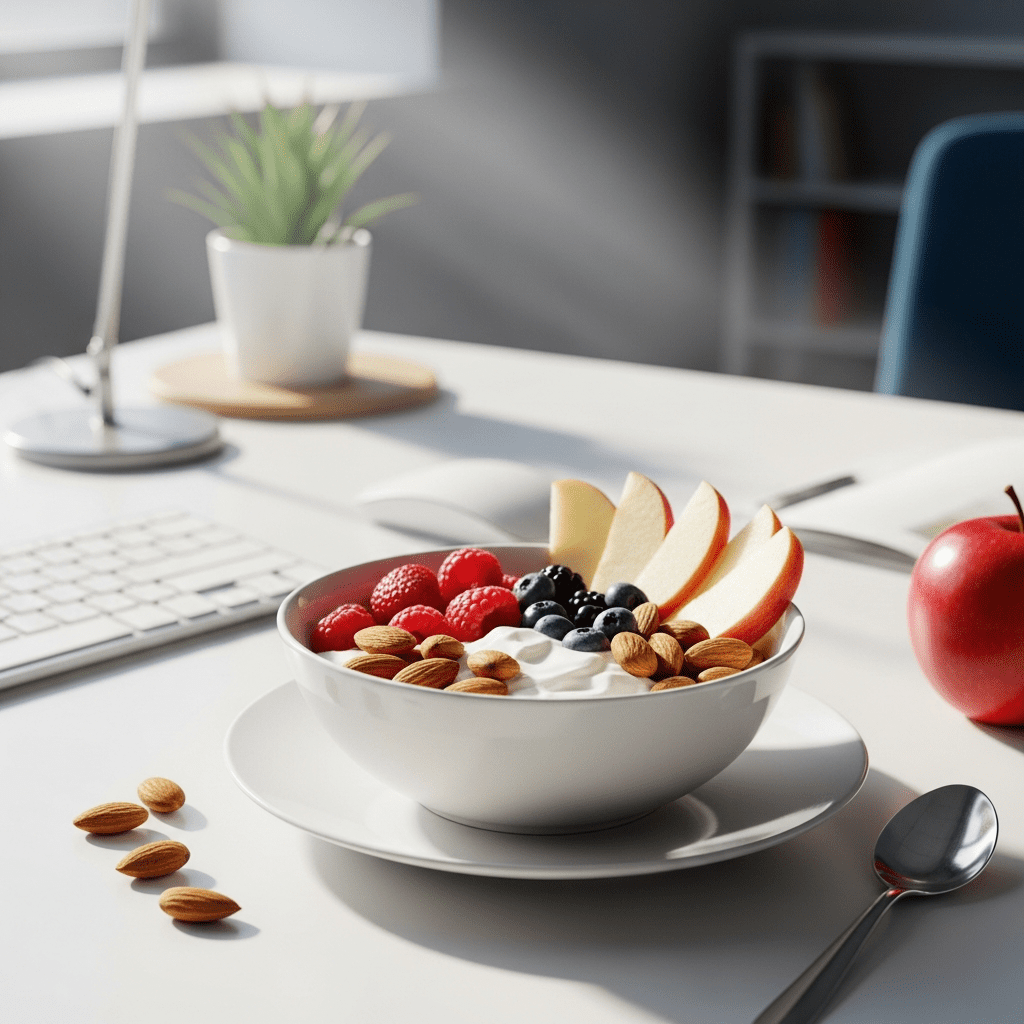
Good options:
- Greek yogurt with berries
- Handful of almonds or walnuts
- Apple slices with nut butter
- Low-sugar protein bars under 200 calories
Examples:
- Keep trail mix at your desk.
- Pair a protein snack with fruit.
- Avoid sugary vending machine items.
Science: According to Harvard Health, dietary fiber slows the absorption of glucose and helps regulate insulin response, while including protein with meals contributes to more stable blood sugar and prevents energy crashes throughout the day.
Pro tip: Prepare snack packs at the start of the week. For more healthy snack ideas, check High-Protein Snacks Under 200 Calories.
What foods help with energy without caffeine?
Foods that pair protein, fiber, and healthy fats can support steadier energy without caffeine. Good options include Greek yogurt with berries, apple slices with peanut butter, almonds, eggs, hummus with vegetables, or a balanced snack with whole-food ingredients.
6. Use Music as a No-Coffee Energy Transition
Music does not create energy the way food or sleep does, but it can help your brain shift states. A short upbeat playlist can act like a transition cue when you feel stuck, bored, or mentally flat.
How to do it:
- Use one 5-minute playlist only for midday resets.
- Play it while standing, stretching, or cleaning your desk.
- Avoid using music as background noise for hours if it becomes distracting.
Examples:
- Listen while stretching or walking.
- Play a motivational podcast before tackling the next task.
Science: Listening to music engages multiple brain regions and can improve mood, cognitive function, and memory — all of which support better focus and productivity during tasks.
7. Quick Mindfulness Practices to Reduce Stress and Boost Energy
Short mindfulness breaks restore mental energy and reduce stress.

How to do it:
- Sit comfortably, close your eyes, and focus on your breath for 3–5 minutes.
- Observe thoughts without judgment.
Examples:
- After a challenging meeting, take a brief meditation break.
- Use guided apps during lunch breaks.
Science: Harvard Health research shows mindfulness lowers cortisol and boosts attention. See Daily Rituals to Reduce Stress, Improve Mood, and Energy for extra techniques.
8. Simple Posture Fixes to Fight Afternoon Fatigue
Poor posture can make desk work feel heavier by adding neck, shoulder, and back tension. A quick posture reset may help you feel less stiff and more ready to focus without needing coffee.
How to do it:
- Sit tall, shoulders back, core engaged.
- Roll shoulders or twist spine gently for 2–3 minutes every hour.
Examples:
- Adjust posture after long computer sessions.
- Use a standing desk when possible.
Why it helps: Posture resets reduce physical tension and interrupt the low-movement pattern that often makes midday fatigue feel worse.
9. How a No-Coffee Task Reset Can Restore Midday Focus
When your energy drops, the problem is not always physical tiredness. Sometimes your brain is stuck in the same task for too long. A quick task reset can lower friction and help you restart without caffeine.
Try this simple reset:
- Close the task you are forcing.
- Write the next tiny step on paper.
- Stand up for one minute.
- Return to the task with one clear action.
This works especially well when your slump feels like mental resistance, not true sleepiness.
Why do I feel tired even when I do not need coffee?
You may feel tired even when coffee is not the real solution because the problem may be mental friction, screen fatigue, dehydration, low movement, or an unbalanced snack. A task reset helps when your brain feels stuck rather than truly sleepy.
10. Use Planning to Restart Your Energy Without Coffee
Organizing tasks preserves mental energy and focus.
How to do it:
- Spend 2–3 minutes listing top priorities.
- Identify one high-impact task and a few smaller tasks.
Examples:
- Jot down three priorities before lunch.
- Use focused 25-minute work intervals with 5-minute breaks.
Science: Planning reduces cognitive load and improves productivity (NIH).
Common Midday Energy Mistakes
- Skipping lunch → blood sugar drops, fatigue rises
- Overreliance on caffeine → short-term boost, long-term crash
- Ignoring hydration → reduces concentration
- Sitting continuously → circulation slows, muscles stiffen
- Skipping breaks → mental energy drains faster
Actionable Midday Energy Checklist
- Stand and stretch every hour
- Drink at least 8 oz water hourly
- Take a 5–7 minute walk outdoors
- Practice 4–7-8 or box breathing exercises
- Eat a protein-rich snack with fiber
- Listen to music or a short podcast
- Take a 3–5 minute mindfulness break
- Correct posture frequently
- Use a no-coffee task reset when focus drops
- Plan afternoon tasks strategically
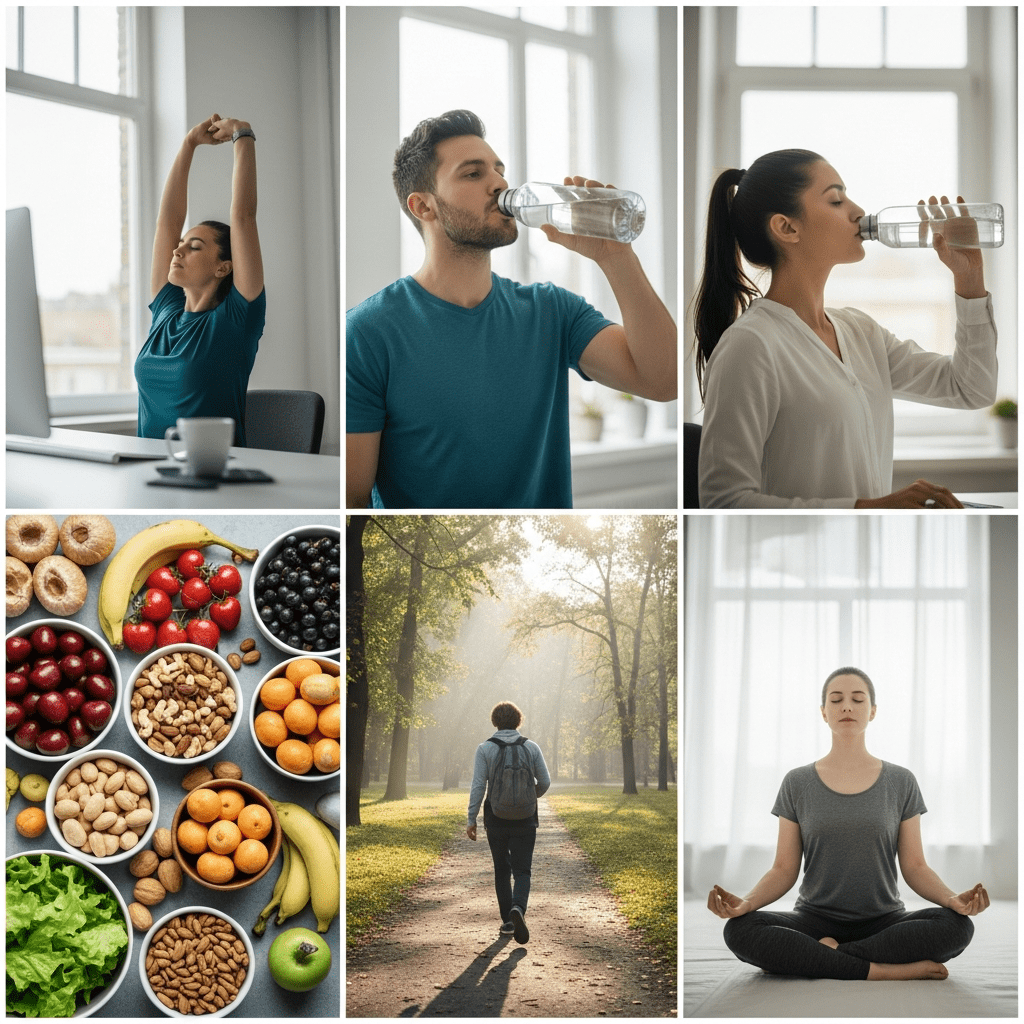
Need a Coffee-Free Reset Right Now?
Try the 5-minute reset: drink water, stand up, step into light, take 5 slow breaths, and switch to one small task. This gives your body and brain a cleaner reset without another caffeine hit.
- Minute 1: Drink water
- Minute 2: Stand and stretch
- Minute 3: Step into light or brighten your workspace
- Minute 4: Take 5 slow breaths
- Minute 5: Choose one tiny next task
More Questions About Energy Without Coffee
What can I drink for energy instead of coffee?
Start with water first, especially if you feel sluggish or foggy. You can also try peppermint tea, ginger tea, lemon water, or sparkling water with citrus. These drinks do not work like caffeine, but they can support hydration and make a midday reset feel easier.
How do I stop relying on coffee for energy?
Start by replacing one coffee moment with a simple reset: water, movement, light, breathing, and a protein-rich snack if needed. The goal is not to quit everything at once, but to build a repeatable routine that gives your body other energy signals.
About This Content
This article is for informational purposes only and does not replace professional medical advice. If fatigue is persistent, severe, sudden, worsening, or paired with concerning symptoms, speak with a qualified healthcare professional.
Content is based on established guidance around hydration, movement, balanced nutrition, stress management, light exposure, and behavioral energy routines.
