

You wake up already behind schedule, skip stretching, forget to drink water, and promise yourself you’ll “start healthy habits tomorrow.” Tomorrow turns into next week — again. If this sounds familiar, you’re not alone. The simplest way to build consistency without adding extra time to your day is habit stacking for busy adults, a method that connects new habits to routines you already do automatically.
Habit stacking works because it removes the need for motivation and replaces it with structure. Instead of trying to create new routines from scratch, you attach small healthy behaviors to existing ones, making them easier to repeat and maintain.
This guide will walk you step by step through how to start habit stacking in real life — even if your schedule already feels full.
What Is Habit Stacking?
Habit stacking is a behavior-building method where you attach a new small habit to an existing routine. By using daily actions as triggers, habit stacking reduces decision fatigue and increases consistency, making it easier for busy adults to build healthy routines without adding extra time to their schedule.
Why Habit Stacking Works for Busy Adults
When people try to build new habits, they often rely on willpower. But busy schedules, stress, and fatigue quickly drain motivation.
Habit stacking works differently. It uses existing routines as triggers, which reduces decision fatigue and makes habits feel automatic faster.
For example:
- Brushing your teeth → stretch for 30 seconds
- Making coffee → drink a glass of water
- Sitting at your desk → roll your shoulders
These small connections make habits easier to remember and repeat. Over time, the brain links the behaviors together, turning them into a single routine.
The Habit Stacking Formula (With Examples)
Habit stacking follows a simple formula:
After I [current habit], I will [new small habit].
Examples:
- After I pour my morning coffee, I will drink a glass of water
- After I brush my teeth at night, I will stretch my neck
- After I sit at my desk, I will roll your shoulders
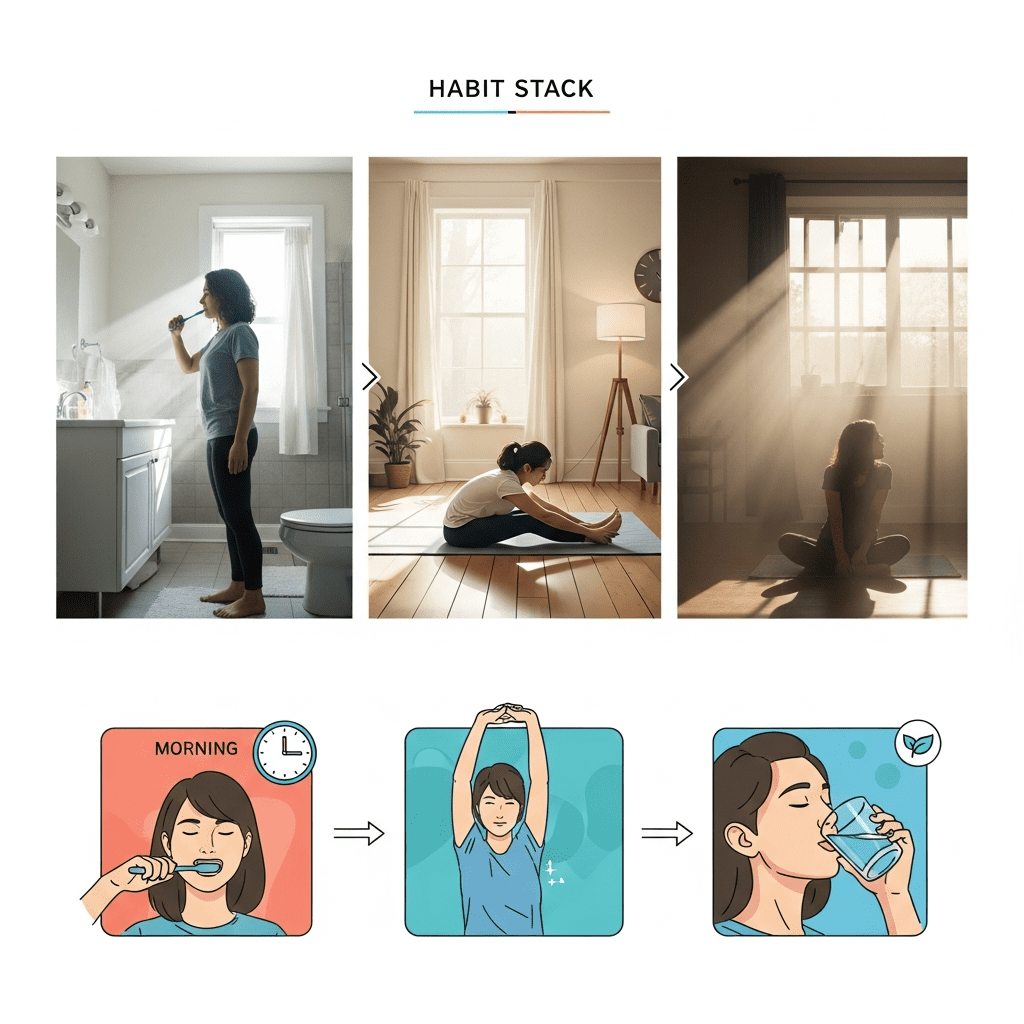
The key is choosing habits that already happen daily without effort. That’s what makes the system reliable.
How to Start Habit Stacking Step by Step
Step 1: Identify Your Anchor Habits
Anchor habits are routines you already do consistently. Common examples include:
- Waking up
- Brushing teeth
- Making coffee
- Starting work
- Eating meals
- Going to bed
Even chaotic schedules include repeated actions. For more ideas on building routines that stick, see our guide on simple daily health routines that stick.
Step 2: Start Smaller Than You Think
One of the biggest mistakes people make is choosing habits that are too big. Habit stacking works best with micro-habits, like:
- 5 squats
- One glass of water
- One deep breath
- 20-second stretch
- Writing one sentence in a journal
Small actions remove resistance and make consistency possible. You’re building repetition first — not intensity.
Step 3: Match Habits Logically
The new habit should make sense after the anchor habit. Good matches:
- Coffee → hydration
- Desk → posture reset
- Shower → stretching
- Dinner → short walk
Poor matches (like brushing teeth → cooking) are easier to forget. Logical pairing helps the brain remember the sequence.
Step 4: Stack Only One Habit at First
Trying to stack multiple habits immediately creates overwhelm. Start with one stack only. Repeat this daily for one week before adding another stack. Consistency builds faster when the system stays simple.
Step 5: Keep the Habit Visible
Environment design helps habit stacking succeed. Examples:
- Put a water glass next to the coffee machine
- Leave a yoga mat near your bed
- Place a sticky note on your desk
- Keep resistance bands near your chair

Visual reminders strengthen the connection between habits.
Step 6: Repeat Until Automatic
Habit stacking becomes powerful when repetition turns into autopilot behavior. This usually takes a few weeks of consistency. At that point, the stack feels like one action instead of two. For example:
“Brush teeth → stretch” becomes a single routine. That’s when the habit truly sticks.
Real-Life Habit Stacking Examples
Morning stacks:
- After turning off the alarm → drink water
- After brushing teeth → stretch
- After making coffee → take vitamins
Workday stacks:
- After opening your laptop → sit up straight
- After lunch → walk for two minutes
- After a meeting → roll your shoulders
Evening stacks:

- After dinner → prepare tomorrow’s lunch
- After showering → stretch calves
- After getting into bed → deep breathing
If you’re trying to improve energy naturally, stacking hydration habits can complement strategies in our daily hydration routine for energy guide.
Habit Stacking vs Starting Habits From Scratch
| Habit Stacking | Starting From Scratch |
|---|---|
| Uses existing triggers | Requires new schedule |
| Easier recall | Easy to forget |
| Low motivation needed | High motivation needed |
| Builds faster consistency | Slower behavior adoption |
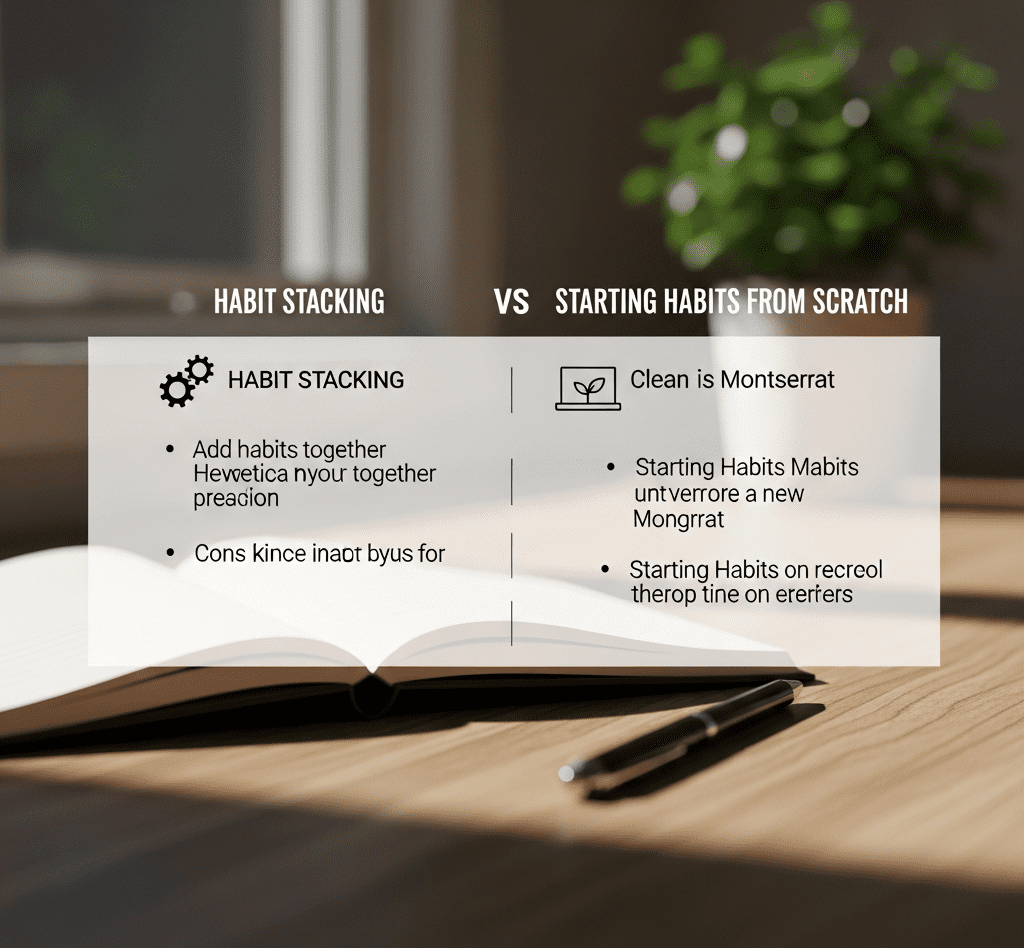
Understanding why healthy habits fail and how to build ones that stick provides context for why habit stacking is so effective.
Common Habit Stacking Mistakes
Even simple systems can fail. The most common problems are:
- Choosing habits that are too big – start tiny.
- Stacking too many habits at once – start with one.
- Picking unreliable anchor habits – choose routines that occur consistently.
- Expecting immediate results – repetition first, results later.
- Ignoring environment cues – visual reminders make stacks stick.
If you want low-stress strategies for daily consistency, check out our breathing exercises to reduce stress.
Benefits of Habit Stacking
- Builds consistency without extra time
- Reduces decision fatigue
- Lowers mental resistance
- Encourages small sustainable changes
- Helps busy adults stay consistent
How Long Does It Take to Become Automatic?
Habits become automatic through repeated actions. Consistency matters more than speed. Small, easy habits become automatic faster than large or complex ones. The NIH explains how repeated behaviors strengthen neural pathways: nih.gov
Harvard Health also highlights how environmental cues influence habit formation: health.harvard.edu
Expanding Your Habit Stacks Gradually
Once your first stack feels automatic, layer another small stack.
Example progression:
Week 1: Brush teeth → stretch
Week 2: Brush teeth → stretch | Coffee → drink water
Week 3: Brush teeth → stretch | Coffee → drink water | Sit at desk → posture reset
Small, incremental stacks are the key to long-term success.
Actionable Habit Stacking Checklist
- Identify one anchor habit
- Choose one tiny healthy habit
- Write your stack using the formula
- Make the habit visible
- Repeat daily for one week
- Avoid adding more stacks too soon
- Focus on consistency, not perfection

Simple actions repeated daily create real change.
When Habit Stacking Doesn’t Work
Habit stacking fails when routines are unpredictable, like:
- Irregular work shifts
- Frequent travel
- Inconsistent sleep schedules
Anchor habits tied to universal behaviors — like brushing teeth or eating meals — are more reliable.
The Long-Term Power of Habit Stacking
The biggest benefit is momentum. Small habits lead to:
- Better energy
- Improved focus
- Healthier routines
- Reduced stress
- Stronger consistency
Most importantly, habit stacking prevents overwhelm. Instead of trying to change everything at once, you build change gradually

If you want to build a simple routine that actually lasts, read our guide on creating a daily health routine that sticks.
People Also Ask
What is habit stacking in simple terms?
Habit stacking is a method of building new habits by attaching them to routines you already do daily. Instead of creating a brand-new schedule, you use existing actions as reminders, making healthy behaviors easier to repeat and maintain.
Does habit stacking really work?
Habit stacking works because it reduces decision fatigue and relies on automatic triggers. When a new behavior is consistently linked to an existing habit, repetition strengthens the connection, increasing the likelihood of long-term consistency.
How many habits should I stack at once?
It’s best to start with one habit stack at a time. Adding multiple stacks too quickly can create overwhelm. Once one stack feels automatic, you can gradually introduce another small addition.
How long does it take for habit stacking to become automatic?
The timeline varies, but consistency matters more than speed. Daily repetition over several weeks strengthens behavior patterns. Small, easy habits tend to become automatic faster than larger, more demanding routines.
Can habit stacking help reduce stress?
Yes, especially when stacking calming actions like deep breathing or short stretches onto predictable routines. Small stress-reducing behaviors repeated daily can create steady improvements in overall well-being.
What are good anchor habits?
Reliable anchor habits include brushing teeth, making coffee, eating meals, sitting at your desk, or getting into bed. The best anchors are routines that happen consistently without needing reminders.
Is habit stacking better than traditional goal setting?
Habit stacking focuses on small consistent actions rather than big outcomes. This makes it easier to maintain daily progress without relying on motivation alone, which often fluctuates.
Trust Notice & Medical Disclaimer
This article is for educational purposes only and is designed to provide general behavior-building guidance. It does not replace professional medical, psychological, or therapeutic advice. Individual results vary based on lifestyle and consistency.
Want to improve your daily health habits?
Take the next step toward building routines that stick and feel effortless.
Read this next: RELATED ARTICLE