
You finally sit down on the couch after a long day. The house is quieter, your phone is still in your hand, and your body feels tired—but your mind won’t slow down. You tell yourself you’ll go to bed soon, yet an hour passes without you moving. When you do get into bed, sleep doesn’t come easily. Thoughts keep looping, and tomorrow already feels heavy.
This is a familiar scene for a lot of people. The problem usually isn’t bedtime itself. It’s everything that happens in the hours leading up to it.
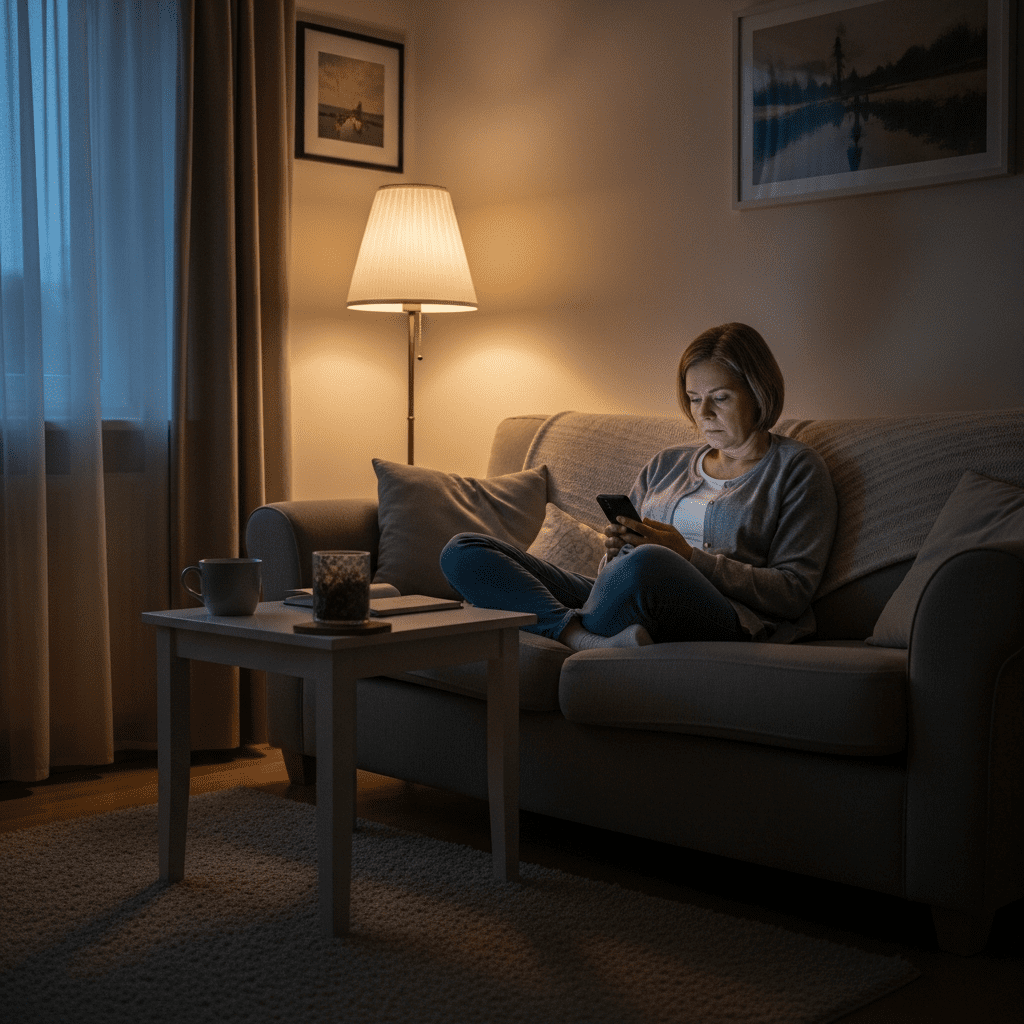
A low-stress evening routine for better sleep isn’t about strict schedules or “perfect” habits. It’s about gently signaling to your body and mind that the day is winding down. When done right, falling asleep feels more natural instead of forced.
Let’s talk about how to build an evening routine that actually helps you relax—without turning your nights into another checklist to stress over.
Why do evenings affect sleep so much?
Most people focus on mornings when they think about routines. But evenings quietly shape how well you rest, recover, and reset.
Your nervous system doesn’t switch off the moment you lie down. If your evening is packed with stimulation, decisions, and mental noise, your body stays in “on” mode. Sleep then becomes a struggle—not because something is wrong with you, but because you never truly slowed down.
This is why simple, consistent healthy daily habits play such a big role in sleep quality over time. Even small routines repeated every day can help your body feel safer and more relaxed at night.
👉 https://everydayhealthplan.com/easy-healthy-habits/
How do you stop overcomplicating your evening routine?
One of the biggest mistakes people make is trying to overhaul their evenings overnight. Suddenly they aim for a flawless routine: no screens, herbal tea, journaling, stretching, reading, meditation—all before bed.
That kind of pressure backfires.
Instead, think of your evening routine as flexible boundaries, not rigid rules. You’re creating a gentle rhythm, not a performance.
Ask yourself one simple question:
What part of my evening feels the most stressful right now?
That’s your starting point.
Step 1: What is a good wind-down signal before bed?

Rather than focusing on a strict bedtime, focus on a wind-down signal—a consistent action that tells your brain the day is shifting gears.
This could be:
- Changing into comfortable clothes
- Dimming the lights in your main living area
- Making a warm, non-caffeinated drink
- Turning off work notifications
The key is consistency, not perfection.
Step 2: Why do you need an evening buffer?

Many people go straight from “doing” to “trying to sleep.” Emails, chores, scrolling—then bed. There’s no buffer in between.
An evening buffer is a short, low-pressure transition period—sometimes just 15–30 minutes—where you stop demanding things from yourself.
Examples:
- Sitting on the couch without multitasking
- Listening to calming music or a familiar podcast
- Folding laundry or doing light cleanup
- Taking a warm shower without rushing
This buffer works even better when combined with simple stress-reduction habits you practice during the day, not just at night.
👉 https://everydayhealthplan.com/how-to-reduce-stress/
Step 3: How does decision fatigue affect sleep?
Decision fatigue is a sneaky source of evening stress. Even small choices—what to watch, what to reply to, what to clean—add mental weight.
You can lower evening stress simply by deciding fewer things:
- Rotate the same 2–3 easy dinners on weekdays
- Choose one default evening activity
- Set a “no new plans” rule after a certain time
- Prepare clothes or to-do lists earlier in the day

Even food decisions matter. Choosing simple, balanced options in the evening—like light meals or snacks—can reduce both mental and physical discomfort before bed.
👉 https://everydayhealthplan.com/healthy-evening-snacks/
Step 4: How should you handle screen time at night?
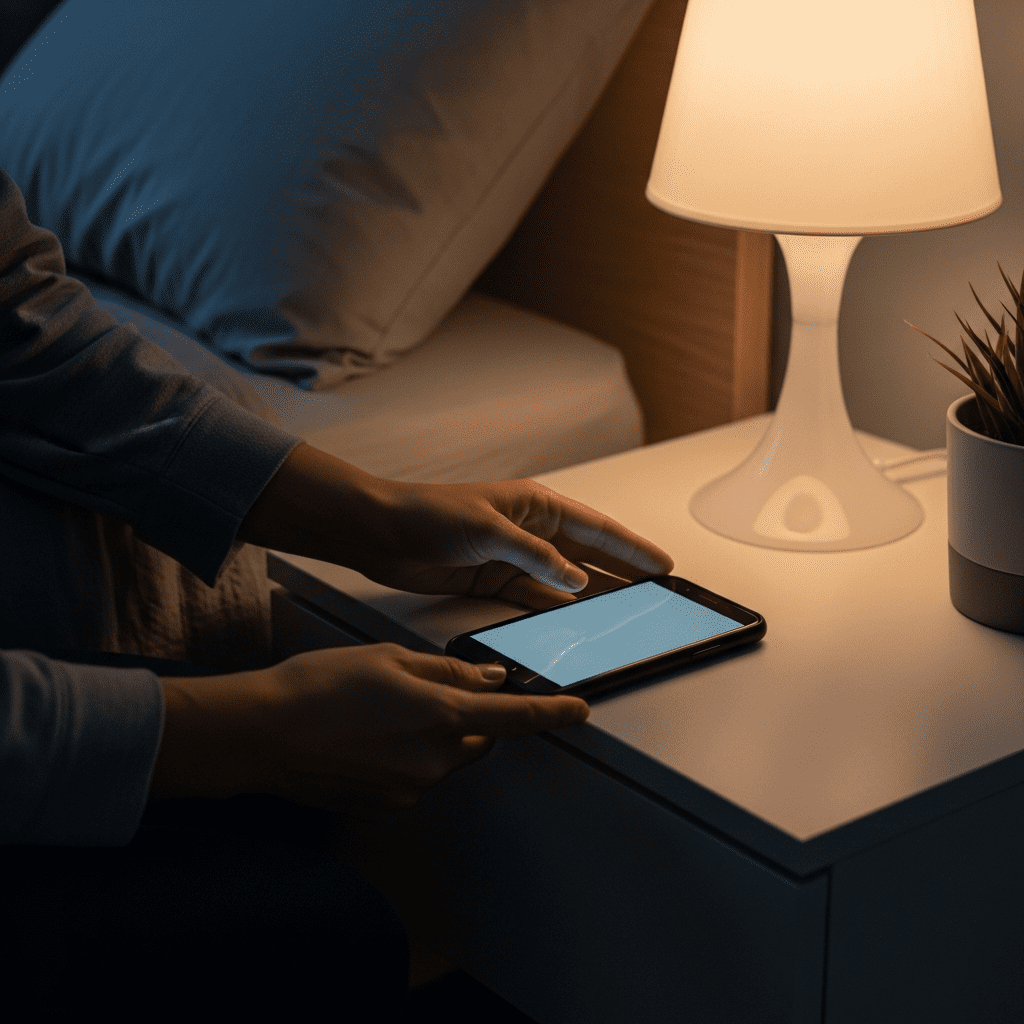
Telling yourself “no screens after 8 pm” sounds good—but it’s rarely realistic. Screens aren’t the real issue. Stimulation is.
High-stress screen habits include:
- Checking work messages
- Reading stressful news
- Endless social media scrolling
- Content that triggers urgency or comparison
Lower-stress alternatives:
- Rewatching familiar shows
- Listening to audiobooks or calming videos
- Switching your phone to grayscale
- Putting your phone down during the last few minutes before bed
The goal isn’t zero screens—it’s lower stimulation.
Step 5: How can physical cues calm a racing mind?
When thoughts race at night, trying to “think your way into calm” often doesn’t work. Your body is usually the faster route.
Helpful physical cues:
- Gentle stretching or slow walking
- A warm shower or bath
- Slow, deep breathing
- Lying on the floor for a few minutes
You don’t need a formal routine. One calming physical action is often enough.
Step 6: How do you stop bedtime overthinking?

Many people struggle to sleep because their brain turns bedtime into a meeting room for unresolved thoughts.
Instead of fighting that, give your mind a place to unload before bed:
- Write tomorrow’s to-do list
- Jot worries on paper without solving them
- Mentally note one or two things that went well
- Say, “I’ll think about this tomorrow,” and mean it
You’re not erasing thoughts—you’re postponing them safely.
Step 7: What makes an evening routine sustainable?
The best evening routine is the one you’ll actually follow when you’re tired.
Aim for:
- 2–4 simple actions
- 15–45 minutes total
- Flexible timing, consistent order
Example:
- Change into comfortable clothes
- Dim lights and silence notifications
- Do one calming activity
- Prepare for bed
That’s enough.
What should you do on nights when the routine falls apart?
Some evenings won’t go as planned. You’ll stay up late, feel restless, or skip your routine.
That’s normal.
What matters most:
- Keep at least one calming habit
- Avoid judging yourself
- Return to your routine the next evening
Consistency over time matters more than any single night.
How long does it take for an evening routine to improve sleep?
This isn’t an overnight fix. Most people notice small changes first:
- Falling asleep a little faster
- Fewer racing thoughts
- Feeling calmer before bed
- Waking up slightly more rested
Think in weeks, not days.
What does a realistic low-stress evening routine look like?
After dinner, you clean up just enough to feel comfortable. Around the same time each night, you change into cozy clothes and dim the lights. You silence non-essential notifications and spend 20 minutes reading or watching something familiar. Before bed, you write tomorrow’s top three tasks, brush your teeth, and get into bed without rushing.
Nothing extreme. Just calm, repeated signals that the day is ending.
If your days already feel busy, pairing a simple evening routine with other small daily habits can make healthy living feel more manageable overall.
The real purpose of a low-stress evening routine
An evening routine isn’t about controlling sleep. It’s about creating the conditions where sleep feels easier.
You’re not forcing relaxation—you’re allowing it.
When evenings become gentler, nights often follow. And even when sleep isn’t perfect, you’ll still feel more grounded, less wired, and better prepared for tomorrow.
Frequently Asked Questions
What is the best evening routine for better sleep?
The best evening routine for better sleep is one that reduces stimulation and stress. Simple habits like dimming lights, limiting decisions, and doing one calming activity help your body wind down naturally.
How long should an evening routine be?
An effective evening routine usually lasts between 15 and 45 minutes. It should feel easy to repeat, not exhausting or overly structured.
Can an evening routine really improve sleep?
Yes. A consistent low-stress evening routine helps signal to your nervous system that it’s time to slow down, making it easier to fall asleep over time.
What should I avoid doing before bed?
Avoid highly stimulating activities like checking work messages, stressful news, or endless social media scrolling, as they keep your brain alert.
How many habits should be in an evening routine?
Most people do best with 2–4 simple habits. Keeping it short increases consistency and reduces pressure.
You don’t need a perfect night to sleep better.
Start with one small, calming change this evening. Repeat it consistently, and let calmer nights build naturally over time.
