

You go to bed at a reasonable time. You track your sleep. You get a full eight hours. The alarm goes off, and instead of feeling refreshed, you feel heavy, groggy, and unmotivated.
If you wake up tired even after 8 hours of sleep, you’re not alone. Many busy American adults assume that sleep duration equals recovery. But your body doesn’t measure rest in hours alone. It measures timing, hormone coordination, sleep stage balance, and nervous system regulation.
The real question isn’t “Did you sleep long enough?”
It’s: Did your internal clock and hormones complete the right sequence?
Understanding why you wake up tired even after 8 hours of sleep requires looking at cortisol, melatonin, adenosine, dopamine, and your circadian rhythm — not just your bedtime.
What It Means When You Wake Up Tired Even After 8 Hours of Sleep
Waking up tired even after 8 hours of sleep usually happens when your hormones and circadian rhythm are misaligned. Even if sleep duration is technically adequate, delayed cortisol release, fragmented REM or deep sleep, incomplete adenosine clearance, or circadian phase drift can prevent your body from transitioning properly into morning alertness.
The Science Behind Why You Wake Up Tired Even After 8 Hours
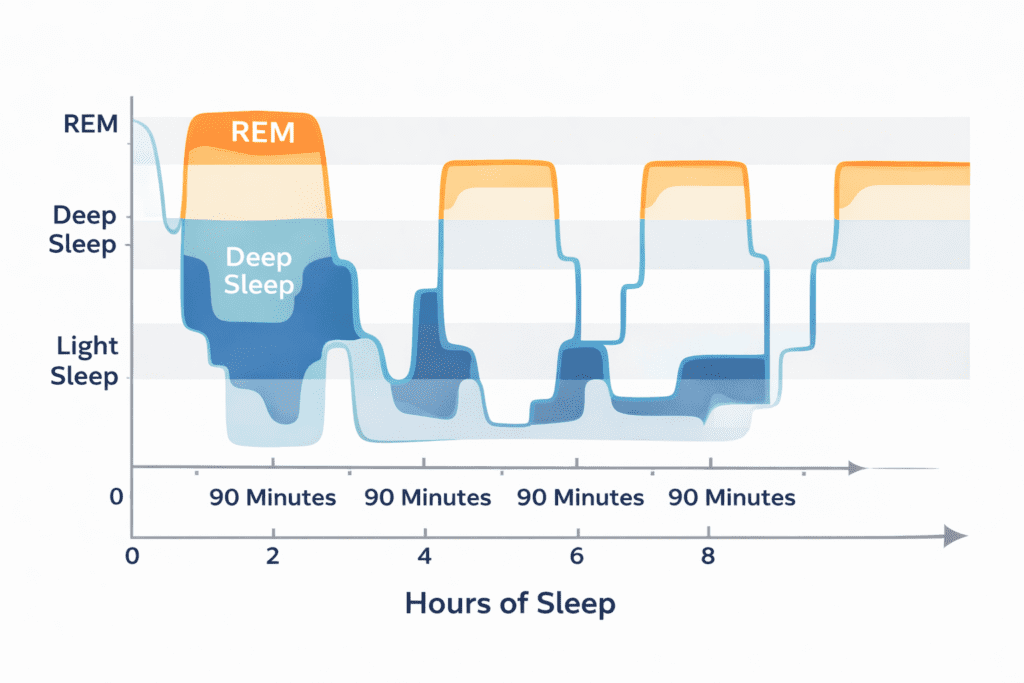
Sleep works in cycles, not blocks. Each night, your brain rotates through:
- Light sleep
- Deep sleep
- REM sleep
You can review an overview of sleep stages from the CDC.
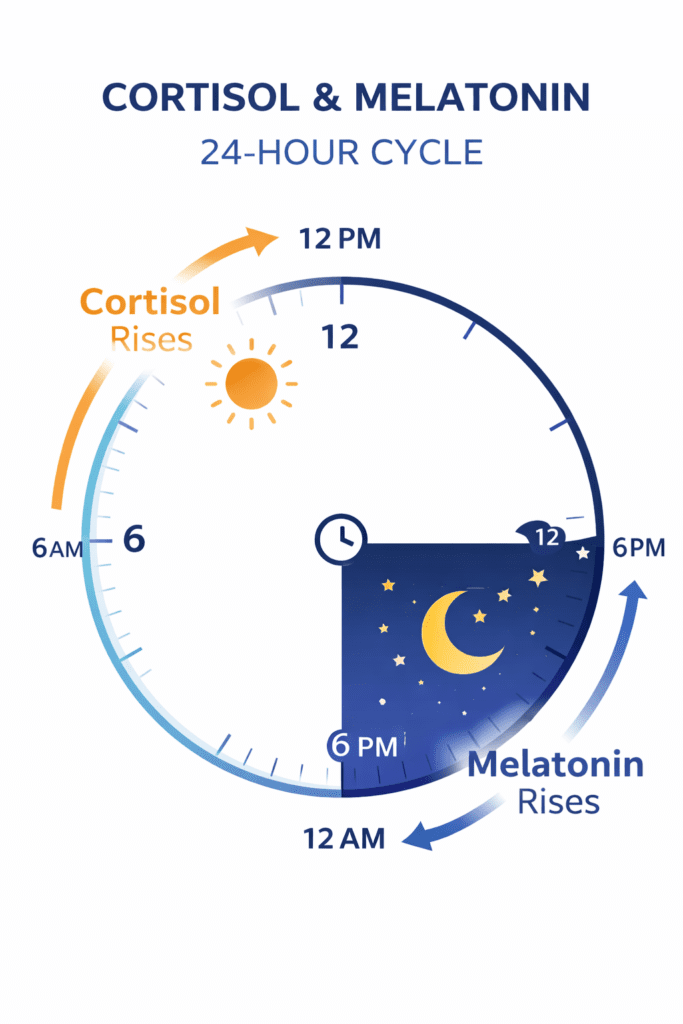
At the same time, your hormones follow a precise rhythm:
- Melatonin rises at night
- Cortisol rises in the early morning
- Adenosine clears during deep sleep
- Dopamine resets for motivation
If even one part of this system is mistimed, you can wake up tired even after 8 hours of sleep.
Here’s the counterintuitive part:
You can sleep eight hours and still wake up during the wrong biological phase.
That mismatch alone can make you feel exhausted.
How Cortisol Timing Determines Why You Wake Up Tired
Most people think cortisol is only a stress hormone. It’s also your natural wake-up signal.
About 30–45 minutes before you wake, your body should trigger the Cortisol Awakening Response (CAR). Research from the National Institutes of Health explains how this early-morning surge prepares the body for alertness in this review on the Cortisol Awakening Response.
This surge increases blood sugar availability, raises blood pressure slightly, and signals your brain that it’s time to transition from sleep to alertness.
If this spike is:
- Too low
- Too delayed
- Or mistimed
You wake up groggy.
Common lifestyle triggers that blunt cortisol timing include:
- Late-night screen exposure
- Inconsistent sleep schedule
- High stress before bed
- Late caffeine intake
- Sleeping in complete darkness until the last second
When cortisol doesn’t rise properly, you wake up tired even after 8 hours of sleep because your body hasn’t shifted into daytime mode yet.
The Link Between Circadian Rhythm Drift and Waking Up Exhausted
Your circadian rhythm is a 24-hour internal clock controlled by light exposure, meal timing, movement, and temperature shifts. The National Institute of General Medical Sciences explains how your circadian rhythm regulates sleep-wake timing.
If you:
- Stay up past midnight regularly
- Scroll on your phone in bed
- Eat late-night snacks
- Sleep in on weekends
Your internal clock drifts later.
This creates a mismatch:
Your alarm says 6:30 AM.
Your biology says 4:45 AM.
You may have slept eight hours, but your circadian phase is delayed. You’re waking up during your biological night.
That’s why you feel heavy, cold, and unmotivated.
This same misalignment often contributes to feeling exhausted at 3PM even after 8 hours of sleep.
What Happens When Sleep Stages Become Fragmented Overnight
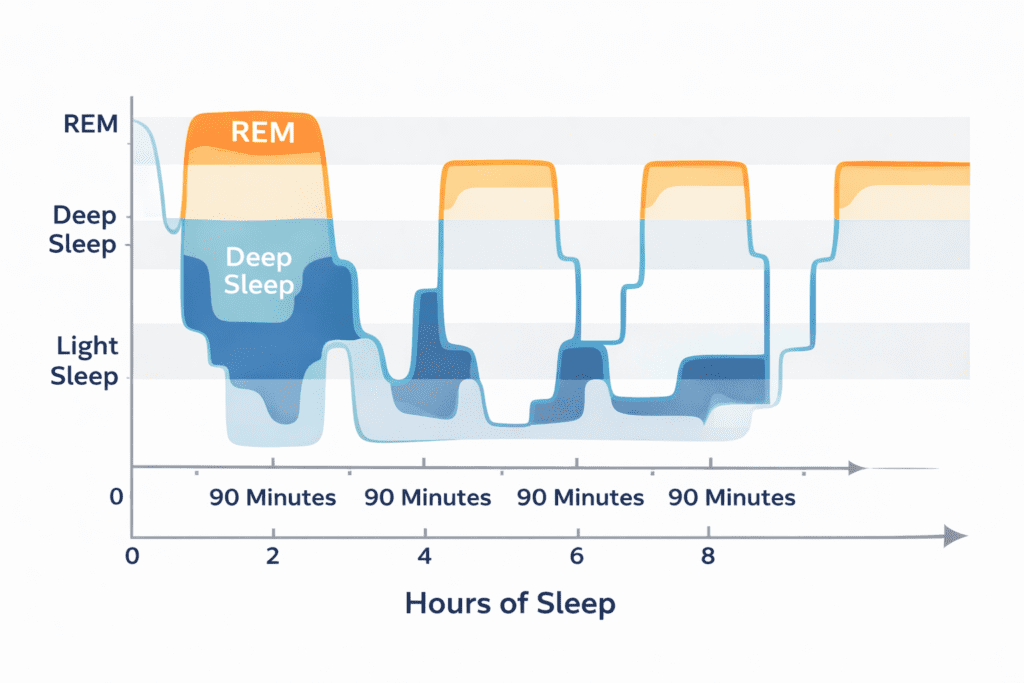
Another reason you wake up tired even after 8 hours of sleep is sleep architecture imbalance.
Deep sleep is when:
- Growth hormone releases
- Adenosine clears
- Physical restoration happens
REM sleep is when:
- Emotional processing happens
- Dopamine pathways reset
- Memory consolidates
Stress, alcohol, late meals, and blue light exposure can fragment these stages.
You may log eight hours, but if:
- Deep sleep is shortened
- REM is disrupted
- Micro-awakenings occur
You wake feeling unrestored.
If this pattern continues, it can evolve into the classic wired but tired at night cycle.
The Hidden Reason Adenosine Carryover Makes You Groggy
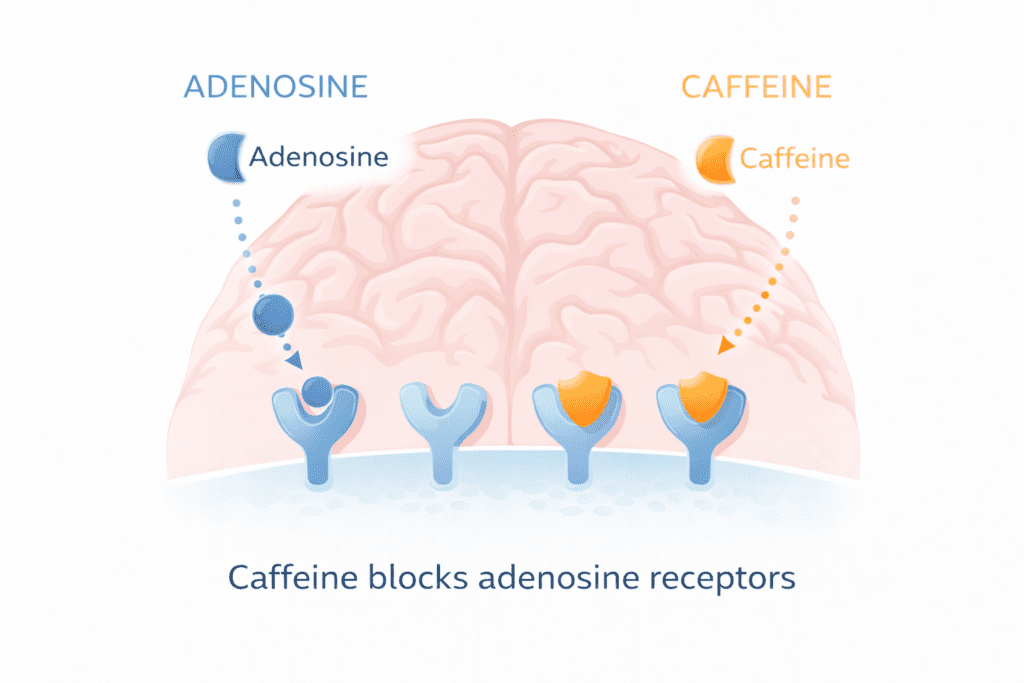
Adenosine builds sleep pressure throughout the day and clears during deep sleep.
If you:
- Sleep lightly
- Wake frequently
- Go to bed too late
- Consume caffeine late afternoon
Adenosine may not fully clear.
When adenosine lingers, you wake up tired even after 8 hours of sleep because your brain is still carrying chemical sleep pressure.
Blood sugar instability can compound this effect. If you also experience symptoms explained in why blood sugar crash symptoms happen, the fatigue can feel even stronger.
Common Lifestyle Triggers That Disrupt Morning Energy
- Late-night screen exposure
- Inconsistent sleep schedule
- Drinking caffeine after 1 PM
- Sleeping in on weekends
- Alcohol within 3 hours of bed
- High evening stress
Why Dopamine Reset Failure Reduces Morning Motivation
Energy is not just physical. It’s motivational.
Dopamine resets during REM sleep. If REM is cut short — common when alarms interrupt the final sleep cycle — dopamine remains suboptimal.
This explains why:
- You feel unmotivated
- You want to hit snooze
- You feel emotionally flat
You’re not just sleepy. Your reward system hasn’t fully rebooted.
What Most People Miss About Alarm Timing and Sleep Cycles
Sleep cycles last about 90 minutes.
If you wake during:
- Deep sleep → heavy grogginess
- REM → emotional disorientation
- Light sleep → easier transition
You can sleep eight hours and still wake mid-cycle.
That single factor can make you wake up tired even after 8 hours of sleep — consistently.
The Real Cause: Hormone Sequencing Failure Across 24 Hours
Morning fatigue is rarely a single event. It’s the result of:
- Evening light exposure suppressing melatonin
- Delayed sleep onset
- Reduced deep sleep
- Fragmented REM
- Blunted cortisol awakening response
- Adenosine carryover
- Circadian phase delay
Each step compounds the next.
That’s the cause-effect chain.
5 Biological Reasons You Wake Up Tired Even After 8 Hours
- Blunted Cortisol Awakening Response
- Circadian rhythm phase delay
- Fragmented deep or REM sleep
- Adenosine carryover
- Alarm timing that interrupts a sleep cycle
The Impact Of Weekend Sleep Shifts on Monday Morning Exhaustion
Sleeping in on weekends shifts your internal clock.
By Monday, your body may think it’s earlier than it actually is.
This phenomenon, often called social jet lag, mimics traveling across time zones — without leaving home.
You wake up tired even after 8 hours of sleep because your rhythm has shifted.
How to Reset Your Circadian Rhythm When You Wake Up Tired
Here’s a structured system to realign hormone timing:
Step 1: Fixed Wake Time (7 Days Straight)
Wake at the same time daily.
Step 2: Morning Light Within 10 Minutes
Get outside for natural sunlight exposure.
Step 3: Delay Coffee 60–90 Minutes
Allow cortisol to rise naturally first.
Step 4: No Screens 60 Minutes Before Bed
Reduce melatonin suppression. You can also learn how to improve sleep quality with evening habits.
Step 5: Eat Breakfast Within 90 Minutes
Signal metabolic daytime start.
Step 6: Stop Caffeine After 1 PM
Prevent adenosine interference.
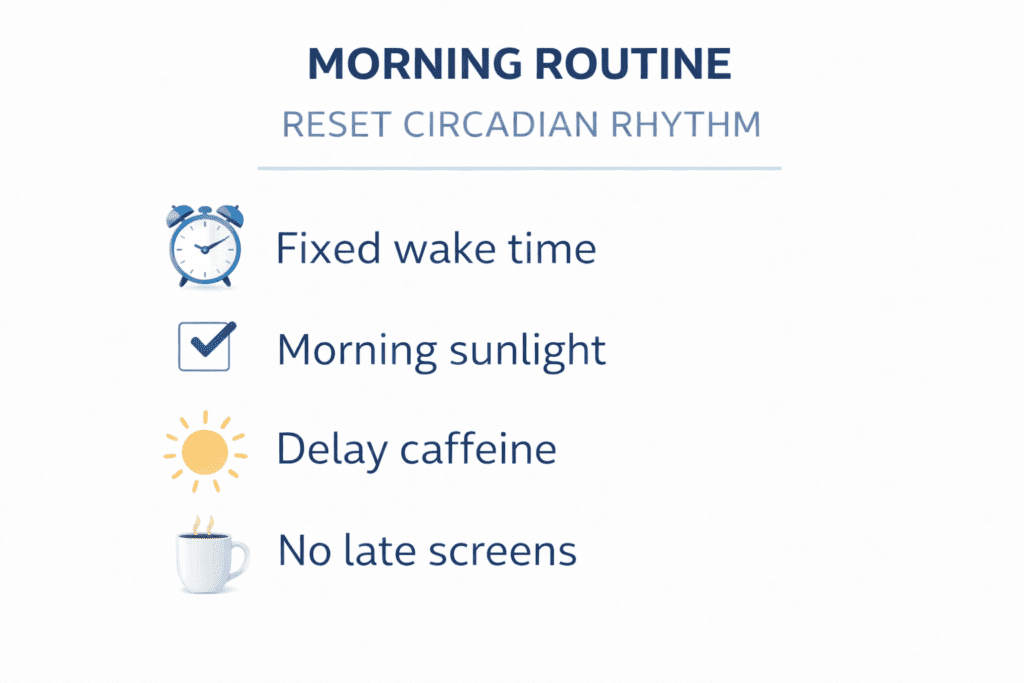
If you need structure, a consistent 7-day morning routine can reinforce circadian stability.
Consistency matters more than perfection.
Escalation Pattern: When Morning Fatigue Becomes Chronic
If misalignment continues:
- Cortisol rhythm flattens
- Evening alertness increases
- Morning grogginess worsens
- Sleep onset gets delayed
- Stress hormones remain elevated
Over time, this creates a cycle of exhaustion in the morning and overstimulation at night.
A Realistic American Scenario
- 11:45 PM: Scrolling on your phone
- Midnight: Lights out
- 6:30 AM: Alarm
- 6:35 AM: Snooze
- 7:00 AM: Immediate coffee
Repeat this for weeks, and you reinforce circadian drift and hormone mistiming.
You wake up tired even after 8 hours of sleep — not because you didn’t sleep enough, but because your timing is off.

Counterintuitive Insight: More Sleep Can Make It Worse
Sleeping in to “catch up” often worsens fatigue.
It pushes your internal clock later.
The solution is not more sleep.
It’s better alignment.
Final Perspective on Why You Wake Up Tired Even After 8 Hours of Sleep
If you wake up tired even after 8 hours of sleep, the issue is rarely duration.
It’s sequencing.
Your hormones, nervous system, and circadian rhythm must transition in order.
When that sequence breaks — through light exposure, stress, inconsistent timing, caffeine misuse, or weekend shifts — you wake during biological night.
Energy stability depends on rhythm, not just rest.
Fix the rhythm, and the hours start working for you.
Frequently Asked Questions
1. Why do I wake up tired even after 8 hours of sleep every day?
This usually happens when your circadian rhythm or cortisol timing is misaligned. Even with enough sleep duration, hormone sequencing and sleep stage quality determine how refreshed you feel in the morning.
2. Is 8 hours of sleep always enough?
Eight hours is a general guideline, but sleep quality, timing, and sleep cycle completion matter just as much as total hours.
3. Can stress cause me to wake up exhausted?
Yes. Elevated nighttime stress hormones can fragment deep sleep and disrupt your natural morning cortisol rise, leading to grogginess.
4. Does caffeine affect morning fatigue?
Late-day caffeine can interfere with adenosine clearance and reduce deep sleep, which may increase morning tiredness.
5. Why do I feel better later in the day?
Cortisol and dopamine levels naturally rise as the day progresses, which can temporarily mask circadian misalignment from earlier in the morning.
6. Does sleeping in help fix morning exhaustion?
Sleeping in often delays your internal clock further and can worsen long-term fatigue instead of fixing it.
7. Can light exposure improve how I feel when I wake up?
Yes. Morning sunlight helps regulate your circadian rhythm and supports a healthy cortisol awakening response.
About This Content
This article is based on established sleep science research related to circadian rhythms, cortisol timing, REM cycles, and adenosine regulation. Educational references from trusted U.S. institutions such as the CDC, NIH, and NIGMS support the biological concepts discussed.
The information provided is for educational purposes only and focuses on lifestyle-based strategies to support healthy daily energy patterns.
