

It’s easy to slip into survival mode at night after a long day filled with work, responsibilities, and constant decision-making. Many adults fall asleep on the couch, scroll through their phones, and go to bed feeling mentally drained but strangely restless. The truth is, what you do in the evening has a powerful effect on how calm, focused, and energized you feel the next day.
You don’t need a perfect nighttime routine or hours of self-care to feel better. Small, intentional evening habits can help your body relax, slow your mind, and prepare your energy for the next day. This guide is for busy adults who want less stress and more energy—without pressure or complicated rules.
If you’re trying to build a healthier lifestyle overall, these evening habits work best when combined with simple daytime routines. You can also explore healthy daily routines for busy adults to support your energy from morning to night.
Why Your Evening Habits Matter More Than You Think
When people want more energy, they usually focus on mornings. But evenings are where everything begins. Poor nighttime habits can disrupt sleep, raise stress hormones, and leave you exhausted the next day—no matter how early you go to bed.
Simple evening routines help calm your nervous system, improve sleep quality, and make mornings feel less rushed. Think of your evening as a “landing zone” that allows your body and mind to slow down gradually instead of crashing.
Create a Digital Wind-Down (Without Going Extreme)

Screens often take over after dinner. Emails, social media, news, and streaming keep your brain alert long after your body is ready to rest. You don’t have to remove screens completely, but setting gentle limits can make a noticeable difference.
Choose a “digital slowdown” time—about 30 minutes before bed—when you stop scrolling and checking notifications. Dim the lights, silence non-essential alerts, and let your brain shift from reaction mode to calm mode. Many people notice better sleep and lower anxiety within days.
Reducing screen time at night also makes mornings much easier. If waking up feels hard, this easy morning routine to boost your energy can help you start the day feeling refreshed instead of exhausted.
Release Physical Stress with Gentle Movement
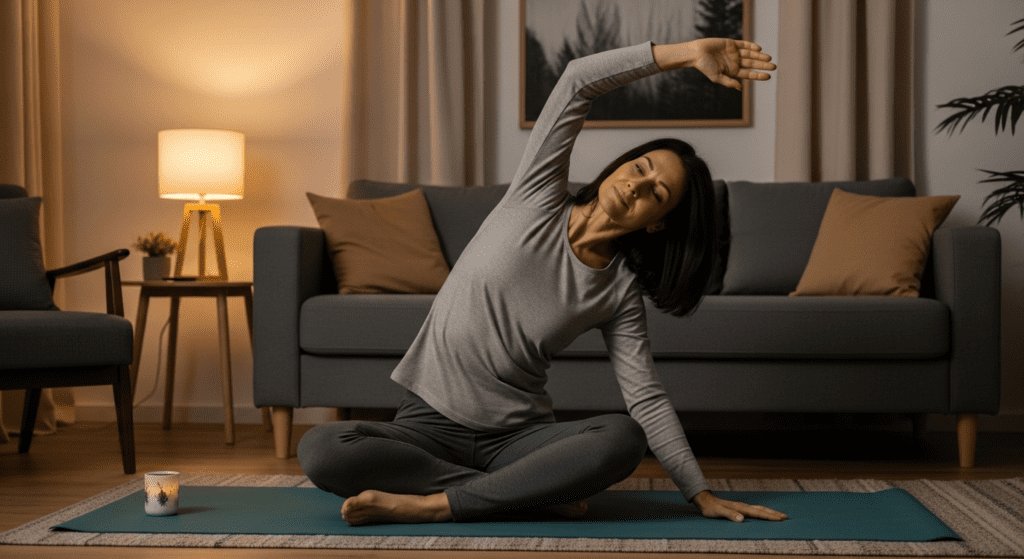
Even if you didn’t exercise, your body still holds tension from sitting, standing, and daily stress. Gentle evening movement helps release that tension and signals your body that it’s safe to relax.
You don’t need intense workouts. Light stretching, slow yoga, or a short walk after dinner can improve sleep and reduce stress. Focus on movements that feel good—neck rolls, hip stretches, or simply lying on the floor and breathing deeply.
This habit also helps reduce morning stiffness, making it easier to wake up and move the next day.
Clear Your Mind Without Overthinking
Mental clutter is one of the biggest reasons people struggle to fall asleep. When everything gets quiet, thoughts about tomorrow and unfinished tasks rush in.
A simple solution is writing things down. Take two or three minutes to note the top three priorities for tomorrow. You don’t need a long to-do list—just the essentials.
You can also write one positive thing that happened during the day or something you’re grateful for. This helps your brain close the day instead of replaying it all night.
Eat and Drink with Sleep in Mind
What you eat and drink at night can either support or disrupt your sleep. Heavy meals, sugar, or caffeine late in the day make it harder for your body to fully relax.
Whenever possible, eat lighter dinners and avoid caffeine at least six hours before bed. Stay hydrated, but reduce large amounts of liquid right before sleep to avoid waking up at night.
A warm, caffeine-free herbal tea like chamomile or peppermint often signals to the body that the day is winding down.
Stick to a Consistent Bedtime Routine
Consistency matters more than perfection. Going to bed and waking up at roughly the same time every day helps regulate your internal clock, making it easier to fall asleep and wake up naturally.
This applies to weekends too. Large changes in sleep schedules can leave you groggy and tired.
Create a simple routine you follow every night in the same order—brush your teeth, dim the lights, stretch, then get into bed. Over time, your body associates these steps with rest.
Use Simple Breathing to Calm Your Nervous System
You don’t need long meditation sessions to relax. A few slow breaths can quickly lower stress.
Try this: inhale through your nose for four seconds, hold for two seconds, then exhale through your mouth for six seconds. Repeat five to ten times. This signals your nervous system to slow down.
Breathing exercises are especially helpful when your mind feels anxious or restless at night.
Protect Your Evening Recharge Time
Evening routines work best when they’re protected. Constant work messages, last-minute tasks, or notifications make it harder to relax.
When possible, set gentle boundaries. Turn off work alerts, delay non-urgent tasks, and ask for quiet time if needed. Rest is not wasted time—it improves focus, mood, and energy the next day.
Be Realistic and Flexible
The best evening routine is one you can maintain. Some nights will be busy or unpredictable—and that’s okay. Even one calming habit can make a difference.
Avoid all-or-nothing thinking. You don’t need a perfect routine every night. Consistency over time is what creates real results.
If staying consistent feels hard, this guide on healthy habits that actually stick can help you build routines that last.

Better Nights Create Better Days
You don’t need expensive tools, complex plans, or major life changes to feel better. Less screen time, gentle movement, simple planning, and consistent sleep are small habits with a big impact.
Choose one habit to try tonight. Let it feel natural before adding another. Over time, these small changes will help you feel calmer, sleep better, and wake up with more energy—one peaceful evening at a time.
Frequently Asked Questions
1. What are effective evening routines for busy adults?
Effective evening routines for busy adults are simple habits that help calm the nervous system, improve sleep quality, and prepare your energy for the next day. These include reducing screen time, gentle movement, prioritizing sleep, and planning for tomorrow.
2. Why do evening habits matter for energy and stress?
Evening habits matter because poor nighttime routines can disrupt sleep, raise stress hormones, and leave you exhausted the next day. Intentional evening practices help your body slow down, relax, and recharge more effectively.
3. How can I reduce screen time in my evening routine?
To reduce screen time, set a “digital wind-down” about 30 minutes before bed where you stop scrolling, dim the lights, silence alerts, and let your brain shift from alert mode to calm mode.
4. What types of evening movement help reduce stress?
Gentle activities like light stretching, slow yoga, or a short after-dinner walk help release physical tension and signal your body that it’s time to relax, which supports better sleep and less stress.
5. How can I quiet my mind before bed?
You can quiet your mind by writing down the top priorities for tomorrow or noting something positive from your day. This helps prevent overthinking at night and allows your brain to “close” the day.
6. What are simple evening habits for better sleep?
Simple habits for better sleep include eating a lighter dinner, avoiding caffeine late in the day, sticking to a consistent bedtime, doing deep-breathing exercises, and creating a nighttime routine your body can recognize as a signal to rest.
Ready to Build Calm Evenings?
👉 Read next: Easy Morning Routine for Better Energy
🔥 Explore more: Healthy Habits That Actually Stick
