

Feeling dizzy and tired in the afternoon can be confusing — especially when you slept well, ate lunch, and didn’t skip your morning routine. The combination of lightheadedness and fatigue often feels random, but it usually isn’t.
In most healthy adults, this pattern reflects a temporary drop in circulation stability and glucose delivery that tends to happen between 2PM and 4PM. It’s not just “low energy.” It’s a timing issue involving your nervous system, blood pressure regulation, hydration status, and blood sugar rhythm.
When those systems shift at the same time, your brain briefly receives less consistent support. That’s when dizziness and fatigue show up together.
What Is Afternoon Dizziness and Fatigue?
Afternoon dizziness and fatigue is a temporary drop in energy and lightheadedness that usually occurs between 2PM and 4PM. It commonly happens when lower cortisol levels, mild blood pressure shifts, blood sugar fluctuations, dehydration, and prolonged sitting briefly reduce stable blood flow and glucose delivery to the brain.
The Science Behind Afternoon Energy and Circulation Drops
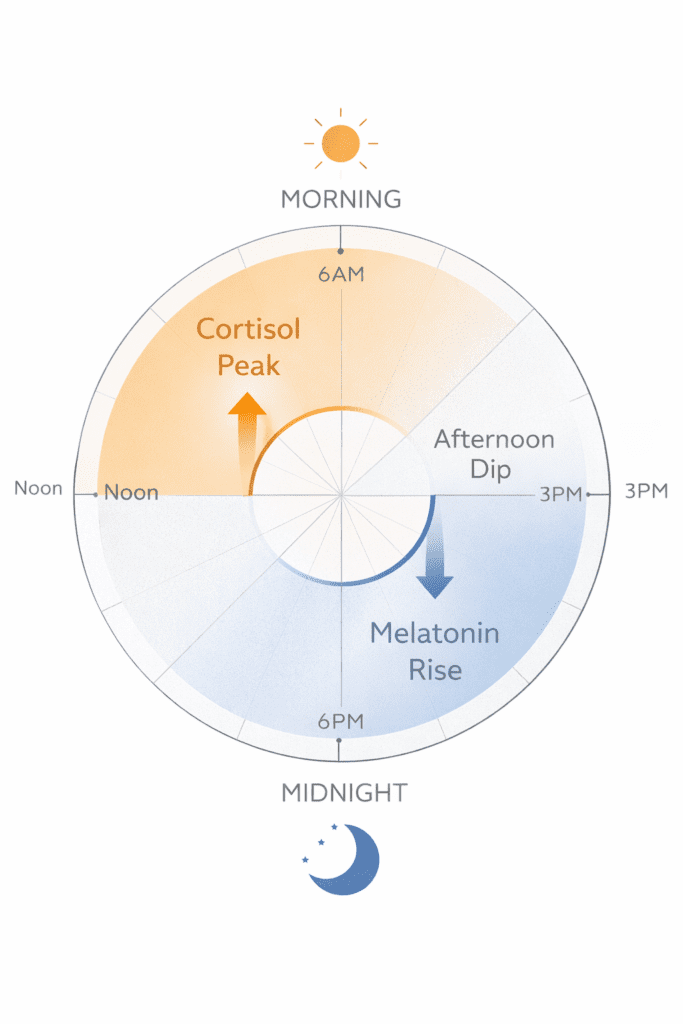
Your body runs on daily rhythms controlled by hormones like cortisol, insulin, melatonin, and adenosine.
In the morning, cortisol rises sharply. This hormone increases alertness, raises blood pressure slightly, and helps mobilize glucose into your bloodstream. By early afternoon, cortisol naturally declines. The NIH explains how sleep and circadian timing influence these rhythms at https://www.nhlbi.nih.gov/health-topics/sleep-deprivation-and-deficiency.
At the same time:
- Adenosine has been building in your brain since you woke up
- Insulin likely spiked from lunch
- You’ve probably been sitting for hours
- Hydration may be lower than it was in the morning
Individually, none of these are dramatic. Together, they create a perfect setup for feeling dizzy and tired in the afternoon.
Your brain depends on two essentials:
- Steady glucose delivery
- Stable blood pressure and circulation
When either fluctuates, symptoms appear quickly.
What Happens When Blood Pressure Slightly Drops Midday
Blood pressure constantly adjusts through the baroreceptor reflex. Pressure sensors in your neck and chest detect changes in blood flow and signal your autonomic nervous system to compensate.
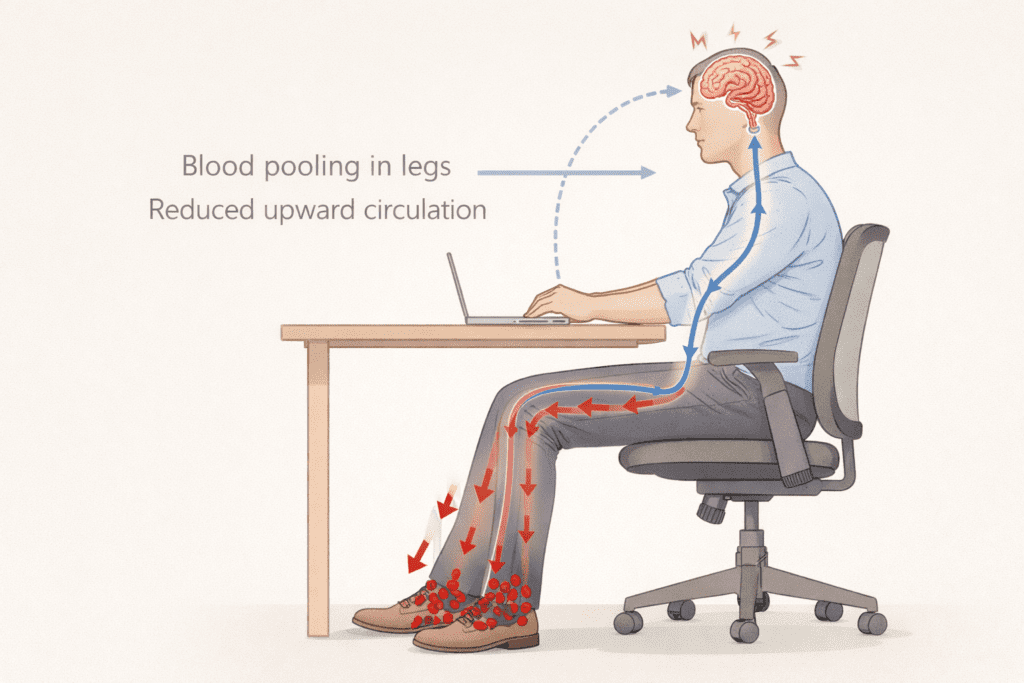
If you’ve been sitting for hours, blood pools in your lower body. Circulation slows. When you stand or shift posture, gravity briefly pulls blood away from your brain.
If nervous system compensation is slightly delayed, your brain experiences a short drop in perfusion.
That can cause:
- Lightheadedness
- Mild dizziness
- Brain fog
- Sudden fatigue
The NIH cardiovascular resource explains how blood pressure regulation works at https://www.nhlbi.nih.gov/health-topics/high-blood-pressure.
This doesn’t require a medical condition. It can happen in healthy adults.
Prolonged sitting reduces muscle contractions that normally push blood back toward your heart. Your calves act as circulation pumps. When inactive, efficiency drops. Even something as simple as a 3 minute posture reset for desk workers can reduce instability.
The Hidden Reason Lunch Can Trigger Dizziness and Fatigue
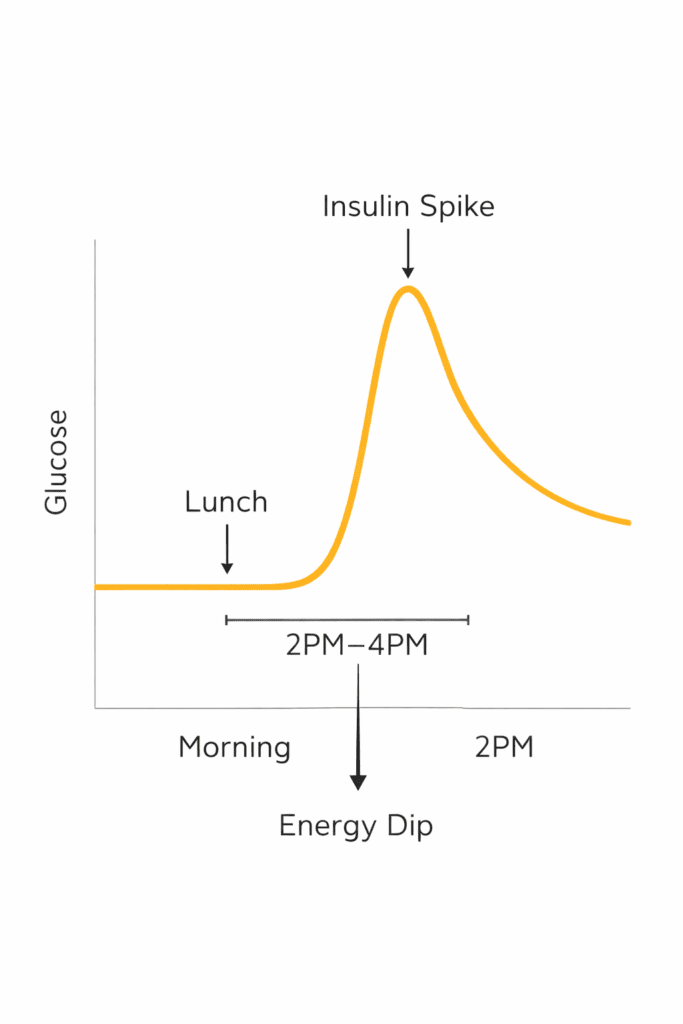
After eating, your body shifts into parasympathetic dominance — rest and digest mode. Blood flow redirects toward digestion. Insulin rises to move glucose into cells.
If lunch was high in refined carbohydrates, insulin may spike sharply. That spike can lead to a mild glucose dip one to two hours later.
Even without clinical hypoglycemia, the relative drop can make you feel:
- Shaky
- Sleepy
- Lightheaded
- Mentally slow
Many people who experience this also relate to feeling tired after eating lunch.
The Real Cause of Feeling Dizzy and Tired in the Afternoon
It’s rarely one single cause.
It’s a timing problem.
By mid-afternoon:
- Cortisol is lower
- Adenosine is higher
- You’ve been sedentary
- Blood sugar may fluctuate
- Hydration may be reduced
- Parasympathetic tone may be elevated
Five small waves combine into one larger wave. That wave feels like dizziness plus fatigue.
The 3 Main Biological Triggers Behind Afternoon Dizziness
- Mild blood pressure drops caused by prolonged sitting and delayed autonomic response
- Post-lunch glucose fluctuations from insulin spikes and carbohydrate-heavy meals
- Reduced plasma volume from mild dehydration and caffeine-related fluid loss
When these overlap, dizziness intensifies.
Here’s a side-by-side comparison of the most common physiological triggers behind feeling dizzy and tired in the afternoon.
Afternoon Dizziness Trigger Comparison
| Trigger | What’s Happening in the Body | Common Signs | Quick Stabilizing Action |
|---|---|---|---|
| Mild Blood Pressure Drop | Reduced venous return from prolonged sitting lowers brain perfusion temporarily. | Lightheaded when standing, heavy head, brief vision dimming. | 3-minute movement pulse or calf raises. |
| Post-Lunch Glucose Fluctuation | Insulin spike followed by a relative glucose dip 1–2 hours after eating. | Shaky, sleepy, foggy thinking. | Add protein or fiber mid-afternoon. |
| Mild Dehydration | Lower plasma volume reduces circulation efficiency and pressure stability. | Dry mouth, low energy, dizziness with posture changes. | 12–16 oz water refill. |
| Adenosine Buildup | Sleep pressure accumulates through the day, lowering alertness. | Eye heaviness, reduced focus, slower thinking. | Light exposure + short walk. |
If shakiness accompanies fatigue, understanding why blood sugar crash symptoms happen adds clarity.
Pick what’s most likely causing your afternoon dizziness
Most people have one dominant trigger. Start with the closest match, then come back and test the next.
How Dehydration Quietly Lowers Plasma Volume
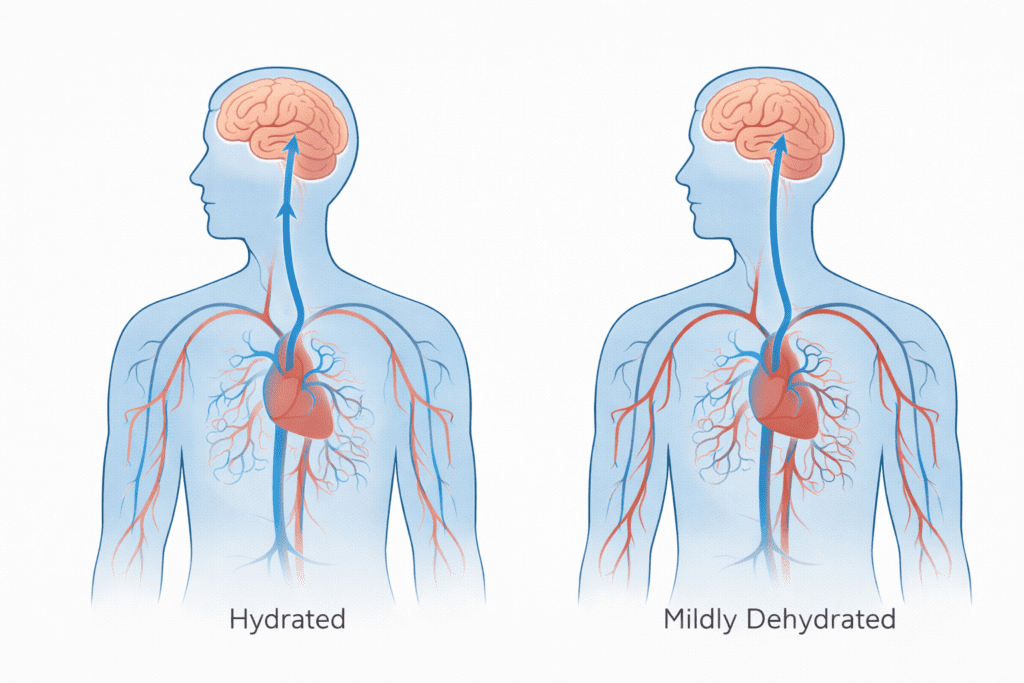
Even mild dehydration reduces plasma volume. Less plasma means less effective blood delivery to your brain during posture changes.
Office environments amplify this:
- Air conditioning increases fluid loss
- Coffee increases urination
- Busy schedules delay water intake
The CDC nutrition hub emphasizes hydration importance at https://www.cdc.gov/nutrition/.
Improving simple daily hydration habits for energy can significantly reduce this trigger.
What Most People Miss About Afternoon Lightheadedness
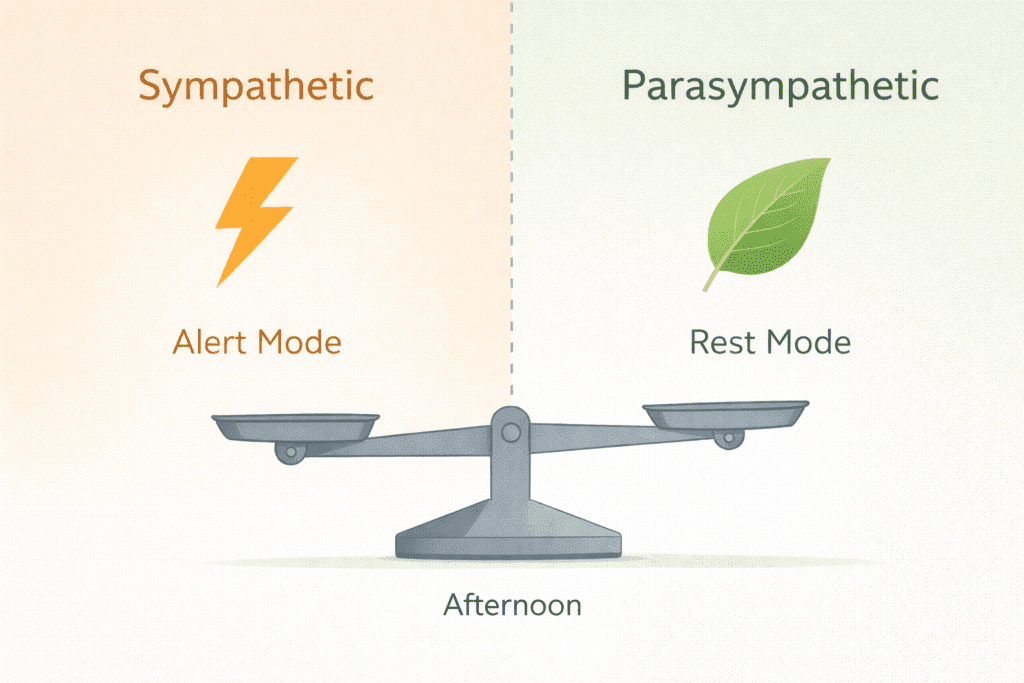
Most blame poor sleep or assume aging is responsible. In reality, autonomic imbalance is often the bigger factor.
Your autonomic nervous system has two branches:
- Sympathetic for alertness
- Parasympathetic for rest
In the afternoon, parasympathetic activity rises. If sympathetic tone doesn’t balance it, blood pressure can dip slightly.
That subtle drop produces lightheadedness rather than dramatic fainting.
The Link Between Sitting, Muscle Inactivity, and Brain Fog
When you walk, leg muscles push blood upward. When you sit, that pumping action stops.
Venous return slows. Cardiac output decreases slightly. Brain perfusion fluctuates during position changes.
Add shallow breathing from computer focus, and oxygen exchange efficiency declines.
These small shifts stack.
How Afternoon Adenosine Buildup Amplifies Fatigue
Adenosine builds in your brain while awake. Caffeine blocks it temporarily.
When caffeine wears off, adenosine signaling intensifies fatigue. Many adults dealing with this also seek afternoon energy crash prevention.
If caffeine timing is off, you may also feel wired but tired at night.
How Chronic Stress Disrupts Afternoon Blood Pressure Regulation
Chronic stress flattens cortisol rhythm. Morning spikes weaken. Afternoon dips deepen.
This reduces resilience against posture-related blood pressure shifts and increases instability later in the day.
The Impact Of Poor Sleep Quality on Afternoon Stability
You can sleep eight hours yet experience fragmented deep sleep. That weakens glycogen restoration and blunts morning cortisol response.
By afternoon, energy resilience is lower.
The Hidden Environmental Triggers That Worsen Afternoon Dizziness
Modern offices compress destabilizing factors into one window:
- Overhead lighting strains eyes
- Screen glare reduces blink rate
- Temperature control decreases thirst cues
- Long meetings reduce movement
- High-carb lunches spike insulin
Cumulatively, these intensify feeling dizzy and tired in the afternoon.

Signs Your Afternoon Dizziness Is Likely Lifestyle-Driven
- Happens at roughly the same time daily
- Improves after walking
- Improves after hydration
- Feels worse after large meals
- Occurs after prolonged sitting
How Small Circulation Adjustments Restore Afternoon Stability
Movement Pulse
Perform 20 slow calf raises and walk briskly for 2–3 minutes.
Hydration Refill
Drink 12–16 oz of water.
Glucose Stabilizer
Add protein or fiber mid-afternoon if lunch was carb-heavy.
Posture Reset
Roll shoulders back and take five diaphragmatic breaths.
Light Exposure
Step outside briefly for natural light.
These micro-adjustments restore circulation, stabilize glucose delivery, and rebalance autonomic tone.

Why You Can Feel Fine in the Morning but Dizzy at 3PM
Morning physiology is protective:
- High cortisol
- Higher blood pressure
- Fresh glycogen
- Low adenosine
By afternoon, those protective factors decline.
If behaviors don’t support stability, symptoms appear.
The Bottom Line on Feeling Dizzy and Tired in the Afternoon
If you feel dizzy and tired in the afternoon, your body is signaling temporary instability in circulation, blood sugar, or nervous system balance.
It’s not weakness.
It’s not random.
It’s timing.
The afternoon is when cortisol dips, adenosine rises, digestion shifts blood flow, hydration declines, and sitting accumulates.
Stabilize circulation. Stabilize glucose. Move consistently. Hydrate earlier. Balance meals.
When you understand the mechanism behind feeling dizzy and tired in the afternoon, the pattern becomes predictable and manageable.
Want to stop the afternoon crash from happening tomorrow?
If you feel dizzy and tired in the afternoon, the fastest wins usually come from a simple daily system: hydration earlier, steadier lunch fuel, and short movement “pulses” before your energy dips.
Best order: Daily Habits → Afternoon Crash Prevention → Hydration Habits
Frequently Asked Questions
Why do I feel dizzy and tired in the afternoon even after sleeping well?
This usually happens because cortisol naturally declines in the afternoon while blood sugar, hydration levels, and circulation fluctuate. When these shifts overlap — especially after lunch or prolonged sitting — your brain may briefly receive less stable blood flow and glucose, causing dizziness and fatigue.
Can low blood pressure cause afternoon dizziness?
Yes. Mild drops in blood pressure, especially after sitting for long periods or standing quickly, can reduce blood flow to the brain. This can create temporary lightheadedness and tiredness even in otherwise healthy adults.
Does blood sugar dropping after lunch make you dizzy?
It can. A high-carbohydrate lunch may cause insulin to spike, followed by a relative dip in blood sugar one to two hours later. Even small fluctuations can trigger shakiness, fatigue, and lightheadedness.
Why does standing up make afternoon dizziness worse?
When you stand, gravity pulls blood toward your lower body. If your nervous system does not compensate quickly enough, blood pressure may briefly drop, leading to dizziness or a heavy-headed feeling.
Can dehydration cause dizziness and fatigue at 3PM?
Yes. Even mild dehydration reduces plasma volume, which can make blood pressure regulation less stable. This increases the likelihood of feeling lightheaded and drained in the afternoon.
Is it normal to feel dizzy and tired every day at the same time?
If it happens predictably between 2PM and 4PM, it is often related to circadian rhythm timing, post-meal digestion, and prolonged sitting. However, persistent or worsening symptoms should be evaluated by a healthcare professional.
Does coffee help or worsen afternoon dizziness?
Coffee may temporarily improve alertness by blocking adenosine, but it can also increase fluid loss and lead to rebound fatigue later. If dehydration or blood sugar instability is involved, caffeine may make the crash worse.
About the Content and Expertise
This article was developed using established physiological principles related to autonomic nervous system regulation, blood pressure control, glucose metabolism, hydration status, and circadian rhythm science. The mechanisms discussed are consistent with research from institutions such as the National Institutes of Health and other major U.S. health authorities.
The focus is educational and intended for generally healthy adults seeking to better understand everyday energy stability patterns. It does not diagnose conditions or replace professional medical evaluation.
Our editorial approach prioritizes:
• Clear biological explanations
• Evidence-aligned physiology
• Practical, realistic lifestyle context for American adults
• Consistent cluster authority around daily energy regulation
Content is reviewed for accuracy, clarity, and alignment with current health education standards before publication.
