
What a Stress-Free Morning Routine for Busy Adults Looks Like

Picture this: Your alarm rings, your mind is already racing with emails, meetings, and errands, and you haven’t even made it out of bed yet. Sound familiar? Many adults start their mornings in a chaotic rush, relying on caffeine and sheer willpower to survive the day.
The good news: You can create a 7-day morning routine for busy adults that reduces stress, improves focus, and sets you up for success—all without adding extra hours to your schedule. This step-by-step guide breaks it down into practical actions, small yet powerful habits, and science-backed tips you can implement immediately. By the end, your mornings won’t just be manageable—they’ll be energizing and enjoyable.
Step 1: How to Choose the Best Wake-Up Time for Your Morning Routine
Why it matters:
Consistent wake-up times regulate your circadian rhythm, the body’s natural 24-hour clock. According to the NIH, keeping a stable wake time improves sleep quality, reduces fatigue, and balances hormone levels like cortisol and melatonin.
Practical Tips:
- Pick a realistic wake-up time you can maintain all 7 days, even on weekends.
- Consider a gentle alarm or sunrise lamp to wake naturally.
- Place your alarm across the room to avoid hitting snooze.
Mini Example:
Sarah, a project manager, used to hit snooze 3–4 times. After switching to a 7:00 AM consistent wake-up time and placing her alarm across the room, she reported feeling less groggy and more in control of her mornings.
Common Mistake:
- Inconsistent wake times increase sleep inertia, the groggy, sluggish feeling that lingers after waking.
Step 2: Why Morning Hydration Boosts Energy and Focus

Science Insight:
During sleep, your body loses fluids through breathing and perspiration. Mild dehydration can cause headaches, low energy, and poor concentration. Starting your day with water replenishes your system and kickstarts metabolism.
Morning Hydration Routine:
- Drink 8–12 oz of water immediately after waking.
- Optional: add lemon or a pinch of sea salt for taste and electrolytes.
- Keep a glass or reusable bottle on your nightstand.
Mini Example:
Mike, a software developer, noticed a mid-morning energy slump before changing his routine. By Drinking water first thing in the morning rehydrates your body and kickstarts metabolism. According to the National Institutes of Health, proper hydration supports energy levels, cognitive function, and overall morning alertness.”
Common Mistake:
- Drinking coffee first can temporarily boost alertness but may worsen dehydration.
Check our Simple Daily Hydration Habits for Energy for more tips.
Step 3: 5–10 Minute Morning Movement Ideas That Actually Work

Why it helps:
Light exercise in the morning boosts circulation, endorphins, and energy, preparing your body for mental and physical tasks. Even small movements can reduce stress hormones.
Routine Examples:
- 2-minute desk stretches: roll shoulders, stretch arms overhead, and rotate wrists.
- 5-minute yoga flow: cat-cow, forward fold, gentle twists.
- Brisk walk around the block: gets blood pumping and wakes up the body.
Mini Tip:
Pair your movement with uplifting music or a short podcast to make it more enjoyable.
Common Mistake:
- Doing an intense workout first thing may spike stress hormones if your body isn’t conditioned.
Try our 10-Minute No Equipment Leg Workouts for easy routines.
Step 4: Simple Mindfulness Practices to Reduce Stress Every Morning

Purpose:
Mindfulness reduces stress, improves focus, and enhances mood. Even 3–5 minutes daily can have measurable benefits, according to research from Harvard Health.
Options:
- Deep breathing: inhale 4 sec → hold 4 sec → exhale 6 sec (repeat 5x).
- Gratitude journaling: write 3 things you appreciate.
- Quick meditation or guided mindfulness with apps like Headspace or Calm.
Mini Example:
Jasmine, a marketing manager, incorporated 5 minutes of journaling. She noticed she reacted less to urgent emails and felt more in control throughout the day.
Common Mistake:
- Skipping this step for “lack of time.” Even 3 minutes is enough to calm the nervous system.
See our 5 Simple Breathing Exercises to Reduce Daily Stress for deeper techniques.
Step 5: Healthy Morning Fuel Ideas for Busy Adults

Why it matters:
Balanced nutrition stabilizes blood sugar, prevents mid-morning energy crashes, and supports brain function.
Quick Options (Under 10 Minutes):
| Breakfast | Time | Benefit |
|---|---|---|
| Greek yogurt + berries + granola | 5 min | Protein + antioxidants |
| Peanut butter toast + banana | 5 min | Healthy fats + fiber |
| Overnight oats | Prep night | Convenient + high-fiber |
Mini Example:
Leo, a sales executive, used to skip breakfast and felt sluggish. Switching to overnight oats made him less hungry mid-morning and improved focus during meetings.
Common Mistake:
- Skipping breakfast entirely increases cortisol, making stress harder to manage.
Check Healthy Breakfasts for Busy Adults (5 Minutes) for more ideas.
Step 6: How to Plan Your Day in Minutes for Better Productivity

Why:
Planning reduces decision fatigue and increases productivity. Even a short morning review can set priorities clearly.
Quick Tips:
- List 3 top priorities for the day.
- Schedule short breaks to prevent burnout.
- Review appointments, deadlines, and meetings.
Mini Tip:
Combine planning with your morning coffee or breakfast to make it automatic and enjoyable.
Common Mistake:
- Overloading your to-do list with unrealistic tasks increases morning stress.
Step 7: How to Limit Tech Use in Your Morning Routine
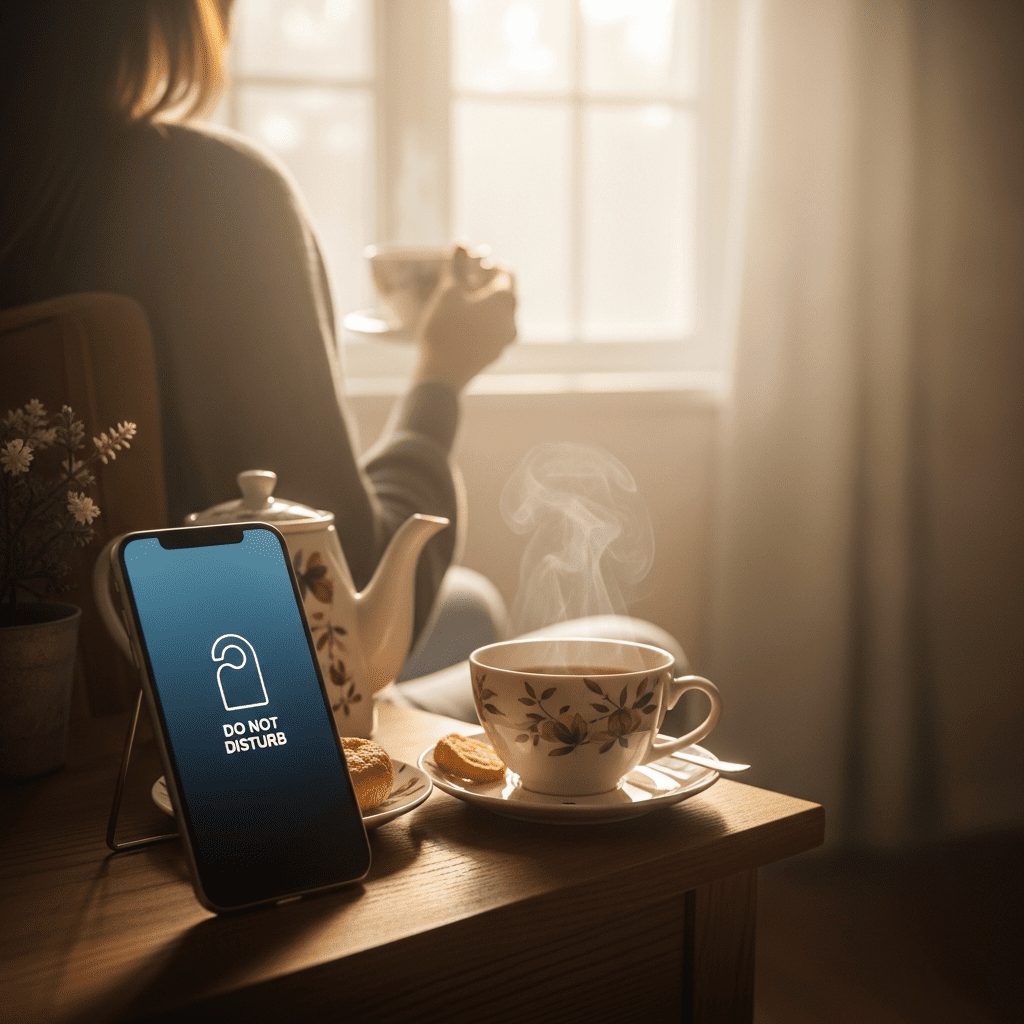
Why it matters:
Early exposure to email or social media triggers reactive stress and reduces focus.
Actionable Steps:
- Delay phone checking for 30 minutes.
- Use “Do Not Disturb” mode.
- Limit notifications to essential alerts only.
Mini Example:
Anna, a teacher, used to scroll through emails before breakfast. She started waiting 30 minutes, and her stress level noticeably dropped.
Common Mistake:
- Immediate social media use triggers comparison and anxiety, setting a negative tone for the day.
7-Day Morning Routine Plan You Can Follow
| Day | Focus | Notes | Mini Tips |
|---|---|---|---|
| Mon | Wake-Up + Hydration | Focus solely on a consistent wake-up time | Keep water nearby; no screens |
| Tue | Add 5-min Movement | Incorporate light stretching | Music or podcast motivates movement |
| Wed | Introduce Mindfulness | Breathing or gratitude journaling | Combine with morning tea |
| Thu | Breakfast Prep | Quick, balanced meals | Prep night to save time |
| Fri | Day Planning | List top 3 priorities | Use a sticky note or planner |
| Sat | Combine Steps 1–5 | Practice full routine | Time each step to stay consistent |
| Sun | Review & Adjust | Reflect on what worked | Adjust wake time or exercise intensity |
Mini Tip:
Track progress in a journal or habit app. Seeing your consistency improves adherence and motivation.
Common Routine Mistakes Busy Adults Make
- Skipping steps: Even small habits make a difference; don’t drop hydration or mindfulness.
- Trying to do too much: Start small, layer habits gradually.
- Inconsistent wake-up time: Weekends should stay close to your weekday schedule.
- Over-reliance on caffeine: Water, movement, and breakfast are better energy boosters.
Proven Benefits of a Morning Routine for Busy Adults
| Benefit | Science Backing | Real-Life Impact |
|---|---|---|
| Reduced Stress | Harvard Health: mindfulness reduces cortisol | Feel calmer handling emails and deadlines |
| Increased Energy | NIH: hydration + light movement improves alertness | Avoid mid-morning crashes |
| Better Focus | NIH: planning + mindfulness improves executive function | Finish tasks faster with less distraction |
| Improved Mood | Mayo Clinic: gratitude & exercise increase endorphins | Feel more positive and proactive |
Daily Morning Routine Checklist for Busy Adults
✅ Set consistent wake-up time
✅ Drink 8–12 oz water first thing
✅ 5–10 minutes of movement
✅ 3–5 minutes of mindfulness
✅ Healthy, quick breakfast
✅ Plan top 3 priorities
✅ Delay tech/social media use

Frequently Asked Question
- What should a morning routine include for busy adults?
A successful morning routine for busy adults includes a consistent wake time, hydration, light movement, 3–5 minutes of mindfulness, a quick healthy breakfast, planning your top daily priorities, and delaying tech or social media for the first 30 minutes. - How long does a stress-free morning routine take?
A basic stress-free morning routine can take just 20–30 minutes, including water, movement, planning, and mindfulness. You can adjust timing based on your schedule. - Can I skip breakfast in my morning routine?
While optional, breakfast helps stabilize blood sugar and maintain energy. Quick breakfasts like Greek yogurt with berries or peanut butter toast take under 10 minutes. - Why should I delay checking my phone in the morning?
Early phone use exposes you to stress triggers like emails and social media, which can increase anxiety and distract you from focused tasks, lowering productivity. - Does consistency matter for a morning routine?
Yes. Daily consistency helps regulate your circadian rhythm, improves sleep quality, balances energy levels, and makes habits automatic over time. - How soon will I feel benefits from a 7-day morning plan?
Most people notice improved focus, reduced stress, and better energy levels within 3–7 days, especially when habits are followed consistently.
Trust Notice & Medical Disclaimer
This article is based on widely accepted health and wellness principles and includes insights from trusted sources such as the National Institutes of Health and Harvard Health. It is intended for informational purposes only and does not constitute medical advice. Always consult a qualified healthcare provider before making changes to your health or wellness routine.
Want to transform your mornings and boost your energy?
Follow this 7-day morning routine for busy adults and start each day feeling calm, focused, and productive. Small habits make a big difference!
Your stress-free, energizing mornings start here.
